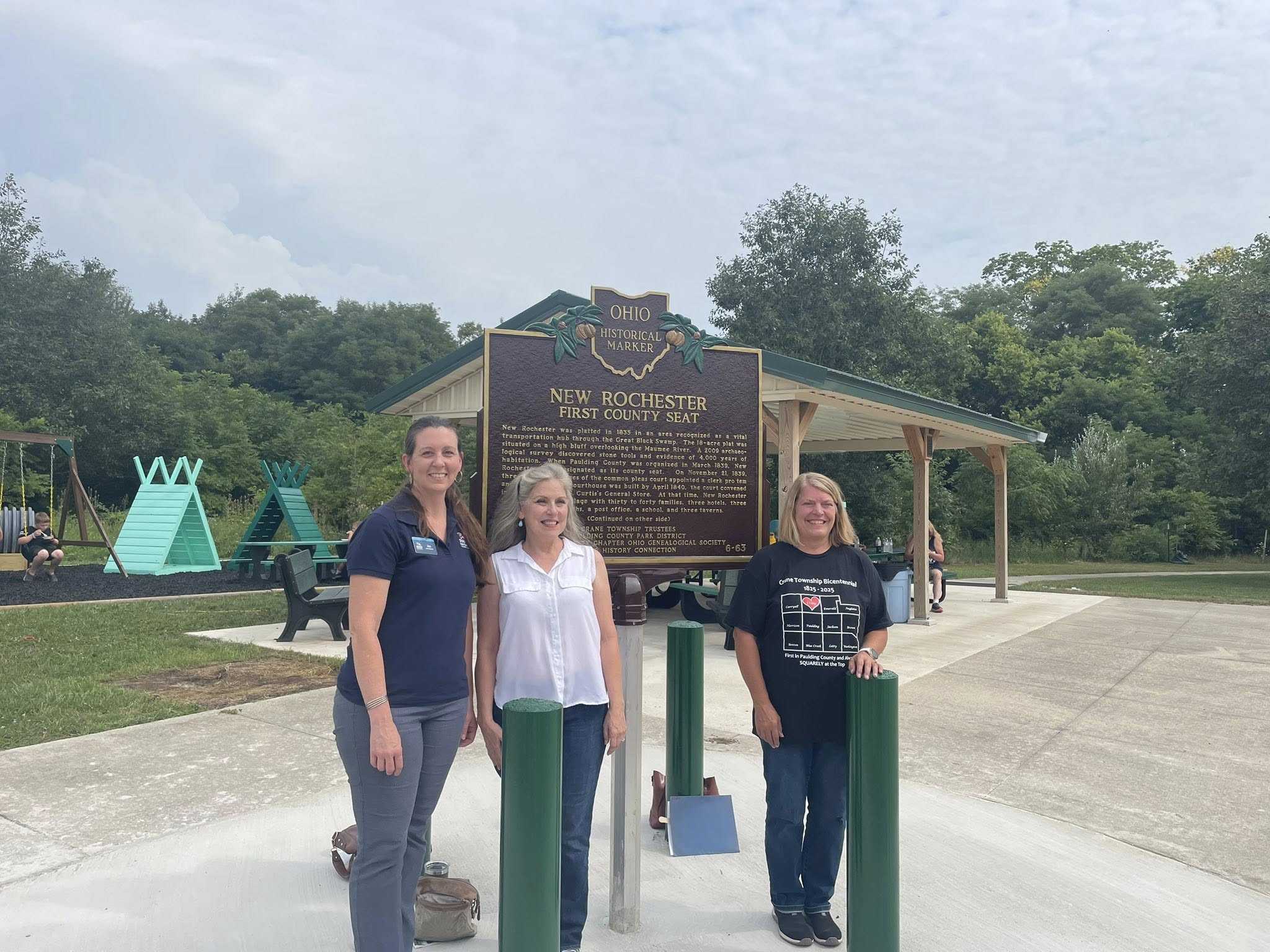
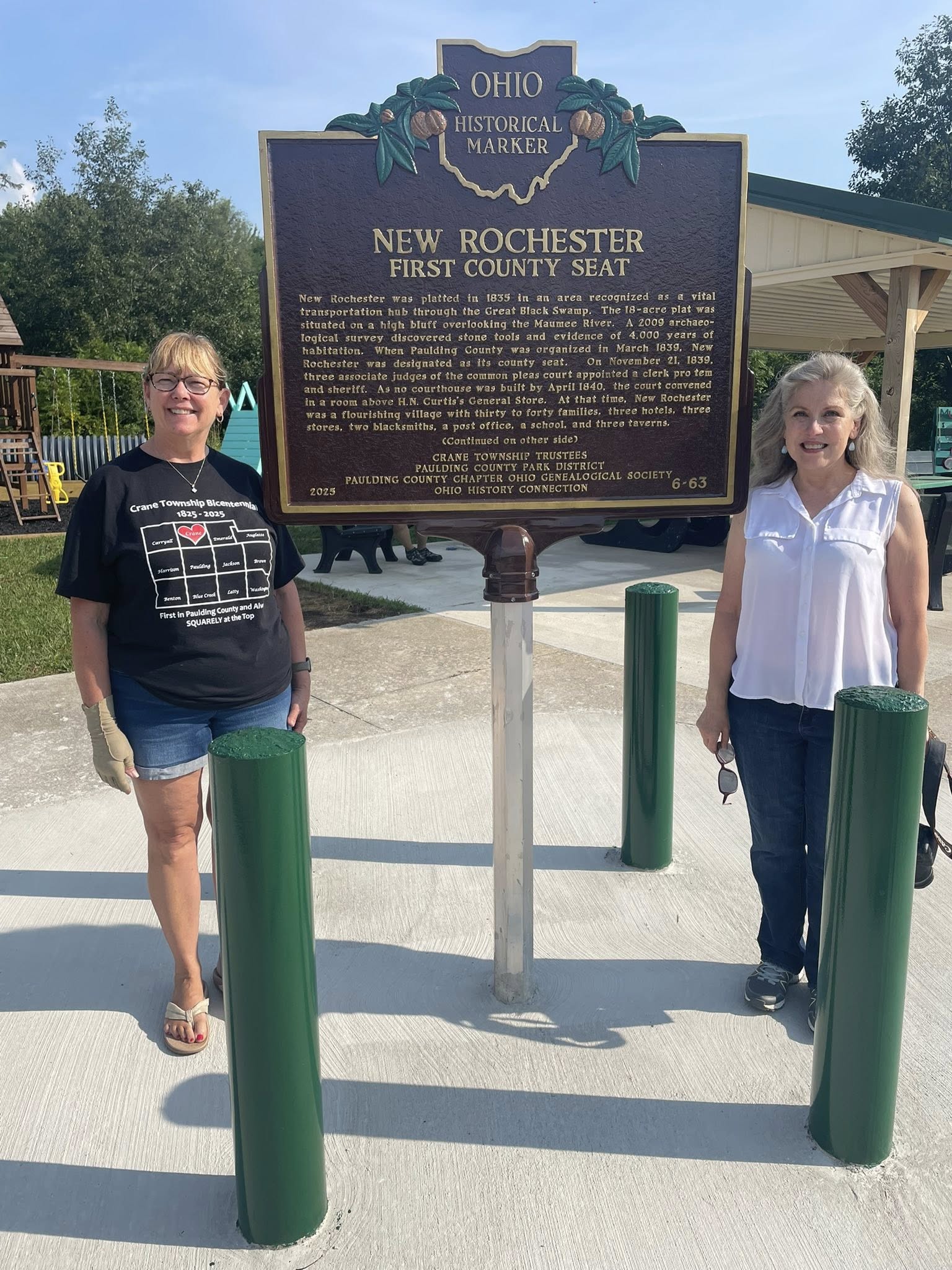
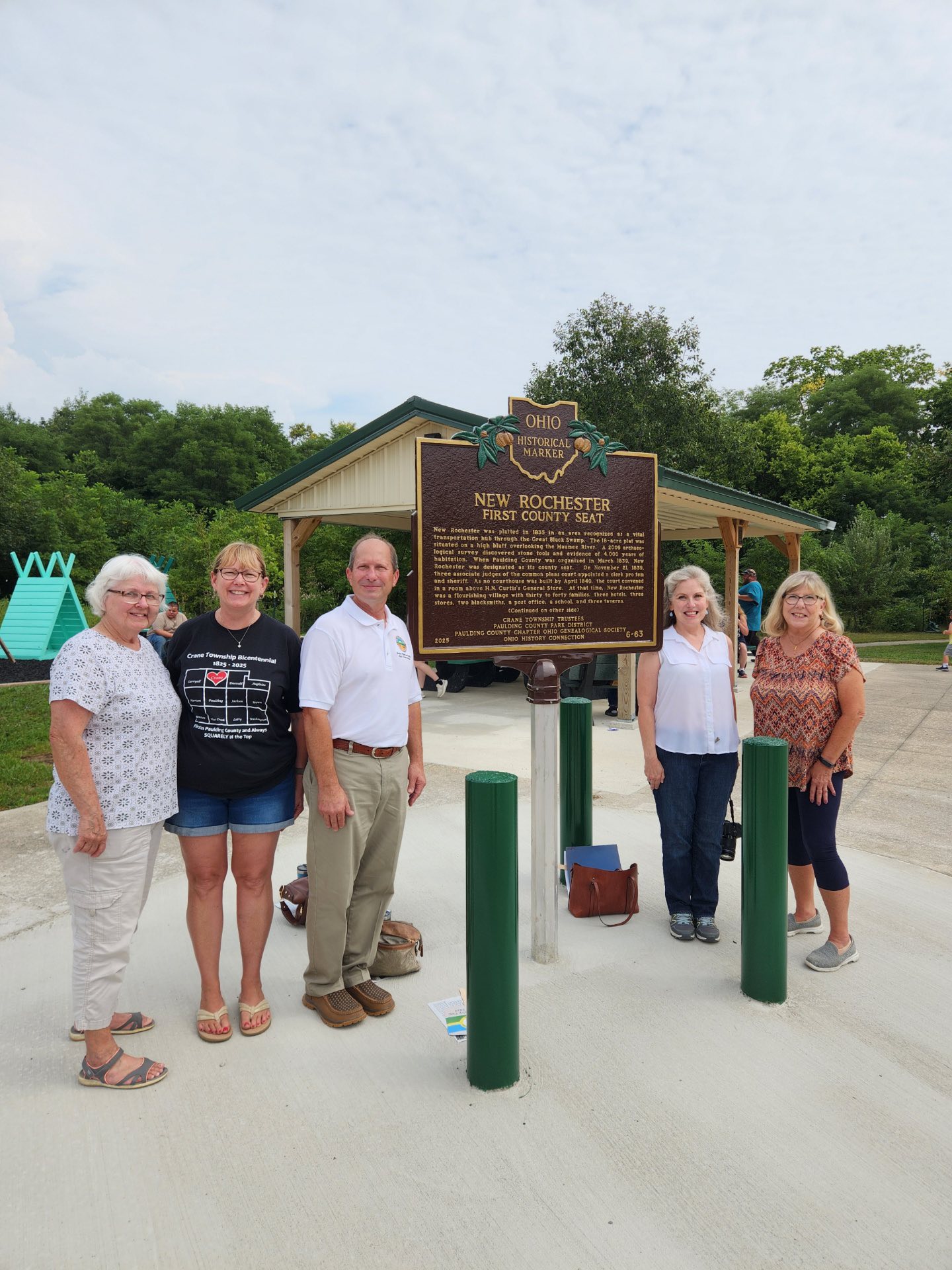
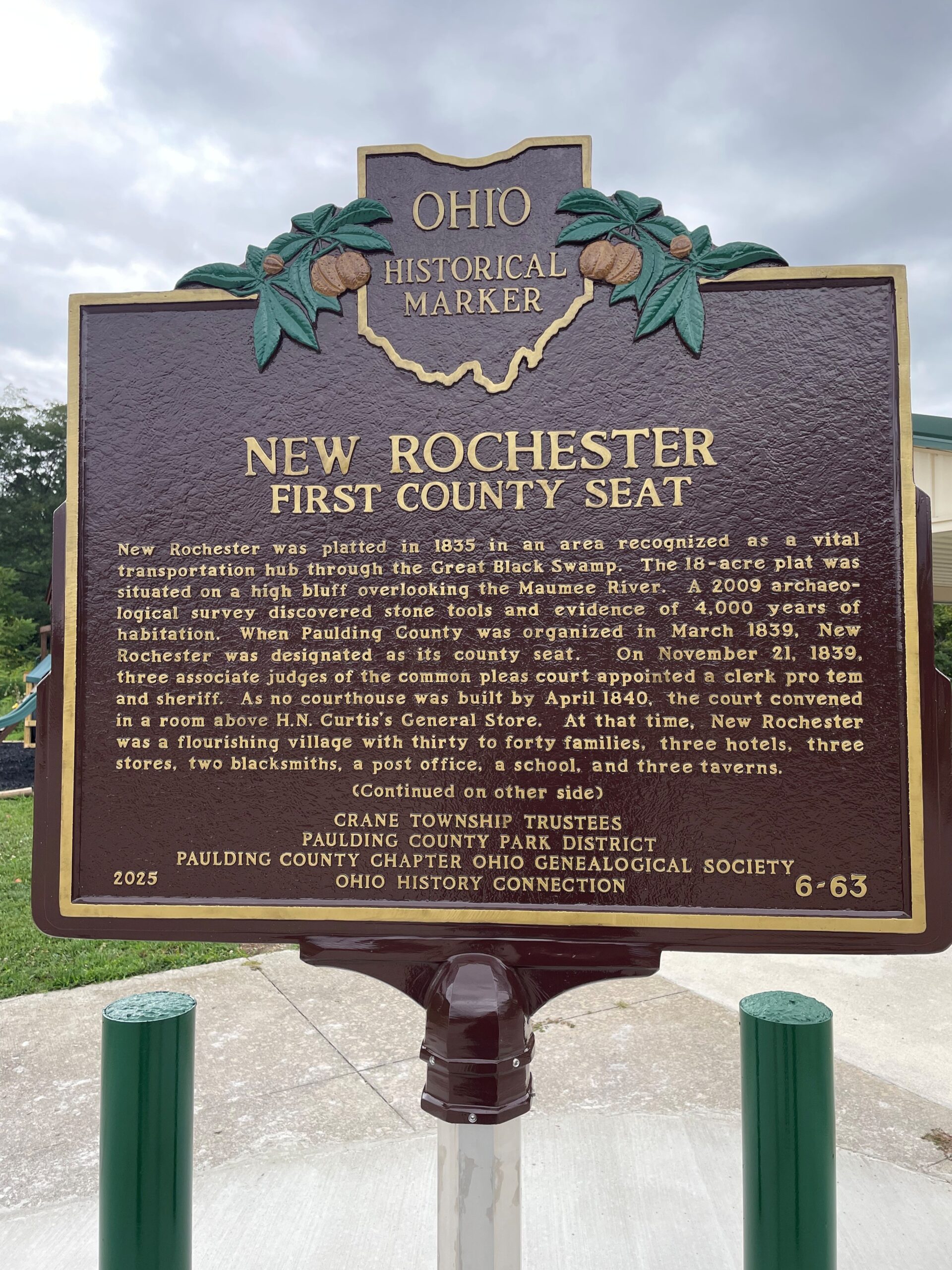
Side A: New Rochester was platted in 1835 in an area recognized as a vital transportation hub through the Great Black Swamp. The 18-acre plat was situated on a high bluff overlooking the Maumee River. A 2009 archaeological survey discovered stone tools and evidence of 4,000 years of habitation. When Paulding County was organized in March 1839, New Rochester was designated as its county seat. On November 21, 1839, three associate judges of the common pleas court appointed a clerk pro tem and sheriff. As no courthouse was built by April 1840, the court convened in a room above H.N. Curtis’s General Store. At that time, New Rochester was a flourishing village with thirty to forty families, three hotels, three stores, two blacksmiths, a post office, a school, and three taverns. (Continued on other side)
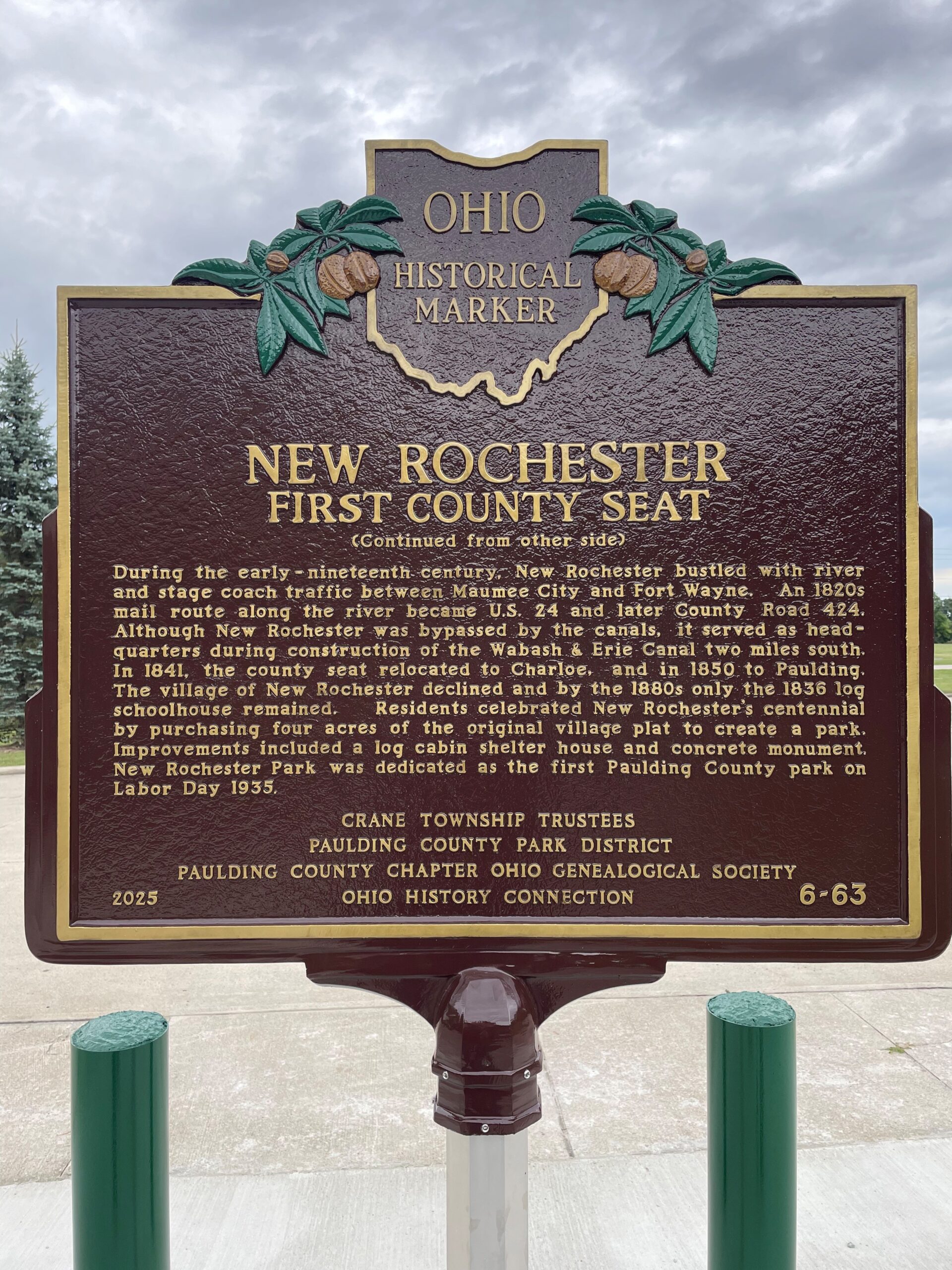
Side B: (Continued from other side) During the early-nineteenth century, New Rochester bustled with river and stage coach traffic between Maumee City and Fort Wayne. An 1820s mail route along the river became U.S. 24 and later County Road 424. Although New Rochester was bypassed by the canals, it served as headquarters during construction of the Wabash & Erie Canal two miles south. In 1841, the county seat relocated to Charloe, and in 1850 to Paulding. The village of New Rochester declined and by the 1880s only the 1836 log schoolhouse remained. Residents celebrated New Rochester’s centennial by purchasing four acres of the original village plat to create a park. Improvements included a log cabin shelter house and concrete monument. New Rochester Park was dedicated as the first Paulding County park on Labor Day 1935.
Sponsors: Crane Township Trustees, Paulding County Park District, Paulding County Chapter Ohio Genealogical Society, Ohio HIstory Connection