Side A: Iuka Ravine, developed on land from the “Indianola Farm” that belonged to the Neil Family, is significant for its early 20th century architecture. The ravine’s natural beauty influenced architects to design homes for the upper middle class that incorporated “features of the old oak forest and glacial boulders.” Several ravine homes were designed by Frank Packard and Charles Inscho. Two classically-designed bridges built in 1912 insulated the area from traffic to create what became known during the 1920s-1950s as a “quiet professor enclave.” Iuka’s curvilinear street, one of the first in Columbus, as well as its stone walls, glacial erratics, and mature hardwoods created a “unique urban experience.” The Iuka Ravine Historic District was listed in The National Register of Historic Places in 1986 and added to the Columbus Register of Historic Properties in 1985.
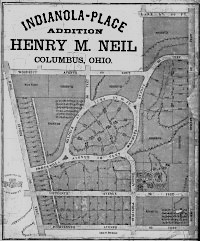
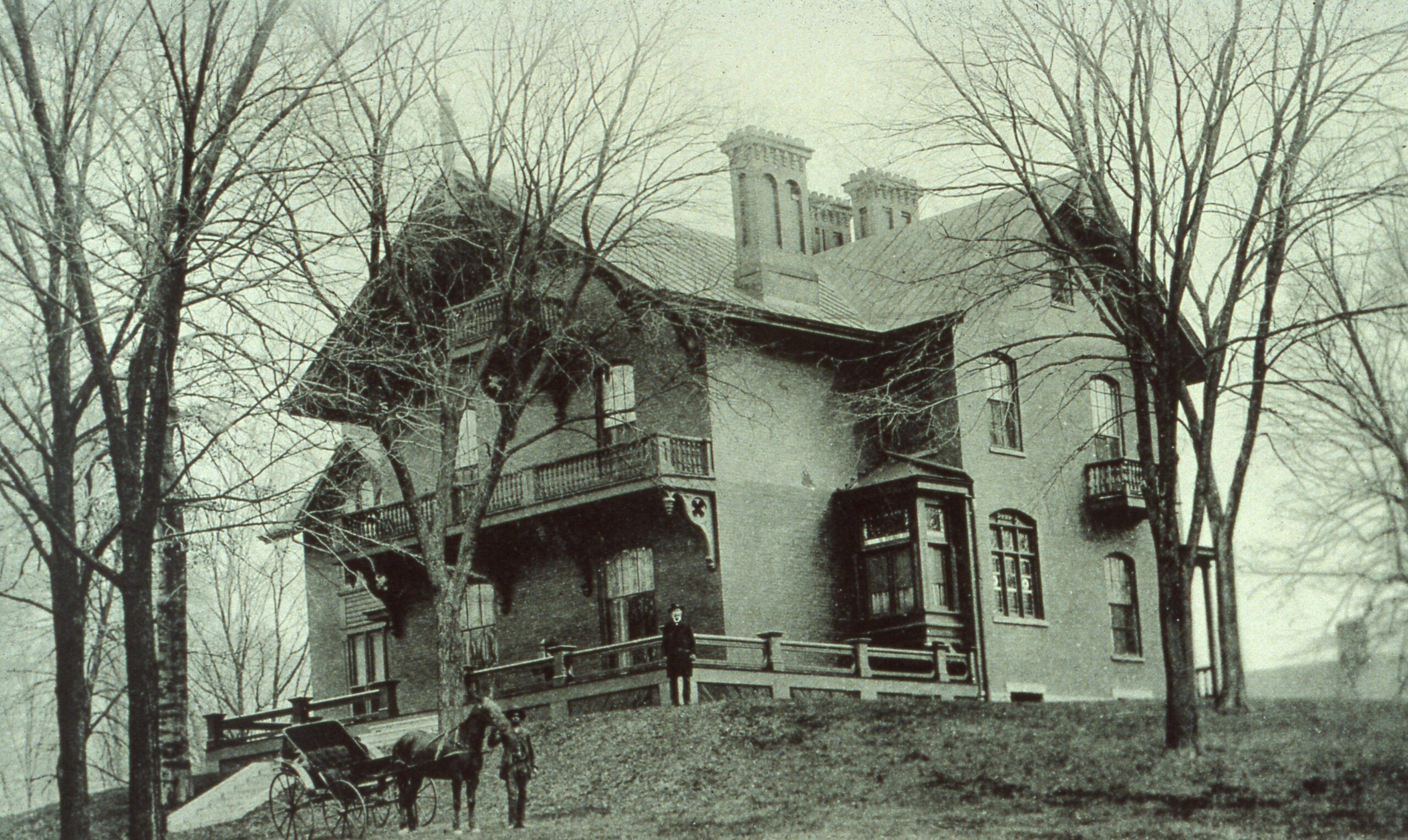
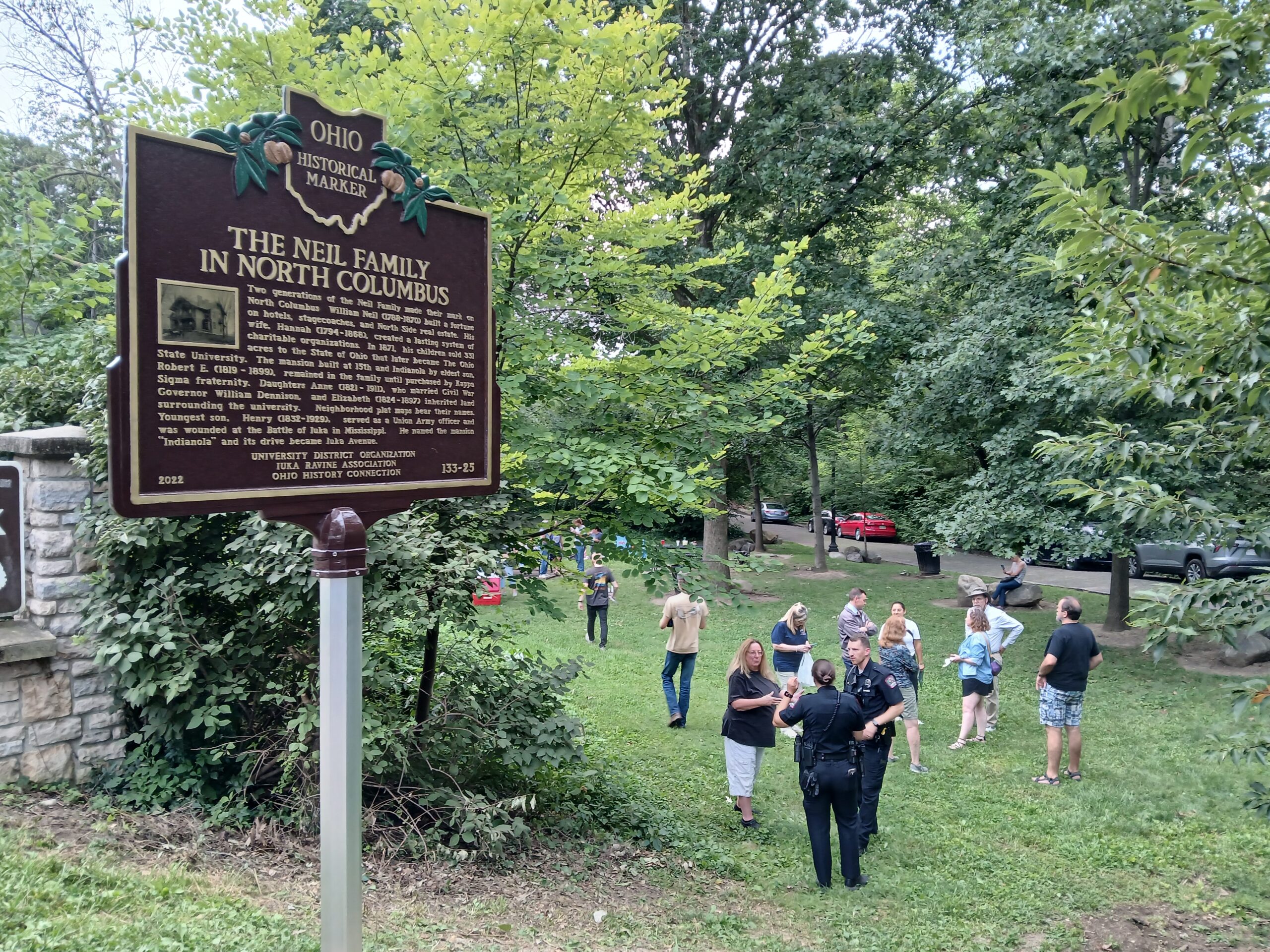
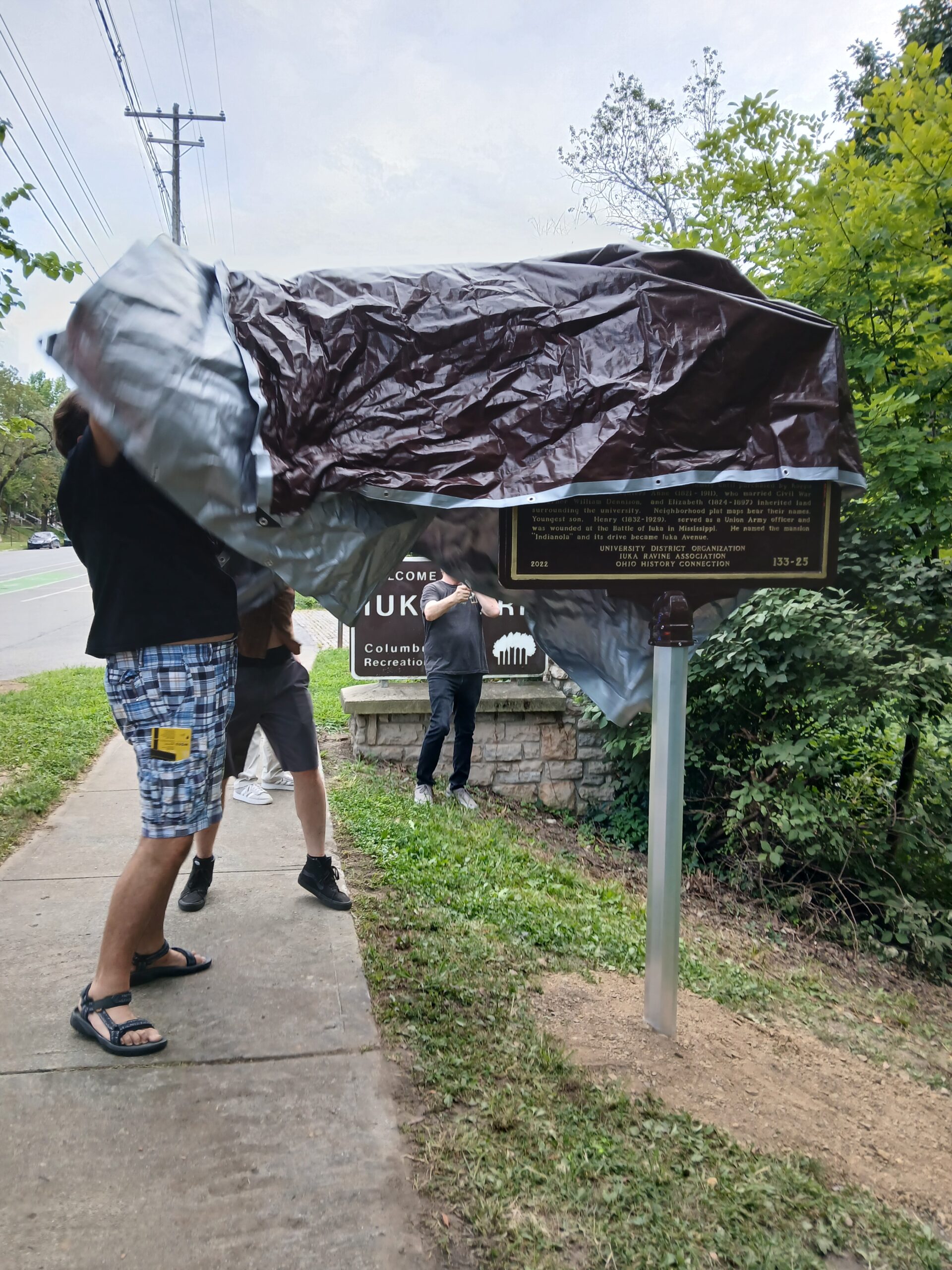
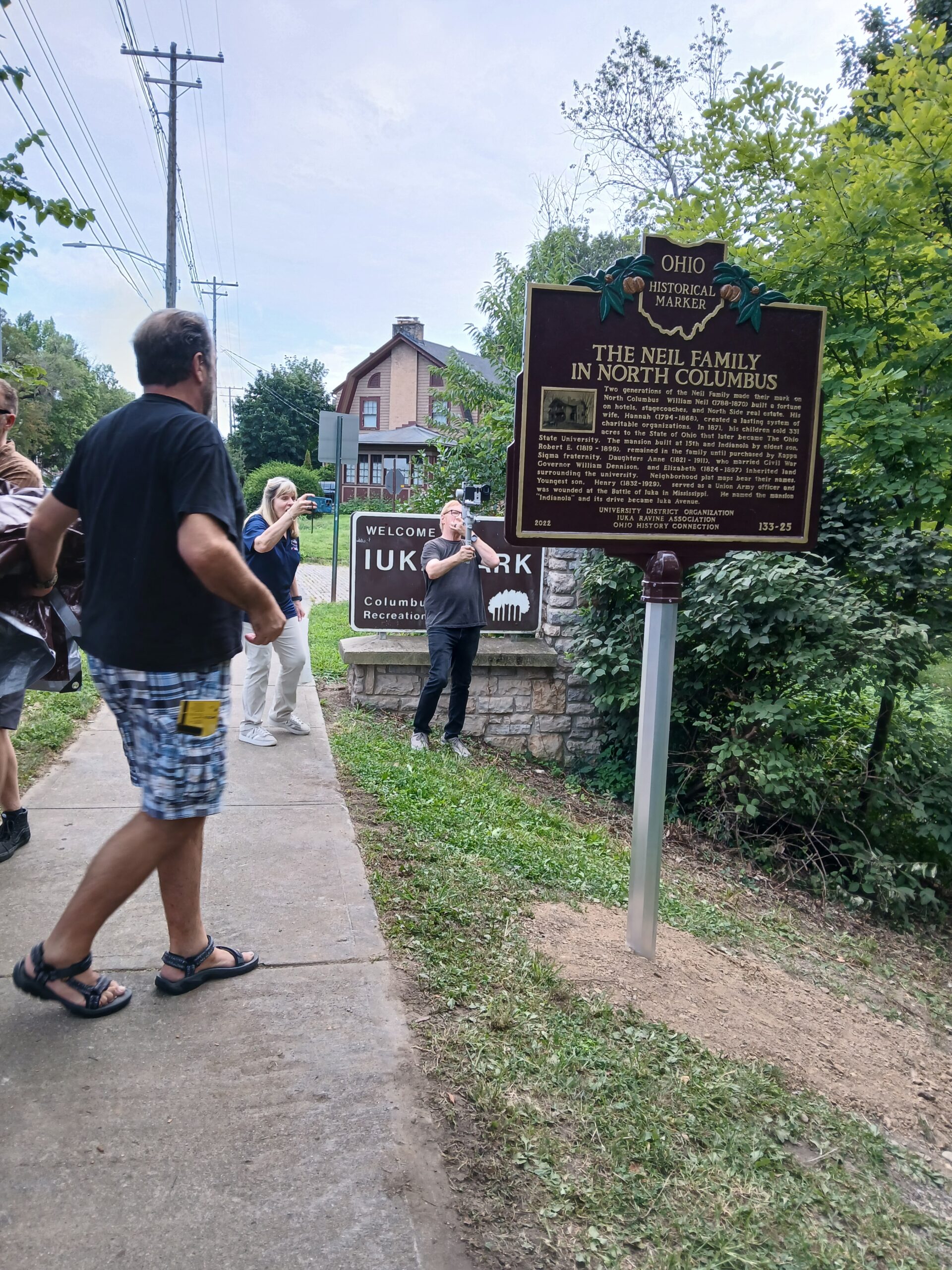
Side B: Two generations of the Neil family made their mark on North Columbus. William Neil (1788-1870) built a fortune on hotels, stagecoaches, and North Side real estate. His wife, Hannah (1794-1868), created a lasting system of charitable organizations. In 1871, his children sold 331 acres to the State of Ohio that later became The Ohio State University. The mansion built at 15th and Indianola by eldest son, Robert E. (1819-1899), remained in the family until purchased by Kappa Sigma fraternity. Daughters Anne (1821-1911), who married Civil War Governor William Dennison, and Elizabeth (1824-1897) inherited land surrounding the university. Neighborhood plat maps bear their names. Youngest son, Henry (1832-1929), served as a Union Army officer and was wounded at the Battle of Iuka in Mississippi. He named the mansion “Indianola” and its drive became Iuka Avenue.