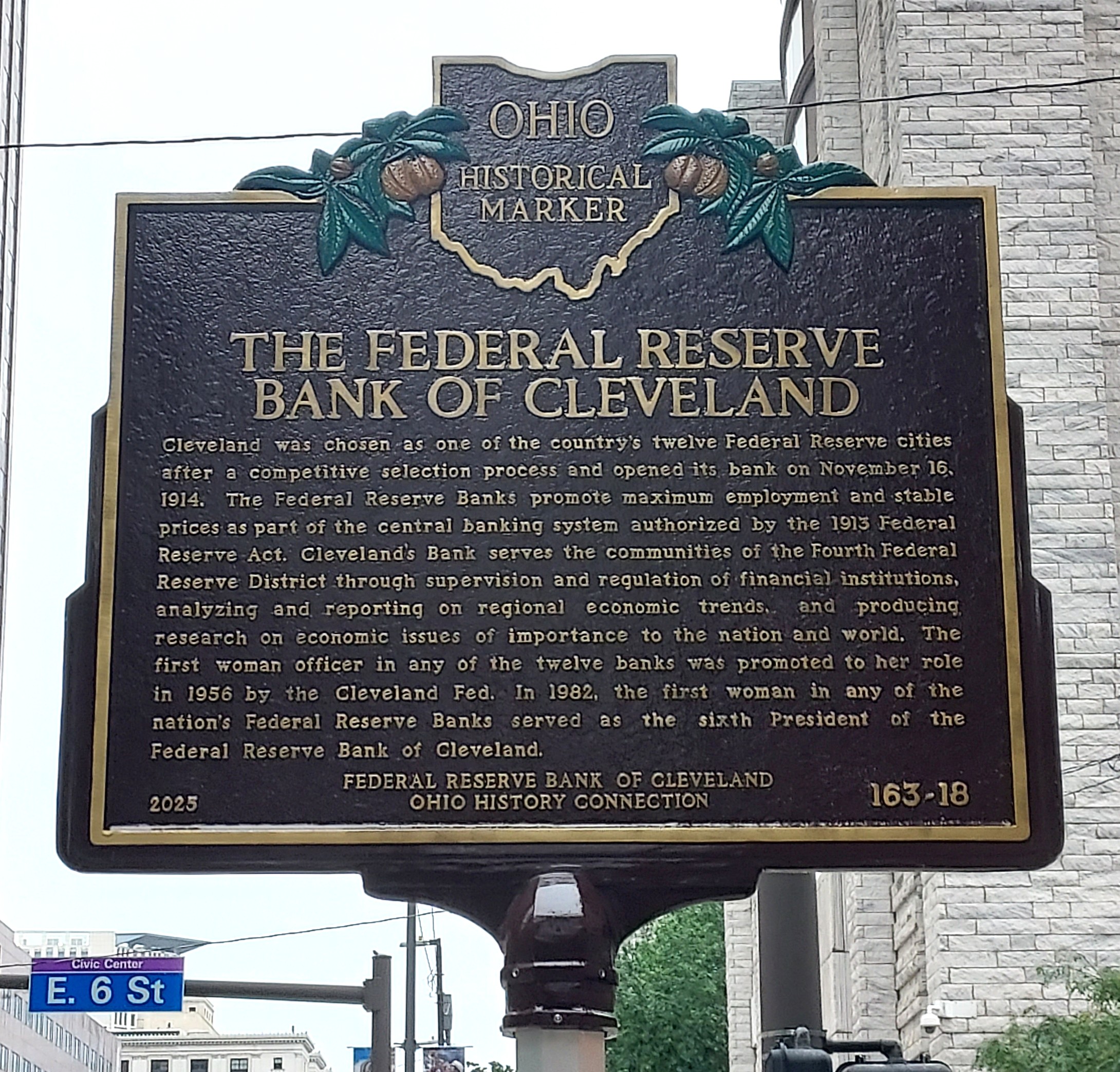
Side A: Cleveland was chosen as one of the country’s twelve Federal Reserve cities after a competitive selection process and opened its bank on November 16, 1914. The Federal Reserve Banks promote maximum employment and stable prices as part of the central banking system authorized by the 1913 Federal Reserve Act. Cleveland’s Bank serves the communities of the Fourth Federal Reserve District through supervision and regulation of financial institutions, analyzing and reporting on regional economic trends, and producing research on economic issues of importance to the nation and world. The first woman officer in any of the twelve banks was promoted to her role in 1956 by the Cleveland Fed. In 1982, the first woman in any of the nation’s Federal Reserve Banks served as the sixth President of the Federal Reserve Bank of Cleveland.
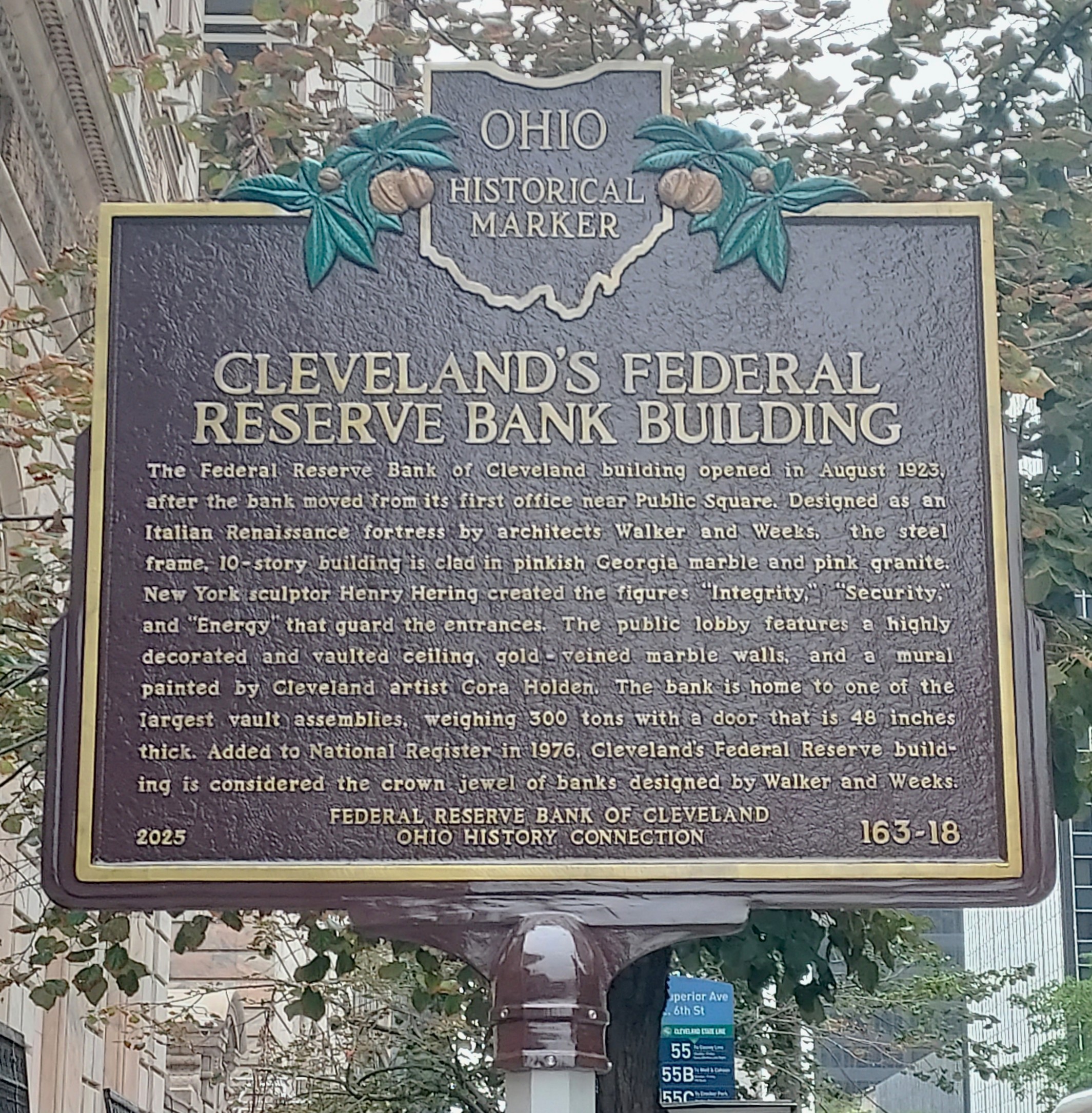
Side B: The Federal Reserve Bank of Cleveland building opened in August 1923, after the bank moved from its first office near Public Square. Designed as an Italian Renaissance fortress by architects Walker and Weeks, the steel frame, 10-story building is clad in pinkish Georgia marble and pink granite. New York sculptor Henry Hering created the figures “Integrity,” “Security,” and “Energy” that guard the entrances. The public lobby features a highly decorated and vaulted ceiling, gold-veined marble walls, and a mural painted by Cleveland artist Cora Holden. The bank is home to one of the largest vault assemblies, weighing 300 tons with a door that is 48 inches thick. Added to National Register in 1976, Cleveland’s Federal Reserve building is considered the crown jewel of banks designed by Walker and Weeks.