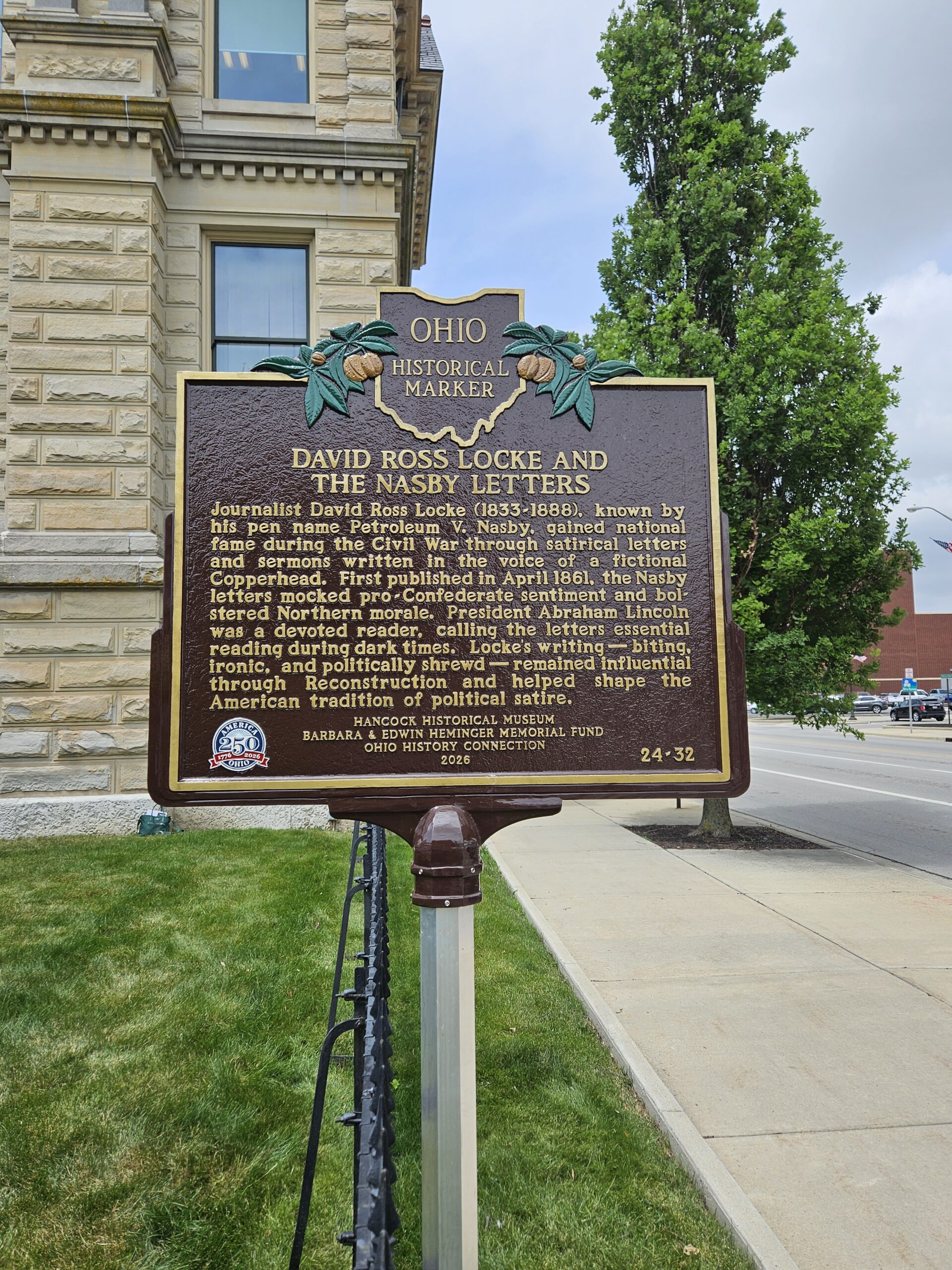
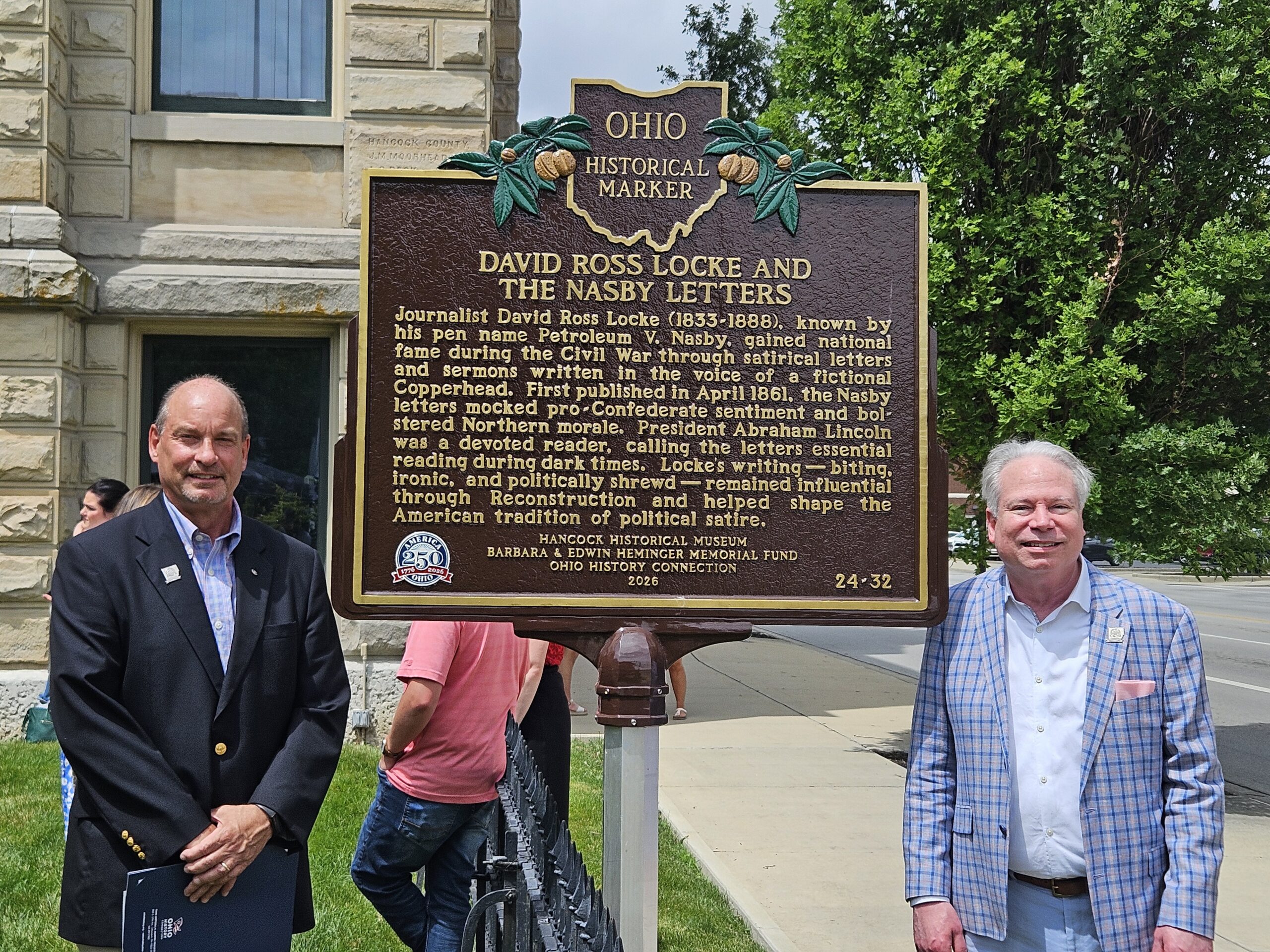
Side A: Journalist David Ross Locke (1833–1888), known by his pen name Petroleum V. Nasby, gained national fame during the Civil War through satirical letters and sermons written in the voice of a fictional Copperhead. First published in April 1861, the Nasby letters mocked pro-Confederate sentiment and bolstered Northern morale. President Abraham Lincoln was a devoted reader, calling the letters essential reading during dark times. Locke’s writing—biting, ironic, and politically shrewd—remained influential through Reconstruction and helped shape the American tradition of political satire.
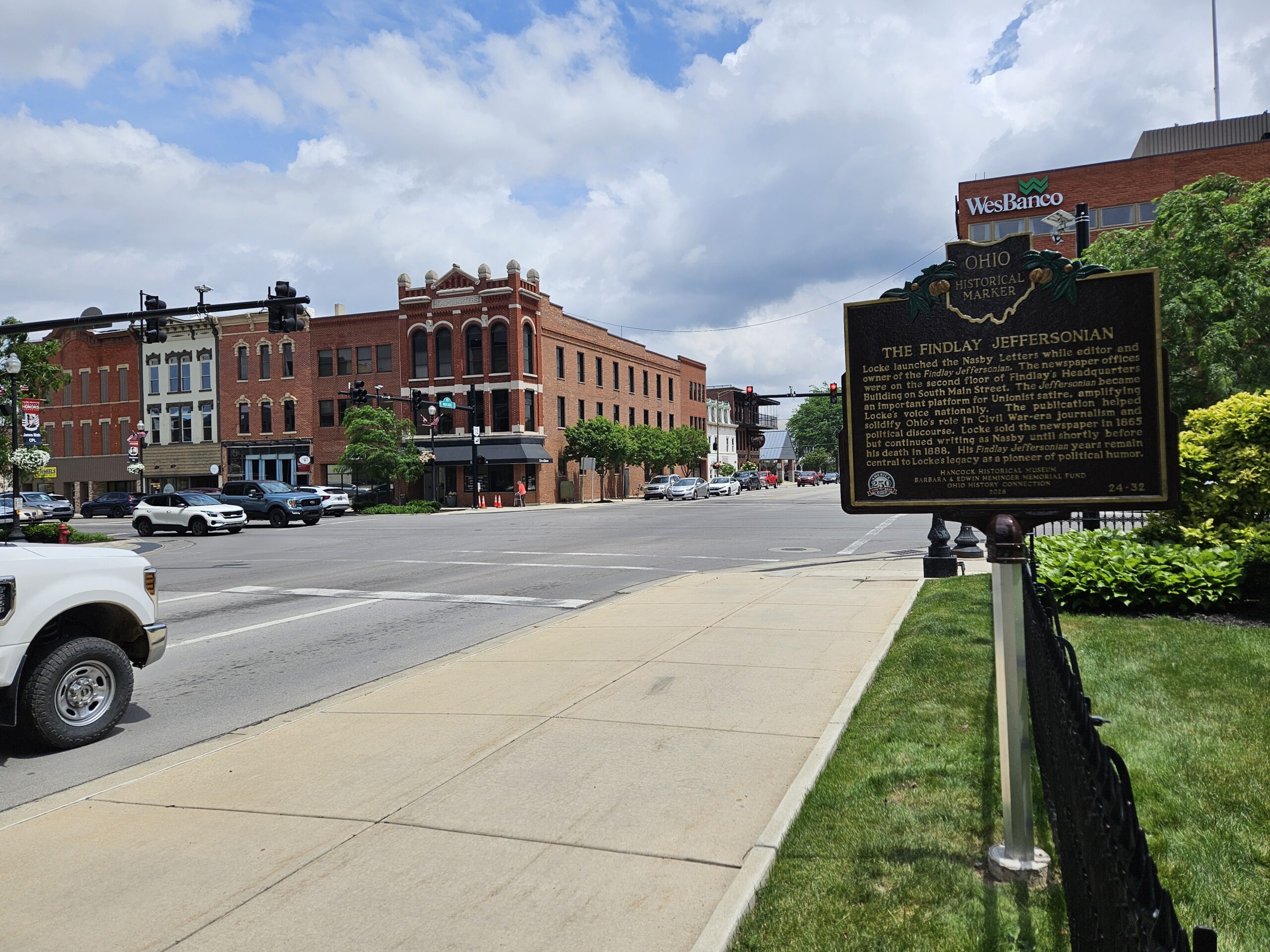
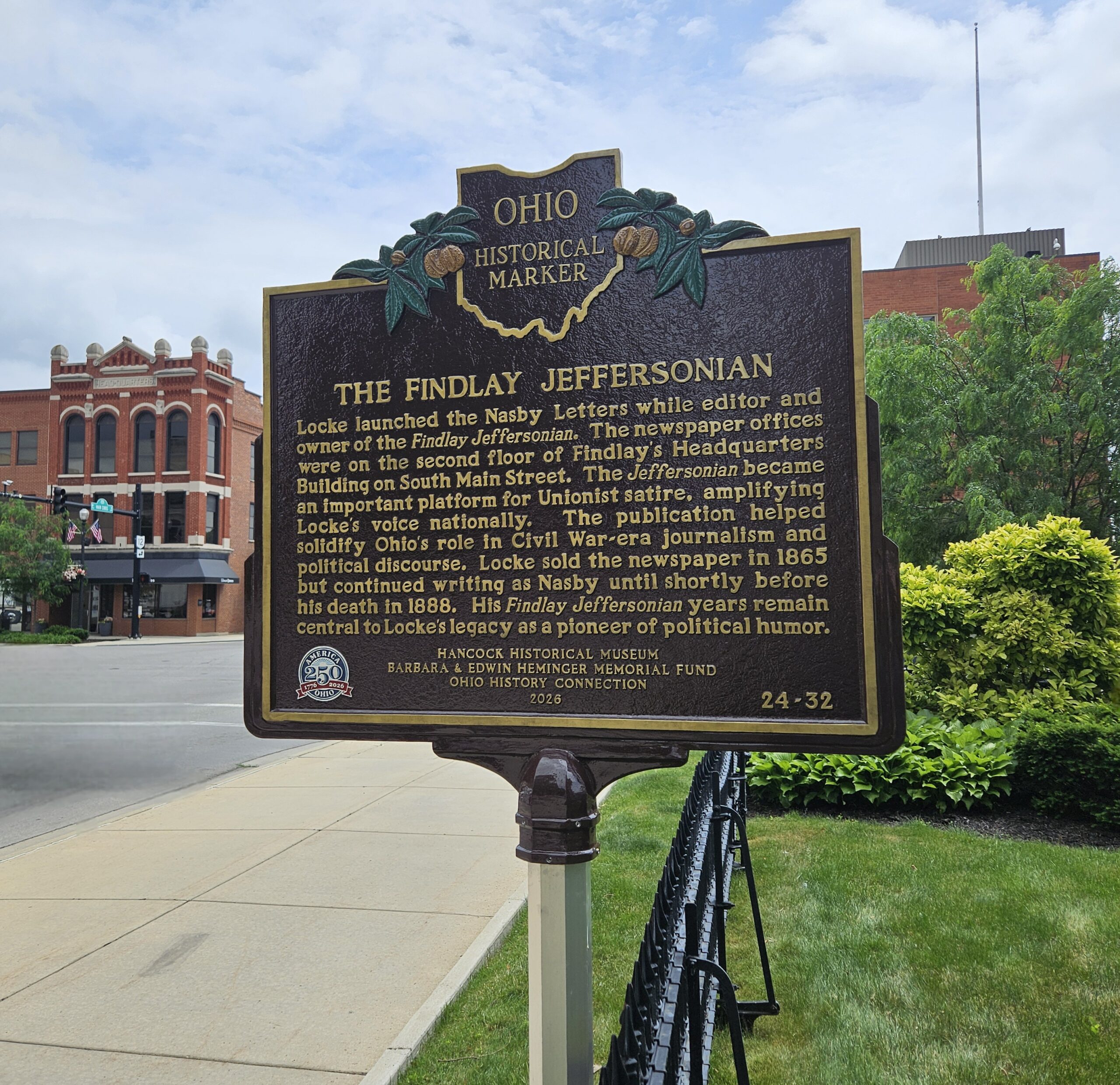
Side B: Locke launched the Nasby Letters while editor and owner of the Findlay Jeffersonian. The newspaper offices were on the second floor of Findlay’s Headquarters Building on South Main Street. The Jeffersonian became an important platform for Unionist satire, amplifying Locke’s voice nationally. The publication helped solidify Ohio’s role in Civil War-era journalism and political discourse. Locke sold the newspaper in 1865 but continued writing as Nasby until shortly before his death in 1888. His Findlay Jeffersonian years remain central to Locke’s legacy as a pioneer of political humor.