

, OH
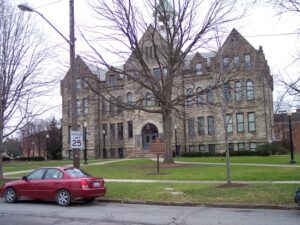
On this site the Lyceum Village and the Berea Seminary were established in 1837 by John Baldwin, James Gilruth, Henry O. Sheldon, and Josiah Holbrook. Their vision was to create the first in a connected series of Lyceum Villages. The Villages were designed especially to assist in the education of teachers, promote “scientific” exchanges over the world and thus encourage the study of the works and word of God, and cultivate the spirit of “peace on earth and good will to men.” The community, however, declined and in 1842, John Baldwin assumed the indebtedness of $15,000. James Wallace acquired the area. It was owned by the Methodist Children’s Home in the 1860s and then sold to German Wallace College in 1866, becoming the original German Wallace College campus.
, OH
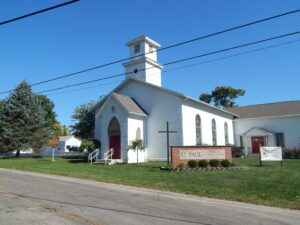
On July 30, 1816, the year before the establishment of Butler Township, a group of farmers of German background founded the Stillwater Church. The log structure with adjoining cemetery was located on three acres between Dog Leg Road and Frederick Pike. In 1842, the congregation replaced the log building with a brick one. In 1873, they moved the building to the northeast corner of Dog Leg and Little York Roads and renamed it St. Paul Lutheran Church. With a fruitful history of sharing God’s love, St. Paul celebrated it’s 200th anniversary on Sunday, July 31, 2016.
, OH
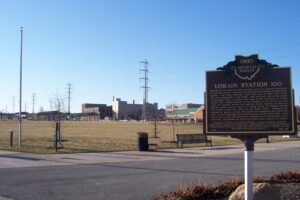
Prior to the Civil War, Ohio was a leading state for enslaved Americans of African decent traveling the Underground Railroad to freedom in Canada. For these fugitives, their final stop in Ohio was a Lake Erie port community in the north. One such port was at the mouth of the Black River in Lorain that came to be identified as Lorain Station 100, named because it was thought to be one of the last stops or stations before the fugitive slaves reached freedom in Canada. Many arrived here in a wagon driven by Robbins Burrell who owned a farm five miles up the Black River. Concealed by vegetables, grains, or hay, the slaves were smuggled into schooners, some of which belonged to Burrell’s cousin Captain Aaron Root. From Lorain Station 100, the determined travelers were transported across Lake Erie, completing the final leg of their long journey to freedom.
, OH
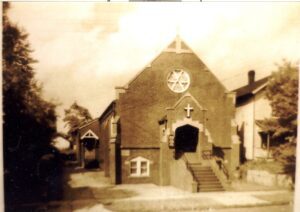
St. Augustine Episcopal Chapel was founded by Lenora Evans Berry, an African American woman, in 1907. A lifelong Baptist, her mission was the development of the Episcopal Church for African Americans in Youngstown. Mrs. Berry’s husband, bricklayer Thomas D. Berry, the son of master builder P. Ross Berry, became the church’s first senior warden and treasurer. The congregation met in St. John’s Parish until they were able to obtain property on Parmalee Avenue. In 1912, Reverend John Ogburn was officially called to vicar. In 1920, work began on plans for a new church. The structure was designed by Charles F. Owsley and construction began after more than six hundred individuals from the community attended the laying of the church’s corner stone on September 11, 1921. St. Augustine Chapel is the oldest African American church and congregation in Youngstown still in its original location and structure.
, OH
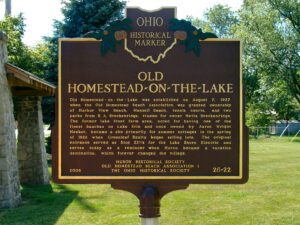
Old Homestead-on-the-Lake was established on August 7, 1927, when the Old Homestead Beach Association was granted ownership of Harbor View Beach, Mansell Beach, tennis courts, and two parks from R. A. Breckenridge, trustee for owner Metta Breckenridge. The former lake front farm area, noted for having one of the finest beaches on Lake Erie and once owned by Aaron Wright Meeker, became a site primarily for summer cottages in the spring of 1922 when Greenleaf Realty began selling lots. The original entrance served as Stop 22 1/2 for the Lake Shore Electric and serves today as a reminder when Huron became a vacation destination, which forever changed the village.
, OH
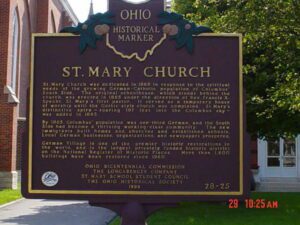
St. Mary Church was dedicated in 1868 in response to the spiritual needs of the growing German-Catholic population of Columbus’ South Side. The original schoolhouse, which stands behind the church, was erected in 1865 under the direction of Rev. Francis X. Specht, St. Mary’s first pastor. It served as a temporary house of worship until the Gothic-style church was completed. St. Mary’s distinctive spire – soaring 197 feet into the Columbus sky – was added in 1893. By 1865, Columbus’ population was one-third German, and the South Side had become a thriving working-class community. The new immigrants built homes and churches and established schools. Local German businesses, organizations, and newspapers prospered. German Village is one of the premier historic restorations in the world, and is the largest privately funded historic district on the National Register of Historic Places. More than 1,600 buildings have been restored since 1960.
, OH
The German Reformed Church was organized on Kelleys Island in 1865. The congregation built this church from island stone in 1866 on 1/2 acre of land purchased from Alfred S. and Hannah Kelley. By 1871, the congregation, one of five on the island, heard services in German and had 25 families as members, including those of Baumler, Beatty, Becker, Boker, Burger, Cattenach, Dodge, Elfers, Fischer, Gerlach, Hess, Huber, Jordon, Keifer, Lange, Nowalk, Pringnitz, Renter, Schaedler, Scheele, Smith, Stoll, Suhr, and Trieschman. Rev. A. William Von Kaske was the congregation’s last resident minister, leaving in 1915. The church’s final service, a funeral for William Burger, was held in 1942. The church’s Ladies Aid Society was able to maintain the building until 1957, after which it was left vacant. The Kelleys Island Historical Association leased the church in 1981 and was granted the deed in 1986.
, OH
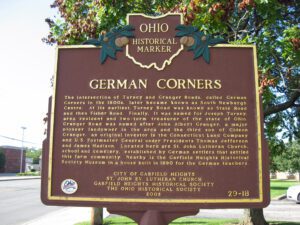
The intersection of Turney and Granger Roads, called German Corners in the 1800s, later became known as South Newburgh Centre. At its earliest Turney Road was known as State Road and then Fisher Road. Finally, it was named for Joseph Turney, area resident and two-term treasurer of the state of Ohio. Granger Road was named after John Albert Granger, a major pioneer landowner in the area and the third son of Gideon Granger, an original investor in the Connecticut Land Company and U. S. Postmaster General under Presidents Thomas Jefferson and James Madison. Located here are St. John Lutheran Church, school and cemetery, established by German settlers that settled this farm community. Nearby is the Garfield Heights Historical Society Museum in a house built in 1890 for the German teachers.