

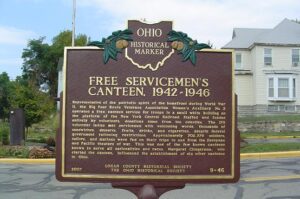
, OH
Representative of the patriotic spirit of the homefront during World War II, the Big Four Route Veterans Association Women’s Auxiliary No. 3 operated a free canteen service for troops in a small white building on the platform of the New York Central Railroad. Staffed and funded entirely by volunteers, donations came from ten counties. The 170 volunteer ladies met servicemen with welcoming words, thousands of sandwiches, desserts, fruits, drinks, and cigarettes, despite federal government rationing restrictions. Approximately 702,779 soldiers, sailors, and marines were fed on their trips to and from the European and Pacific theaters of war. This was one of the few known canteens known to serve all nationalities and races. Margaret Clingerman, who started the canteen, influenced the establishment of six other canteens in Ohio.
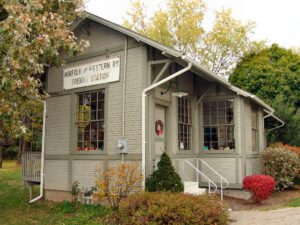
, OH
Legend has it that Mogadore’s first settler, Ariel Bradley, was a spy for George Washington in October, 1776. As a nine year old boy, Ariel crossed British lines on a supposed errand to the nearest grist mill and returned with troop positions and tent counts. In 1801, Ariel left Connecticut to make his new home in what would be Ohio. In 1807, he built a log cabin on a 146 acre plot of farm land that cost $335. Until 1825 the new community had been named Bradleyville, but Ariel did not want the area named after him. Martin Kent was building a residence and a sailor, John Robinson, climbed to the top of the framework, pulled a flask of whiskey from his pocket. Breaking the flask on the last beam of construction, Robinson shouted “Three cheers for Mogador,” which is a large city in Morocco, thusly christening the area Mogadore.
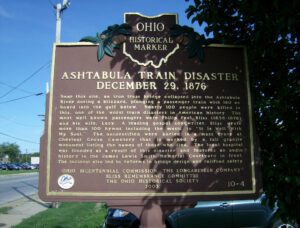
, OH
Near this site, an iron truss bridge collapsed into the Ashtabula River during a blizzard, plunging a passenger train with 160 on board into the gulf below. Nearly 100 people were killed in this, one of the worst train disasters in American history. The most well known passengers were Philip Paul Bliss (1838-1876) and his wife, Lucy. A leading gospel songwriter, Bliss wrote more than 100 hymns including the music to “It Is Well With My Soul.” The unidentified were buried in a mass grave at Chestnut Grove Cemetery that is marked by a tall granite monument listing the names of those who died. The local hospital was founded as a result of this disaster and features an audio history in the James Lewis Smith Memorial Courtyard in front. The incident also led to reforms in bridge design and railroad safety.
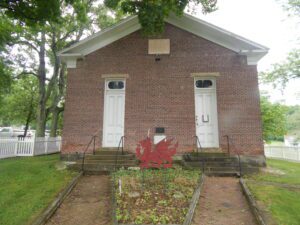
, OH
In 1972 a group of Welsh-Americans chartered the Welsh-American Heritage Museum to preserve Welsh history and culture, and to preserve the Welsh Congregational Church. The old brick church was where songs of praises rang, as the Welsh gathered and sang beloved hymns of their homeland in four-part harmony. The church is a link in a long, unbroken chain of memories and still serves the community as a center of Welsh-American activities and a keeper of the community’s heritage. The red dragon and daffodil are symbols of Wales.
, OH
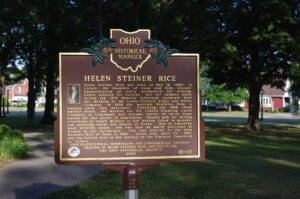
Helen Steiner Rice was born on May 19, 1900, in Lorain, the daughter of Anna and John Steiner. Demonstrating an early propensity for writing, Helen planned for college, but her father’s death during the 1918 Spanish Influenza epidemic kept her working at the Lorain Electric Light and Power Company. In 1929 she married Franklin Rice, a Dayton bank vice president. Following the 1929 stock market crash, she worked for the Gibson Greeting Cards Company in Cincinnati and became editor of verse lines. Known for her words of inspiration, Helen’s gift for writing continues to reach millions in her poetry found in modern-day greeting cards and dozens of books. One of America’s most prolific poets, she was also an early advocate of women in the workplace. She was elected to the Ohio Women’s Hall of Fame in 1992. Helen died April 23, 1981, and was buried next to her parents at the Elmwood Cemetery in Lorain.
, OH
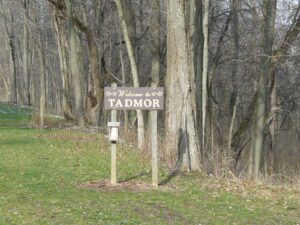
The Village of Tadmor is significant as being the location of one of the most important centers of transportation in early Ohio history. As early as 1809, keelboats were poled up river from Dayton to load and unload freight in the village. By 1837, the Miami and Erie Canal had reached Tadmor, connecting it to the Ohio River in the south and Lake Erie in the north. In the 1830s, the National Road was constructed through Tadmor, connecting it to points east and west. In 1851, the Dayton & Michigan Railroad established freight and passenger service to the growing town. Residents hoped that Tadmor’s strategic location would help it prosper, however, successive flooding on the Great Miami River stifled growth. Tadmor was finally abandoned when a dam constructed by the Miami Conservancy District in 1922 to retain water during flooding made the site uninhabitable.
, OH
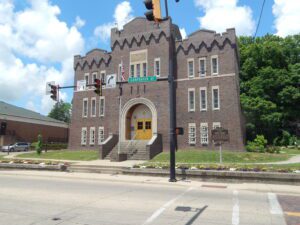
In the first years of the twentieth century, Athens’ citizens formed a new National Guard company. The guardsmen initially held drill at the Campbell Block on Court Street, but soon the Athens Commercial Club began advocating for an armory from the Ohio National Guard. In 1912, the Armory Board approved the request. Plans were drawn up for the armory and the Guard purchased land from the Athens Brick Company at the foot of Shale Hill. Construction began in the spring of 1915 and the Armory opened in December. In March of 1917, the city held a dedication ceremony and parade. Before World War I, the Athens Armory housed Company L and the Machine Gun Company, both part of the 7th Infantry Regiment, Ohio National Guard. (Continued on other side)
, OH
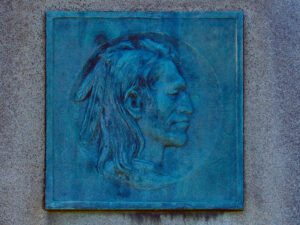
Tah-gah-jute, the Mingo chief named Logan, was a native of Pennsylvania. Logan moved to Ohio in 1770, and settled at the Pickaway Plains. Logan and his father, Shikellimus, had long supported friendships between Native Americans and white men; however, in the spring of 1774, his tribesmen and family were murdered at Yellow Creek, along the Ohio River. Once an advocate of peace, Logan went on the warpath and raided frontier settlements. These and similar raids along the Ohio frontier precipitated Lord Dunmore’s War in October 1774. After the Shawnees and their allies were defeated at Point Pleasant, Virginia governor Lord Dunmore marched up the Hocking River to the Pickaway Plains. Dunmore asked his interpreter, Colonel John Gibson, to assist in negotiations with Cornstalk and other Indian leaders, including Logan. Logan declined to attend the conference, but spoke to Gibson about his anger and betrayal.