

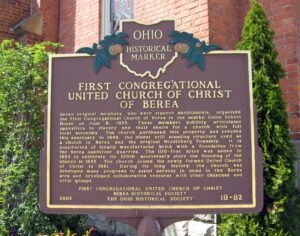
, OH
Seven original members, who were staunch abolitionists, organized the First Congregational Church of Berea in the nearby Union School House on June 9, 1855. These members publicly articulated opposition to slavery and their desire for a church with full local autonomy. The church purchased this property and erected this sanctuary in 1869, the oldest still standing structure used as a church in Berea and the original Middleburg Township. It is constructed of locally manufactured brick with a foundation from the Berea sandstone quarries. The 100-foot spire was added in 1954 to celebrate its 100th anniversary since the founding of the church in 1855. The church joined the newly formed United Church of Christ in 1961. During its long history, the church has developed many programs to assist persons in need in the Berea area and developed collaborative ventures with other churches and civic groups.
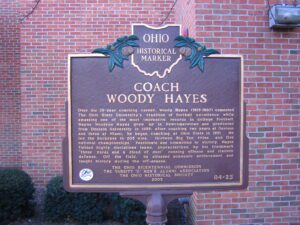
, OH
Over his 28-year coaching career, Woody Hayes (1913-1987) cemented The Ohio State University’s tradition of football excellence while amassing one of the most impressive records in college football. Wayne Woodrow Hayes grew up in Newcomerstown and graduated from Denison University in 1935; after coaching two years at Denison and three at Miami, he began coaching at Ohio State in 1951. He led the Buckeyes to 205 wins, thirteen Big Ten titles, and five national championships. Passionate and committed to victory, Hayes fielded highly disciplined teams, characterized by his trademark “three yards and a cloud of dust” running offense and staunch defense. Off the field, he stressed academic achievement and taught history during the off-season.
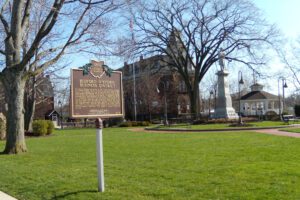
, OH
The town of Bedford was settled in 1837. Early residents, Hezekiah and Clarissa Dunham donated the land that serves as Bedford Public Square. The Dunhams built one of the area’s first homes in 1832, which stands at 729 Broadway with the letters H & D above the doorway. Early settlers were attracted to the area by the abundance of natural resources and a large waterfall for mill sites. Bedford also served as a stagecoach stop on the route from Cleveland to Pittsburgh. The road or Turnpike Road as it was called was originally part of the Mahoning Indian Trail. By 1895 the road was renamed Main Street (and later Broadway) when the Akron, Bedford, and Cleveland Railway Company (ABC) traversed the middle of the street carrying passengers. The interurban is called “America’s first high speed long distance electric interurban” with speeds in excess of 60 miles per hour. [continued on other side]
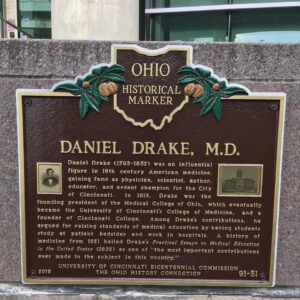
, OH
Daniel Drake, M.D.. Daniel Drake (1785-1852) was an influential figure in 19th century American medicine, gaining fame as physician, scientist, author, educator, and ardent champion for the City of Cincinnati. In 1819, Drake was the founding president of the Medical College of Ohio, which eventually became the University of Cincinnati’s College of Medicine, and a founder of Cincinnati College. Among Drake’s contributions, he argued for raising standards of medical education by having students study at patient bedsides and work in hospitals. A history of medicine from 1921 hailed Drake’s Practical Essays on Medical Education in the United States (1832) as one of “the most important contributions ever made to the subject in this country.”
, OH
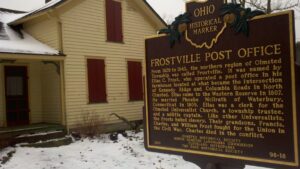
The North Olmsted Historical Society was founded in 1953 and became incorporated as a non-profit association in 1961. A year later, Frostville Museum opened in the Prechtel House. The society took on the challenge of preserving the history of the entire original township and became the Olmsted Historical Society in 1969. The Frostville Museum has grown from one house to a small village. Volunteers are dedicated to preserving the past and the present for the future. In August 2010, First Lady Michelle Obama designated the society as a Preserve America Steward. Frostville is an affiliate of the Cleveland Metroparks.
, OH
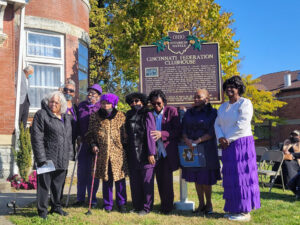
“Lifting As We Climb”: The Cincinnati Federation of Colored Women’s Clubs (CFCWC) was organized May 6, 1904, during a meeting called by Mary Fletcher Ross at the Allen Temple A.M.E. Church. Gathering together eight existing African-American women’s clubs, the CFCWC sought to unite in their work promoting “the betterment of the community.” At a time when both government and private philanthropies overlooked the needs of Black Americans, CFCWC members helped to organize the city’s first kindergartens for Black children, taught in Cincinnati African-American public schools –including the Walnut Hills Douglass and Stowe schools—and raised money for the Home of Aged Colored Women. Since 1904, the Cincinnati Federation of Colored Women’s Clubs has ensured the civic and constitutional rights of all African Americans while meeting the needs of their city.
, OH
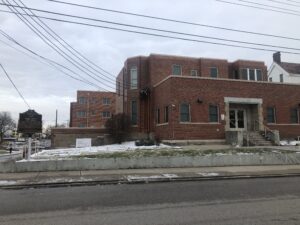
Walnut Hills has been home to a significant middle- and working-class Black community since the 1850s. In 1931, African American entrepreneur Horace Sudduth bought 1004 Chapel Street and then the row of buildings across Monfort, naming them the Manse Hotel and Annex. Throughout the 1940s, hotel dinner parties could move to the Federation of Colored Women’s Clubs house next door for dancing. A large addition to the Manse in 1950 created its own ballroom, 24-hour coffee shop, upgraded Sweetbriar Restaurant, and more guest rooms. It appeared in the Negro Motorist’s Green Book between 1940-1963, providing local, transient, and residential guests both catered meetings and top entertainment during the last decades of segregation. It closed in the late 1960s when the economic need for a first-class segregated hotel disappeared in the age of Black Power.
, OH
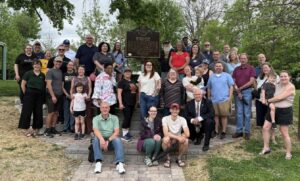
Miranda Boulden Parker lived at 2644 Marsh Avenue from 1907 to 1915. She moved into the four-family rental home with her daughters Bianca and Portia, who both worked as teachers. Miranda Parker was the widow of John P. Parker, Ripley’s Underground Railroad hero, born into slavery who famously helped more than 400 fugitives escape to freedom. In March 1914, after several vacant apartments in their Marsh Avenue home were repeatedly vandalized, daughter Bianca assumed the role as building caretaker. When she appealed to the police for help against vandals breaking windowpanes, shutters, and transoms, the police made no effort to arrest the offenders. Instead, the Health Department issued a 24-hour eviction notice. Bianca Parker sued Norwood’s Health Officer and Chief of Police unsuccessfully. The Parker family left Norwood for the more welcoming and integrated Madisonville neighborhood.
Miranda Boulden Parker lived in a home on this site from 1907(1) to 1915(2). She was the widow of Underground Railroad hero John P. Parker, who had been born into slavery. They lived in Ripley, Ohio, where John P. Parker helped more than 400 fugitives escape to freedom.(3) After his death in 1900, Miranda and their daughters Bianca and Portia, both teachers, came to Norwood. Here they rented an apartment in a four-family dwelling where Bianca became the caretaker.(4) From 1913-‘14, vandals broke over 63 windowpanes, shutters, and transoms. Bianca appealed to the police for help. Instead, the police notified the Health Department, who gave the Parkers a 24-hour eviction notice. The Parkers moved out of Norwood after unsuccessfully suing the city. (123 words)
City of Norwood, Ohio
Norwood Historical Society
The Ohio History Connection
This park was established by the City of Norwood in 1923(5) for the purpose of preventing Black Americans from owning homes here.(6) From 1907(7) to 1922(8), a four-family house on this site was rented by Black families.(9) George and Sarah Hirst lived in one of those units. On July 5, 1922, the Hirsts purchased a vacant lot next door(10) to the four-family dwelling and hired a Black contractor to build them a home.(11) White neighbors, fearing that a “Negro colony” might be developing, petitioned(12) Norwood City Council to take action.(13)(14) The Council used the right of eminent domain to seize the vacant lot from George and Sarah Hirst.(15) The Council also seized several other adjacent lots and demolished the four-family dwelling, creating Marsh Park.(16) (125 words)
City of Norwood, Ohio
Norwood Historical Society
The Ohio History Connection