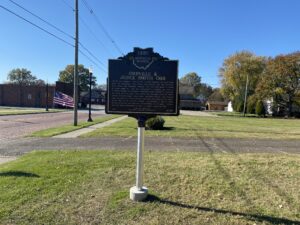
Orrville was founded in 1852 at the railroad crossing that would later serve the Pittsburgh, Fort Wayne and Chicago and the Columbus, Mount Vernon and Cleveland railroads. The town was named in honor of Judge Smith Orr, who was instrumental in bringing the railroad to Wayne County. Orr persuaded landowner Robert Taggart to partition ten acres into town lots. After buying out the land owned by fellow settlers Christian Horst, David Rudy, and Peter Perrine, Orr engaged Jesse Straughan to create the first plat map that centered the newly-formed town on the railroad crossing. Incorporated on May 9, 1864, Orrville prospered and attracted manufactories of all kinds. Orrville was the largest manufacturing town in Wayne County by 1873.
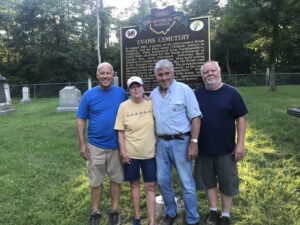
In August 1818, a group of six interrelated Welsh families, led by John Jones (Tirbach) landed in Gallipolis. They journeyed from Cardiganshire, South Wales destined for the Welsh settlement at Paddy’s Run, near Cincinnati. Following their decision to remain here instead, they built cabins in the Symmes Creek Valley on the old Welsh road between Centerville and Oak Hill. The group became the nucleus for later Welsh settlement, as the area became known as “Little Cardiganshire.” Evans Cemetery is on land set aside by John Jones, later owned by grandson Timothy Evans. Approximately 50 souls lie here, several in unmarked graves.
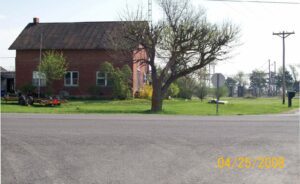
Built in 1886 by direct descendants of slaves, the Black and White schoolhouse provided education for local youth until 1928. Denied admission to white schools in the area, local African-American families first built a log schoolhouse across the road in 1883 in which to educated their children. Three years later, this brick building was constructed. The black families allowed white children to attend and, as a result, the school became known as the Black and White school. It is an early integrated school in Ohio.
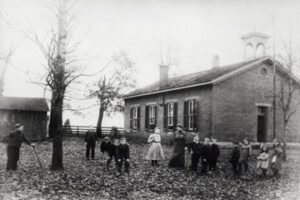
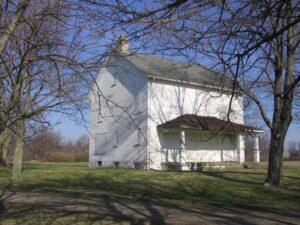
In 1854, Samuel and Rebecca McClellan Collins deeded 1.28 acres to Beavercreek Township, Greene County, for the purpose of building a schoolhouse. The first two schoolhouses were constructed of stone with fireplaces for heat. Collins neighborhood children in first through eighth grade were educated in the present red brick building until 1944, when decreased enrollment forced Xenia Township to close the school. Virgil and Helen Bryson Brantley, great-granddaughter of Samuel and Rebecca Collins, purchased the school property in 1982 and began the restoration of the vandalized and deteriorated schoolhouse. The pony/coal shed and privies were rebuilt on their foundations. (Continued on other side)
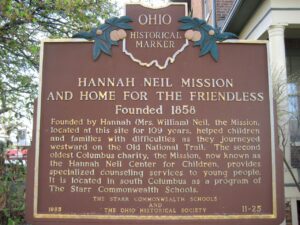
Founded by Hannah (Mrs. William) Neil, the Mission, located at this site for 109 years, helped children and families with difficulties as they journeyed westward on the Old National Trail. The second oldest Columbus charity, the Mission, now known as the Hannah Neil Center for Children, provides specialized counseling services to young people. It is located in south Columbus as a program of The Starr Commonwealth Schools.
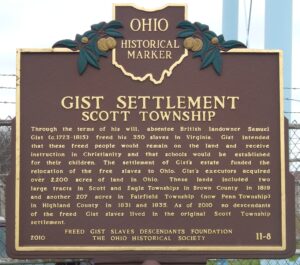
Through the terms of his will, absentee British landowner Samuel Gist (c. 1723-1815) freed his 350 slaves in Virginia. Gist intended that these freed people would remain on the land and receive instruction in Christianity and that schools would be established for their children. The settlement of Gist’s estate funded the relocation of the freed slaves to Ohio. Gist’s executors acquired over 2,200 acres of land in Ohio. These lands included two large tracts in Scott and Eagle Townships in Brown County in 1819 and another 207 acres in Fairfield Township (now Penn Township) in Highland County in 1831 and 1835. As of 2010, no descendants of the freed Gist slaves lived in the original Scott Township settlement.
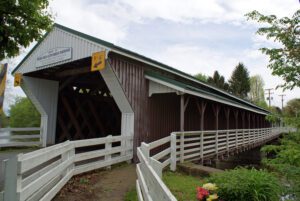
The Newton Falls covered bridge was built over the east branch of the Mahoning River around 1831. A crosswalk was added in 1921 for children crossing the bridge on their way to the school on Center Street. The Newton Falls bridge is considered the second oldest existing covered bridge in Ohio, the oldest covered bridge in use on its original site, the only covered bridge in the state with a covered crosswalk, and the last surviving covered bridge in Trumbull County. Built on the Town Lattice truss plan, the bridge is 123 feet long and twenty-four feet wide. It has a clear span of 101 1/2 feet and a sixteen foot-wide roadway. Listed on the National Register of Historic Places in 1974, the structure is maintained by Trumbull County.
Edmund Munger was born in 1763 in Norfolk, Connecticut, and later moved to Vermont. In 1799, his wife Eunice Kellogg and five children traveled by wagon and flat-bottomed boat to claim land in Washington Township. A blacksmith by trade and a farmer, Munger was deeply interested in community affairs. In 1804, he was elected a Montgomery County Commissioner and four years later to Ohio’s Seventh General Assembly. From 1809 to 1826, he served as Clerk of Washington Township. His militia men elected him a Brigadier General in 1809 to take command of the Second Brigade, First Division of the Ohio Militia. During the War of 1812, Governor Return J. Meigs instructed Munger to defend the frontier within his command. His quick action protected settlers and kept vital supply routes open. General Munger died at his farm here in 1850 and is buried next to his wife in the Old Centerville Cemetery.