3201-3537 Burlington-Macedonia Road, Lawrence County Road 120
South Point
, OH
Macedonia Cemetery (circa 1840) belongs to Macedonia Church, Ohio’s first Black Church. Those buried include settlers of the Macedonia Free Black Settlement, built by free people who assisted freedom seekers along the Underground Railroad. Also interred are soldiers of the Civil War’s United States Colored Troops (USCT), most of whom served in the 5th Regiment, Ohio’s first Black Regiment (1863). The Polley family also rest here. Emancipated slaves, the family continued their freedom struggle when their children were kidnapped from Ohio and unlawfully sold into slavery. Macedonia’s extant burial grounds include this sacred site and another 1/2 mile north.
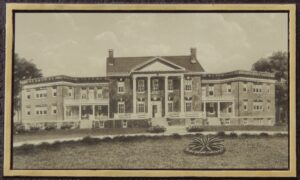
The Hillcrest Children’s Home stood near this site in Wheelersburg and opened in 1921 to the first 57 of many children who would come to live there. A 50-room building intended for 100 children, Hillcrest often housed double to triple that number. The extended community supported Hillcrest, providing entertainment, sponsoring activities, and donating presents for the children whose times there left indelible memories. The home closed in 1970 and was razed the following year.
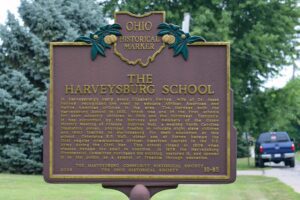
The Quaker village of Harveysburg was founded in 1829 on land originally a part of Colonel Abraham Buford’s Revolutionary War Land Grant. Levi Lukens, a Virginia Quaker, purchased the 1000 – acre survey in 1812 and sold a portion to Rhoden Ham in 1815. Ham then sold a portion of his holdings to William Harvey, a Quaker originally from North Carolina, who developed 47 lots for a village which thrived from its beginnings. Early businesses included grist mills, a tin shop, hardware store, blacksmith shop, a large pork packing plant, a bank, and a dry goods store owned by William Harvey. Its first post office opened in 1839. Harveysburg was incorporated in 1844. The village received its name from a merchant in Cincinnati who told William Harvey that he should add burg to his name and call the place Harveysburg.
From 1942 until 1946, members of local churches and two railroad auxiliaries operated a community-based free canteen for passing troops on the platform of the Pennsylvania Railroad station. A grateful region honored approximately 1.2 million of the nation’s sons and daughters with welcoming words, sandwiches, pies, cakes, cookies, fruits, drinks, and other sundries. Staffed and funded entirely by volunteers, donations came from many communities in eight counties. Crestline’s children donated their pennies to pay for construction of a larger canteen in 1943. Volunteers met as many as 25 trains daily. They served troops on passenger trains, troop trains, and hospital trains and new recruits and returning veterans as well as troops from allied countries on their trips to and from Europe or the Pacific. Throughout World War II, many other canteens were created across the nation, including many in Ohio. The Crestline region’s reputation was enhanced immeasurably by the volunteer’s service.
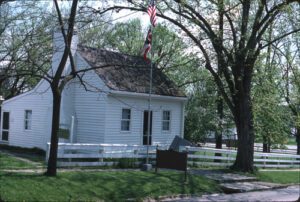
Hiram Ulysses Grant was born in this one-story, timber-frame home on April 27, 1822 to Jesse and Hannah Simpson Grant. The Grants settled in Point Pleasant the previous year, and Jesse took charge of the tannery located near the cottage. Now restored, the building remained in relatively good condition through the 1880s. In 1823, the family moved to Georgetown, Ohio, where Hiram lived until his appointment to West Point at age 17. Although reluctant to attend the Academy, Grant, now known as Ulysses Simpson Grant due to an error on the application, graduated in 1843 and was stationed at Jefferson Barracks near St. Louis, where he courted his future wife Julia Dent, with whom he had four children, Frederick, Ellen, Ulysses Jr., and Jesse. (continued on other side)
20190 Middleburg-Plain City Rd (SE part of Milford Ctr)
Milford Center
, OH
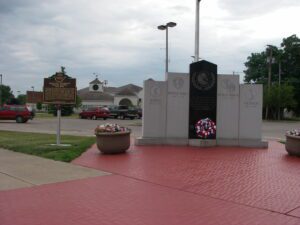
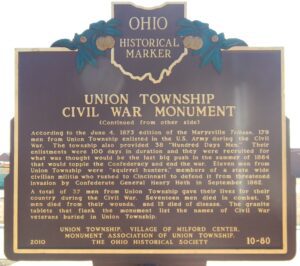
The following notice appeared in the Marysville Tribune newspaper, February 5, 1873: To Arms! To Arms! The Monument Association of Union Township propose holding a Fair and Festival in Milford Centre on Feb 20 and 21…the proceeds to be applied to the fund already raised to erect a Monument in memory of the fallen heroes of Union Tp. Said Monument to be unveiled on the 30th of May, 1873. It is desired that every citizen have an opportunity to contribute something in aid of such a worthy object. It is therefore hoped that every person, male and female, will send in their donations of such articles as they may have to lay upon the alter of our departed Heroes. Bring Wheat, Corn, fancy work, mitts, Hoods, articles for children, anything, to the value of a horse…. On May 30, 2003—130 years later—the Monument Association of Union Township rededicated the refurbished monument.
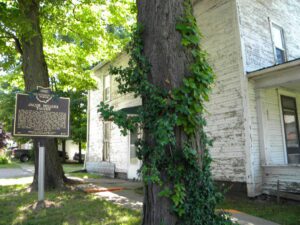
In 1805, for $1.50 an acre, Jacob Miller purchased this property in the Congressional Land Office in Chillicothe, capital of the new state of Ohio. He and Somerset co-founder John Finck then each built a tavern on either side of town along the Zane’s Trace, laid out along existing Indian trails in 1796-1797 and Ohio’s first major thoroughfare. Finck built his home and tavern in 1807 and Miller his shortly after. From 1800 to 1815, Zane’s Trace saw significant traffic between the established eastern states and the newly opened Northwest Territory. A perpetual stream of emigrants rolled westward, giving constant occupation to hundreds of tavern-keepers. Besides operating his tavern and farming, Jacob Miller was a public servant. In 1809, he was appointed Overseer of the Poor as there was a need to “bind out” poor children to families who could take care of them. [continued on other side]
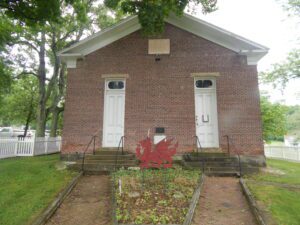
In 1972 a group of Welsh-Americans chartered the Welsh-American Heritage Museum to preserve Welsh history and culture, and to preserve the Welsh Congregational Church. The old brick church was where songs of praises rang, as the Welsh gathered and sang beloved hymns of their homeland in four-part harmony. The church is a link in a long, unbroken chain of memories and still serves the community as a center of Welsh-American activities and a keeper of the community’s heritage. The red dragon and daffodil are symbols of Wales.