

, OH
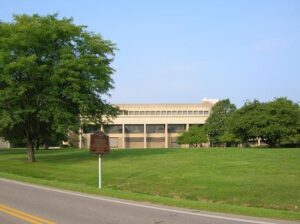
Wilberforce University, founded at Tawawa Springs in 1856 by the Methodist Episcopal Church, is the first private historically black college or university in America. The inspirations for Wilberforce were an unwavering faith in God, an acknowledgement of the contribution of the British abolitionist and Member of Parliament William Wilberforce, the leadership of AME Bishop Daniel Payne, and the belief in the potential of all women and men to learn and prosper. Wilberforce embraces the love of learning and the use of education as a tool of personal and community empowerment. Wilberforce seeks to cultivate and meet the historic hunger for freedom and liberty of all people. Today, Wilberforce is affiliated with the African Methodist Episcopal Church and educates diverse students from across the nation and around the world. Wilberforce continues to serve as a beacon for learning and research.
, OH
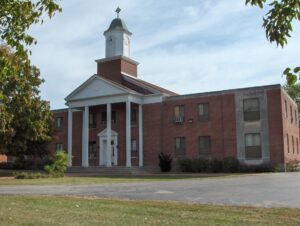
Payne Theological Seminary was originally established as Union Seminary in West Jefferson, Ohio, by the Ohio Conference of the African Methodist Church (AME) on October 18, 1844. The Cincinnati Conference of the Methodist Episcopal Church North met to establish a school for people of African descent, and in 1856, purchased Tawawa Springs, a defunct health resort, to open Wilberforce University, named for the early nineteenth century British abolitionist, William Wilberforce. In 1862 the institution closed due to low enrollment and dwindling funds. AME Bishop Daniel Alexander Payne purchased the school for $10,000, and the school was reopened in 1863 by closing the Union Seminary and merging the assets. In 1895, the department of theology separated from Wilberforce University and became Payne Theological Seminary, named in honor of Bishop Payne. Payne is the oldest, free standing African American Seminary in the United States.
, OH
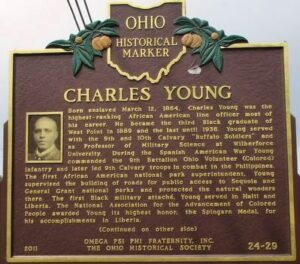
Born enslaved March 12, 1864, Charles Young was the highest-ranking African American line officer most of his career. He became the third Black graduate of West Point in 1889 and the last until 1936. Young served with the 9th and 10th Calvary “Buffalo Soldiers” and as Professor of Military Science at Wilberforce University. During the Spanish American War Young commanded the 9th Battalion Ohio Volunteer (Colored) Infantry and later led 9th Calvary troops in combat in the Philippines. The first African American national park superintendent, Young supervised the building of roads for public access to Sequoia and General Grant national parks and protected the natural wonders there. The first Black military attache, Young served in Haiti and Liberia. The National Association for the Advancement of Colored People awarded Young its highest honor, the Spingarn Medal, for his accomplishments in Liberia. (continued on other side)
, OH
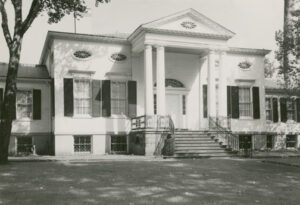
This Federal house was begun about 1820 for Martin Baum (1765-1831), one of Cincinnati’s early merchants. Art patron and abolitionist Nicholas Longworth (1782-1863) lived here for more than thirty years and commissioned the notable landscape murals in the foyer painted by African-American artist Robert S. Duncanson (1821-1872). Iron magnate David Sinton (1808-1900), the subsequent owner, bequeathed the house to his daughter Anna Sinton Taft (1852?-1931). She and her husband Charles Phelps Taft (1843-1929), older half-brother of William Howard Taft (1857-1930), who accepted his party’s nomination for president from the portico in 1908, assembled the acclaimed art collection displayed here. Bequeathed to the people of Cincinnati in 1927, the Taft Museum of Art opened to the public in 1932. It was designated a National Historic Landmark in 1973.
, OH
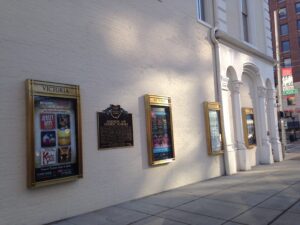
Dayton natives Hermene (1902-1986) and Josephine Schwarz (1908-2004) were pioneers of dance who founded one of the first regional ballet companies in the country. In 1927, they opened the Schwarz School of Dance, which eventually became the Dayton Ballet in 1978. Josephine’s choreography blended classical ballet traditions and contemporary dance, creating a fusion of styles that through her students and other companies shaped the development of dance in the United States. The sisters are credited with introducing organized dance to African-American and underserved children in the Dayton area. As part of the sisters’ legacy, Josephine created a fund at the Dayton Foundation in memory of Hermene to support Dayton arts and artists.

, OH
In 1942, Charity Adams Earley (1918-2002) became the first African American woman to receive a commission in what became the Women’s Army Corps (WACs). She rose through the ranks to command the 6888th Central Postal Directory Battalion in Europe, the only unit of African American women to serve overseas in World War II. Upon leaving the service in 1946, she was the WAC’s highest-ranking African American officer, a lieutenant colonel. Raised in Columbia, South Carolina, Earley moved to Ohio to attend Wilberforce University and later The Ohio State University. She married Stanley Earley, Jr., M.D. in 1949 and they later moved to Dayton. She became active in civic affairs, including serving on the Sinclair Community College Board of Trustees.
, OH
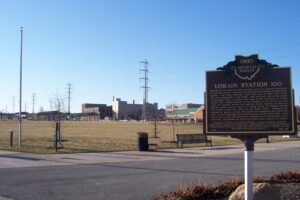
Prior to the Civil War, Ohio was a leading state for enslaved Americans of African decent traveling the Underground Railroad to freedom in Canada. For these fugitives, their final stop in Ohio was a Lake Erie port community in the north. One such port was at the mouth of the Black River in Lorain that came to be identified as Lorain Station 100, named because it was thought to be one of the last stops or stations before the fugitive slaves reached freedom in Canada. Many arrived here in a wagon driven by Robbins Burrell who owned a farm five miles up the Black River. Concealed by vegetables, grains, or hay, the slaves were smuggled into schooners, some of which belonged to Burrell’s cousin Captain Aaron Root. From Lorain Station 100, the determined travelers were transported across Lake Erie, completing the final leg of their long journey to freedom.
, OH
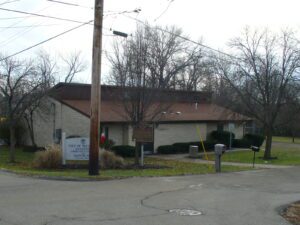
Civic organizations played pivotal roles in the development of the residential community of Hazelwood, founded as a subdivision of Blue Ash in 1888. The Hazelwood Civic Association, initially established as the Brothers Civic Society in 1941, addressed community needs by working for public improvements and promoting civic relations through social events and educational programs. Efforts by the HCA led to the construction of a new civic center and the introduction of the Boy and Girl Scouts and other programs that were previously unavailable to African-American children. Hazelwood’s deterioration and the threat of encroaching industrial development led to the formation of the Hazelwood Improvement Corporation in 1968. The HIC, acting as an agent of the city of Blue Ash, helped to upgrade housing, pave roads, build new homes to ensure a residential nature, install water and sewage systems, and erect streetlights. In 1997, the Hazelwood Community Association was organized to assist residents during Hazelwood’s transition to a racially integrated community.