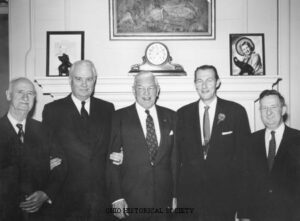
Ohio’s fifty-ninth governor, Marietta native C. William O’Neill was the only Ohioan to head all three branches of state government. An honor graduate of both Marietta High School and Marietta College, O’Neill won election to the Ohio House of Representatives in 1938, serving there until 1950 but interrupted from 1943-1946 when he was with General George Patton’s Third Army in Europe during World War II. In 1947 he became the youngest Speaker of the House in Ohio history. Elected Attorney General in 1950, he won the governorship in 1956, modernizing the highway and mental health departments during his tenure. His election to the State Supreme Court in 1960 and elevation to Chief Justice in 1970, noted by landmark judicial reforms, capped his exemplary career of public service to Ohio.
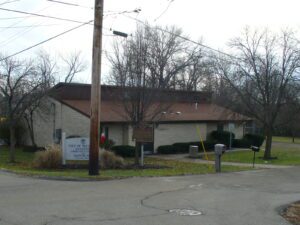
Civic organizations played pivotal roles in the development of the residential community of Hazelwood, founded as a subdivision of Blue Ash in 1888. The Hazelwood Civic Association, initially established as the Brothers Civic Society in 1941, addressed community needs by working for public improvements and promoting civic relations through social events and educational programs. Efforts by the HCA led to the construction of a new civic center and the introduction of the Boy and Girl Scouts and other programs that were previously unavailable to African-American children. Hazelwood’s deterioration and the threat of encroaching industrial development led to the formation of the Hazelwood Improvement Corporation in 1968. The HIC, acting as an agent of the city of Blue Ash, helped to upgrade housing, pave roads, build new homes to ensure a residential nature, install water and sewage systems, and erect streetlights. In 1997, the Hazelwood Community Association was organized to assist residents during Hazelwood’s transition to a racially integrated community.
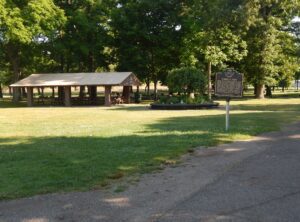
Nimisilla Park was established in 1894. Prior to its founding, the site was the location of the county fair from 1859 to 1893. Throughout its history, Nimisilla Park hosted horse races, live music, soldier reunions, and a zoo, among other events. Prominent political figures, such as Rutherford B. Hayes, James A. Garfield, William McKinley, and Eugene V. Debs, made speeches at the park. In 1918, Debs delivered a famous anti-war speech for which he was arrested and jailed. As of 2016, the park continues to serve as a gathering place for the community.
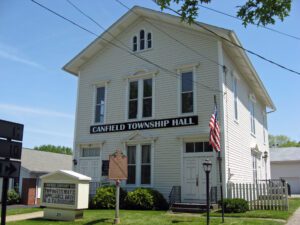
The Canfield Township Hall was erected in 1884. It served as the first public building in which the Canfield citizens could conduct town business, elections, and public meetings. An example of Renaissance Revival or “Italianate” architecture, the building is typical of late Victorian commercial buildings, but constructed of wood rather than of the customary brick. Drafted by Colonel S. Kinney, it was originally constructed for the sum of $2,389 by G.W. Strock at the corner of South Broad and East Main streets, on a lot purchased for $500. In 1936, R.J. Neff moved the hall several hundred feet south to its present location. In addition to official township meetings, the second floor has been used for a variety of activities, including social meetings, lectures, contests, dances, and roller-skating. The building served as an early home of the Canfield Historical Society and operated continuously for over one hundred and twenty-five years.
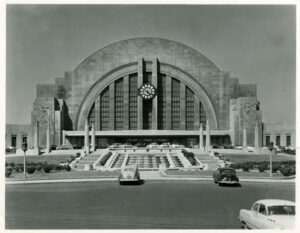
Cincinnati Museum Center at Union Terminal, 1301 Western Avenue
Cincinnati
, OH
The Cincinnati Union Terminal opened in March 1933 and integrated rail travel in the city, which previously operated from five separate passenger terminals. Built when rail travel was already in decline, Union Terminal stopped operating as a passenger railroad station in 1972. Only during WWII was the terminal used to capacity with as many as 34,000 people travelling through the building daily in 1944. As part of preservation efforts, 14 mosaics depicting Cincinnati industry of the 1930s by Winold Reiss were saved from the concourse and moved to the Greater Cincinnati Airport. The restored Union Terminal became a Museum Center in November 1990 with the opening of the renovated Cincinnati Museum of Natural History and new Cincinnati History Museum. Cincinnati Union Terminal has been described as one of the most outstanding examples of Art Deco train stations in the nation and was listed on National Register of Historic Places in 1972.
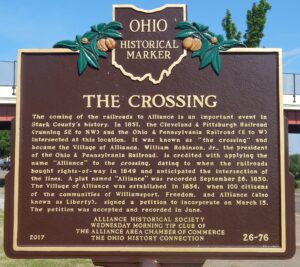
The coming of the railroads to Alliance is an important event in Stark County’s history. In 1851, the Cleveland & Pittsburgh Railroad (running SE to NW) and the Ohio & Pennsylvania Railroad (E to W) intersected at this location. It was known as “the crossing” and became the Village of Alliance. William Robinson, Jr., the president of the Ohio & Pennsylvania Railroad, is credited with applying the name “Alliance” to the crossing, dating to when the railroads bought rights-of-way in 1849 and anticipated the intersection of the lines. A plat named “Alliance” was recorded September 26, 1850. The Village of Alliance was established in 1854, when 100 citizens of the communities of Williamsport, Freedom, and Alliance (also known as Liberty), signed a petition to incorporate on March 15. The petition was accepted and recorded in June.
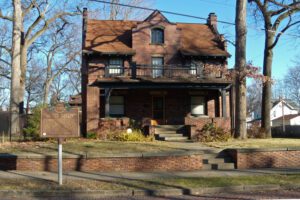
Akron, an industrial boomtown in the early twentieth century, grew in population nearly fivefold between 1900 and 1920. As the city industrialized, middle class residents sought homes on West Hill, away from the smoke and soot of heavy industry on the East Side. The Hall Park Allotment Historic District in West Hill represents a notable early twentieth century neighborhood. Developed by Philander Hall between 1902 and 1919 during the height of Akron’s “rubber boom,” it consists of several houses representing the picturesque styles of the period, including the American Foursquare, Craftsman, Colonial, and Medieval Revival Styles. With its gently curving brick streets, hilly topography, and mature trees, the Hall Park Allotment Historic District evokes the feeling of a distinct period of time in Akron’s history and constitutes a neighborhood of distinctive historical character and architectural merit.
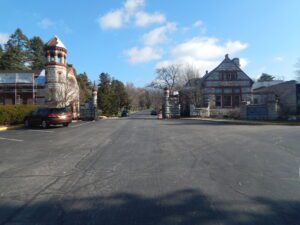
Woodland Cemetery and Arboretum, 118 Woodland Avenue
Dayton
, OH
Founded in 1841, Woodland is one of the nation’s oldest rural garden cemeteries, the style of which was a dramatic departure from traditional church burial grounds at the time. Woodland’s oldest portion, including Victorian Era burial sections, a Romanesque gateway, and a Tiffany chapel, forms a district listed on the National Register of Historic Places. The Arboretum, with over 3,000 trees on more than 200 acres, completes this outdoor museum of Dayton history. Among those buried here are cemetery founder John Van Cleve, the Wright Brothers, inventors John Patterson and Charles Kettering, poet Paul Laurence Dunbar, Col. Edward Deeds, Governor James M. Cox, and humorist Erma Bombeck.