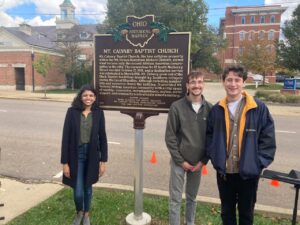
Mt. Calvary Baptist Church, the lone religious property within the Mt. Vernon Downtown Historic District, served what became only the second African American congregation in the city. The cornerstone for 13 South Mulberry Street was laid October 17, 1915, and a dedication service was celebrated in March 1916. Mt. Calvary grew out of the Black Baptist traditions brought by Southern refugees during the Great Migration. Although dwindling membership and resources closed the building, it provided Mt. Vernon’s African American community with a vital space of worship, communion, mutual assistance, asylum, social support, and community celebration for almost a century.
Oscar D. Boggess (1832-1907) was born in Virginia, the son of a slave and her master. He and his family were granted freedom in the will of his father and master. The will was contested up to the United States Supreme Court, which upheld Boggess’ freedom. Boggess moved to Pennsylvania at age 20, and during the Civil War, joined the 43rd United States Colored Troops. He earned the Butler Medal of Honor for bravery at the Battle of the Crater near Petersburg, Virginia, in July 1864. Boggess moved to Youngstown after the war, and worked as a stonemason. He was a charter member of Tod Post 29, Grand Army of the Republic, in Youngstown, and a co-founder of the Oak Hill Avenue African Methodist Episcopal Church, the city’s first African American religious congregation. The Boggess home, formerly located near this site, hosted the church’s first meetings in 1870.
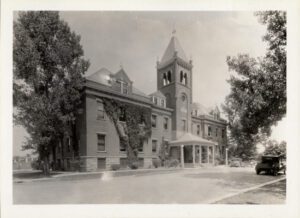
Central State University originated on March 19, 1887, when the Ohio General Assembly passed an act establishing a Combined Normal and Industrial (CN&I) Department at Wilberforce University. Through various transitional changes, it emerged as an independent, state university. In 1941, the General Assembly expanded the CN&I, which offered two-year courses, into the College of Education and Industrial Arts, with four-year programs. In 1947, it separated from Wilberforce University. The history of Central State University tells the history of higher education and advancement for African Americans in Ohio. It is within the walls of these structures, and others unfortunately demolished or destroyed by the 1974 tornado, that thousands of African Americans received valuable training for successful and rewarding careers. Thus, many of the contributions of African Americans to the promotion and betterment of education, medicine, law, social justice, technology, and the arts in Ohio have their roots here on the campus of Central State University.
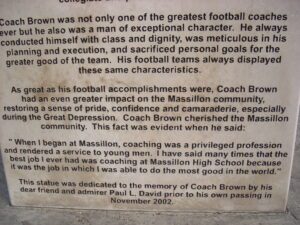
Paul E. Brown, born September 7, 1908 in Norwalk, Ohio, and raised in Massillon, is a member of the Professional Football Hall of Fame and was one of the greatest coaches in the history of football at all levels. From 1932 until 1940, he led Massillon High School to a record of 80-8-2. He coached Ohio State to the 1942 national collegiate championship, and joined the professional football ranks in 1946 as coach of the new franchise in Cleveland. He coached his namesake Cleveland Browns to seven league championships in 17 seasons.
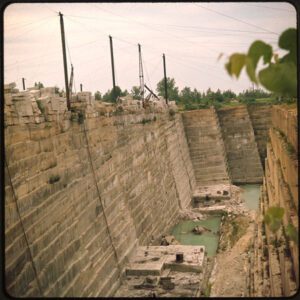
For more than ninety years, this area was the heart and soul of Berea’s sandstone quarries. In the early 1830s, John Baldwin discovered that the area’s sandstone deposits made superb grindstones and building stones. In the 1840s, thriving sandstone quarries developed and became Berea’s lifeblood. Searching for the “American Dream,” German, Irish, Italian, Hungarian, and Polish immigrants, among others, came here to work. The quarries eventually encompassed nearly 250 acres and consumed the fashionable houses of Berea’s “South Side” and the buildings of Baldwin University. The Cuyahoga County Court House, Ohio’s Capitol, and Canada’s parliament buildings are among many structures in North America and Europe constructed of Berea sandstone. Decreasing demand for sandstone and the Great Depression closed the last of Berea’s quarries in the mid-1930s.
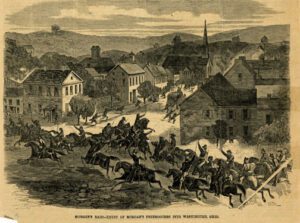
During the American Civil War 1860-1865, a Confederate cavalry, led by Brigadier General John Hunt Morgan, infiltrated the states of Kentucky, southern Indiana, and southeastern Ohio as a diversionary tactic to draw northern troops from eastern Tennessee. The 2,500 calvarymen passed through Gallia County, Ohio, and reached the village of Vinton on July 17, 1863. The Rebels plundered the town searching for horses, food, and forage. Near this marker, they crossed the covered bridge over Big Raccoon Creek and then burned the 120-foot structure behind them. Area residents were left unharmed and no lives were lost.
Henry Kelsey Devereux was born into an aristocratic family on October 10, 1859 in Cleveland, Ohio. Ohio artist, Archibald Willard, chose Harry, as he was fondly known, to portray the drummer boy in one of America’s most famous patriotic paintings, “The Spirit of ’76”. At the time Willard approached him to pose, young Harry was a cadet at Brooks Military Academy. He married socialite Mildred French in 1885 and in 1910 they settled in her father’s pretentious country estate in Wickliffe, Ohio (presently Telshe Yeshiva College). His passion for harness racing and for breeding horses culminated in the organization of the American Association of Trotting Horse Breeders and his position as president of the Grand Circuit. The affluent and charitable Wickliffe resident died in 1932 at the age of 72.
One of the first industries in Marietta was shipbuilding. Due to the abundance of trees and the shipbuilding talent of the New England settlers, twenty-nine ocean going vessels were built in eight shipyards from 1800 to 1812. In 1845 shipbuilding resumed and seven more vessels were constructed. The last ship left dry dock in 1847. The first vessel built was the 110-ton brig St.Clair, captained by Commodore Abraham Whipple. Whipple was a noted Revolutionary War naval officer who escaped the British blockade in 1778 to carry important dispatches to France. He later captured ten vessels worth one million dollars from a British convoy and, in 1784, was the first to fly the American flag on the River Thames in England.