

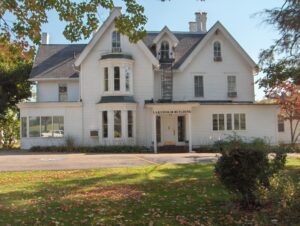
, OH
Lakeholm was built as the home of Columbus Delano while serving as Secretary of the Interior under President Ulysses S. Grant from 1870 to 1875. Delano (1809-1896) came to Mount Vernon in 1817, attended public schools, studied law, and was admitted to the bar in 1831. In addition to practicing law in Mount Vernon and serving as the Prosecuting Attorney of Knox County, Delano was a farmer, mill owner, and politician. Lakeholm, originally part of a 300-acre farm, contains many of its original rooms and Italianate features. In 1966, 209 acres of the farm were acquired for the establishment of the Mount Vernon Nazarene College. The house served as offices, meeting rooms, and classrooms. In 2002, the college became a university and continues to use Lakeholm for administrative offices. Historic Lakeholm is a focal point on the Mount Vernon Nazarene University campus and a symbol of the institution’s ties with the Mount Vernon community.
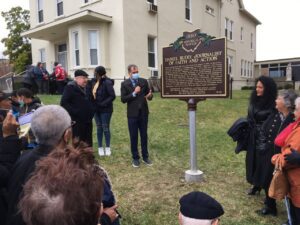
, OH
Daniel Arthur Rudd was born into slavery on August 7, 1854, in Bardstown, Kentucky. He became a newspaperman, lecturer, publicist, and tireless advocate for the Roman Catholic Church. After the Civil War Rudd moved to Springfield. Baptized and raised in Catholicism, he joined St. Raphael Parish, where the philosophy of racial equality offered by the church solidified his vision of justice. By 1885 he had established his own weekly newspaper, The Ohio State Tribune. He rebranded it The American Catholic Tribune (ACT) after moving to Cincinnati. Rudd claimed ACT was the only Catholic newspaper owned by an African American. At the height of its popularity in 1892, the publication had a circulation of 10,000. In 1893 Rudd was asked to chair the Afro-American Press Association, representing more than 200 black-owned newspapers.
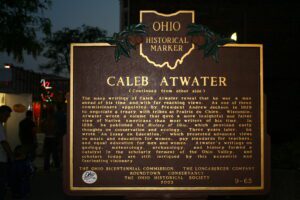
, OH
Born in North Adams, Massachusetts on December 23, 1778, Caleb Atwater graduated from Williams College in 1804. He moved to Circleville in about 1814 where he organized the city’s first school board and served as postmaster and prosecuting attorney. His life and work as a teacher, minister, lawyer, legislator, and scholar greatly influenced early 19th-century Ohio. Upon arriving in Circleville, he became interested in local history and the nearby earthworks and in 1820 published his book Descriptions of the Antiquities Discovered in the State of Ohio and Other Western States, the first compilation of prehistoric remains in the Ohio and Mississippi valleys. Elected to the Ohio State Legislature in 1821, Atwater fervently supported canal construction. He also chaired Ohio’s first board of school commissioners and was instrumental in passage of Ohio’s Public School Law. For this, he has been called the “Father of Ohio’s Common Schools.” (continued on other side)
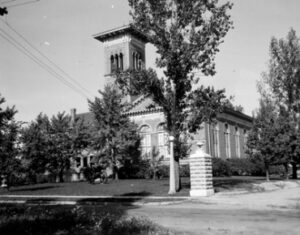
, OH
At the turn of the twentieth century, increased enrollment in the Combined Normal and Industrial Department at Wilberforce University (which later became Central State University) spurred construction of new teaching and dormitory facilities. Galloway Hall, which included an auditorium and a tower with chimes and a clock, was completed in 1906. Many famous personalities performed in Galloway Hall’s auditorium, including the renown opera singer Leontyne Price; Robert McFerrin, the first African American male lead with the New York Metropolitan Opera; actors Ruby Dee and Ossie Davis; comedian and civil rights activist Dick Gregory; and composer and conductor Duke Ellington. Noted authors and intellectuals addressed audiences there, including historian John Hope Franklin; writer, poet, actor, and playwright Maya Angelou; Lerone Bennett, author, historian, and editor of EBONY Magazine; and writer and essayist James Baldwin. (continued on other side)
, OH
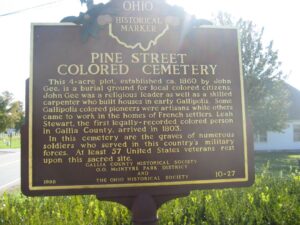
This 4-acre plot, established ca. 1860 by John Gee, is a burial ground for local colored citizens. John Gee was a religious leader as well as a skilled carpenter who built houses in early Gallipolis. Some Gallipolis colored pioneers were artisans while others came to work in the homes of French settlers. Leah Stewart, the first legally-recorded colored person in Gallia County, arrived in 1803. In this cemetery are the graves of numerous soldiers who served in this country’s military forces. At least 57 United States veterans rest upon this sacred site.
, OH
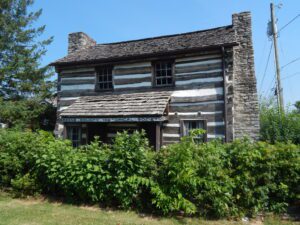
James Sr. and Rebecca (Junkin) Galloway moved with their family to Greene County from Kentucky in 1798, constructing their first home, a small log cabin. Galloway built the present structure around 1799 near the bend in the Little Miami River near what is now Goes Station on U.S. 68. In 1936, the Greene County Historical Society moved the home to the corner of Second and Monroe streets and then to the present site in 1965. The 1974 Xenia Tornado caused serious damage to the building, which has been restored and maintained by the historical society. James Sr. served as a hunter during the American Revolution, procuring game for the army, and while in Ohio, was the first treasurer of Greene County. His son James Jr. served as the first County Surveyor.
, OH
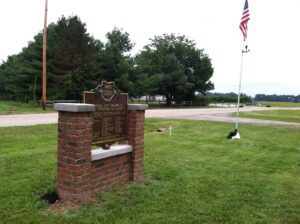
Through the terms of his will, British absentee landowner Samuel Gist (c. 1723-1815) freed his 350 Virginia slaves and provided funds for their relocation, the purchase of land, and the establishment of schools and homes. The executors of Gist’s will acquired over 2,000 acres of land in Ohio, including two large tracts in Scott and Eagle townships in Brown County in 1819. In 1831 and 1835, an agent of the Gist estate purchased 207 acres in Highland County and divided the acreage into thirty-one lots. This Gist settlement in Eagle Township was the first to be purchased and settled. It was recorded at Brown County on August 4, 1819 as 1197 acres of land divided among “150 Negroes who were emancipated by the will of Samuel Gist”. In 2009, descendants of the freed Gist slaves still inhabited part of the original settlement.
, OH
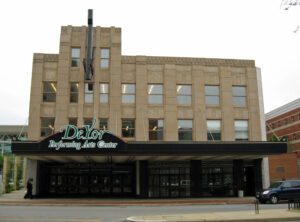
The Warner Brothers – Harry, Albert, Sam, and Jack – were members of a Jewish immigrant family from Poland that settled in Youngstown in the mid-1890s. The brothers attended local schools and worked in their father’s shoe repair shop and meat market before entering the motion picture business. They purchased a projector and opened the first of several theaters in the Mahoning Valley in 1905. The brothers left Youngstown for New York and Hollywood as their company developed into an industry leader. Warner Brothers Pictures, founded in 1923, released Don Juan in 1926, the first “talking picture” using Vitaphone technology. On May 14, 1931, the family gathered in Youngstown to dedicate a luxurious new Warner Theater to the people of the city where it all started, and to memorialize Sam, who died in 1927.