

, OH
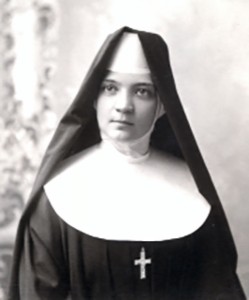
In 1916, Bishop of Toledo Joseph Schrembs requested that the Sisters of Saint Francis, Rochester, Minnesota, send nuns to work with Polish immigrant children that were flooding into greater Toledo. Mother Mary Adelaide Sandusky (1874-1964) brought 22 sisters who quickly established a new order, their Toledo motherhouse, and began teaching in parish schools. Under her steady guidance, the Sisters of St. Francis of the Congregation of Our Lady of Lourdes, Sylvania, Ohio, transformed 89-acres of farmland into a tranquil campus that included gardens, shrines, and an arboretum. Mother Adelaide designed buildings modeled on the California missions and filled them with European art as well as original ceramic murals made by the Sisters. The Sylvania Franciscans flourished and over 500 new members joined between 1916 and 1964. (Continued on other side)

, OH
Ella Nora Phillips Myers Stewart was one of the first practicing Black women pharmacists in the United States. After she married William Stewart in 1920, the couple settled in Youngstown, then moved to Toledo where they opened Stewart’s Pharmacy in 1922. Having broken professional barriers, Ella Stewart became a tireless civil rights champion. Advocating for Black women she was active in the Enterprise Charity Club and was a 1937 charter member of Beta Lambda and Toledo Alumnae chapters of Delta Sigma Theta Sorority. She served on the National Association of Colored Women Clubs, the Women’s Advisory Committee of U.S. Department of Labor, and Pan-Pacific Southeast Asia Women’s Association. Toledo’s Ella P. Stewart Academy for Girls was named in her honor in 1961. She was inducted into the Ohio Women’s Hall of Fame in 1978.
, OH
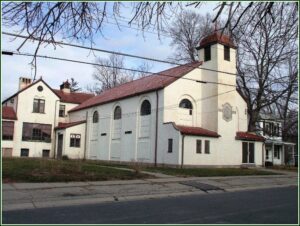
Eckstein Elementary School operated on this site from 1915 to 1958, serving Glendale’s Negro children from Kindergarten through eighth grade. The school was named in honor of Eleanor Eckstein, who taught the children at various locations in the village during the time of segregation in America. Upon completing eighth grade, Eckstein School’s students were integrated with their white counterparts in grades nine through twelve at Congress Avenue School. The Eckstein School building evolved from a single family dwelling into its present structure through a series of expansions, the last of which was the addition of the gymnasium in 1928. In the mid-1950s Glendale became a part of the Princeton School District. A new consolidated high school opened in 1958, the Congress Avenue School became Glendale Elementary, and Eckstein was closed. This commemorative text was composed by alumni of the Eckstein School.
, OH
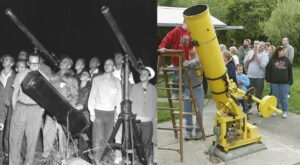
On October 4, 1957 the Soviet Union surprised the world with the launching of Sputnik 1, the world’s first artificial satellite. The Cincinnati Astronomical Society’s Moonwatch Team, organized in 1956 as part of its participation in the International Geophysical Year, was immediately activated by the Smithsonian Astrophysical Observatory (S.A.O.). First observations of satellites were made December 15, 1957. On these grounds, from 1957 to 1964, the Cincinnati Moonwatch Team, principally under the leadership of Tom Van Flandern (1940-2009), spent thousands of man-hours optically observing and recording data to verify the positions of satellites in space. Many times the team compiled the best satellite tracking records in the world. Because of this work The Moonwatch Team and the Cincinnati Astronomical Society were recognized by the S.A.O. as one of its leading teams worldwide.
, OH
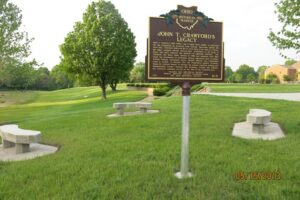
John T. Crawford (1813-1880), was a white Union soldier. In gratitude for the kindnesses he received from African-Americans during the Civil War, Crawford willed his 18 1/2-acre farm to be used as a “home, for aged, indigent worthy colored men, preference to be given to those who have suffered the miseries of American Slavery.” The Crawford Old Men’s Home opened in 1888 and operated until 1964 under the trusteeship of prominent African-Americans such as lawyer William Parham, newspaper editor Wendell Dabney, and Ambassador Jesse D. Locker. It merged with the Progressive Benefit Society’s Home for Colored Women to become the Lincoln Crawford Nursing and Rehabilitation Center. Pleasant Hill Academy, College Hill Library, and Crawford Commons are all on the site of the Crawford farm.
, OH
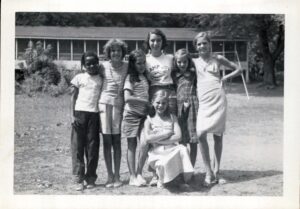
Camp Joy was born at the site of Seven Hills Neighborhood House and original location of St. Barnabas Episcopal Mission Church. Displacement and loss caused by Ohio River flood of 1937 inspired St. Barnabas’ rector and his wife, Laurence “Cap” and Sadie Hall, to act on behalf of the children of Cincinnati’s West End. The Halls conceived of Camp Joy as a haven where kids could find a respite from impoverished surroundings in the city and its sweltering summer heat. The camp was a success and continued after the Halls’ assignment to another parish. From 1940-1944, Rev J. Brooke and Mrs. Betty Mosley continued to nurture the people of the West End through St. Barnabas and Camp Joy. (Continued on other side)
, OH
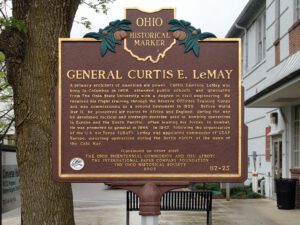
A primary architect of American air power, Curtis Emerson LeMay was born in Columbus in 1906, attended public schools, and graduated from The Ohio State University with a degree in civil engineering. He received his flight training through the Reserve Officers Training Corps and was commissioned as a second lieutenant in 1929. Before World War II, he pioneered air routes to Africa and England; during the war he developed tactical and strategic doctrine used in bombing operations in Europe and the South Pacific, often leading his forces in combat. He was promoted to general in 1944. In 1947, following the organization of the U.S.Air Force (USAF), LeMay was appointed commander of USAF Europe, directing operations during the Berlin Airlift at the dawn of the Cold War. (continued on other side)
, OH
The Sisters of Notre Dame de Namur were founded in 1804 by Saint Julie Billiart to spread the message “Ah, how good it is to serve God.” In 1840, at the request of Bishop John B. Purcell in 1840, the Sisters travelled to Cincinnati, Ohio to help educate the city’s growing Catholic population. Choosing to serve the poor, the Sisters turned down land in Brown County and instead founded schools at Sixth Street in Cincinnati. Since the start of the 21st century, the Sisters serve in twenty-seven other states, the District of Columbia, and in South America, Europe, Africa and Asia. Sister Dorothy Stang, while working for land reforms for the poor in Brazil, was martyred in 2004.