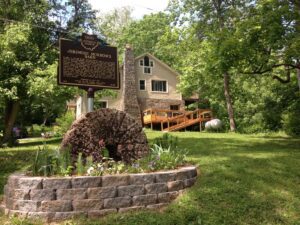
In 1795, at the age of 23, Jeremiah Morrow came to the Northwest Territory from Pennsylvania. He purchased land along the Little Miami River in Deerfield Township and in 1799 married Mary Parkhill of Pennsylvania. Around 1800 he built this barn which is one of Warren County’s oldest standing structures. In 1801, Morrow was sent to the Second Territorial Assembly and to the first Ohio Constitutional Convention in 1802. In 1803, he was elected the new state’s first U. S. Congressman and was Ohio’s only congressman for ten years. In 1813 the Ohio legislature elevated him to U.S. Senate. In 1822 he became Ohio’s ninth governor. He went on to serve in both the Ohio House and Senate and at age 69 returned to Congress. An extraordinary man, Jeremiah Morrow gave his country 43 years of public service.
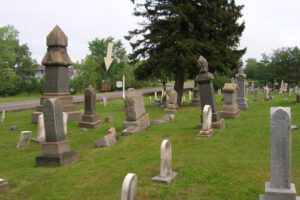
Settlers from Connecticut were the first to come to Canfield Township in the late 1700s, and they were followed by a second wave of immigrants, Swiss-German pioneers who began arriving from Berks and Leigh counties in Pennsylvania in 1804. In 1810, these “Pennsylvania Dutch” established The Zion Lutheran and Reformed Church and built a log church and cemetery on this site. The church was destroyed by fire in 1845 and a new church served the congregation well until it too was destroyed by fire in 1894. The cemetery, known as The Old Dutch and German Burying Ground, German Cemetery, and Lynn Cemetery and now Old North Cemetery, is all that remains. Among the dozens of old stone markers, some in German, are markers for veterans of the American Revolution, War of 1812, Civil War, and other wars.
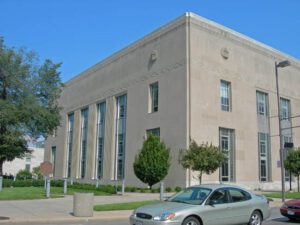
Toledo High School opened in 1854 on the site of the city’s first log schoolhouse. After an 1895 fire, it was rebuilt and named Central High School. The facility closed in 1914 with the opening of Scott and Waite high schools. It reopened as Woodward Technical School and later became Vocational High. The building was razed in 1938 for construction of the Toledo Public Library.
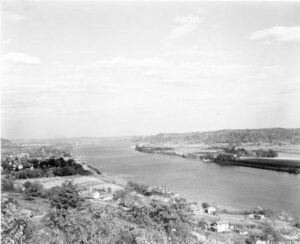
The Ohio River, the southeast border of Gallia County, played a significant role in the development of Gallipolis and Gallia County. One of the state’s first thoroughfares, this waterway enabled pioneers to settle in what was known as the Northwest Territory. On October 17, 1790, approximately 500 French immigrants arrived in Gallipolis, traveling by flatboats from Pittsburgh, and settled in log cabins in what is now City Park, in the heart of Gallipolis. This established the second oldest permanent settlement in the territory. The settlers relied on the River for communication, commerce, and transportation, and the River brought postal service to Gallipolis in 1794. As local business and river trade developed in the 1800s, Gallipolis became a thriving port. The scenic Ohio River is an important inland waterway, providing transportation for many commodities between major cities. The River also provides recreational opportunities for both visitors and residents, including water sports, fishing, and boating.
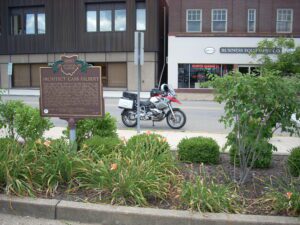
One of America’s leading architects of the early 20th century, Cass Gilbert (1859-1934), was born in a home that stood at this site. After studying at the Massachusetts Institute of Technology, Gilbert apprenticed with prominent architectural firm McKim, Mead, and White. The critical success of his first major public building, the design of the 1895 Minnesota State Capitol, established his national reputation. His influential 1912 Woolworth building, at 792 feet, was then the world’s tallest building, earning Gilbert’s nickname of “Father of the Modern Skyscraper.” Combining classical designs with modern technology, Gilbert also created the United State Supreme Court building (1932) in Washington, D.C., an enduring icon of American justice and democracy. His other achievements include the Arkansas and West Virginia capitols, the U.S. Custom House in New York, and several buildings at Oberlin College. Gilbert served as the president of the American Institute of Architects and the National Academy of Design.
Benjamin Overfield (1774-1831), son of a Revolutionary War soldier, opened his tavern in this log house on September 13, 1808. Never moved, it is the oldest surviving building in Troy. The tavern provided food, lodging and space for business and social gatherings. Overfield agreed to let the county use a room on the second floor of the building as a temporary courtroom. Behind the tavern, Benjamin built a small log cabin that was home to his family. He prospered here until 1825 when he moved to the Public Square. Today’s structure includes the tavern, the cabin, and later additions. Used as a dwelling from 1825 until 1948, the building now houses the Overfield Tavern Museum. Benjamin Overfield and his first wife Mary are buried in Rose Hill Cemetery.
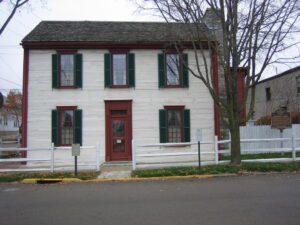
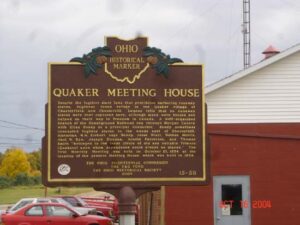
Despite the fugitive slave laws that prohibited harboring runaway slaves, fugitives found refuge in the Quaker village of Chesterfield, now Chesterhill. Legend tells that no runaway slaves were ever captured here, although many were hidden and helped on their way to freedom in Canada. A well-organized branch of the Underground Railroad ran through Morgan County with Elias Bundy as a principal conductor. Bundy sometimes concealed fugitive slaves in the woods east of Chester Hill. Historian W.H. Siebert says Bundy, Jesse Hiatt, Nathan Morris, Abel W. Bye, Joseph Doudna, Arnold Patterson, and Thomas Smith “belonged to the inner circle of old and reliable Friends [Quakers] upon whom dependence could always be placed.” The first Monthly Meeting was held on October 21, 1839 at the location of the present Meeting House, which was built in 1834.
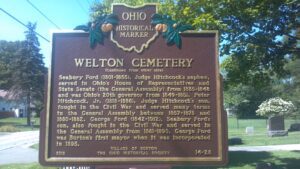
Welton Cemetery was known as Roselawn Cemetery until the early 1900s. Early settlers to the Burton area donated the land. Welton Cemetery is the burial place for veterans of the nation’s wars and for several state officials. Judge Peter Hitchcock (1781-1853) served in the War of 1812. From 1810-1852, he was elected to both houses of Ohio’s General Assembly and one term in the U.S. House of Representatives and served on the state’s Supreme Court. He was Chief Justice from 1831-1833 and 1849-1851. In 1850, he was a member of Ohio’s constitutional convention. (Continued on other side)