

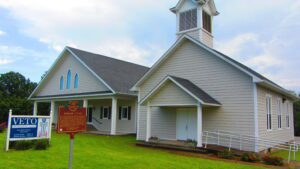
, OH
Ephraim Cutler (1767-1853) arrived in Marietta from Connecticut in 1795. Prominent in southeast Ohio, Cutler was appointed judge of the court of common pleas and justice of the peace, surveyed land for the Ohio Company, and was a trustee of Ohio University. In 1802, Cutler was chosen as a Washington County delegate to Ohio’s constitutional convention in Chillicothe. A contested issue at the convention was whether to permit or exclude slavery in the new state of Ohio. As a member of the committee that introduced Article VIII, or the bill of rights, of Ohio’s Constitution, Cutler drafted Section 2, which specifically excluded slavery or involuntary servitude in Ohio on the basis that the Ordinance of 1787 forbade it. The section passed through the convention by one vote. Veto Lake was named for Cutler’s role in having slavery vetoed in Ohio.
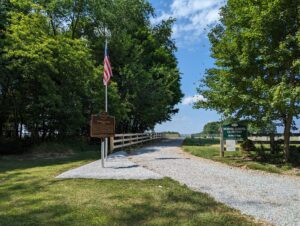
, OH
The Snowden Family Band was an acclaimed African-American stringband who performed in and around Knox County for nearly seventy years, from the 1850s into the 1920s. Buried in Morris Chapel Cemetery are Thomas Snowden (1803-1856), his wife Ellen Cooper Snowden (1817-1894), and their nine children: Oliver, Sophia, Mary, Ben, Lew, Phebe, Martha, Elsie, and Annie. Born into slavery in Maryland, Thomas and Ellen separately relocated to Knox County and to freedom during the 1820s. They married in 1834. In the 1850s, the six surviving children formed a band under Ellen’s direction. Talented musicians, the Snowden Family performed banjo and fiddle music for public events and at their homestead near Mount Vernon. Many believe that the song “Dixie,” attributed to minstrel Daniel Decatur Emmett (1815-1904), originated with the Snowden Family Band.
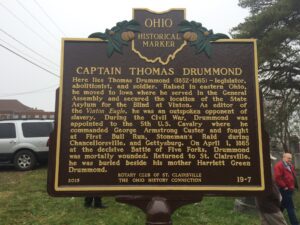
, OH
Here lies Thomas Drummond (1832-1865)- legislator, abolitionist and soldier. Raised in eastern Ohio, he moved to Iowa where he served in the General Assembly and secured the location of the State Asylum for the Blind at Vinton. As editor of the “Vinton Eagle”, he was an outspoken opponent of slavery. During the Civil War, Drummond was appointed to the 5th U.S. Cavalry where he commanded George Armstrong Custer and fought at First Bull Run, Stoneman’s Raid during Chancellorsville and Gettysburg. On April 1, 1865 at the decisive Battle of Five Forks, Drummond was mortally wounded. Returned to St. Clairsville, he was buried beside his mother Harriett Green Drummond.
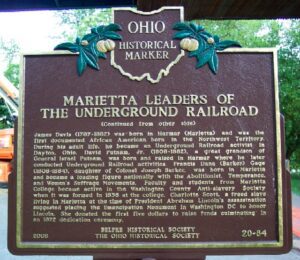
, OH
People living in Marietta and along the Muskingum River shared a history of slavery opposition. Manasseh Cutler, from Massachusetts and an Ohio Land Company agent, helped draft the Ordinance of 1787 that prohibited slavery in the Northwest Territory. General Rufus Putnam, Captain Jonathan Stone, and other Ohio Land Company Revolutionary War veterans, founded Marietta at the mouth of the Muskingum River in 1788 bringing with them their anti-slavery sentiments. A proposal to legalize slavery in the proposed state of Ohio was vetoed largely due to the efforts of Marietta’s Ephraim Cutler and General Putnam at the 1802 Ohio Constitutional Convention. These conditions were precursors toward the formation of the Underground Railroad as fugitive slaves crossed the Ohio River seeking freedom. From 1812 through 1861, large numbers of fugitive slaves fleeing toward Canada, were aided by descendants of early settlers who operated Underground Railroad Stations along the Muskingum River. (Continued on other side)
, OH
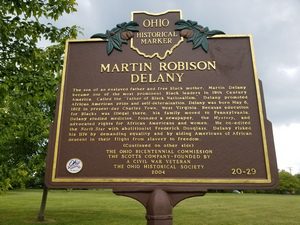
The son of an enslaved father and free Black mother, Martin Delany became one of the most prominent Black leaders in 19th Century America. Called the “Father of Black Nationalism,” Delany promoted African American pride and self-determination. Delany was born May 6, 1812 in present-day Charles Town, West Virginia. Because education for Blacks was illegal there, his family moved to Pennsylvania. Delany studied medicine, founded a newspaper, the “Mystery,” and advocated rights for African Americans and women. He co-edited the “North Star” with abolitionist Frederick Douglass. Delany risked his life by demanding equality and by aiding Americans of African descent in their fight from slavery to freedom. (Continued on other side)
, OH
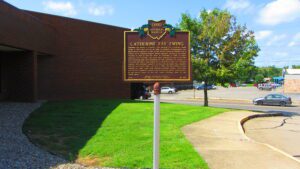
Frances Dana (Barker) Gage was born on October 12, 1808, in Marietta. She married James L. Gage in 1829 and they raised eight children, including four sons who served with Union forces during the Civil War. Throughout much of her life, Frances was deeply involved with the Temperance and Anti-Slavery movements and Women’s Rights issues. Presiding over the Women’s Rights Convention in Akron in 1851, she invited Sojourner Truth to give her famous “Ain’t I a Woman” speech. The Gage family moved in 1853 to St. Louis, the western extension of the Mason-Dixon Line, where her life was threatened whenever she spoke out against slavery. During the Civil War, she traveled south to aid Union soldiers and teach freed slaves. Though crippled and permanently disabled by a stroke, she continued to lecture on social issues until 1867. Frances Dana Gage died on November 10, 1884, in Greenwich, Connecticut.
, OH
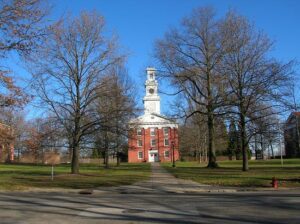
With the help of town founder, David Hudson, Western Reserve College and its Academy were founded in 1826. Often called “The Yale of the West,” the college saw success initially as all of its professors and college presidents were Yale College graduates. Nationally, Western Reserve College became involved with the Underground Railroad and anti-slavery movement 28 years before the Civil War began. Moreover, Western Reserve College established the Loomis observatory, named for Elias Loomis, a Yale tutor and WRC professor, which is now the second oldest observatory in the United States. The Western Reserve College moved to Cleveland in 1882 and eventually became Case Western Reserve University while the Academy remained in Hudson. Today, the Western Reserve Academy is one of the nation’s oldest and most respected independent college preparatory schools.
, OH
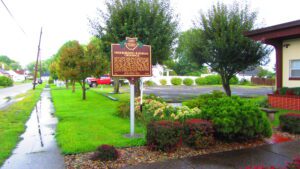
Underground Railroad crossings, agents, and conductors were common along the Ohio River between Washington County, Ohio and Wood County, Virginia. At Constitution, six miles upriver from Belpre, Judge Ephraim Cutler listened for hoot owl calls that signaled when a boatload of runaway slaves was crossing from Virginia to the Ohio shore. “Aunt Jenny,” a slave woman in Virginia, used a horn signal to alert abolitionist John Stone in Belpre when fugitive slaves were crossing. At Little Hocking, eight miles downriver from Belpre, slaves crossing from Virginia looked for a lantern signal to guide them to the Horace Curtis Station on the Ohio River shore. Runaway slaves were also assisted by Thomas Vickers at Twin Bridges, James Lawton at Barlow, and others as they traveled northward by various routes through Morgan County to Putnam in Muskingum County where the Underground Railroad merged with the Muskingum River Corridor.