

, OH
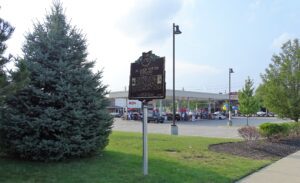
Dr. Jared Potter Kirtland was a prominent nineteenth century professor, physician, naturalist and horticulturist. In 1837, Kirtland purchased land in Rockport Township that stretched from Madison Avenue to Lake Erie. Kirtland used that land as a natural laboratory and filled it with gardens, greenhouses and an arboretum where he developed fruit and grape varieties best suited for the region. His success with new varieties inspired area farmers to successfully concentrate on fruit and grape growing. In 1839, he built a home at Detroit and Bunts Roads and lived there unitl his death in 1877. (Continued on other side)
, OH
Puritas Mineral Spring Company bottled and sold mineral water from the natural springs in the area. In 1894, the Cleveland and Berea Street Railway bought Puritas Springs and expanded the area into a picnic grove with a dance hall and pavilion to increase passenger traffic on the inter-urban line. Puritas Springs Park opened June 10, 1900- the first day the railways operated all the way to the entrance gates. John E. Gooding bought Puritas Springs in June 1915 and added and indoor roller rink, amusement rides, and the mighty Cyclone roller coaster. Labor Day 1958 the park closed, and on May 9, 1059 a fire destroyed many parts of the abondoned park.
, OH
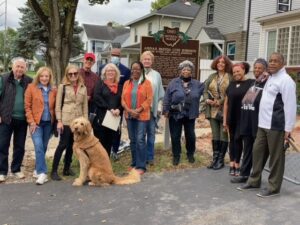
Aminah Brenda Lynn Robinson (1940-2015) and her son Sydney moved into this home in 1974. The artist, a visual historian, lived and worked here in the Shepard community until her passing. Raised in Columbus’s Poindexter Village and educated in the local public schools, Robinson also studied at Columbus College of Art and Design and The Ohio State University. Her art reflected stories handed down from her elders, experienced within her community, and the local history she researched while working at the Columbus Metropolitan Library. She received a 2004 MacArthur Award for her celebration of “family, ancestry, and the grandeur of simple objects in drawings, paintings, and large-scale, mixed-media assemblages.” (Continued on the other side)
, OH
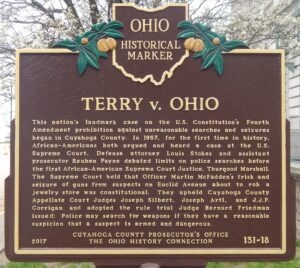
This nation’s landmark case on the U.S. Constitution’s Fourth Amendment prohibition against unreasonable searches and seizures began in Cuyahoga County. In 1967, for the first time in history, African-Americans both argued and heard a case at the U.S. Supreme Court. Defense attorney Louis Stokes and assistant prosecutor Reuben Payne debated limits on police searches before the first African-American Supreme Court Justice, Thurgood Marshall. The Supreme Court held that Officer Martin McFadden’s frisk and seizure of guns from suspects on Euclid Avenue about to rob a jewelry store was constitutional. They upheld Cuyahoga County Appellate Court Judges Joseph Silbert, Joseph Artl, and J.J.P. Corrigan and adopted the rule trial Judge Bernard Friedman issued: Police may search for weapons if they have a reasonable suspicion that a suspect is armed and dangerous.

, OH
Iuka Ravine, developed on land from the “Indianola Farm” that belonged to the Neil Family, is significant for its early 20th century architecture. The ravine’s natural beauty influenced architects to design homes for the upper middle class that incorporated “features of the old oak forest and glacial boulders.” Several ravine homes were designed by Frank Packard and Charles Inscho. Two classically-designed bridges built in 1912 insulated the area from traffic to create what became known during the 1920s-1950s as a “quiet professor enclave.” Iuka’s curvilinear street, one of the first in Columbus, as well as its stone walls, glacial erratics, and mature hardwoods created a “unique urban experience.” The Iuka Ravine Historic District was listed in The National Register of Historic Places in 1986 and added to the Columbus Register of Historic Properties in 1985.
, OH
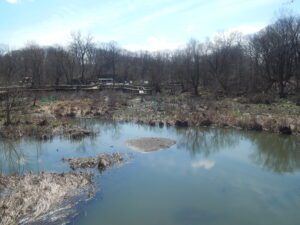
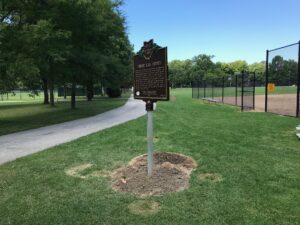
Around 1895 a park system was created connecting the corridor of Doan Brook from Shaker Lakes to Gordon Park on Lake Erie. In 1915, the Shaker Heights Land Company and Van Sweringen Company deeded property to the City of Cleveland for the park. In 1947, Cleveland leased to the cities of Shaker Heights and Cleveland Heights portions of the park within their boundaries. A proposed “Clark Freeway” (I-290) linking I-271 to downtown Cleveland through the park threatened the area in the 1960s. The proposal faced strong opposition from the Park Conservation Committee, a coalition of 30 garden clubs, the City of Shaker Heights, the Cleveland Heights PTA Council, the Shaker Historical Society, and other organizations. Governor James Rhodes withdrew the plans in 1970. The Clark Freeway was defeated and the park preserved.
, OH
Beginning in 1873, oil magnate and philanthropist John D. Rockefeller purchased 700 acres of land in East Cleveland Township, now located in East Cleveland and Cleveland Heights. A failed hotel built in 1874-1875 served as the family’s summer home until it was destroyed by fire in 1917, although Rockefeller’s son, John, Jr., continued to visit the grounds. The Rockefellers spent much of their time outdoors, where they built on the land’s natural beauty and carefully designed and built carriage, foot and bridle paths, scenic views, lakes, a lily pond, stone bridges, a horse track and a gold course. John, Jr. purhcased all of his father’s Forest Hill property in 1923 and continued to buy adjacent land.
, OH
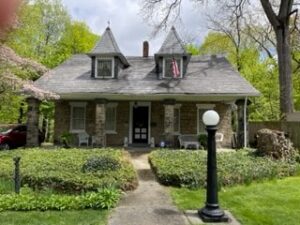
The Curtis-Preyer Stone House takes its name from two families associated with its early history. Richard and Clarissa Dille Curtis purchased 70 acres in the Connecticut Western Reserve from veteran Elias Lee in 1819. The Euclid Township “Turkey Knob” settlement soon thrived around Dugway Brook, springs sites, and an American Indian crossroads. The Curtis, Dille, Lee, and Stillman families, related by marriage, helped each other succeed by harnessing the creek to power their grist and saw mills and selling quarried stone and felled timber. Sometime between 1819 and 1835 Curtis built his stone house using the Berea sandstone quarried on site. The roof was created of ax-hewn “pegged” tree timbers, and the thick stone walls fashioned of uncoursed, chiseled stones. A central chimney fed seven fireplaces and a bake oven.