 Skip to content

4-33 Old Sandusky Trail and Shawnee Ford
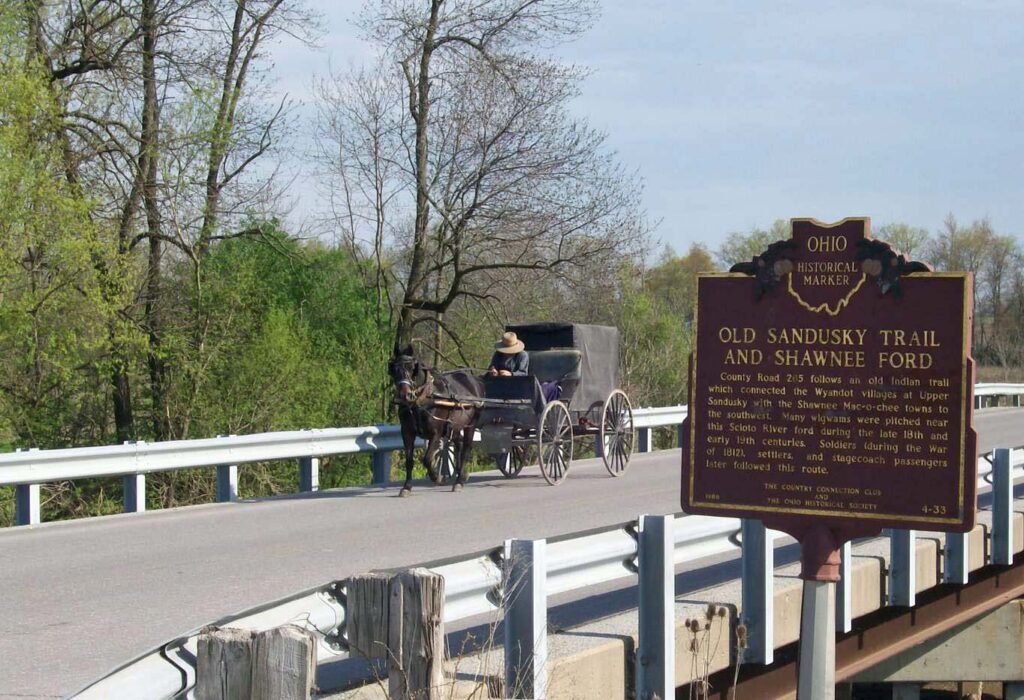
County Road 265 follows an old Indian trail which connected the Wyandot villages at Upper Sandusky with the Shawnee Mac-o-chee towns to the southwest. Many wigwams were pitched near this Scioto River ford during the late 18th and early 19th centuries. Soldiers (during the War of 1812), settlers, and stagecoach passengers later followed this route.
3-33 Chief Roundhead’s Village
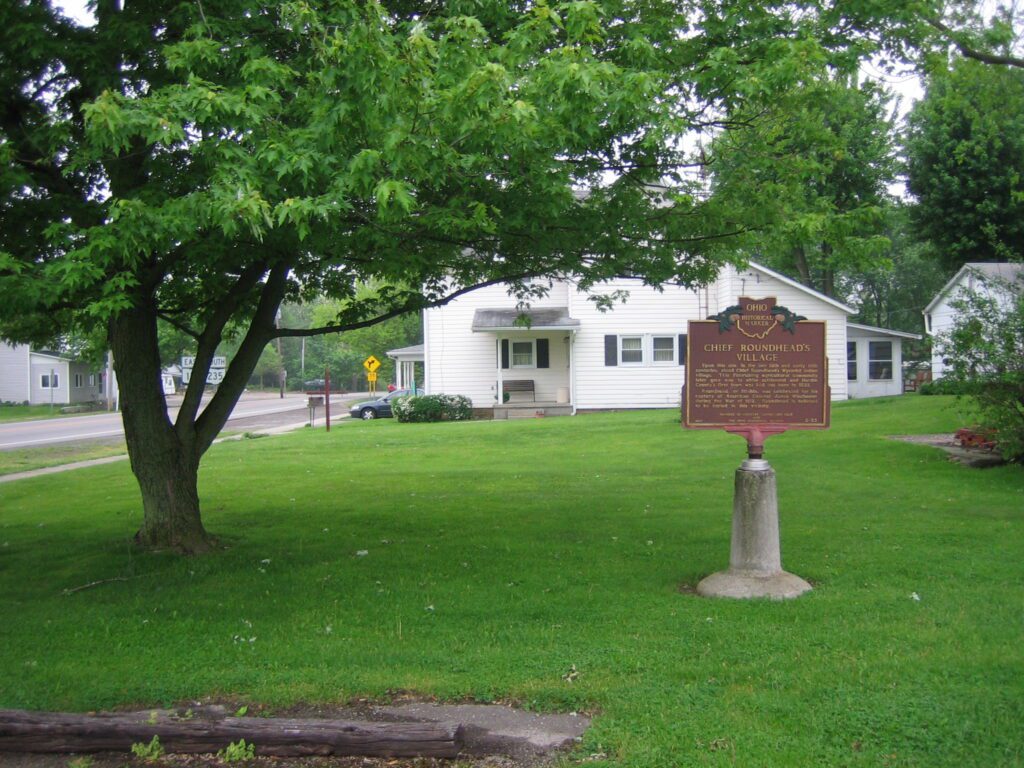
Upon this site, in the late 18th and early 19th centuries, stood Chief Roundhead’s Wyandot Indian village. This flourishing agricultural community later gave way to white settlement and Hardin County’s first town was laid out here in 1832. Roundhead, or Stiahta, was celebrated for his capture of American General James Winchester during the War of […]
2-33 In memory of Jacob Parrott
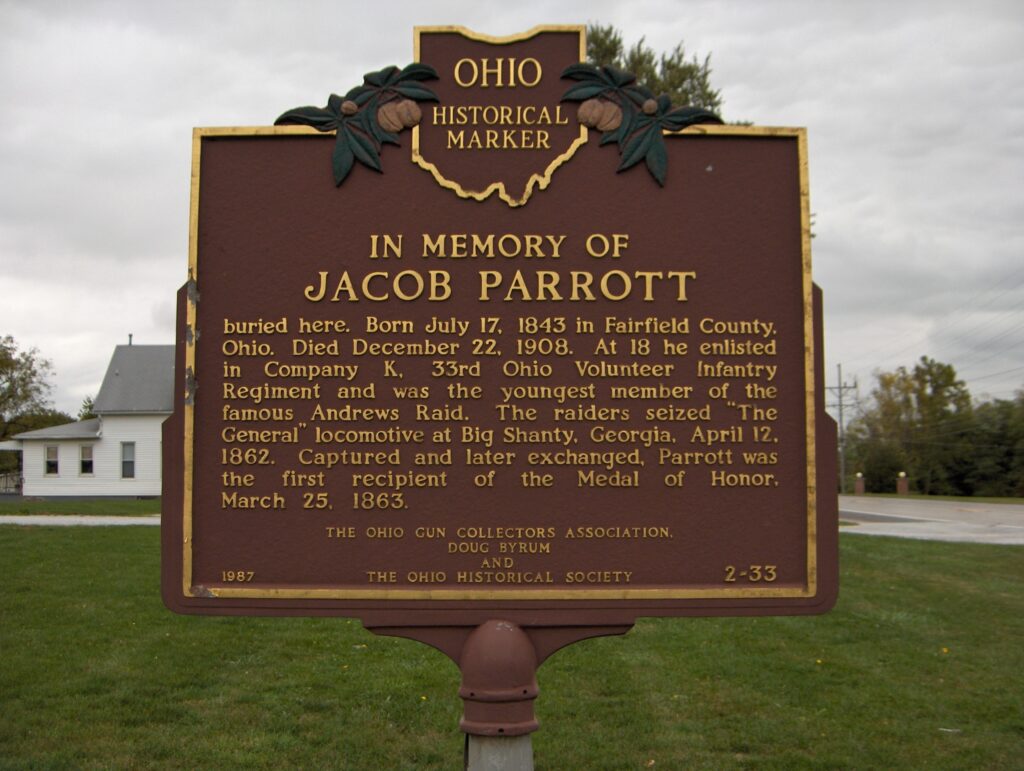
Jacob Parrott who is buried here. Born July 17, 1843 in Fairfield County, Ohio. Died December 22, 1908. At 18 he enlisted in Company K, 33rd Ohio Volunteer Infantry Regiment and was the youngest member of the famous Andrews Raid. The raiders seized “The General” locomotive at Big Shanty, Georgia, April 12, 1862. Captured and […]
1-33 Hog-Creek Marsh
Comprising 8,000 acres of Brookston-Crosby soils, the marsh is named for Hog Creek which drains it. Once a shallow lake, cranberries, wild flags and grasses flourished here. Reclamation (1868) cost $13.00 per acre. Dredging was done by steam scow; lateral ditches were hand dug by spade. The original grade of 1/3″ in 100′ proved ineffective […]
23-32 William Ellsworth Hoy (1862-1961)
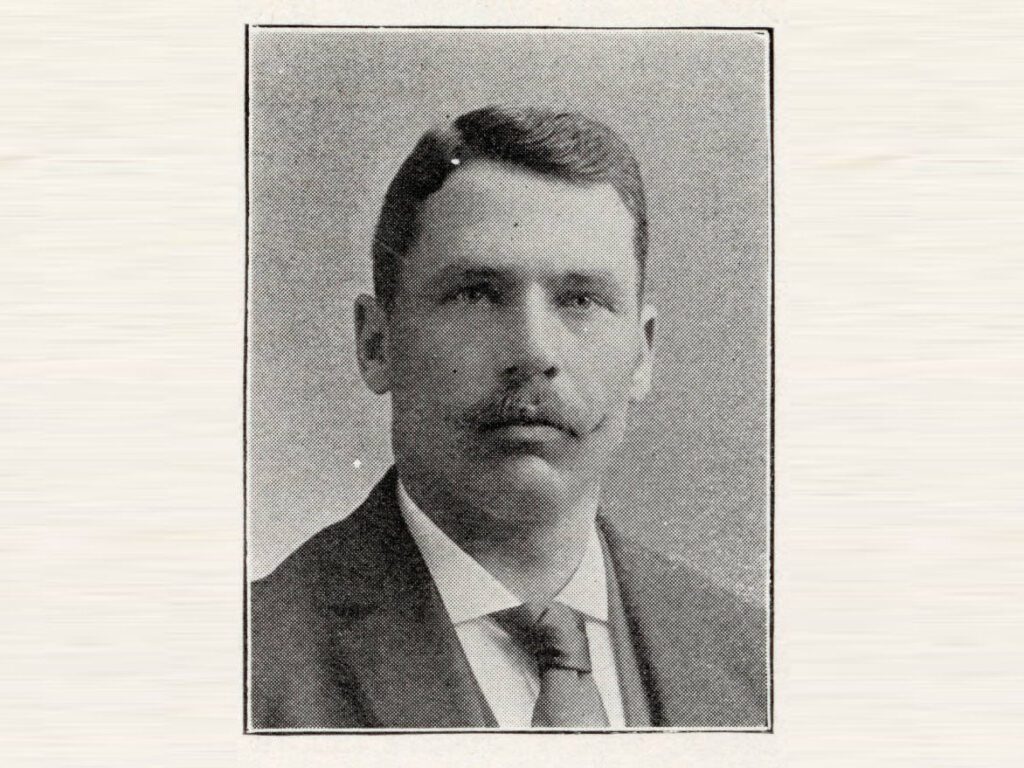
William Ellsworth “Dummy” Hoy was born in Houcktown on May 23, 1862. Although spinal meningitis as a toddler left him deaf and mute, Hoy became one of the great 19th century professional baseball players. He played centerfield for such teams as the Chicago White Stockings, Louisville Colonels, and Cincinnati Reds. In his 1888 Washington Senators […]
22-32 Mason Chapel African Methodist Episcopal Church
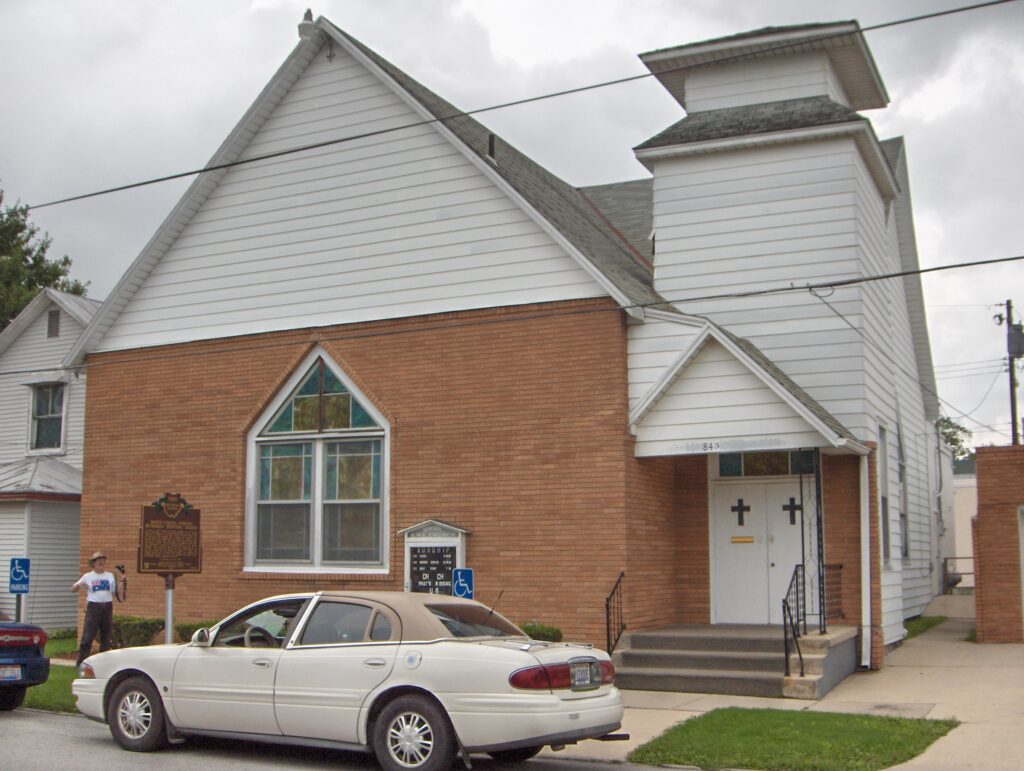
In spite of small numbers and being welcomed by the mostly white congregation of First Methodist Episcopal Church, African Americans in Findlay in the 1880s wanted to express their faith in ways that best reflected their freedoms and traditions. By the mid-1880s, the congregation was meeting in members’ homes and the Odd Fellows Hall, but […]
21-32 The Glass Industry of Findlay

In 1884, the first natural gas well was successfully drilled in Findlay, and when The Great Karg Well, then the largest in the world, was drilled in 1886, the boom was on. Many industries, especially glass, were attracted to Findlay, lured by free or cheap gas for fuel. They included eight window, two bottle, two […]
20-32 The Underground Railroad of Hancock County
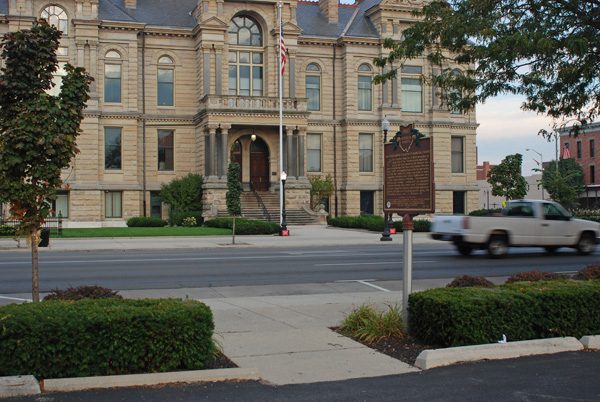
The Fugitive Slave Act of 1850 prompted an expansion of the “Underground Railroad,” and as the state spanning the shortest distance between the Ohio River and Canada, Ohio saw heavy traffic in escaping slaves in the decades before the Civil War. Hancock County was home to many sympathetic residents who defied fugitive slave laws to […]
19-32 Indian Green / McKinnis-Litzenberg Farmstead
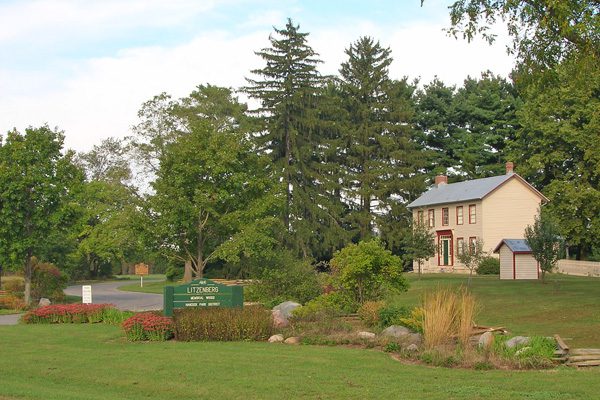
This area of western Hancock County is a part of the Maumee River Watershed known as “Indian Green.” Wyandot Indians chose this area for hunting and ceremonial grounds along the Blanchard River in the 1700s because it was next to the river, yet high enough to avoid frequent flooding. One-half mile east of this location […]
18-32 Rawson and the Railroads / The Rawson Heritage
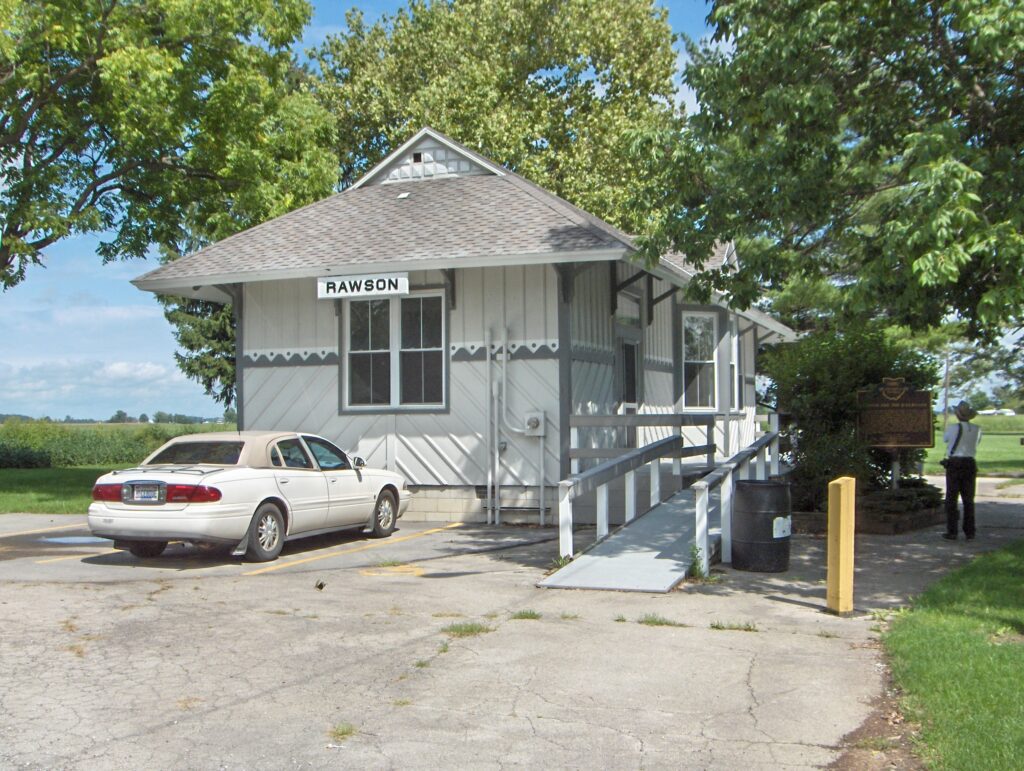
The original town plat of Rawson was filed on February 3, 1855, consisting of fifty-five lots in sections 13 and 14 of Union Township, Hancock County on the Frederick Keller and George J. Kelly farms. Several residential and business structures were built in anticipation of completion of a railroad rumored to pass from Fremont through […]