 Skip to content

17-32 19th Century Freight Depot / Railroads of Hancock County
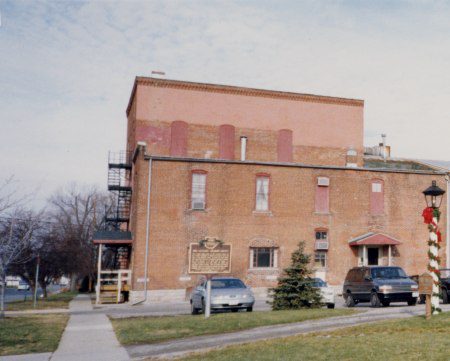
The freight depot east of this marker stands on the western terminus of Hancock County’s first rail link to the outside world. In 1849 the Mad River and Lake Erie Railroad Company opened a branch line from Findlay to its main line at Carey. A freight warehouse was built here ca. 1848 and passenger station […]
16-32 Old Mill Stream Fairgrounds / Oesterlen Well Site
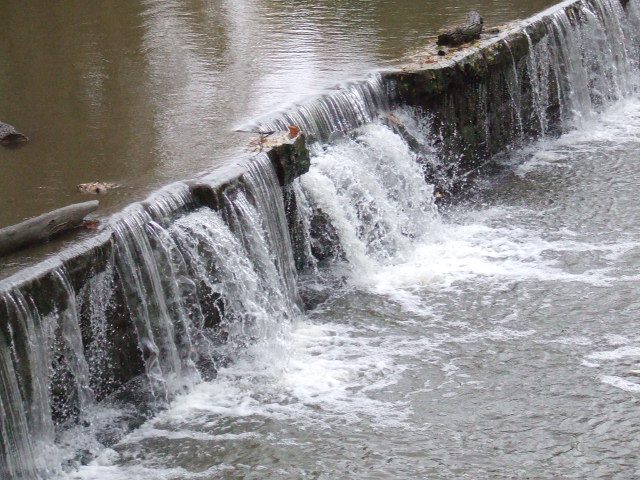
The Hancock County Agricultural Society was organized on March 26, 1938. The Society soon purchased an 80 acre farm once owned by Tell Taylor, composer of the song “Down by the Old Mill Stream,” and held its first fair on this site October 13-15, 1938. The county fair has been held here every year since […]
15-32 Riverside Park / Old Mill Stream

One of the earliest and largest amusement parks in Northwest Ohio dedicated in 1906 on site of old waterworks. Trains brought visitors from as far away as Cleveland. 1907: Dance Pavilion and 2,000 seat auditorium built. 1908: Bathing beach made in old reservoir. 1925: Green Mill Dance Hall built on side near dam. Big name […]
14-32 The Ohio Oil Company-Marathon Oil Co. / Gas Boom Era
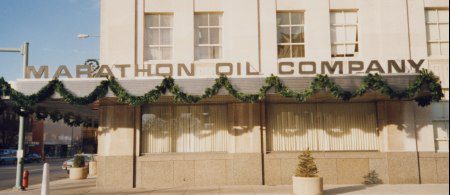
Site of the first Findlay Field Office for what was to become a world-wide oil company, formerly locally owned and operated. 1887: The Ohio Oil Company was incorporated by five independent oil producers in the Lima field. 1901: J.C. Donnell elected President of the Ohio Oil Company. Company’s ‘big well,’ the “Hugh McMurray,” comes in. […]
12-32 St. John’s Evangelical Lutheran Church
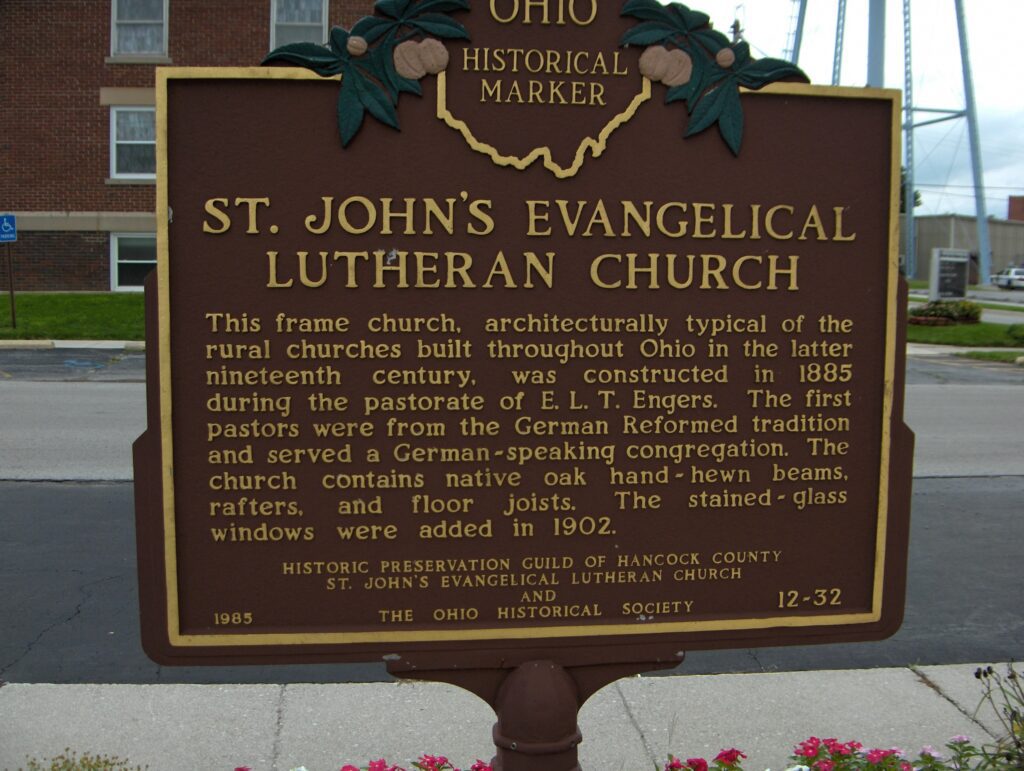
This frame church, architecturally typical of the rural churches built throughout Ohio in the latter nineteenth century, was constructed in 1885 during the pastorate of E.L.T. Engers. The first pastors were from the German Reformed tradition and served a German-speaking congregation. The church contains native oak hand-hewn beams, rafters, and floor joists. The stained-glass windows […]
11-32 Village of Arcadia / The Arcadia Heritage
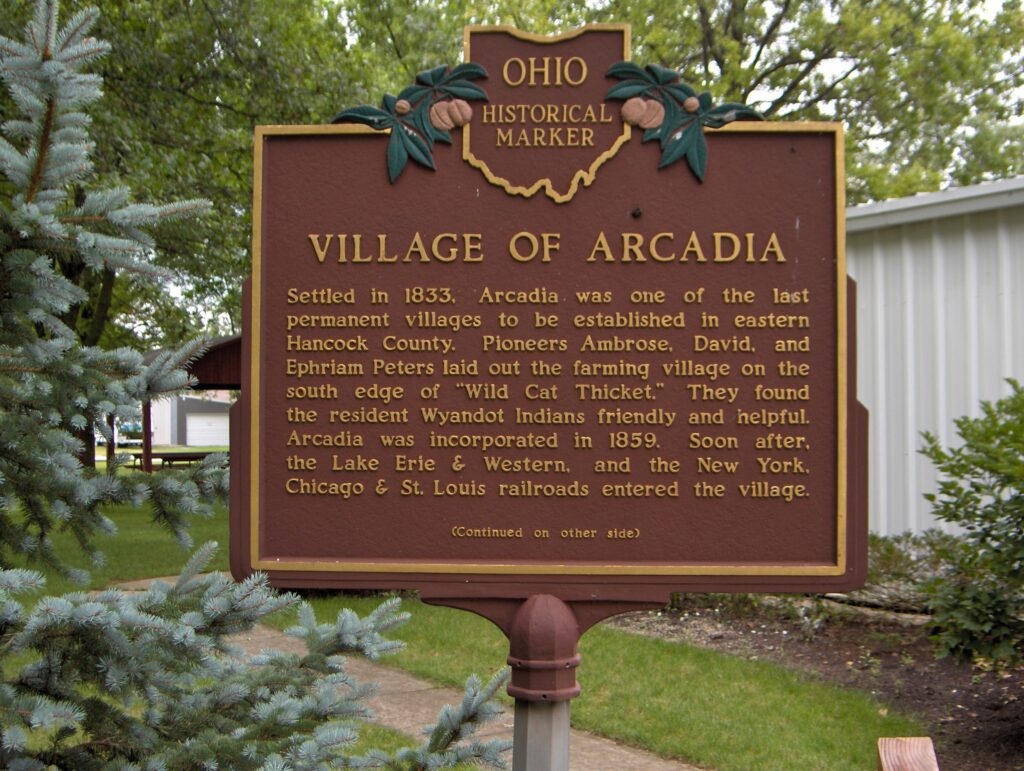
Settled in 1833, Arcadia was one of the last permanent villages to be established in eastern Hancock County. Pioneers Ambrose, David, and Ephriam Peters laid out the farming village on the south edge of “Wild Cat Thicket.” They found the resident Wyandot Indians friendly and helpful. Arcadia was incorporated in 1859. Soon after, the Lake […]
10-32 Village of Arlington / The Arlington Heritage

First a farming community, later a railroad crossroads in southern Hancock County, Arlington was one of the county’s earliest settlements. Gen. William Hull opened a trail into the area during the War of 1812 as he crossed Buck Run at Eagle Creek. He led his army to the Blanchard River to establish Ft. Findlay. Robert […]
13-32 McComb First Presbyterian Church
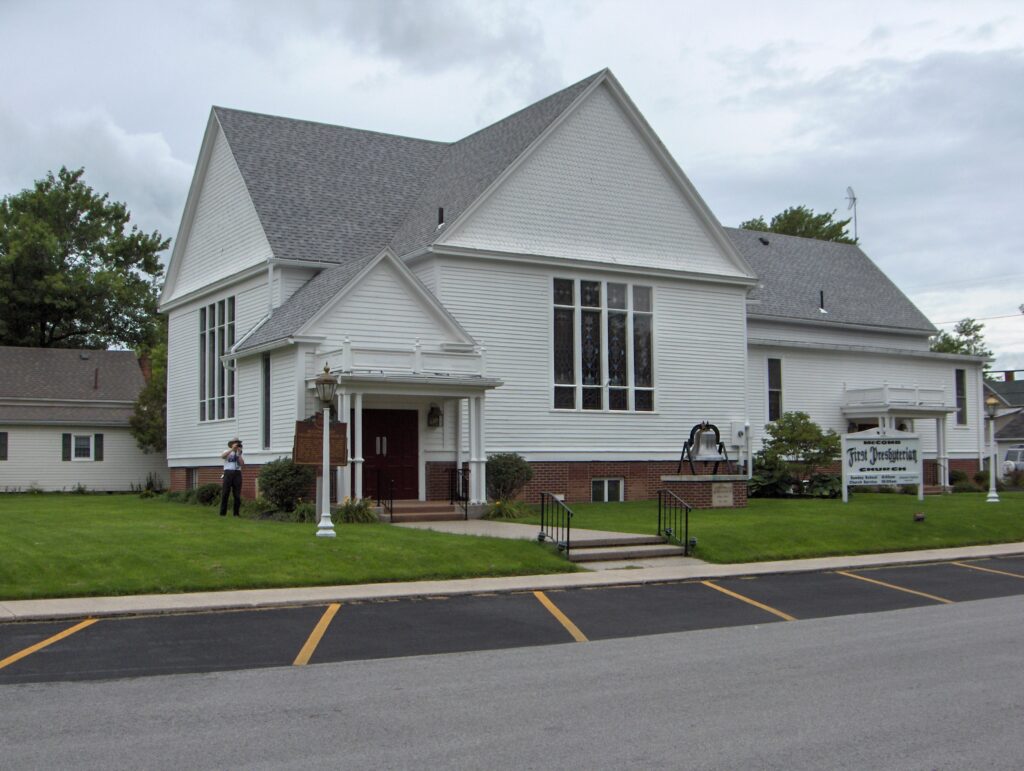
Organization of the congregation began in 1848 under the Rev. George Van Eman, and a charter was granted in 1854. The oldest Presbyterian church building in continuous use in Hancock County, the sanctuary was constructed in 1855-56. Members of the congregation included first Congressional Medal of Honor recipients John R. Porter and William Bennsinger, honored […]
9-32 Findlay College
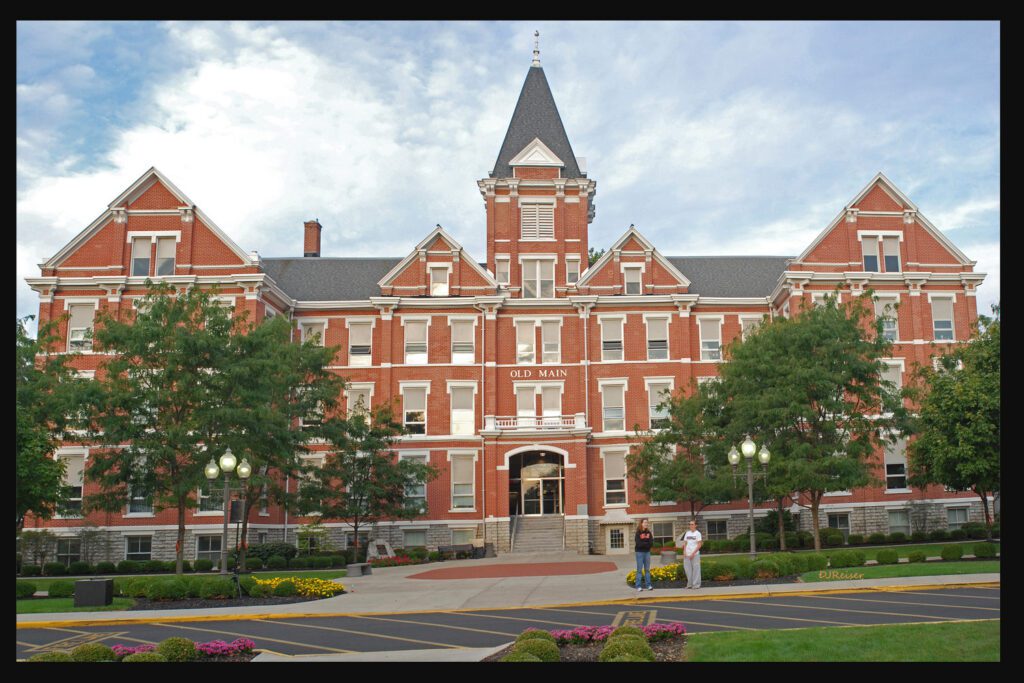
Findlay College was a joint venture of the Churches of God, General Conference, and the Village of Findlay. It was chartered on January 28, 1882, to provide a liberal arts education within a Christian context for all–regardless of race or sex. Old Main was constructed between 1883 and 1886 at a cost of $51,662.95. It […]
8-32 The Village of McComb
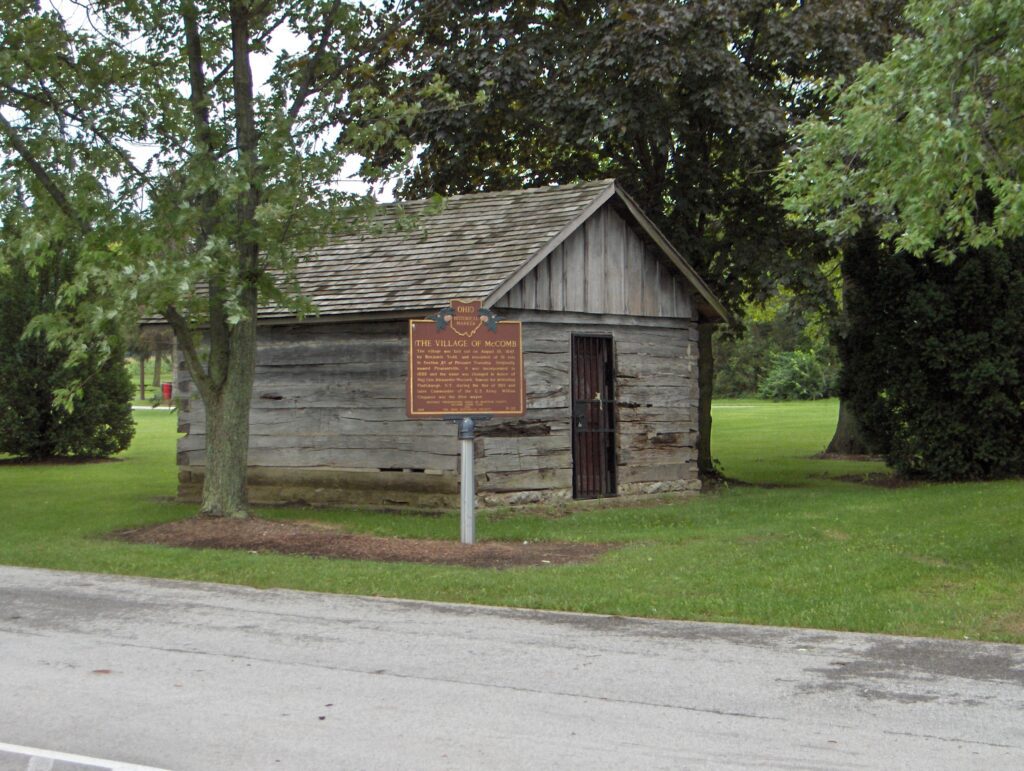
The village was laid out on August 18, 1847, by Benjamin Todd, and consisted of 18 lots in Section 26 of Pleasant Township. Originally named Pleasantville, it was incorporated in 1858 and the name was changed in honor of Maj. Gen. Alexander Macomb, famous for defending Plattsburgh, N.Y., during the War of 1812 and later […]