 Skip to content

4-32 Site of Fort Findlay
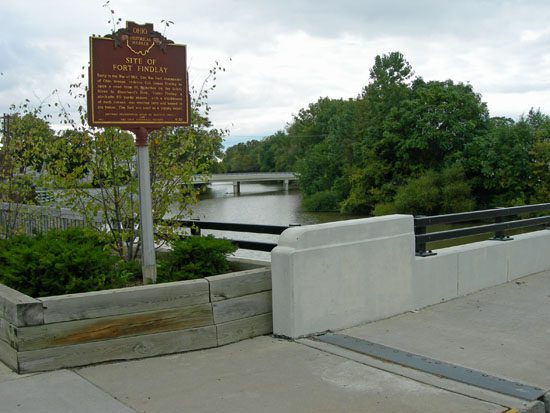
Early in the War of 1812, Gen. Wm. Hull, commander of Ohio troops, ordered Col. James Findlay to open a road from Ft. McArthur on the Scioto River to Blanchard’s Fork. Under Findlay, a stockade 50 yards square, with a blockhouse at each corner, was erected here and named in his honor. The fort was […]
1-32 In Memory of William Bensinger and John R. Porter / The Andrews Raiders
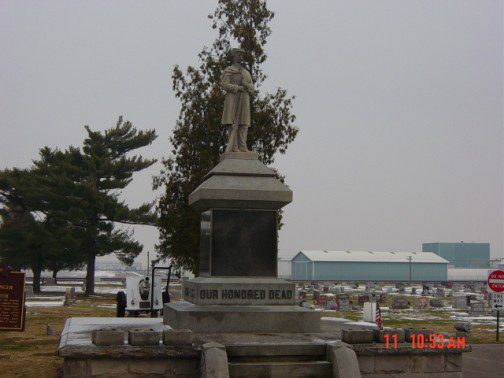
In memory of William Bensinger and John R. Porter who are buried here. They joined the famous Andrews Raid to wreck the Confederate supply lines. The Raiders captured a locomotive, “The General,” at Big Shanty, Georgia on April 12, 1862. Private Porter missed the great locomotive chase which followed. Pvt. Bensinger was aboard when “The […]
99-31 Cincinnati Federation of Colored Women’s Clubs / Cincinnati Federation Clubhouse
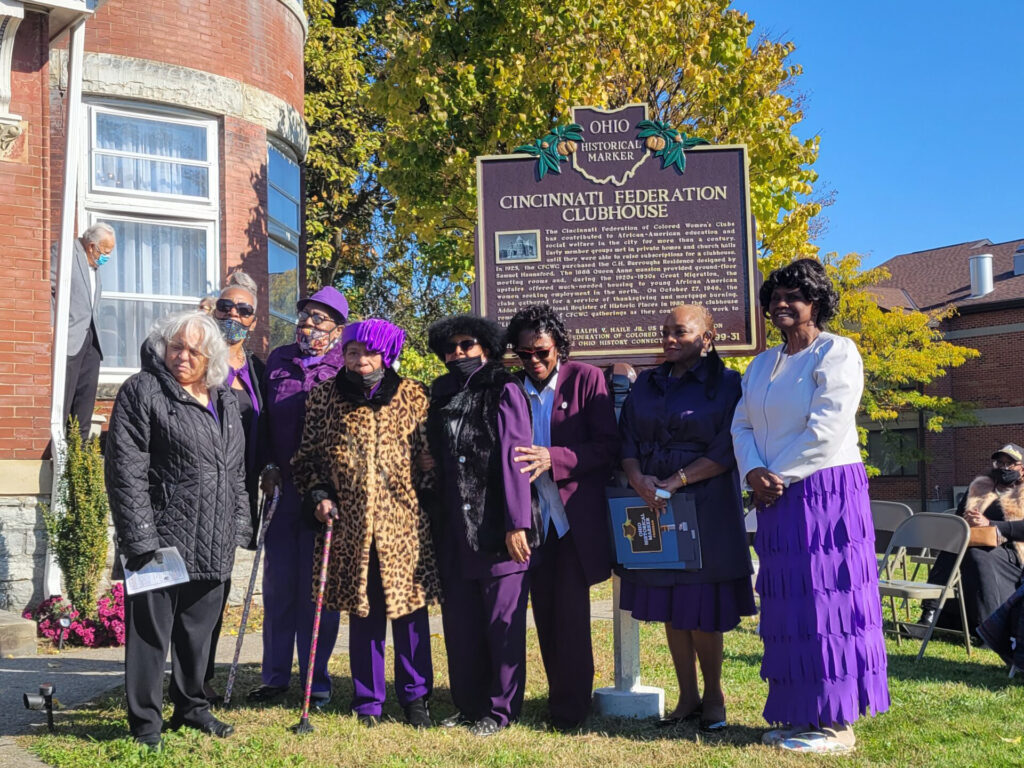
“Lifting As We Climb”: The Cincinnati Federation of Colored Women’s Clubs (CFCWC) was organized May 6, 1904, during a meeting called by Mary Fletcher Ross at the Allen Temple A.M.E. Church. Gathering together eight existing African-American women’s clubs, the CFCWC sought to unite in their work promoting “the betterment of the community.” At a time […]
98-31 Chestnut Street Cemetery / Two Centuries of Jewish Cincinnati
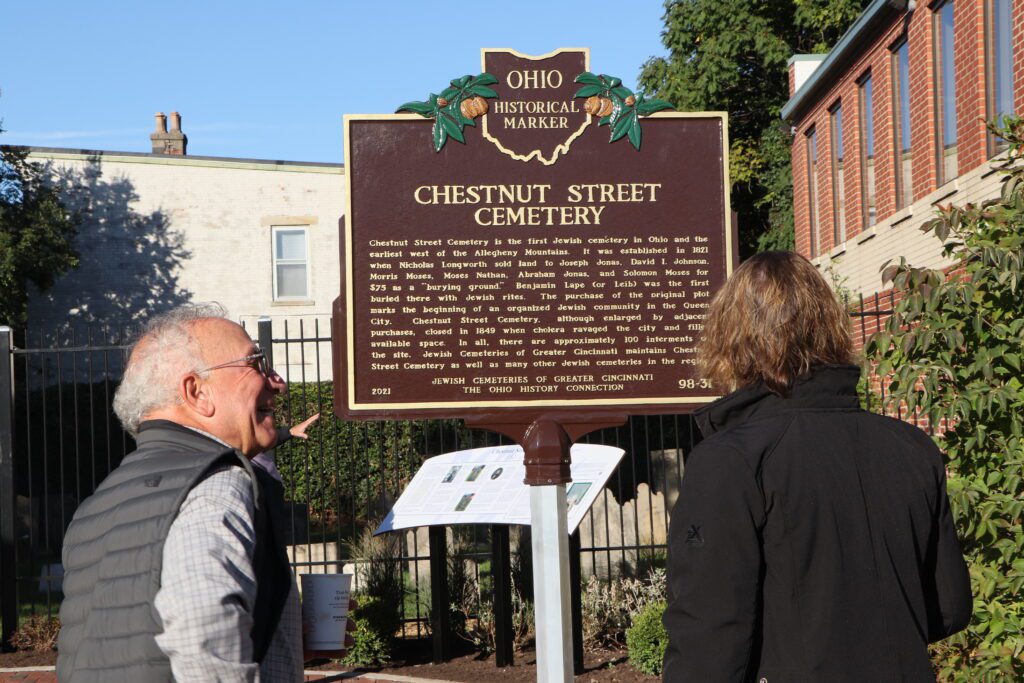
Chestnut Street Cemetery is the first Jewish cemetery in Ohio and the earliest west of the Allegheny Mountains. It was established in 1821 when Nicholas Longworth sold land to Joseph Jonas, David I. Johnson, Morris Moses, Moses Nathan, Abraham Jonas, and Solomon Moses for $75 as a “burying ground.” Benjamin Lape (or Leib) was the […]
97-31 Cincinnati Stock Exchange
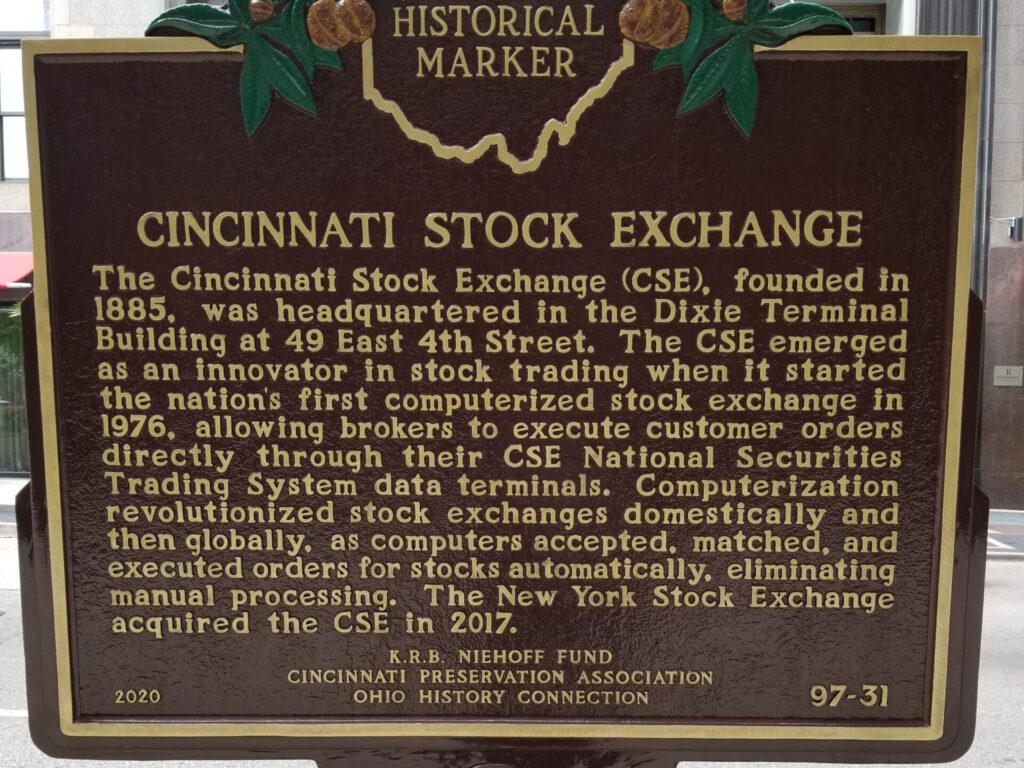
The Cincinnati Stock Exchange (CSE), founded in 1885, was headquartered in the Dixie Terminal Building at 49 East 4th Street. The CSE emerged as an innovator in stock trading when it started the nation’s first computerized stock exchange in 1976, allowing brokers to execute customer orders directly through their CSE National Securities Trading System data […]
96-31 (A) Findlay Market Opening Day Parade
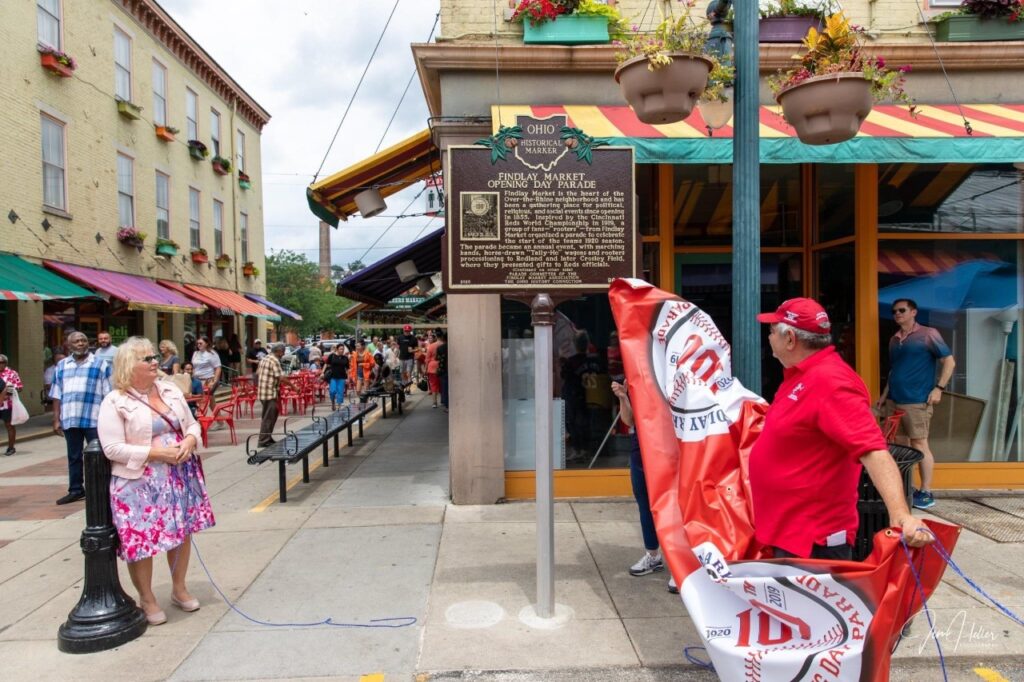
Findlay Market is the heart of the Over-the-Rhine neighborhood and has been a gathering place for political, religious, and social events since opening in 1855. Inspired by the Cincinnati Reds World Championship in 1919, a group of fans –“rooters” – from Findlay Market organized a parade to celebrate the start of the team’s 1920 season. […]
95-31 Christ Church Cathedral
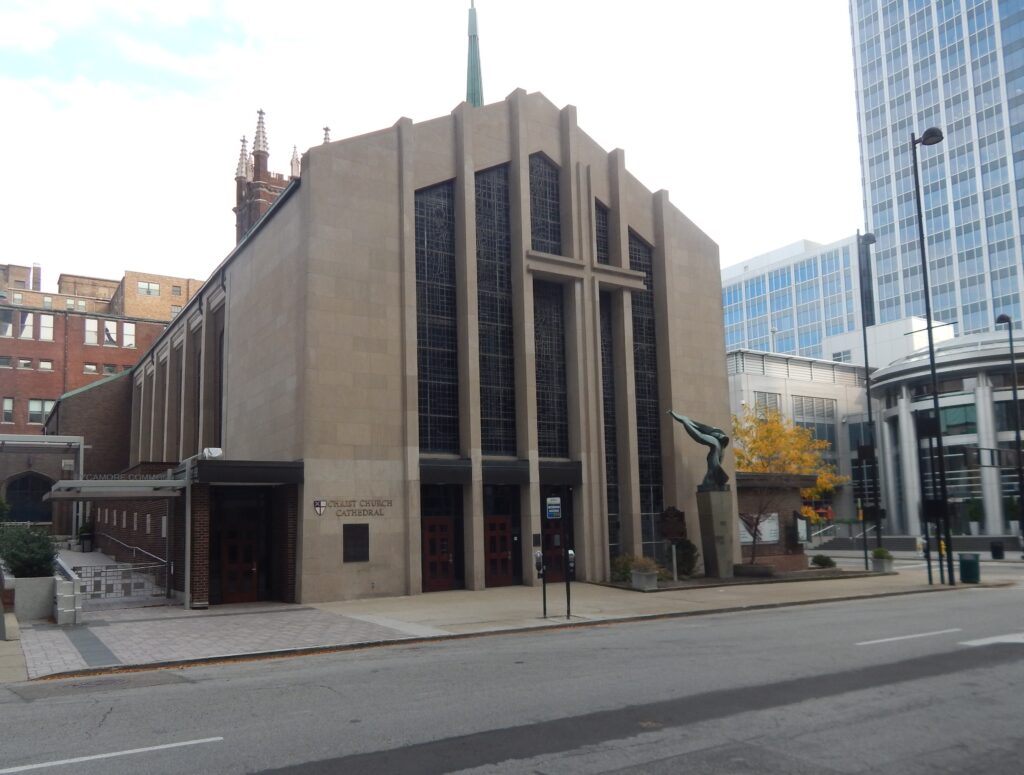
In 1817 twenty-two men, including future President William Henry Harrison, chartered Cincinnati’s first Episcopal parish, Christ Church. In 1835 members erected a Gothic Revival-style church on this site. The neighborhood evolved as the city grew with the influx of immigrants. Parish women raised funds to teach, feed, clothe, and shelter tenement families, and alleviate suffering […]
94-31 Peebles Corner / Peebles Corner
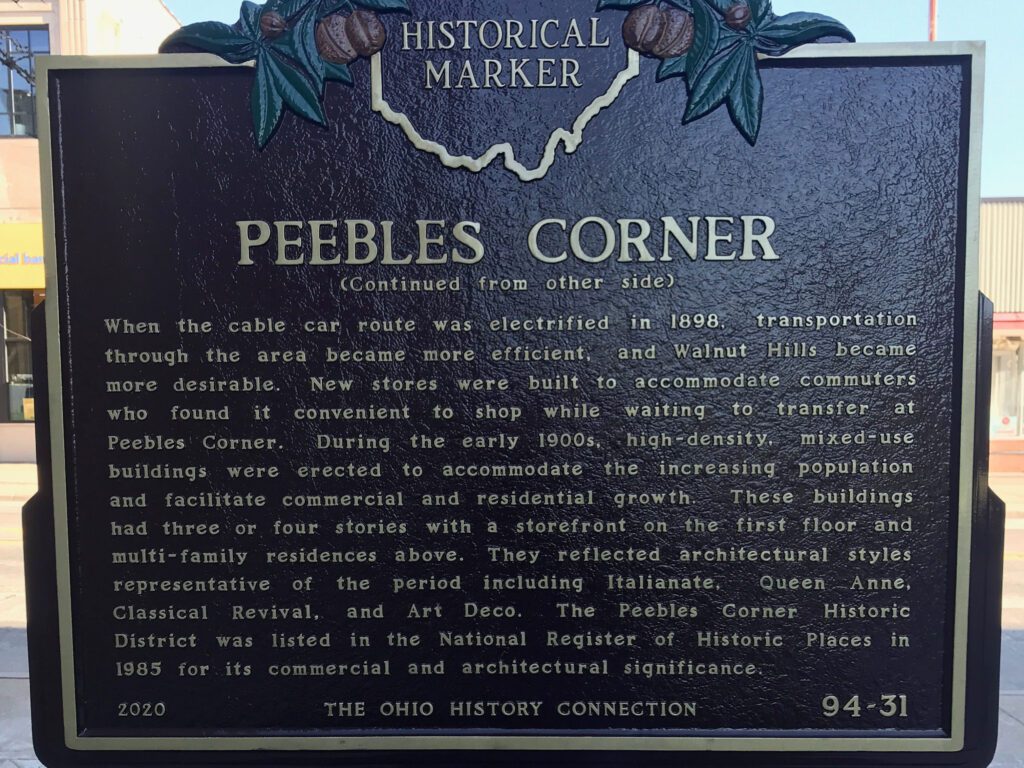
When the cable car route was electrified in 1898, transportation through the area became more efficient, and Walnut Hills became more desirable. New stores were built to accommodate commuters who found it convenient to shop while waiting to transfer at Peebles Corner. During the early 1900s, high-density, mixed-use buildings were erected to accommodate the increasing […]
93-31 Xavier University Armory / Xavier University Armory
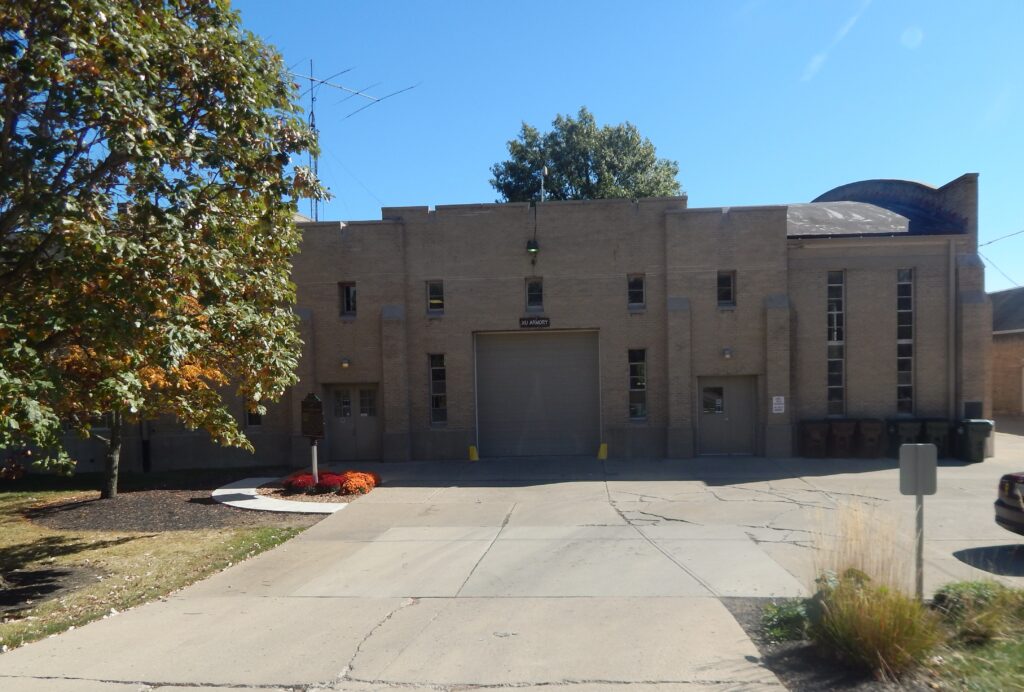
Xavier University Armory. The Xavier University Armory was dedicated in 1948 by the first Secretary of the Army, Kenneth C. Royall. In the following decades, U.S. Army Reserve Officer Training Corps (ROTC) cadets used it as a place to refine their tactical and technical skillsets in preparation to serve as officers in the U.S. Army. […]
92-31 The Orgins of Harvest Home

In 1804, Enoch (1764-1817) and Achsah (c.1767-1839) Carson and their seven children journeyd from New Jersey to Cincinnati. In 1805, they settled in the western hills in a large grove near Beech Flats, in what would become Green Township in 1809 and Cheviot in 1818. Game was plentiful and fertile soil yielded abundant crops. By […]