 Skip to content

3-82 Morgan’s Raid in Vinton County
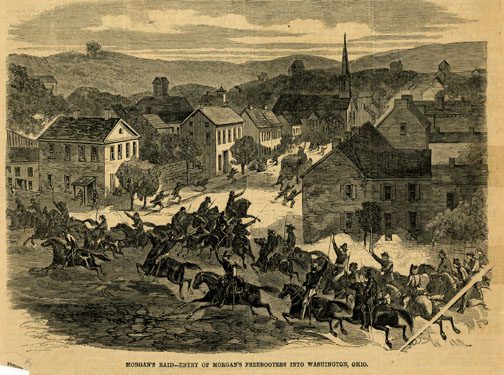
During the summer of 1863, General John Hunt Morgan, a Confederate cavalry leader from Kentucky, invaded southern Ohio with 2,460 mounted men. Throughout the campaign Morgan’s men plundered and looted before being captured by Union forces. On July 17, Morgan led his troops into Wilkesville stealing horses, sacking stores, and robbing private citizens. That night […]
16-27 Morgan’s Raid
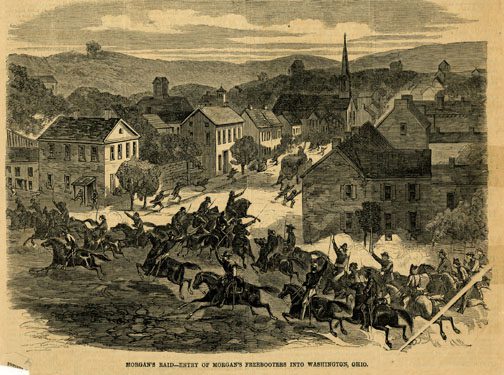
During the American Civil War 1860-1865, a Confederate cavalry, led by Brigadier General John Hunt Morgan, infiltrated the states of Kentucky, southern Indiana, and southeastern Ohio as a diversionary tactic to draw northern troops from eastern Tennessee. The 2,500 calvarymen passed through Gallia County, Ohio, and reached the village of Vinton on July 17, 1863. […]
1-82 Hope Furnace
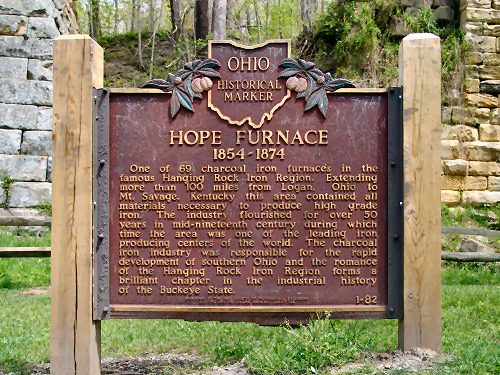
One of the 69 charcoal iron furnaces in the famous Hanging Rock Iron Region. Extending more than 100 miles from Logan, Ohio to Mt. Savage, Kentucky this area contained all materials necessary to produce high grade iron. The industry flourished for over 50 years in mid-nineteenth century during which time the area was one of […]
82-18 First Congregational United Church of Christ of Berea
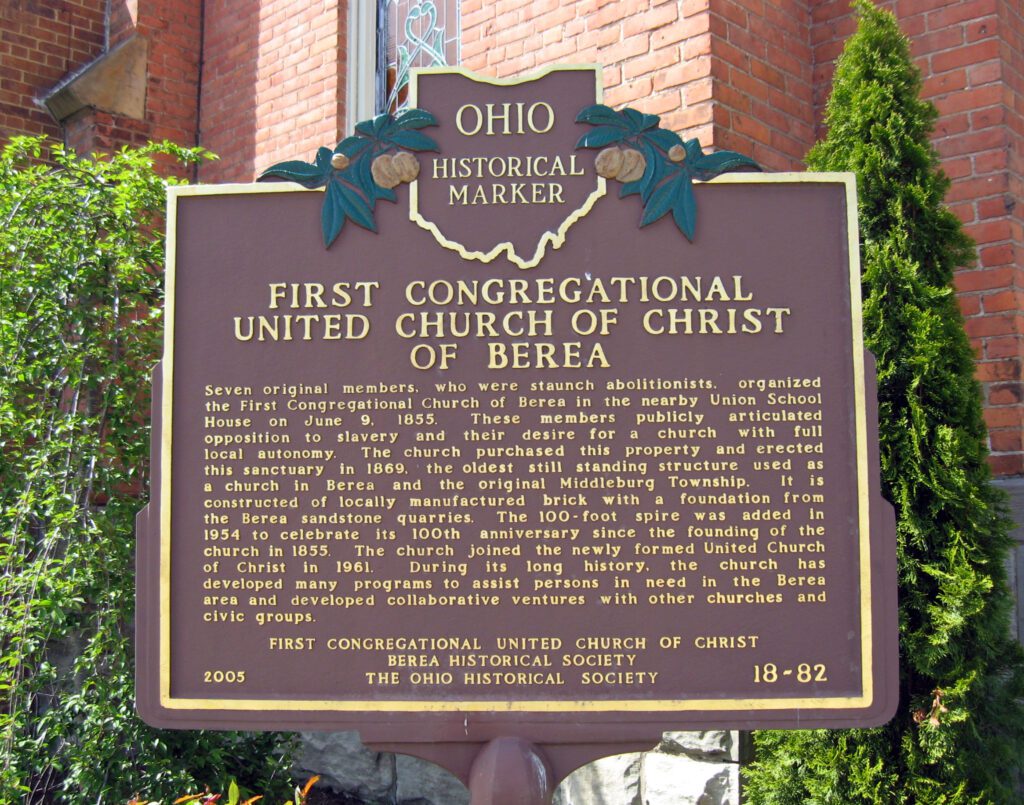
Seven original members, who were staunch abolitionists, organized the First Congregational Church of Berea in the nearby Union School House on June 9, 1855. These members publicly articulated opposition to slavery and their desire for a church with full local autonomy. The church purchased this property and erected this sanctuary in 1869, the oldest still […]
6-81 Here Lies Robert Nesbitt / The Western Terminus of the Lincoln Highway in Ohio

This is the gravesite of Robert Nesbitt, an immigrant from Convoy, Ireland who named Convoy, Ohio after his home town. In 2010, the Convoy Community Foundation, Convoy Lions Club, Convoy Business Association, and Convoy Community Days, Inc. raised the funds to restore Nesbitt’s tombstone. A representative from Convoy, Ireland – Ray Bonar – attended the […]
5-81 Leslie C. Peltier
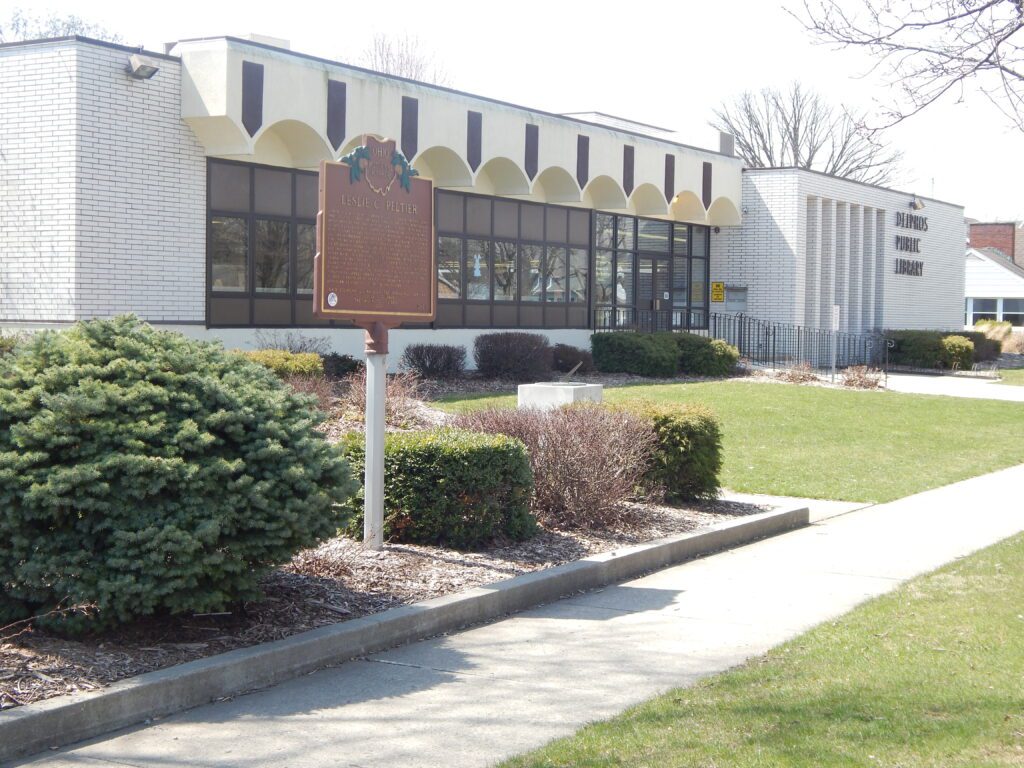
A farm boy with a tenth grade education, Leslie Peltier, born near Delphos in 1900, achieved fame as one of the most famous astronomers of the twentieth century. In 1916, he raised $18 dollars by picking 900 quarts of strawberries on his father’s farm in order to purchase his first telescope. His stargazing abilities led […]
4-81 The Brumback Library
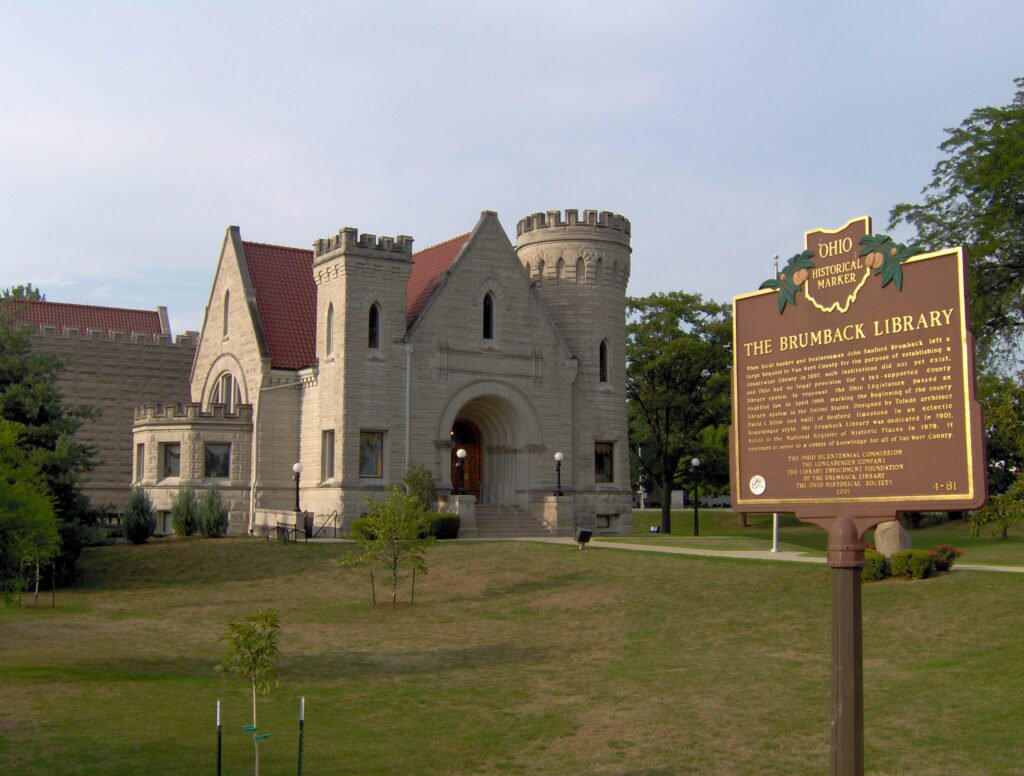
When local banker and businessman John Sanford Brumback left a large bequest to Van Wert County for the purpose of establishing a countywide library in 1897, such institutions did not yet exist, and Ohio had no legal provision for a tax-supported county library system. In response, the Ohio Legislature passed an enabling law in April […]
3-81 Anthony Wayne’s March Across Van Wert County / Venedocia Village
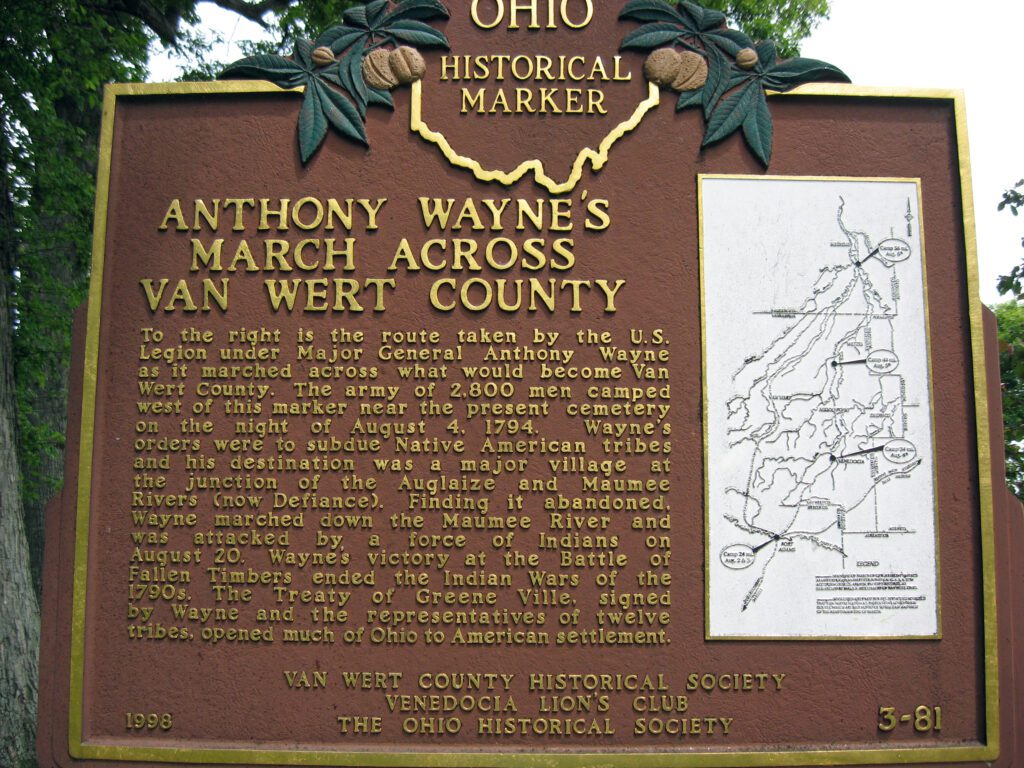
To the right is the route taken by the U.S. Legion under Major General Anthony Wayne as it marched across what would become Van Wert County. The army of 2,800 men camped west of this marker near the present cemetery on the night of August 4, 1794. Wayne’s orders were to subdue Native American tribes […]
2-81 Killing Spree Ends Here in 1948
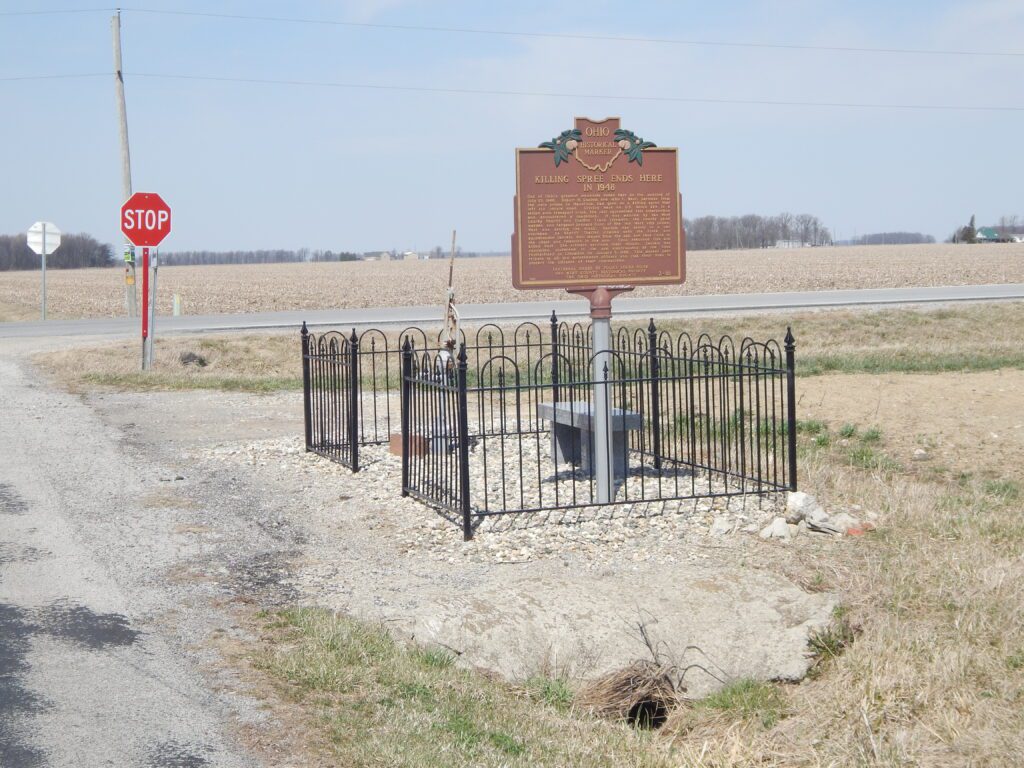
One of Ohio’s greatest manhunts ended here on the morning of July 23, 1948. Robert M. Daniels and John C. West, parolees from the state prison in Mansfield, had gone on a killing spree that left six people dead. Driving west on U.S. Route 224 in a stolen auto transport truck, the pair approached this […]
1-81 Hoghe Road Bridge
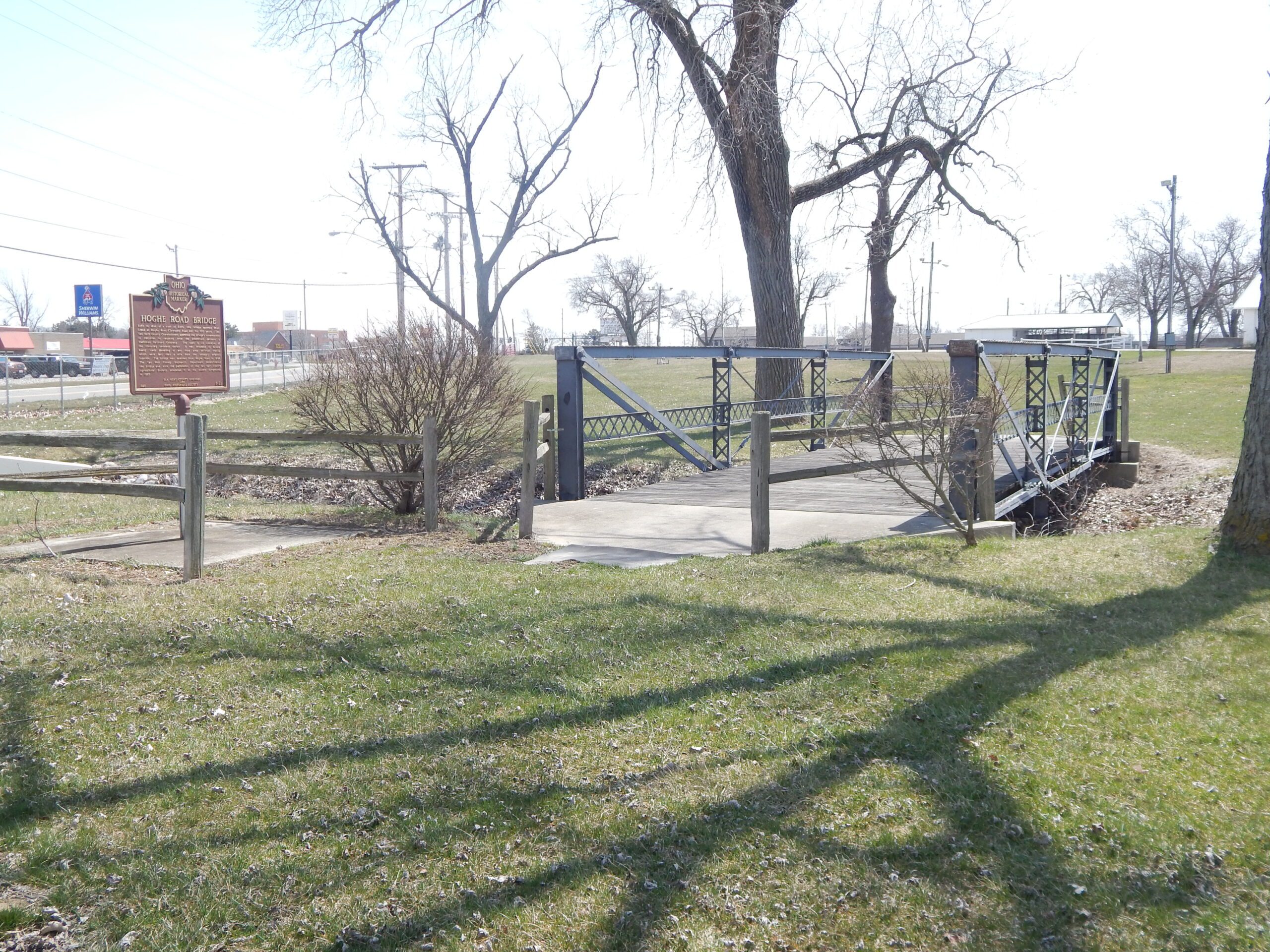
Built in 1894 at a cost of $575, this bridge spanned Town Creek at Hoghe Road (Township Road 82) for 100 years. The Van Wert County Commissioners approved the bridge’s construction in response to requests from the Cincinnati, Jackson & Mackinaw Railroad Company. The span is an example of the truss-leg bedstead design. It was […]