 Skip to content
9-83 The Civilian Conservation Corps / The Civilian Conservation Corps of Fort Ancient
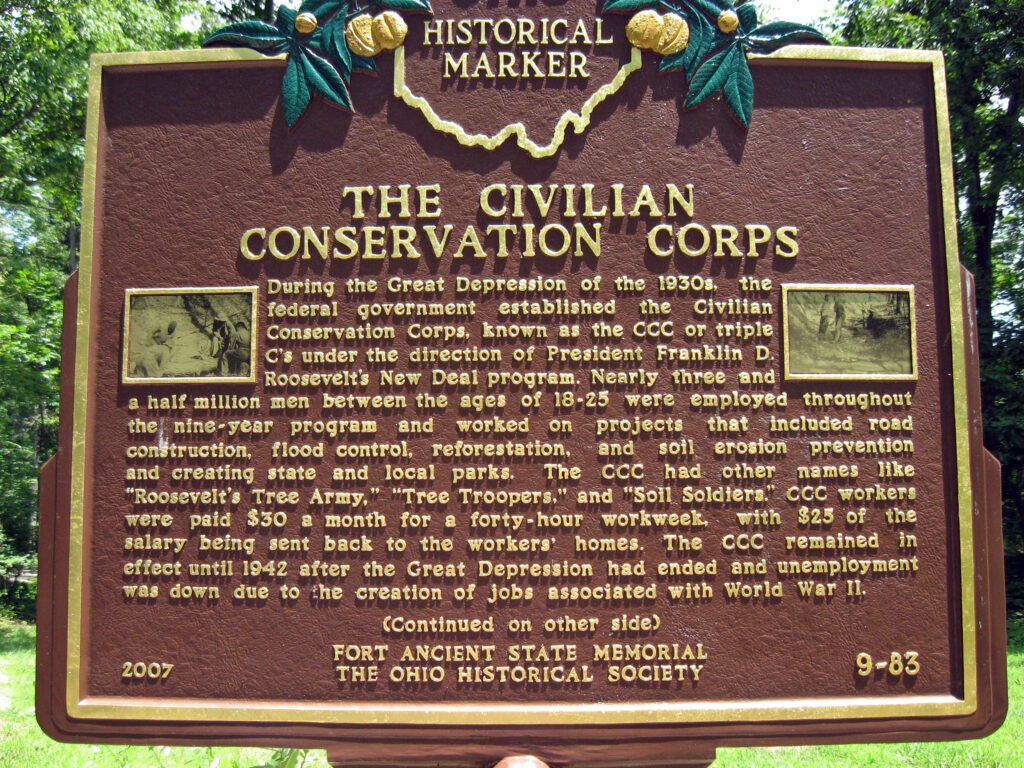
During the Great Depression of the 1930s, the federal government established the Civilian Conservation Corps, known as the CCC or triple C’s under the direction of President Franklin D. Roosevelt’s New Deal program. Nearly three and a half million men between the ages of 18-25 were employed throughout the nine-year program and worked on projects […]
8-83 Jonathan Wright Homestead

Jonathan Wright (1782-1855) and his wife Mary Bateman Wright (1787-1866) moved with their five children from Menallen, Adams County, Pennsylvania, in 1814 and built this Federal style house. Using skills acquired from his father, Joel Wright, a surveyor who platted the city of Columbus, Jonathan platted the village of “Springborough,” named for the many springs […]
7-83 The Old Log Post Office
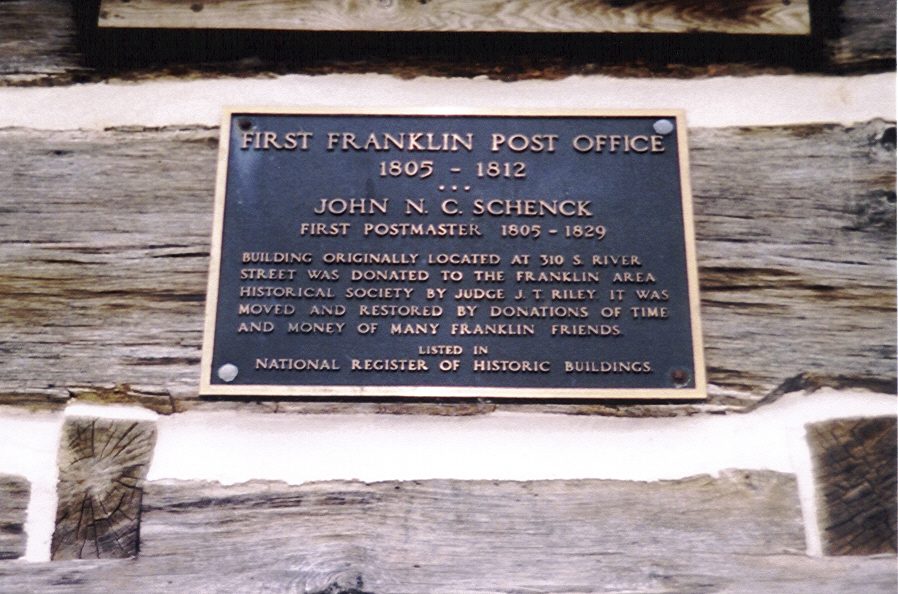
The oldest known structure standing in Franklin, the Old Log Post Office is a reminder of the links the community’s earliest members maintained to the rest of the young state of Ohio and to the United States during the early nineteenth century. John Noble Cumming Schenck, older brother of one of the founders of Franklin, […]
6-83 Spring Valley Wildlife Area – A Feature of Ohio’s Wetlands
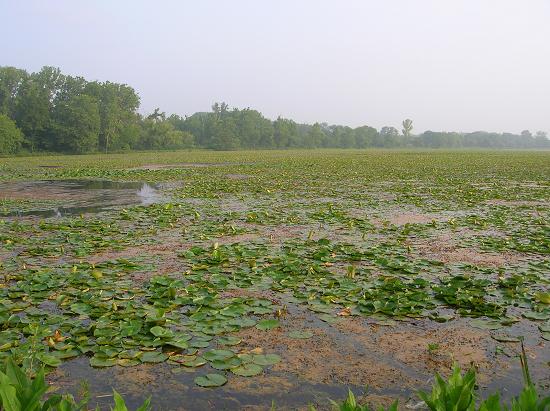
Nearly 90% of Ohio’s wetlands have been drained or filled. Kettle holes, sphagnum peat bogs, prairies, and oak openings are still found in a few glaciated areas in the northern half of the state. Coastal areas along Lake Erie and bottomlands along Ohio’s rivers and streams preserve the remaining wetlands. Once a commercial fur farm, […]
5-83 Blaw-Knox Antenna

In 1922, during the infancy of broadcast radio, the call letters WLW were assigned to the station begun by Cincinnatian Powell Crosley Jr. The station moved its transmitting operations to Mason in 1928, and by April 17, 1934, WLW had permission to operate experimentally at 500,000 watts. Becoming the first and only commercial radio station […]
4-83 John Evans House

David and Rachel Burnet Evans built this Federal style house in 1836. Their son, Dr. John Evans (1814-1897), nationally known physician, statesman, and educator, lived here as a young man. After graduating from Lynn Medical College in Cincinnati, Dr. Evans became a prominent physician in Indiana and helped establish the Indiana Hospital for the Insane. […]
3-83 Thomas Corwin (1794-1865)

One of the most effective political orators of his era, Tom Corwin (nicknamed “the Wagon Boy” for his War of 1812 service) resided here from 1839 until his death. A Whig stump speaker known for his wit and eloquence, he was elected governor of Ohio in 1840 and campaigned for William Henry Harrison in his […]
2-83 Union Village (1805-1912)

Union Village, the first and largest Shaker (United Society of Believers) community west of the Allegheny Mountains, was established in 1805. Nearly 4,000 Shakers lived in Union Village, the last living here until 1920. They owned 4,500 acres of land with more than 100 buildings. Union Village was parent to other communities in Ohio, Kentucky, […]
1-83 Justice John McLean 1785-1861

Having settled in the Ridgeville area with his father, Justice McLean, in 1799, Justice John McLean was appointed to the United States Supreme Court in 1829 by President Andrew Jackson. He was best known for his anti-slavery dissenting opinion in the famous Dred Scott case. Founder of the Western Star, former Postmaster General, Congressman, and […]
4-82 Maude C. Collins – Law Enforcement Pioneer

Ohio’s first female county sheriff, Maude Charles Collins (1893-1972) of Vinton County was appointed to finish her husband Fletcher’s term after he was killed in the line of duty in October 1925. In 1926, she ran for the office in her own right on the Democratic ticket and handily beat males in both the primary […]