 Skip to content

20-7 Groundbreaking Site of the National Road in Ohio / Belmont County
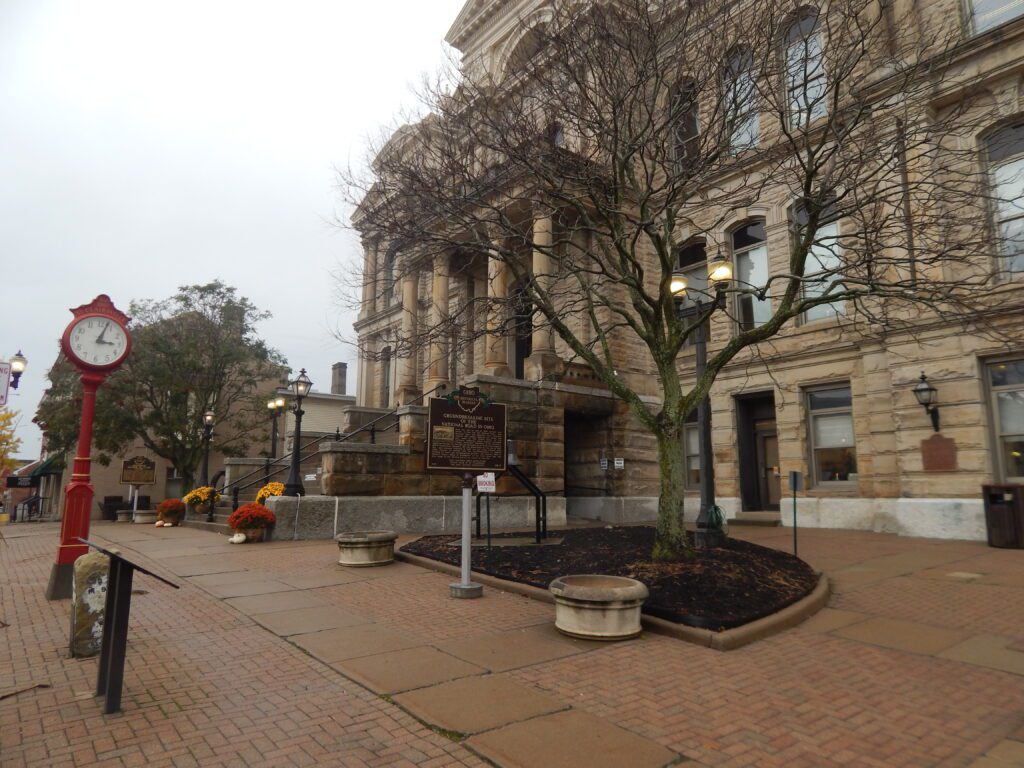
Near this site on July 4, 1825 ground was broken in Ohio for the National Road. The National Road was America’s first federally planned and funded highway and linked the east coast of the United States to Old Northwest Territory. Albert Gallatin, President Thomas Jefferson’s Secretary of the Treasury, conceived the idea for the road […]
15-7 Union Square and Its Uses / The Question of Ownership
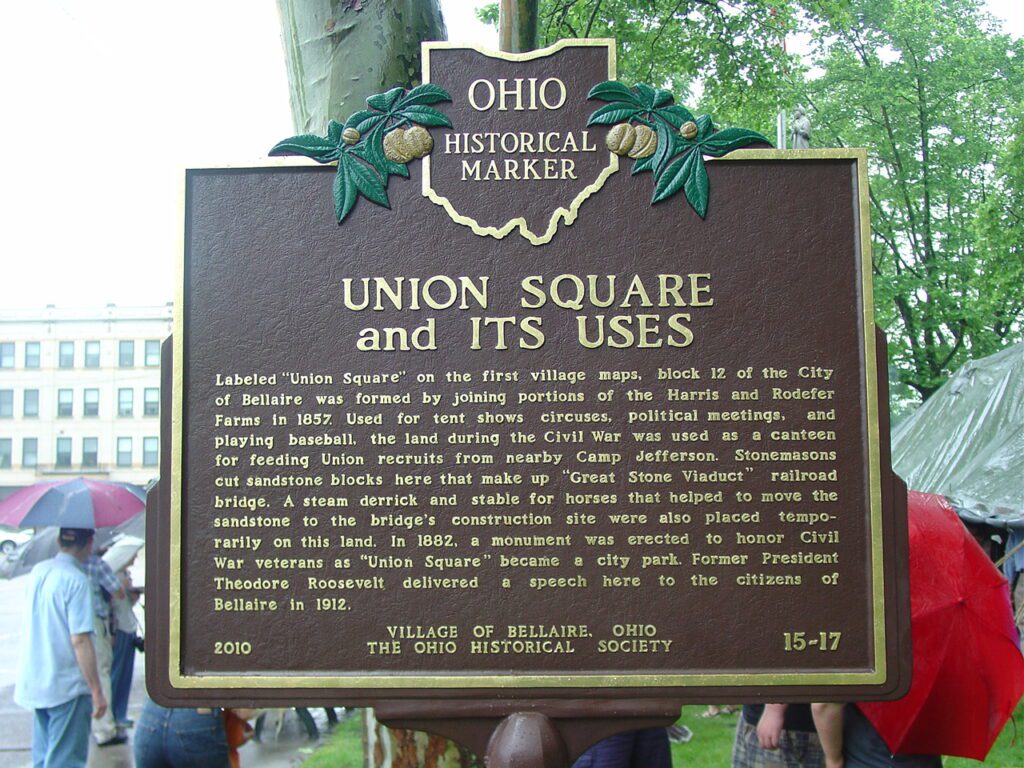
Labeled “Union Square” on the first village maps, block 12 of the City of Bellaire was formed by joining portions of the Harris and Rodefer Farms in 1857. Used for tent shows, circuses, political meetings, and playing baseball, the land during the Civil War was used as a canteen for feeding Union recruits from nearby […]
16-7 Bellaire High School Clock Tower / Central School Clock Tower and Bell
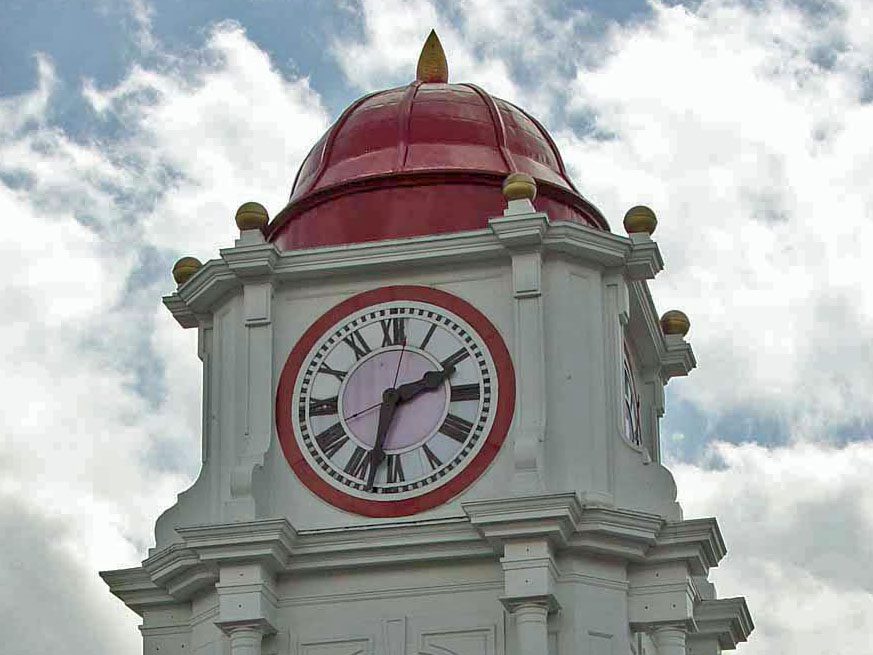
The Bellaire High School Clock Tower was erected in 1925 as the second town clock to be mounted on Bellaire’s public schools. C.W. Bates of Wheeling designed this tower, built by C.D. Keyser & Co. of Bellaire. The school building stretches 256 feet along 35th Street, and the tower rises 40 feet above the 3rd […]
17-7 Governor Arthur St. Clair – 1734-1818
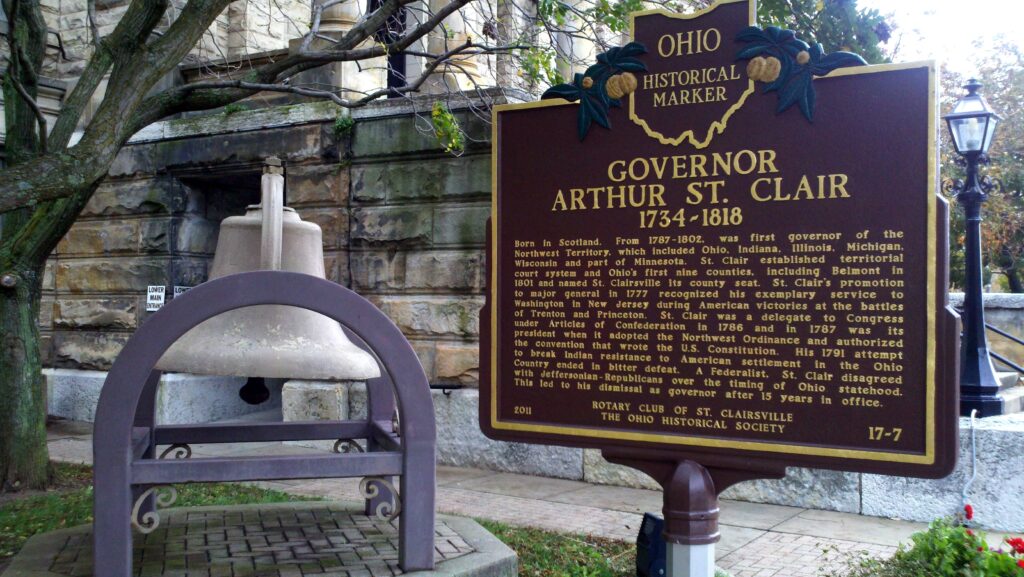
Born in Scotland. From 1787-1802, was first governor of the Northwest Territory, which included Ohio, Indiana, Illinois, Michigan, Wisconsin and part of Minnesota. St. Clair established territorial court system and Ohio’s first nine counties, including Belmont in 1801 and named St. Clairsville its county seat. St. Clair’s promotion to major general in 1777 recognized his […]
12-7 William Dean Howells, “The Dean of American Letters” / Poet James Arlington Wright
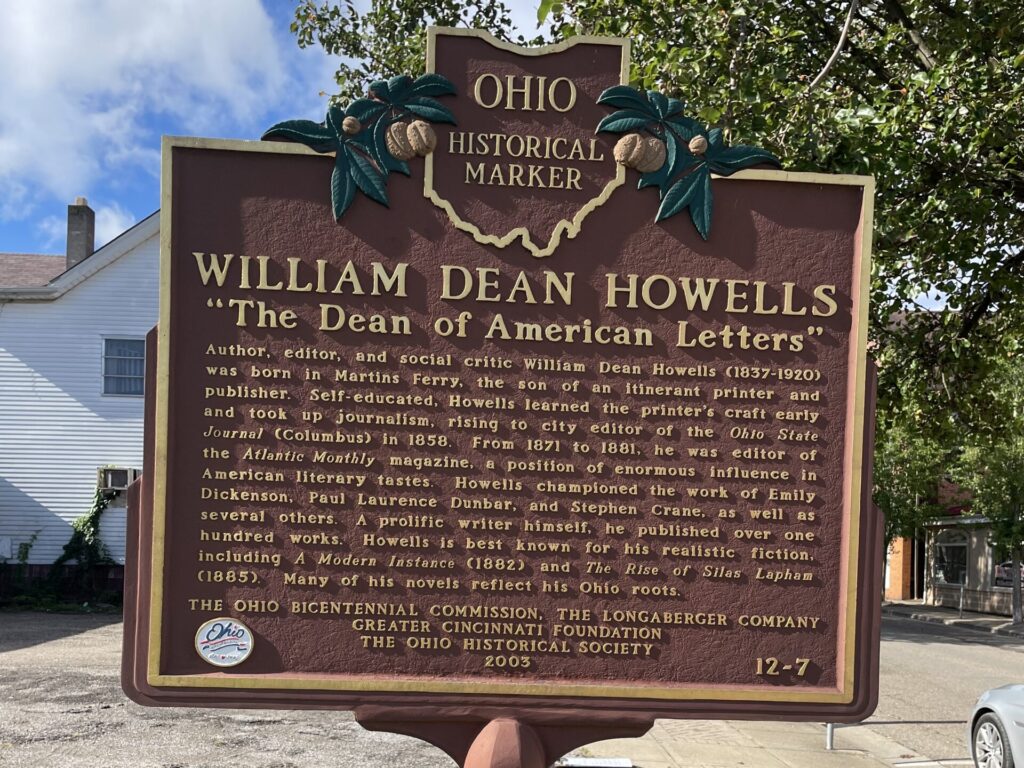
Author, editor, and social critic William Dean Howells (1837-1920) was born in Martins Ferry, the son of an itinerant printer and publisher. Self-educated, Howells learned the printer’s craft early and took up journalism, rising to city editor of the Ohio State Journal (Columbus) in 1858. From 1871 to 1881, he was editor of the Atlantic […]
13-7 Powhatan Point
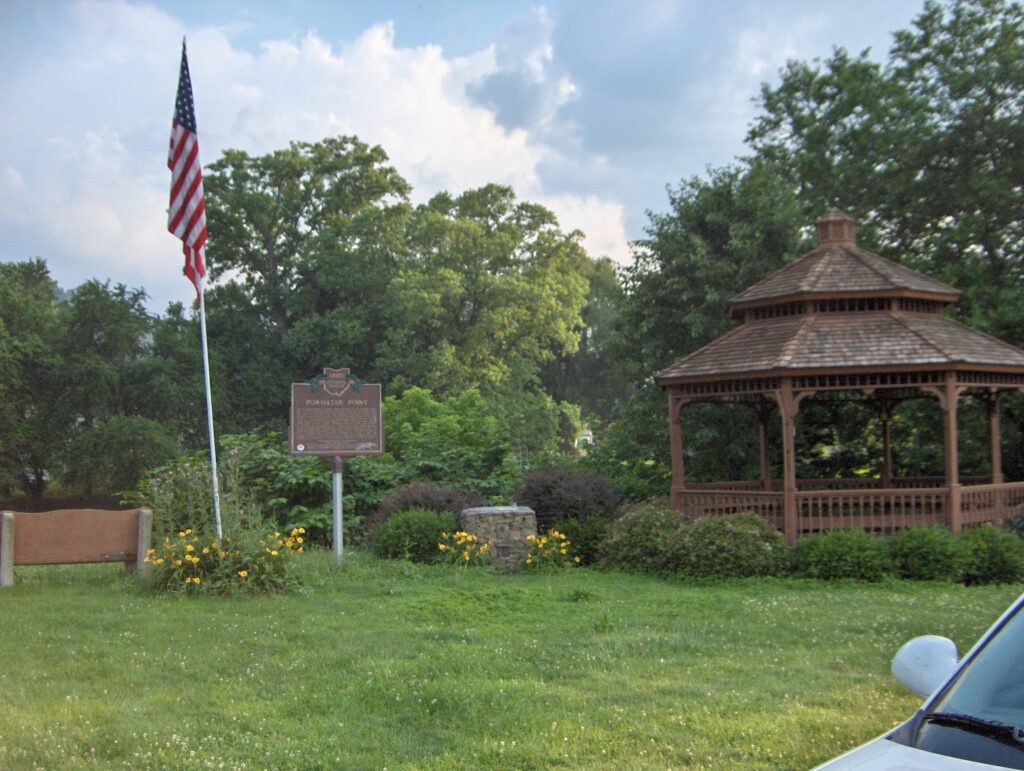
First surveyed in 1849, Powhatan Point was laid out by Franklin Knox. The “point” is the confluence of Captina Creek and the Ohio River. The small but thriving river and farming community served York Township and the rich Captina Valley as a shipping center for its first 75 years. Given impetus by the construction of […]
14-7 The Great Stone Viaduct
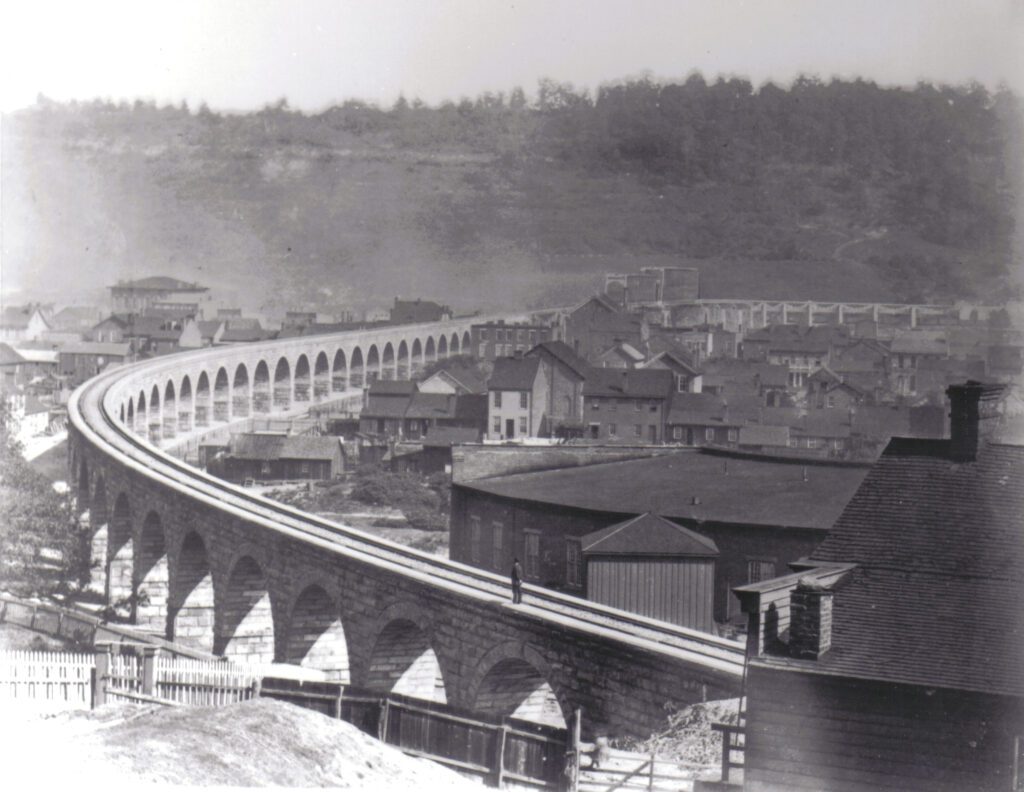
Construction of this Great Stone Viaduct began in 1870 at Union Street as an Ohio approach to the railroad bridge spanning the Ohio River. It was completed to Rose Hill in April 1871, and the entire bridge span connecting Ohio to West Virginia, of which the Viaduct is a part, was opened to rail traffic […]
9-7 Imperial Glass – Gem of “The Glass City”

With ready access to raw materials, fuel, skilled labor, and transportation, the Ohio Valley became the center of the American glass industry during the late 1800s. Among dozens of local manufacturers, the Imperial Glass Company, founded in 1901 by river man and financier Edward Muhleman, first made glass in 1904 and distinguished itself for mass […]
10-7 Morristown
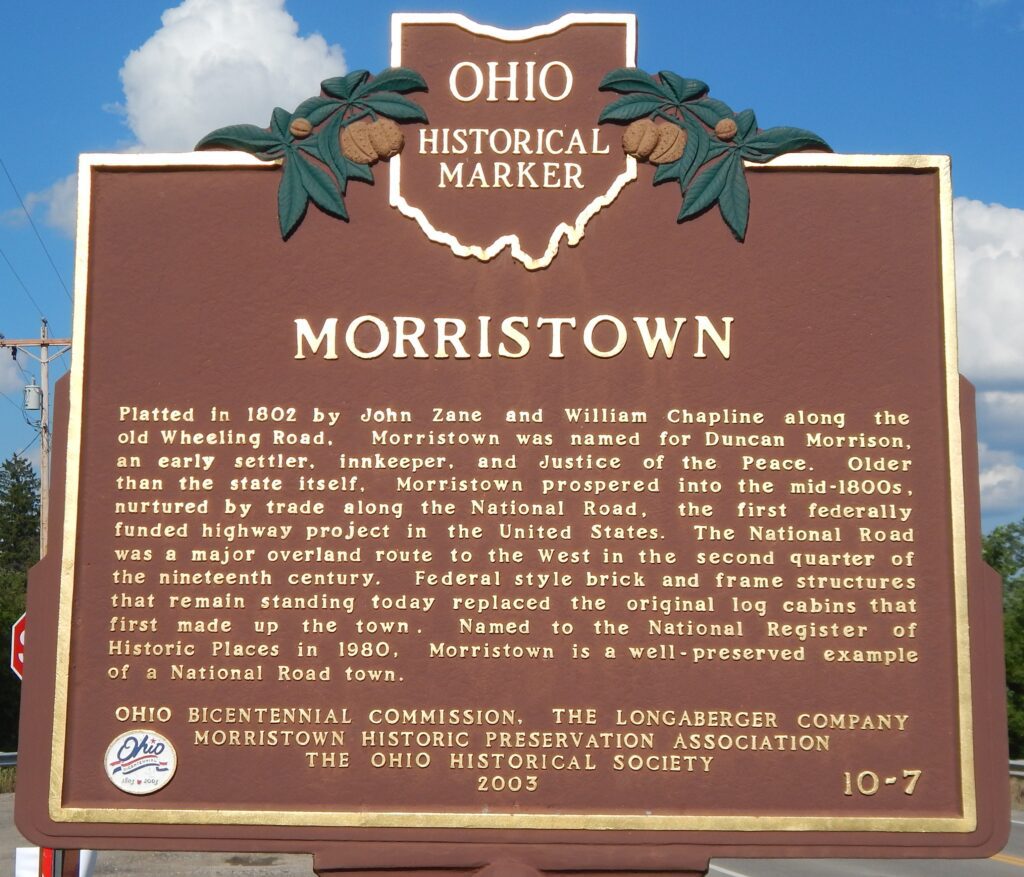
Platted in 1802 by John Zane and William Chapline along the old Wheeling Road, Morristown was named for Duncan Morrison, an early settler, innkeeper, and Justice of the Peace. Older than the state itself, Morristown prospered into the mid-1800s, nurtured by trade along the National Road, the first federally funded highway project in the United […]
11-7 Blaine Hill “S” Bridge / Blaine Hill Viaduct
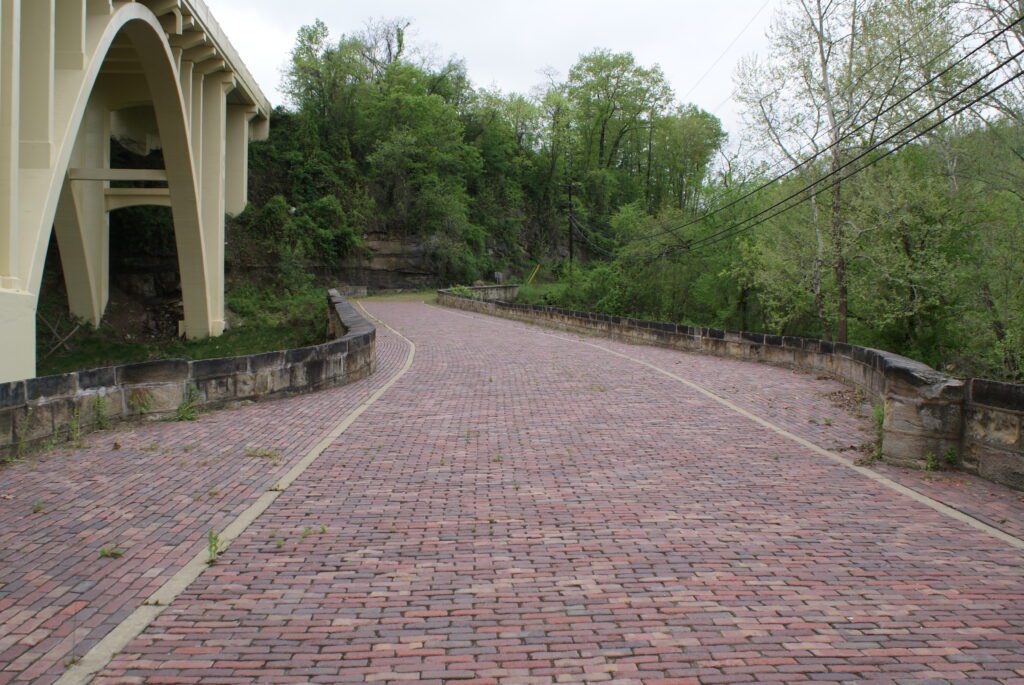
The first Blaine Hill Bridge was constructed in 1828 as part of the National Road, the nation’s first federally funded highway. This three-arch S-shaped structure, 345 feet in length, spans Wheeling Creek (a tributary of the Ohio River) and is the longest original “S” bridge in existence on the old National Road. At a gradient […]