 Skip to content

2-21 Camp Delaware 1862-1864
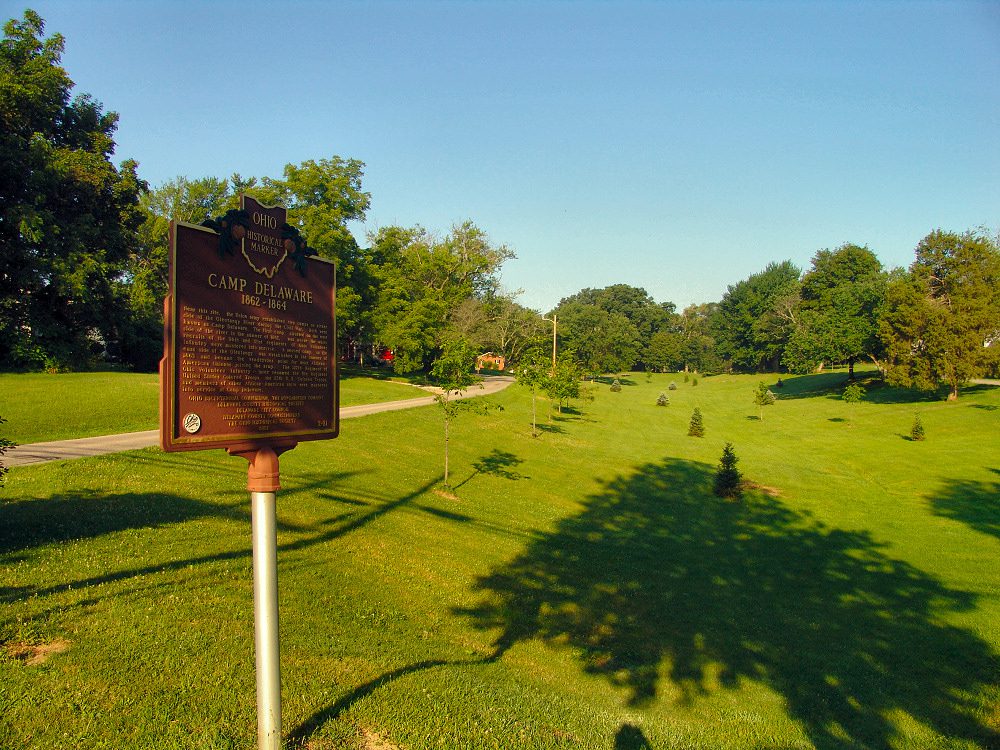
Near this site, the Union army established two camps on either side of the Olentangy River during the Civil War. Both were known as Camp Delaware. The first camp, situated on the west side of the river in the summer of 1862, was where the white recruits of the 96th and 121st regiments of Ohio […]
1-21 Pioneer Radio Telescope / Big Ear Radio Telescope

One-half mile east is the site of the former BIG EAR radio telescope. Designed by Dr. John D. Kraus, pioneering radio astronomer at Ohio State University, it had a collecting area of 340 by 70 feet (104 by 21 meters). The observatory was completed in 1963. The Ohio Sky Survey recorded here between 1965 and […]
7-20 Winchester’s Camp No. 2 / Preston Island
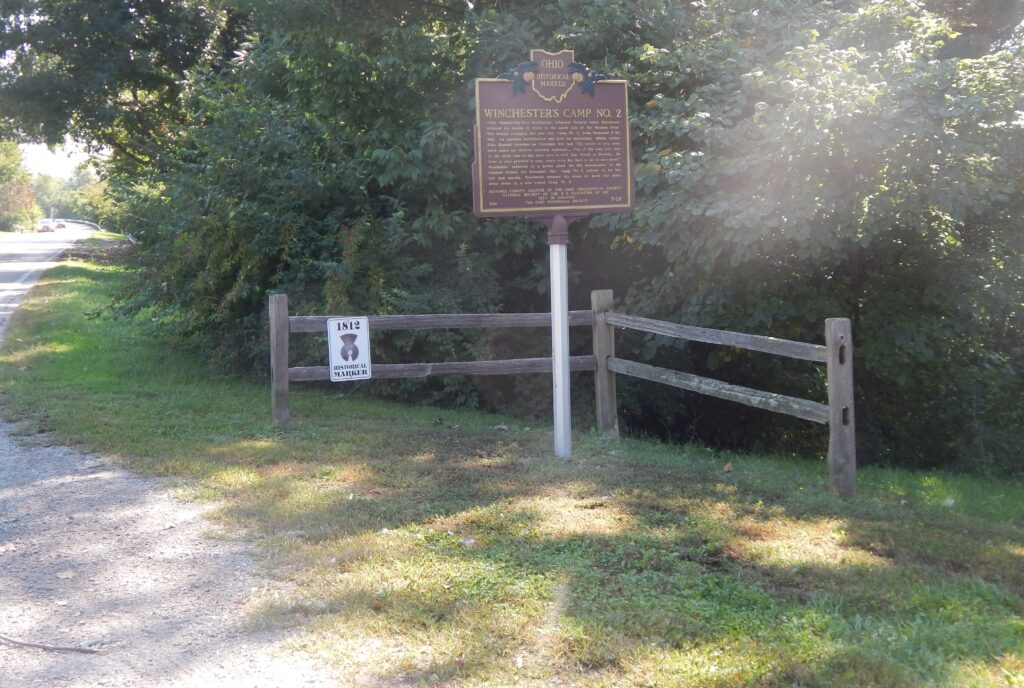
After completing Fort Winchester, Brigadier General James Winchester ordered his troops to cross to the north side of the Maumee River. The troops occupied the new site, Camp #2, from November 3-10, 1812. An earthen fortification was built for protection. Militia soldier Elias Darnell recorded on November 4th that “The weather is very rainy, which […]
6-20 Winchester’s Camp No. 3/Fort Starvation / The Old Kentucky Burial Grounds
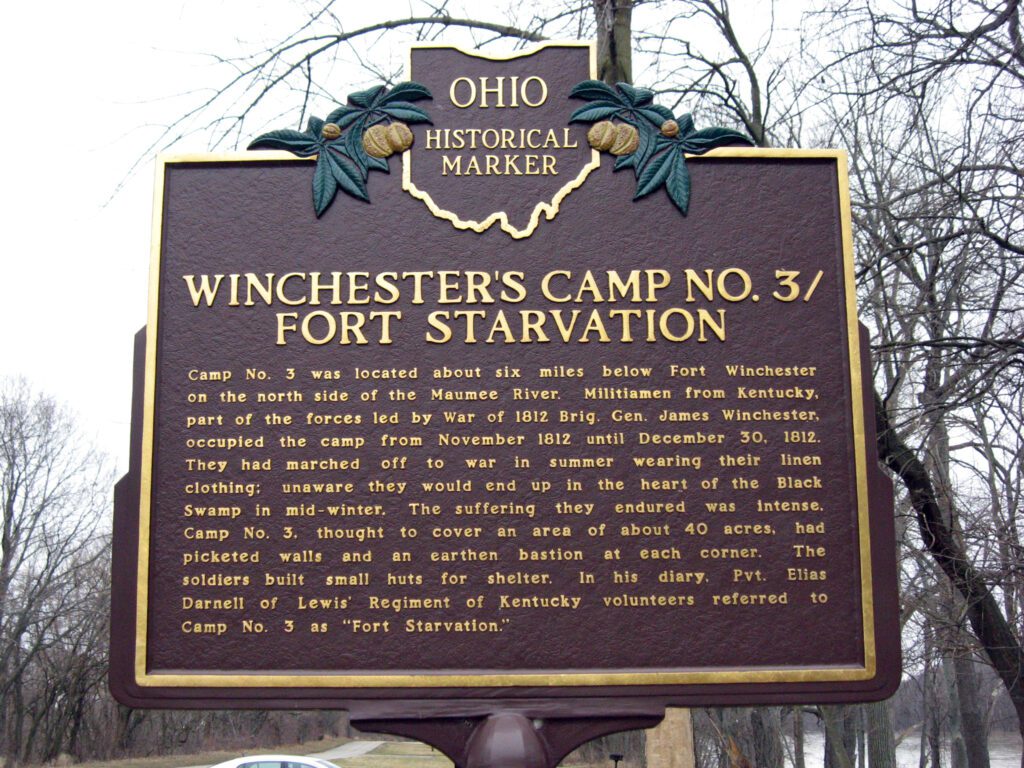
Camp No. 3 was located about six miles below Fort Winchester on the north side of the Maumee River. Militiamen from Kentucky, part of the forces led by War of 1812 Brig. Gen. James Winchester, occupied the camp from November 1812 until December 30, 1812. They had marched off to war in summer wearing their […]
5-20 Evansport
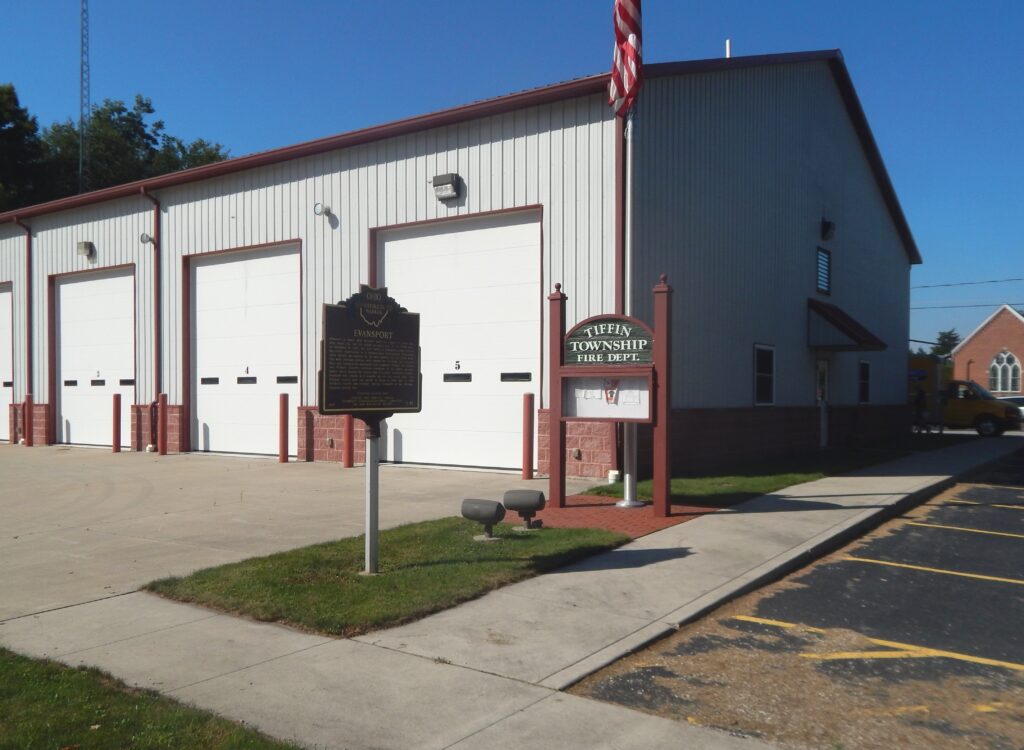
Evansport is named after brothers Amos and Albert G. Evans who, with Jacob Coy, had the village surveyed next to the Tiffin River on December 14, 1835. The “port” suffix in Evansport’s name reflects the river’s significance as a transportation thoroughfare. Evansport’s early growth was spurred by its mills powered by the Tiffin River. The […]
4-20 Fort Winchester
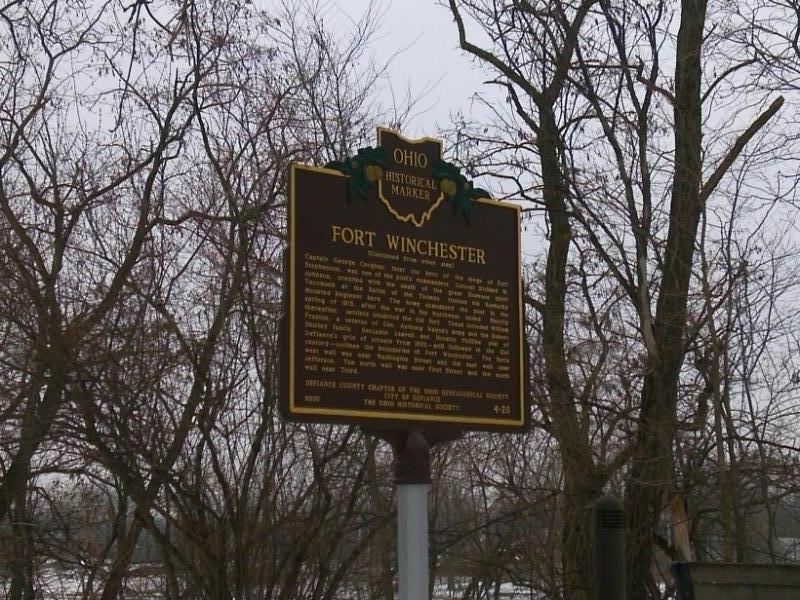
General William Henry Harrison ordered the construction of Fort Winchester at the beginning of October 1812 and it was completed October 15. The fort served as a forward observation post and supply depot for the American army during the War of 1812. Until Fort Meigs was completed in 1813, Fort Winchester was the front line […]
3-20 Tale of Ensign James Liggett / Major Adam Charles Muir, 41st Regiment of Foot
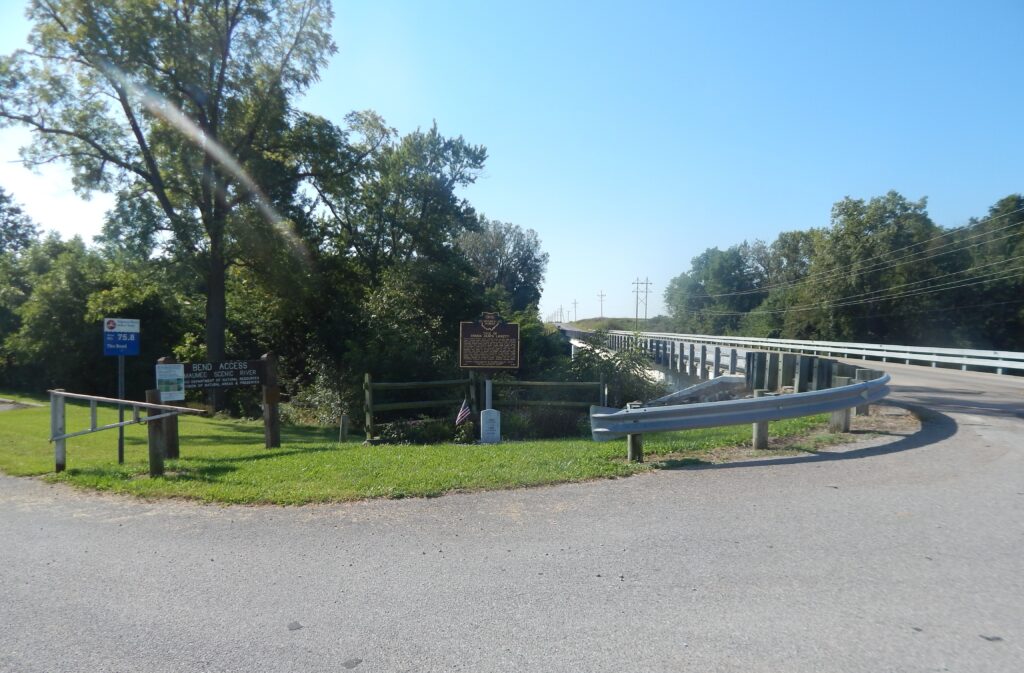
After American militia troops forcibly ended the 1812 siege of Fort Wayne, General James Winchester’s Army of the Northwest marched down the north side of the Miami [Maumee] River to stop or retard advancing British troops sent to aid in the siege of Fort Wayne. After three days of difficult march, Ensign James Liggett of […]
2-20 Spemica Lawba-Johnny Logan
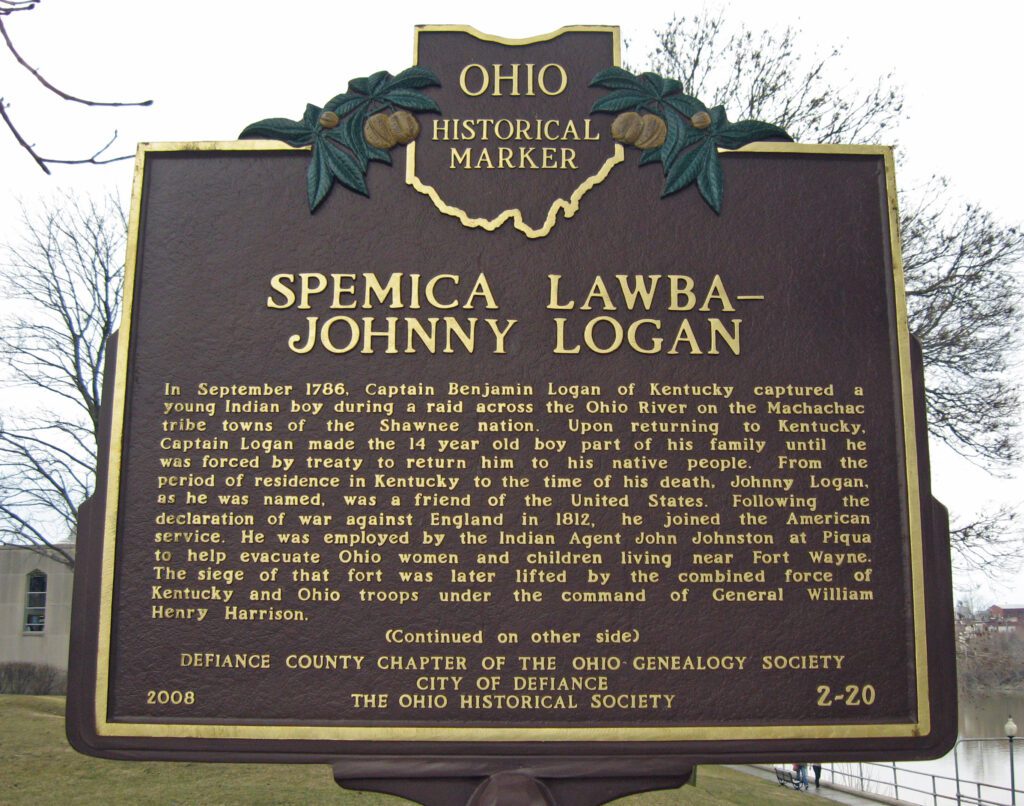
In September 1786, Captain Benjamin Logan of Kentucky captured a young Indian boy during a raid across the Ohio River on the Machachac tribe towns of the Shawnee nation. Upon returning to Kentucky, Captain Logan made the 14 year old boy part of his family until he was forced by treaty to return him to […]
1-20 Daeida Hartell Wilcox Beveridge / Amelia Swilley Bingham
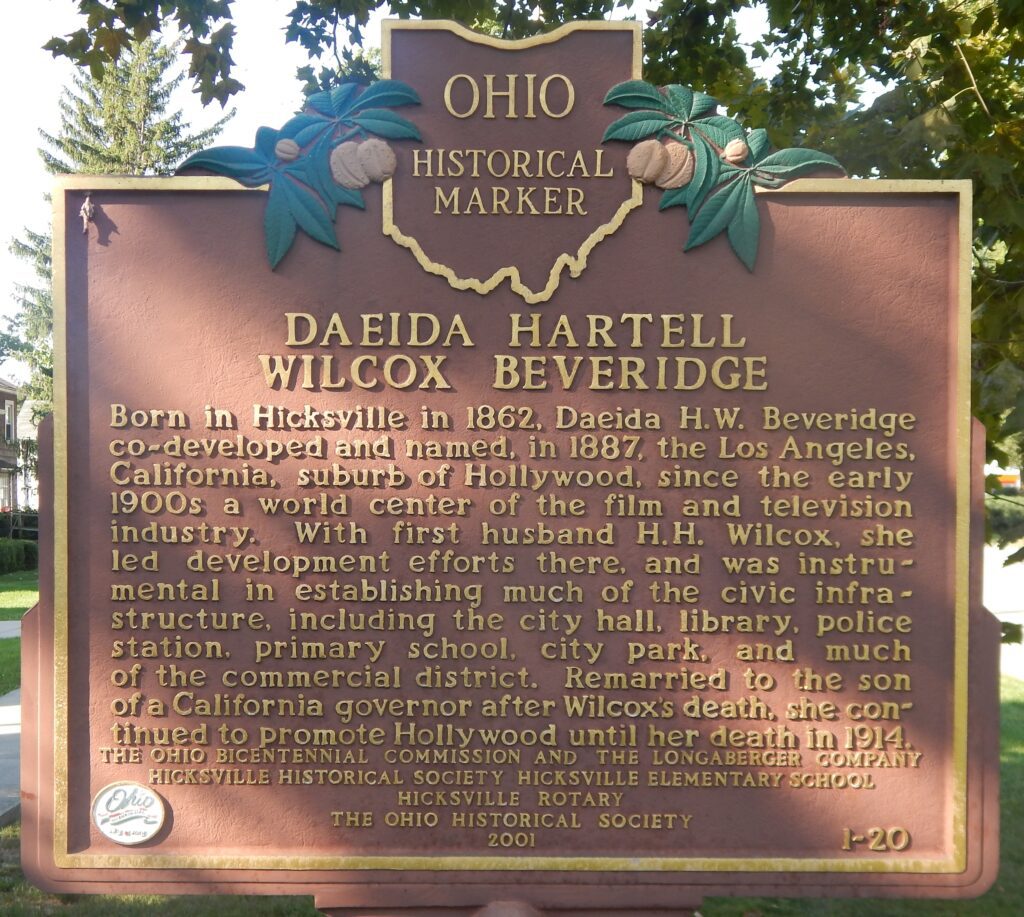
Born in Hicksville in 1862, Daeida H.W. Beveridge co-developed and named, in 1887, the Los Angeles, California, suburb of Hollywood, since the early 1900s a world center of the film and television industry. With first husband H.H. Wilcox, she led development efforts there, and was instrumental in establishing much of the civic infrastructure, including the […]
8-19 James & Sophia Clemens & Greenville Settlement in Long, Ohio
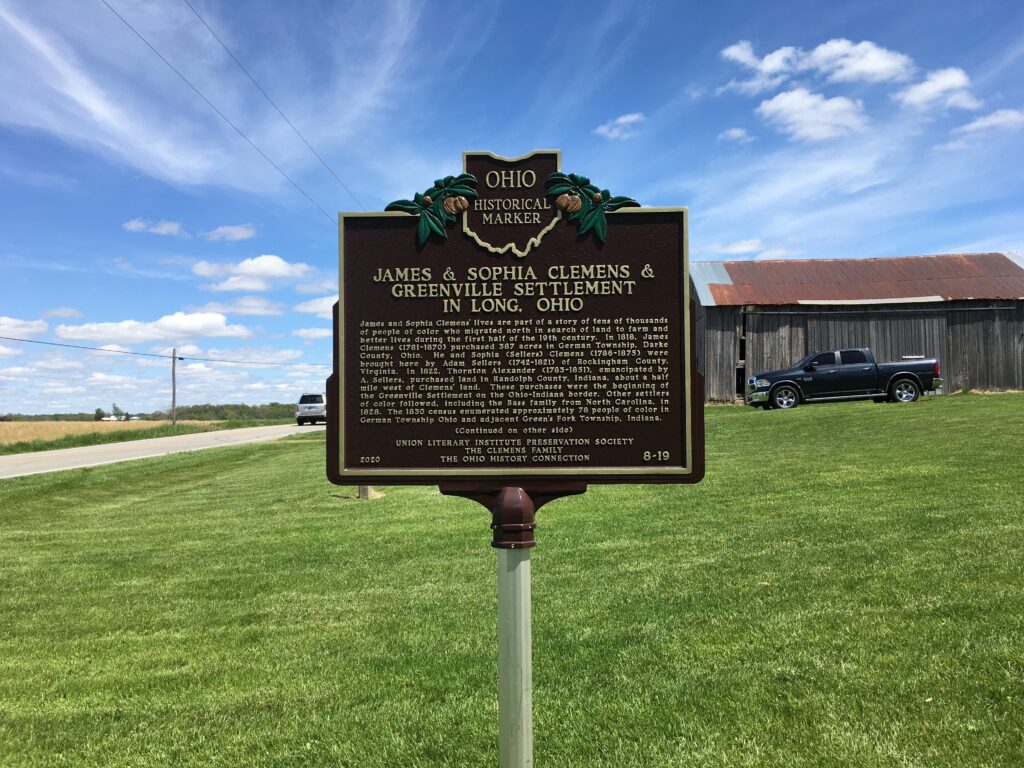
James and Sophia Clemens’ lives are part of a story of tens of thousands of people of color who migrated north in search of land to farm and better lives during the first half of the 19th century. In 1818, James Clemens (1781-1870) purchased 387 acres in German Township, Darke County, Ohio. He and Sophia […]