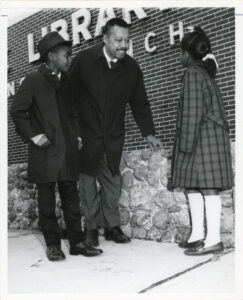
On November 19, 1968, the Columbus Metropolitan Library dedicated the first public library in the nation named after Dr. Martin Luther King Jr. After King’s assassination on April 4, 1968, the East Side Community Council requested that the new library being planned for the King-Lincoln Bronzeville community bear his name. The King family had both family and civic ties to Columbus and were honored by the tribute. More than 1,000 people gathered outside 1600 E. Long Street to hear Martin Luther King Sr. deliver the November dedication speech. Continuing the King family tradition, Martin Luther King III cut the ribbon to open a new branch building at 1487 E. Long Street on October 18, 2018. The Martin Luther King Branch was the first Columbus public library to bear an individual’s name.
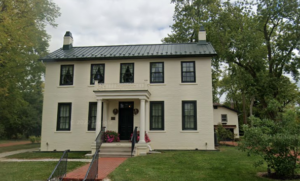
Hugh Grant Sr. (1769-1806) owned a gristmill and land in Pittsburgh, Pennsylvania, during the 1790s. He married Catharine Barr Grant (unknown-1836) and they had 6 children: Alexander, Jacob, Isabella, Nancy, Mary, and Hugh Grant Jr. (born posthumously). In 1804 Grant purchased 450 acres of federal land at the Chillicothe land office. In 1805 he and his family moved to Jackson Township, Ohio. Uncertain of the location of his tracts, he settled his family in a log structure along the Scioto River. During the winter of 1806-1807, Grant died in a freak accident climbing a honeybee tree. Catharine Barr Grant realized they were on the wrong land and moved her family to the right property holdings where the Grant Homestead remains. She died August 17, 1836, and is buried in Union Methodist Cemetery.
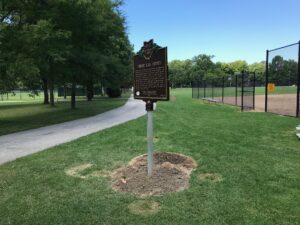
Beginning in 1873, oil magnate and philanthropist John D. Rockefeller purchased 700 acres of land in East Cleveland Township, now located in East Cleveland and Cleveland Heights. A failed hotel built in 1874-1875 served as the family’s summer home until it was destroyed by fire in 1917, although Rockefeller’s son, John, Jr., continued to visit the grounds. The Rockefellers spent much of their time outdoors, where they built on the land’s natural beauty and carefully designed and built carriage, foot and bridle paths, scenic views, lakes, a lily pond, stone bridges, a horse track and a gold course. John, Jr. purhcased all of his father’s Forest Hill property in 1923 and continued to buy adjacent land.
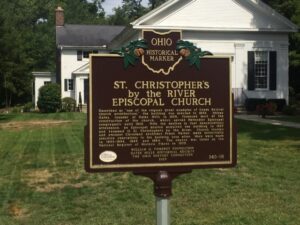
Described as “one of the region’s great examples of Greek Revival church architecture,” the building was erected in 1853. Holsey Gates, founder of Gates Mills in 1826, financed most of the construction of the church, which served Methodist Episcopal congregants until 1926. With the decline in that denomination’s attendance, an Episcopal mission acquired the building in 1927 and renamed it St. Christopher’s by the River. Church trustee and eminent Cleveland architect Frank Walker made historically sensitive renovations to the building soon after. More were made in 1953-1954, 1965, and 1984. The church was listed on the National Register of Historic Places in 1975.