

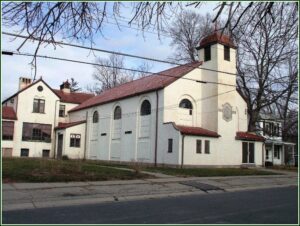
, OH
Eckstein Elementary School operated on this site from 1915 to 1958, serving Glendale’s Negro children from Kindergarten through eighth grade. The school was named in honor of Eleanor Eckstein, who taught the children at various locations in the village during the time of segregation in America. Upon completing eighth grade, Eckstein School’s students were integrated with their white counterparts in grades nine through twelve at Congress Avenue School. The Eckstein School building evolved from a single family dwelling into its present structure through a series of expansions, the last of which was the addition of the gymnasium in 1928. In the mid-1950s Glendale became a part of the Princeton School District. A new consolidated high school opened in 1958, the Congress Avenue School became Glendale Elementary, and Eckstein was closed. This commemorative text was composed by alumni of the Eckstein School.
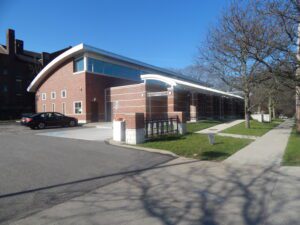
, OH
One of the most recognized figures of the Harlem Renaissance, Langston Hughes was born in Joplin, Missouri on February 1, 1902 and moved to Cleveland by the time he was in high school. An avid traveler, he credited his years at Central High School for the inspiration to write and dream. The consummate Renaissance man, Hughes incorporated his love of theater, music, poetry, and literature in his writings. As an activist, he wrote about the racial politics and culture of his day. He was awarded the Spingarn Medal by the NAACP. He published over 40 books, for children and adults. Known as the “Poet Laureate of the Negro People,” Hughes most famous poem is “The Negro Speaks of Rivers.” Langston died on May 22, 1967, and his remains were interred beneath the commemoratively designed “I’ve Known Rivers” tile floor in the Schomburg Center for Research in Black Culture in Harlem.
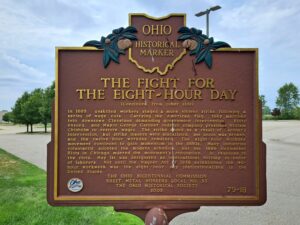
, OH
Organized efforts to establish an eight-hour workday existed as early as 1866 in the United States. The Cleveland Rolling Mills Strikes of 1882 and 1885, as part of this almost-70-year struggle, contributed to the establishment of the eight-hour workday. Both strikes challenged the two-shift, twelve-hour workday in addition to seeking recognition of the Amalgamated Association of Iron, Steel, and Tin Workers. The first strike – by English, Welsh, and Irish skilled workers – was at the Newburgh Rolling Mills, a major producer of steel rails for the rapidly expanding railroad industry that once stood near this site. It was quickly broken when unskilled Polish and Czech immigrants, unaware of the ongoing labor dispute, were hired. The strike ended when these new workers did not support the union. (continued on other side)
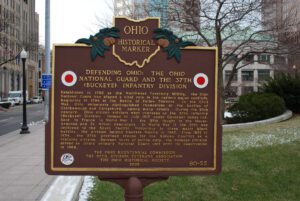
, OH
With five army camps in Columbus, Capitol Square was a military crossroads from 1861 to 1865. Ohio troops were mustered, paid, and on some occasions garrisoned at the Statehouse. Three of every five male Ohioans between the ages of 18 and 45 served in the Civil War. Ohio’s contribution to the war effort was enormous, supplying almost 320,000 soldiers to the Union Army, representing 230 regiments and 26 independent artillery batteries. More than 35,000 soldiers died during the war, and 30,000 more were disabled. One hundred forty-eight Ohio soldiers received the Congressional Medal of Honor for valor. Perhaps Ohio’s greatest contribution to the war was to the Union leadership that won it: Generals Ulysses S. Grant, William Tecumseh Sherman, Philip H. Sheridan, and James B. McPherson, as well as Secretary of War Edwin Stanton and Secretary of the Treasury Salmon Chase, were all Ohioans.
, OH
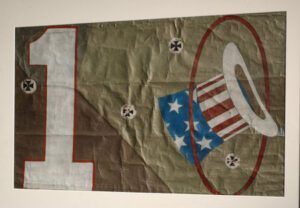
America’s World War I “Ace of Aces,” Edward Vernon Rickenbacker was born in Columbus in 1890 to Swiss immigrant parents, leaving school at age 12 to help support his family. Working for several Columbus automobile companies initiated his love of racing, and he achieved fame as a race driver and team owner between 1910 and 1916. Enlisting in the U.S. Army in 1917, he went to France as staff driver for General John Pershing with ambitions of becoming a combat flier. He managed a transfer to the American Expeditionary Force’s Aviation Instruction Center, learned to fly, and was assigned to the 94th Aero Squadron, the famed “Hat in the Ring” squadron led by ace Raoul Lufbery. (continued on other side)
, OH
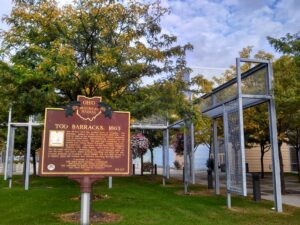
One of five Civil War military posts in Columbus, Tod Barracks, named in honor of Governor David Tod, was built in 1863 as the headquarters for military administration in central Ohio. Necessitated by Lincoln’s call for 300,000 new troops, the post was constructed in two months with United States Engineer, Captain John Tod, as supervisor. Carpenters of the 88th Ohio Volunteer Infantry from Camp Chase, three miles west, built it. Tod Barracks served as a recruiting depot, a rendezvous point for new recruits, and place where soldiers mustered-out after the war. Located adjacent to Columbus’ Union Station, the post also served as a transfer point for soldiers and officers traveling through Ohio. (continued on other side)
, OH
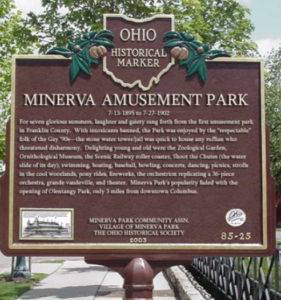
For seven glorious summers, from July 13, 1895 to July 27, 1902, laughter and gaiety rang forth from the first amusement park in Franklin County. With intoxicants banned, the Park was enjoyed by the “respectable” folk of the Gay ’90s – the stone water tower/jail was quick to house any ruffian who threatened disharmony. Delighting young and old were the Zoological Garden, Ornithological Museum, the Scenic Railway roller coaster, Shoot the Chutes (the water slide of its day), swimming, boating, baseball, bowling, concerts, dancing, picnics, strolls in the cool woodlands, pony rides, fireworks, the orchestrion replicating a 36-piece orchestra, grande vaudeville, and theater. Minerva Park’s popularity faded with the opening of Olentangy Park, only 3 miles from downtown Columbus.
, OH
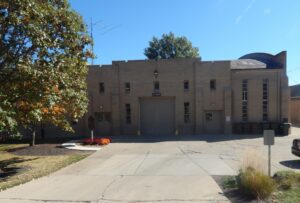
Xavier University Armory. The Xavier University Armory was dedicated in 1948 by the first Secretary of the Army, Kenneth C. Royall. In the following decades, U.S. Army Reserve Officer Training Corps (ROTC) cadets used it as a place to refine their tactical and technical skillsets in preparation to serve as officers in the U.S. Army. Since 1948, Xavier University ROTC commissionees have become General Officers and recipients of the Silver Star Medal, Bronze Star Medal, Purple Heart, and other prestigious awards. (Continued on other side)