 Skip to content

34-77 Akron Community Service Center and Urban League
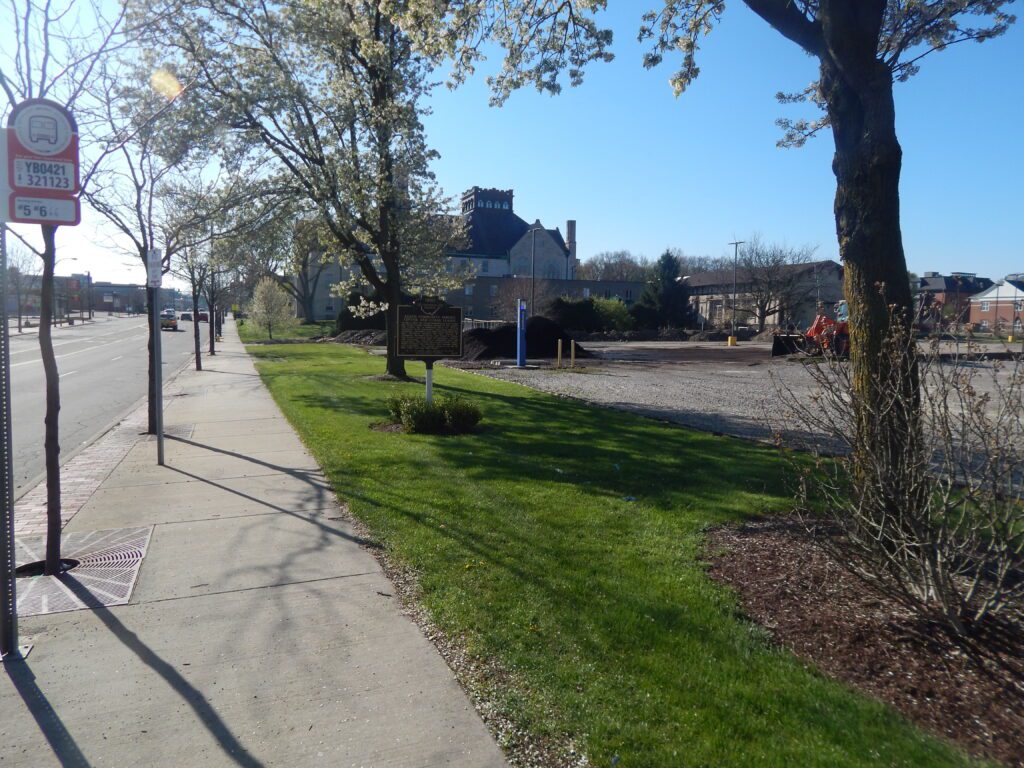
On May 1, 1950, the Akron Community Service Center and Urban League building opened to the public. The Center was a gathering place for African Americans of the community, where they addressed workplace, education, and other issues dividing the city. Directors included the late George W. Thompson, Raymond Brown, and Vernon L. Odom. The Center […]
45-77 Hale, Hammond, Cranz Homesteads
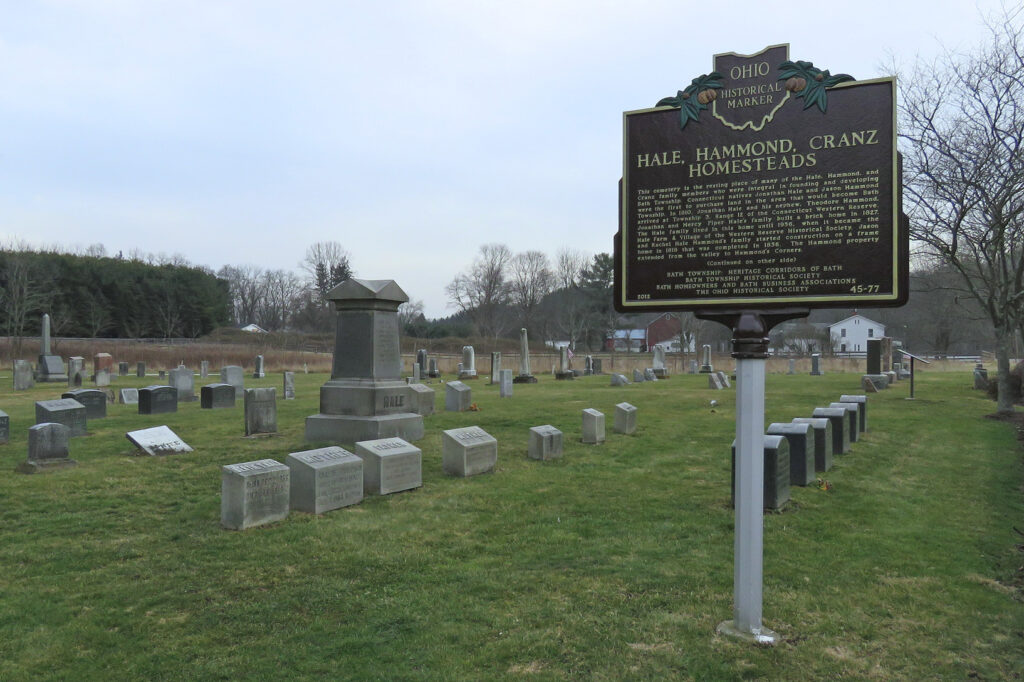
This cemetery is the resting place of many of the Hale, Hammond, and Cranz family members who were integral in founding and developing Bath Township. Connecticut natives Jonathan Hale and Jason Hammond were the first to purchase land in the area that would become Bath Township. In 1810, Jonathan Hale and his nephew, Theodore Hammond, […]
44-77 Shaw Cemetery
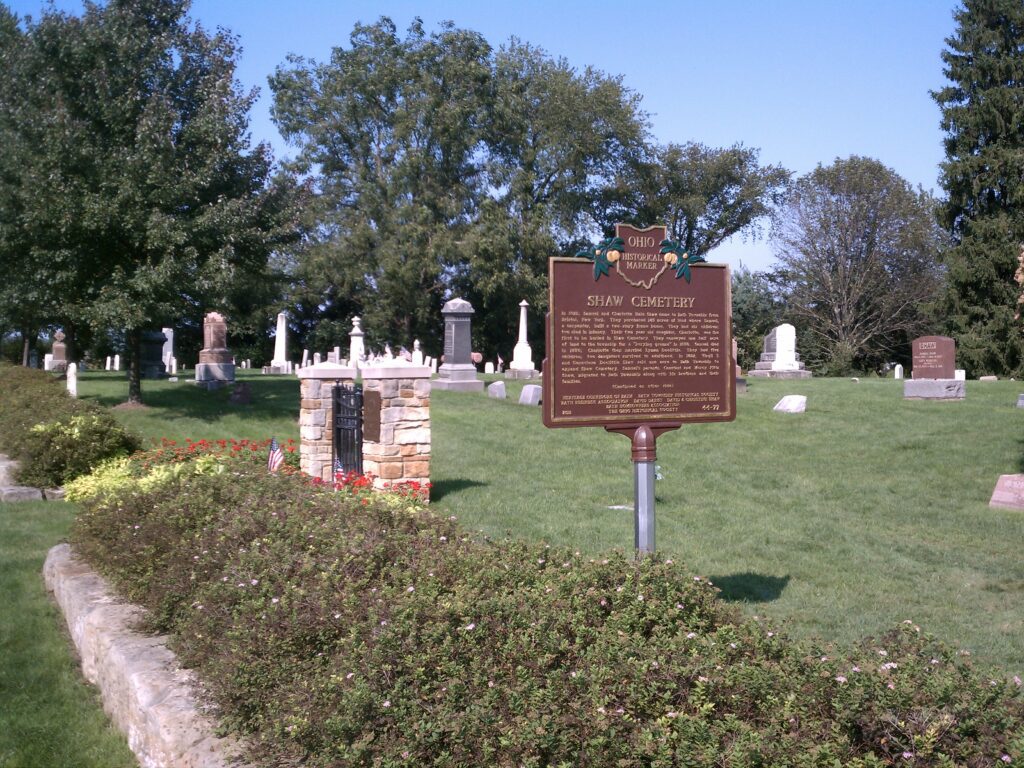
In 1829, Samuel and Charlotte Hale Shaw came to Bath Township from Bristol, New York. They purchased 145 acres of land where Samuel, a carpenter, built a two-story frame house. They had six children; two died in infancy. Their two year old daughter, Charlotte, was the first to be buried in Shaw Cemetery. They conveyed […]
43-77 Boston Township Hall / John Eisenmann (1851-1924)
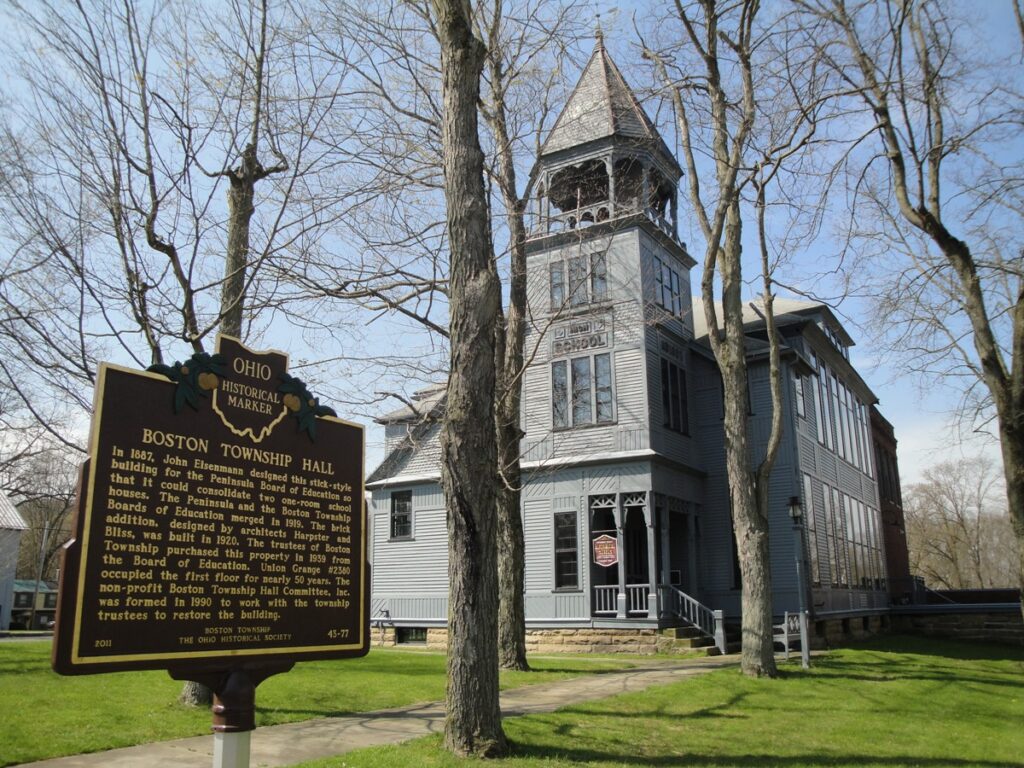
In 1887, John Eisenmann designed this stick-style building for the Peninsula Board of Education so that it could consolidate two one-room school houses. The Peninsula and the Boston Township Boards of Education merged in 1919. The brick addition, designed by architects Harpster and Bliss, was built in 1920. The trustees of Boston Township purchased this […]
42-77 High Bridge Glens
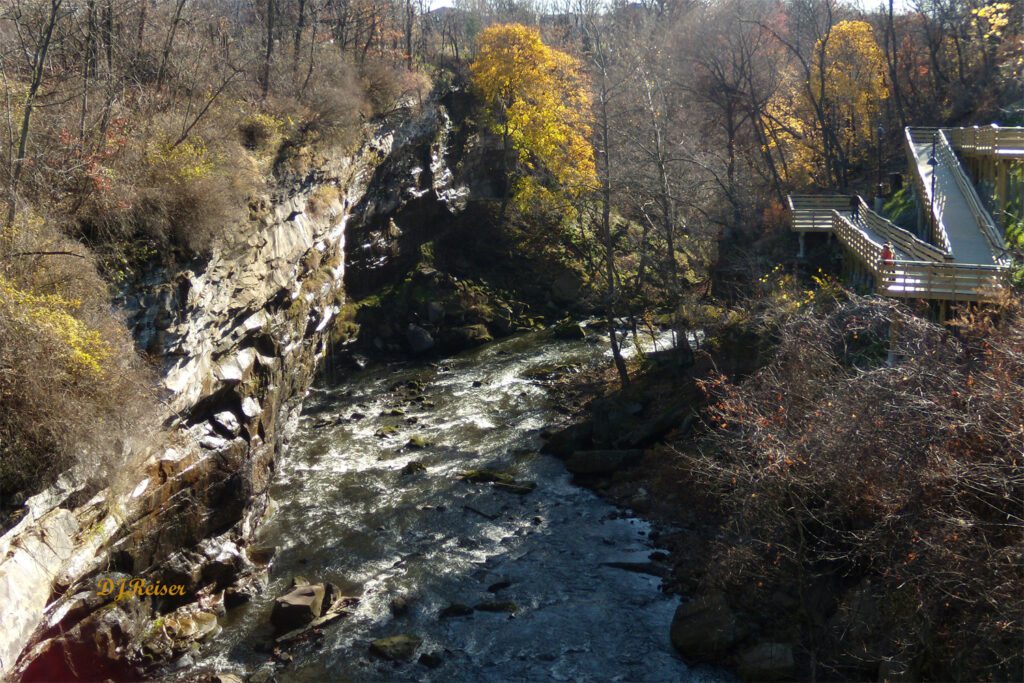
In 1879, local hardware store owners L.W. Loomis and H.E. Parks established a summer resort at Front Street and Prospect Avenue. The High Bridge Glens and Caves park spanned both sides of the Cuyahoga River and featured a dance and dining pavilion, scenic trails and overlooks, cascades and waterfalls, deep caverns, curious geological formations, and […]
41-77 Middlebury Cemetery
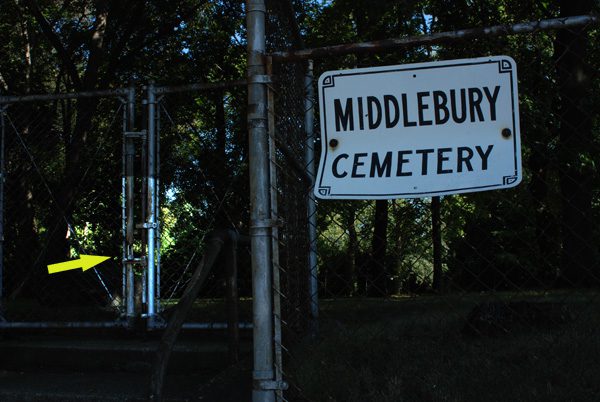
This burying ground was the first public cemetery located within Akron’s boundaries. It was also known as the “Old Cemetery” and the “Newton Street Cemetery.” Deacon Titus Chapman donated this land in 1808 as a burying ground, and he was probably the first person interred here when he died later that year. Early Akron settlers […]
40-77 The Gate Lodge, Stan Hywet Hall & Gardens / The Gate Lodge, Stan Hywet Hall & Gardens, The Birthplace of Alcoholics Anonymous
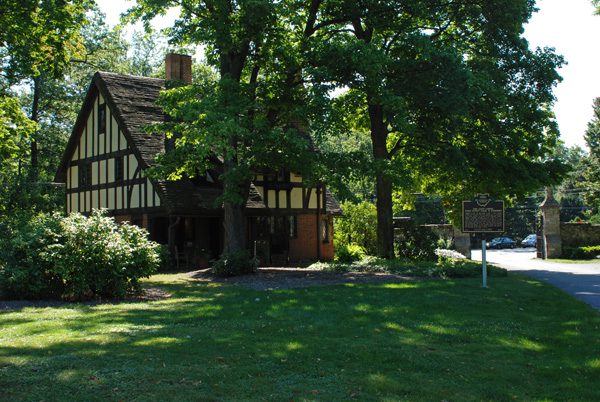
Completed in 1915, the Gate Lodge is one of several service buildings located at Stan Hywet Hall dedicated to the operations of the estate. Located at the front entrance gates, this two-story Tudor Revival structure was designed by the Seiberlings’ architect Charles S. Schneider. Originally, the Gate Lodge served as a residence for the estate’s […]
39-77 Gustave H. Grimm
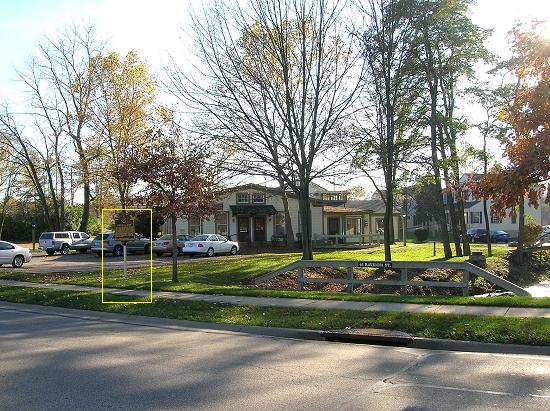
On this site in 1882, Gustave H. Grimm (1850-1914), a German immigrant tinsmith, established the G.H. Grimm Manufacturing Company. His device, the Champion Evaporator revolutionized maple syrup production with the use of a corrugated pan which increased the efficiency of evaporating liquids such as saps. Grimm’s business became the world’s leading manufacturer of maple supplies. […]
38-77 Elm Court Arthur Hudson Marks (1874-1939) / Our Lady of the Elms Sisters of St. Dominic
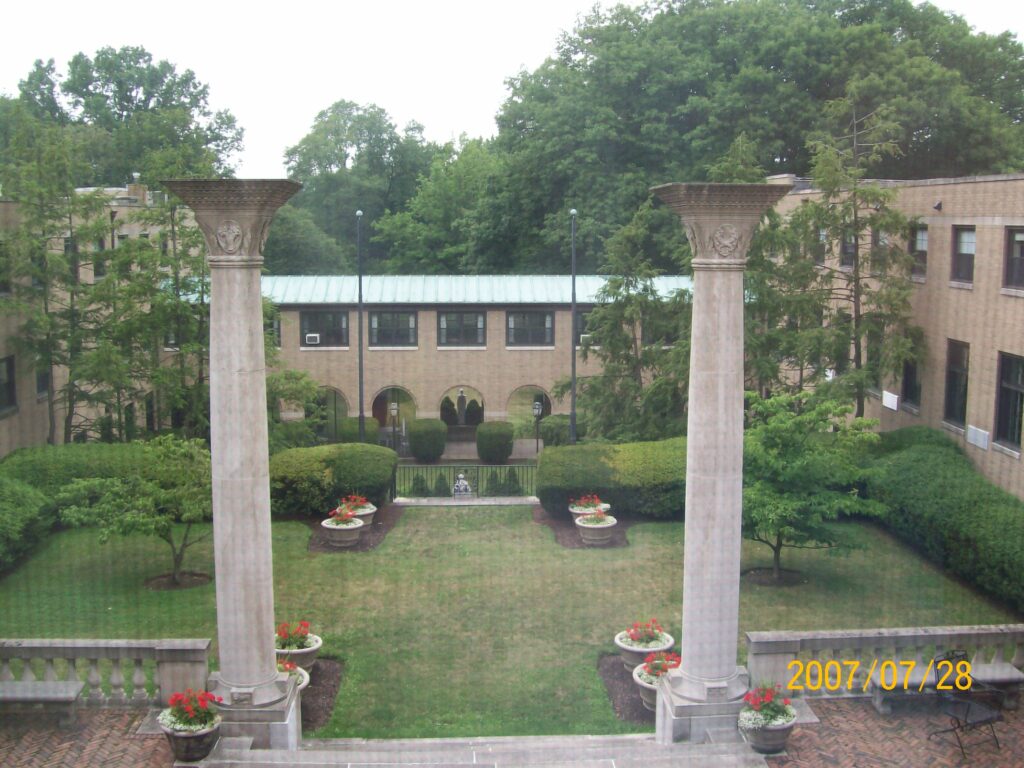
Elm Court, designed by Howard Van Doren Shaw of Illinois, was built in 1912 for Arthur Hudson Marks. The original mansion exemplifies the Italian Renaissance Revival style. Elm Court included the mansion, barn, stables, carriage house, pond, and a variety of trees, especially elms, on 33 acres. Arthur Marks was the inventive genius in chemistry […]
37-77 Treaty of Fort McIntosh Boundary Line
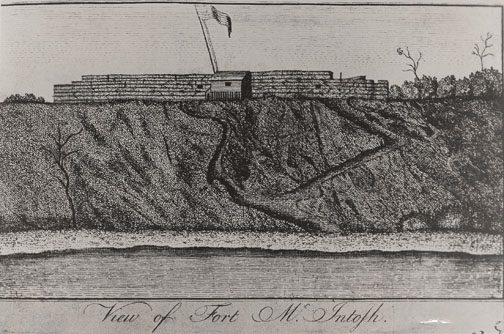
In 1785, American Indian tribal leaders from the Chippewa, Delaware, Ottawa, and Wyandot met with representatives sent by the United States Congress to sign the controversial Treaty of Fort McIntosh. The treaty surrendered control of Native American lands in southern and eastern Ohio to the United States government. Most Indians rejected the validity of the […]