 Skip to content

22-78 Phebe Temperance Sutliff
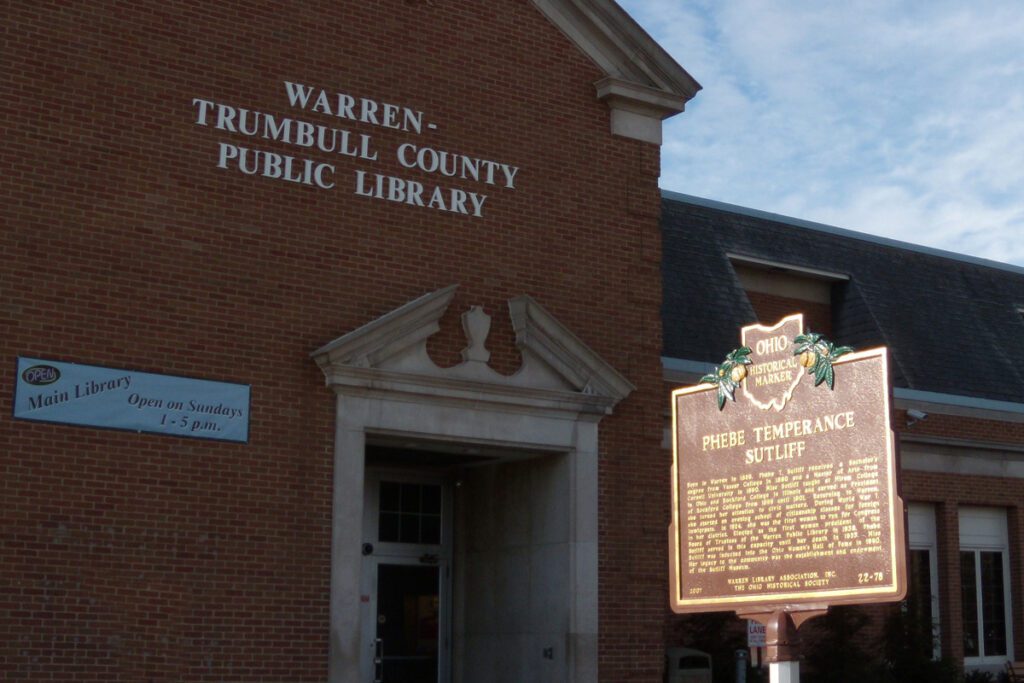
Born in Warren in 1859, Phebe T. Sutliff received a Bachelor’s degree from Vassar College in 1880 and a Master of Arts from Cornell University in 1890. Miss Sutliff taught at Hiram College in Ohio and Rockford College in Illinois and served as President of Rockford College from 1896 until 1901. Returning to Warren, she […]
21-78 Ohio’s First Civil War Monument
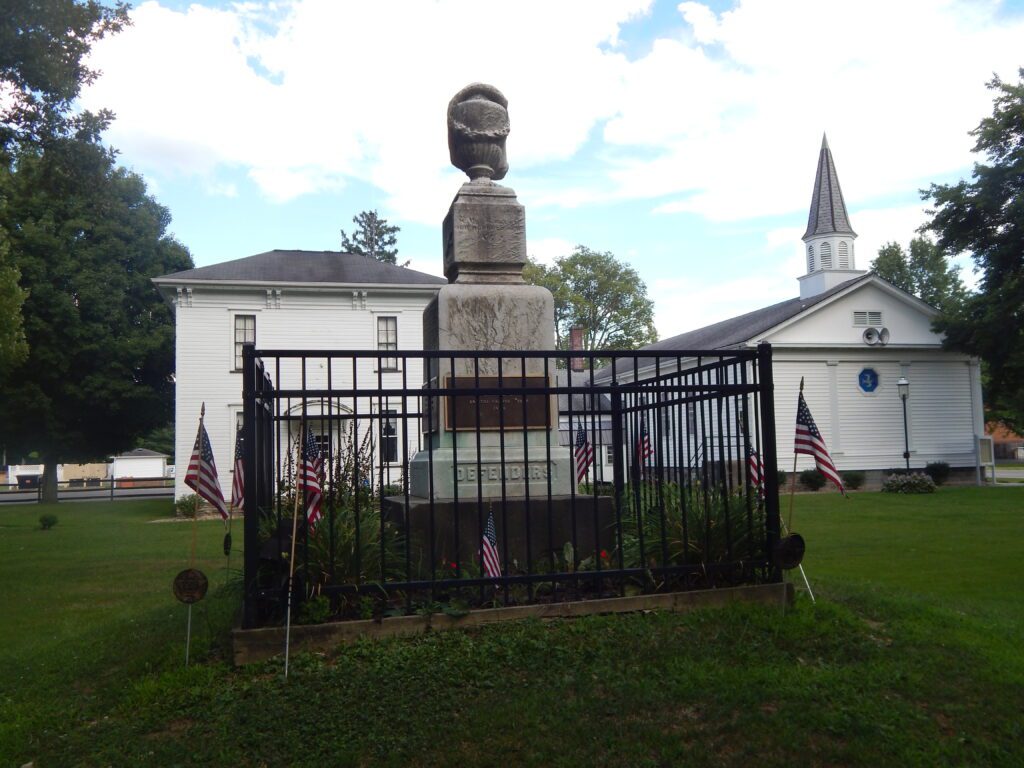
With the outbreak of the Civil War in 1861, many young men of Bristol Township enlisted in the army when President Abraham Lincoln issued his call to defend the Union cause. The death toll of some of these men at the Battle of Shiloh in Tennessee in April 1862 touched the local community as did […]
19-78 The Barnhisel House
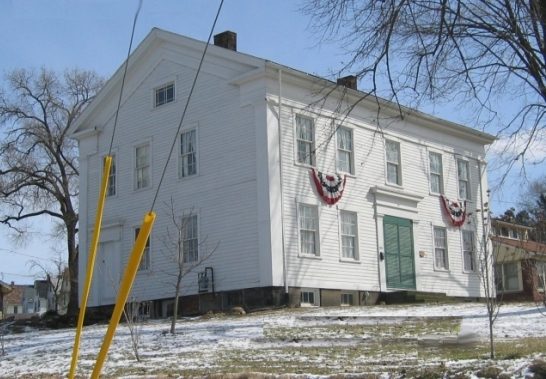
Built circa 1840 by Henry Barnhisel Jr. in the Greek Revival architectural style, the Barnhisel home is one of the oldest remaining structures in Girard. Henry and Eve Anna Barnhisel purchased the land where the house stands in 1813 when they acquired 318 acres in the Connecticut Western Reserve. The couple moved onto the land […]
17-78 William McKinley Birthplace
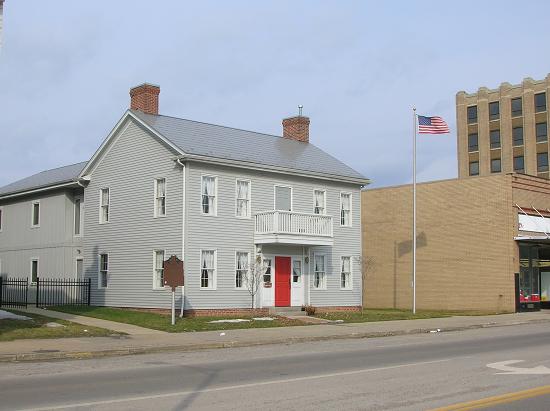
One of seven native Ohioans to serve as president of the United States, William McKinley (1843-1901) was born at this site. The original house was moved from this site and ultimately destroyed by fire. The McKinleys lived here until 1852 when they moved to Poland, Ohio, where William attended the Poland Seminary. He briefly attended […]
16-78 Howland Springs
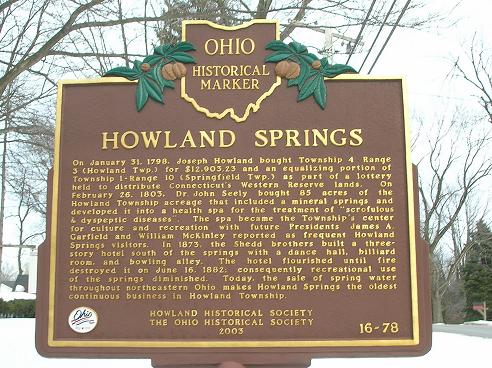
On January 31, 1798, Joseph Howland bought Township 4-Range 3 (Howland Twp.) for $12, 903.23 and an equalizing portion of Township 1-Range 10 (Springfield Twp.) as part of a lottery held to distribute Connecticut’s Western Reserve lands. On February 26, 1803, Dr. John Seely bought 85 acres of the Howland Township acreage that included a […]
15-78 Harriet Taylor Upton
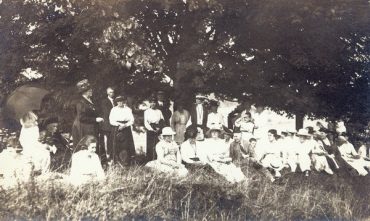
After embracing the cause of women’s suffrage, Harriet Taylor Upton (1854-1945) devoted her life to the movement. Born in Ravenna, she moved to Warren as a child and lived in this house beginning in 1873. Upton was treasurer of the National American Woman Suffrage Association from 1895 to 1910 and brought its headquarters to Warren […]
14-78 Gustavus Center Historic District
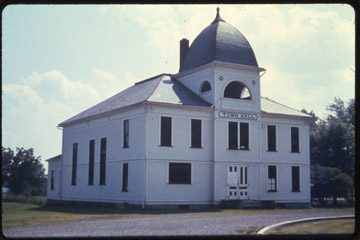
Major buildings dating from 1832 to 1898 surround the village green, the geographic center of Gustavus Township. Built in 1832 on the northwest quadrant, the George Hezlep House features Federal-Greek Revival architecture and has a closet reputedly used on the Underground Railroad. Built in 1840, the Farmers’ Exchange Store was originally a double entrance Greek […]
13-78 Settled by Alexander and Sarah Sutherland / Newton Township Duck Creek Settlement
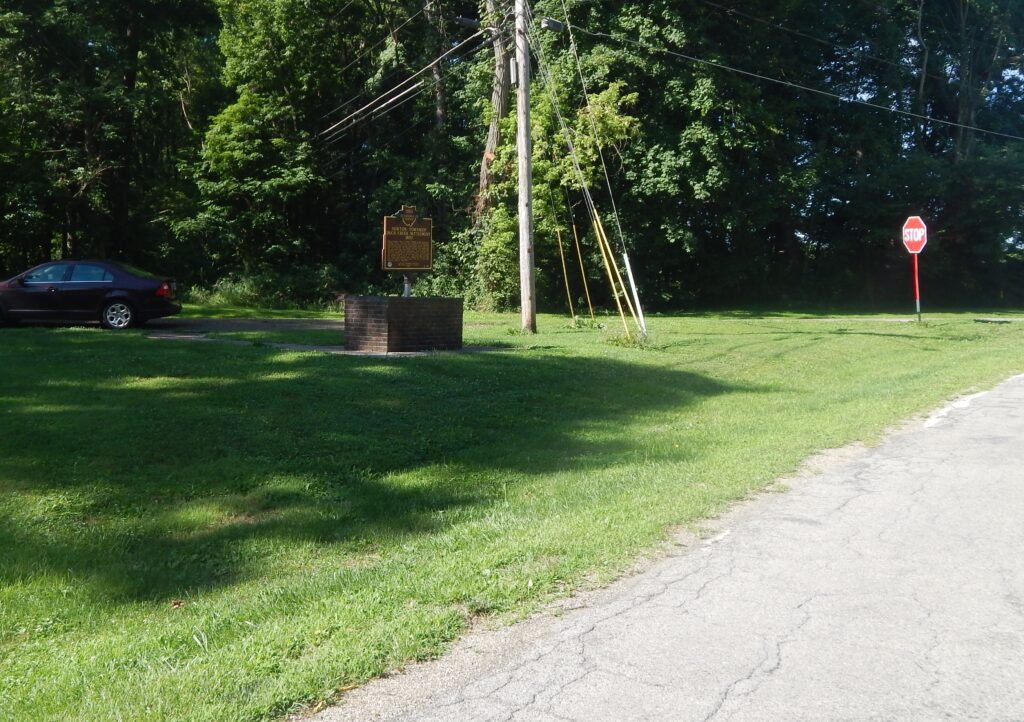
Alexander Sutherland (1767-1845) and his wife Sarah (1768-1836) were the first settlers in Newton Township, Trumbull County, Ohio. Coming from Westmoreland County, Pennsylvania, the Sutherlands acquired 205 acres of land along Duck Creek southward from this site. Alexander was an influential person in the area after the settlement was made at Duck Creek. He was […]
12-78 Darrow Octagon House / Clarence Darrow (1857-1938)
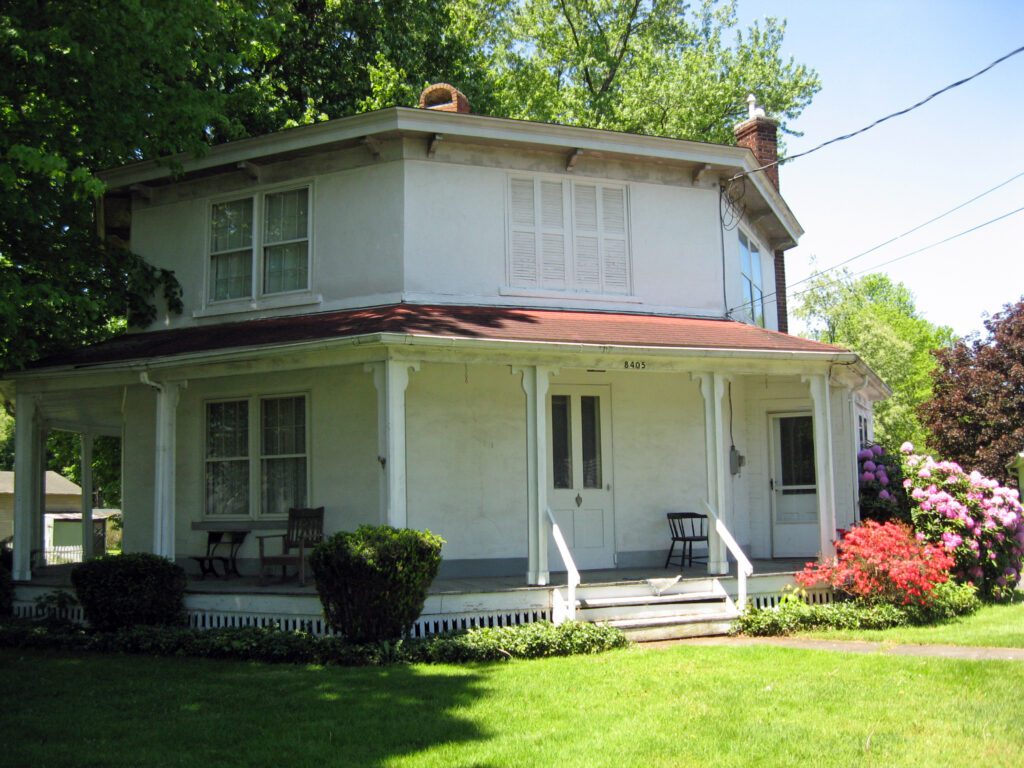
This eight-sided house reflects a widespread pre-Civil War architectural fad. Promoted by phrenologist Orson S. Fowler in his 1848 book A Home for All as a way to “bring comfortable homes within the reach of the poorer classes,” the octagon made efficient use of interior space and natural ventilation. More than thirty octagonal houses are […]
11-78 Newton Falls Covered Bridge
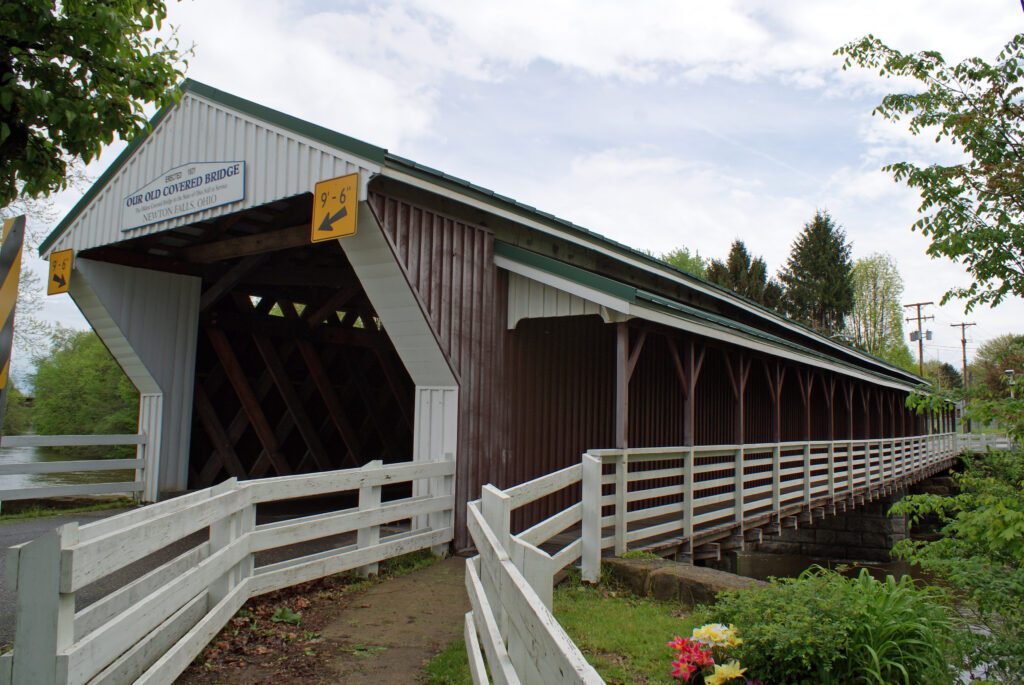
The Newton Falls covered bridge was built over the east branch of the Mahoning River around 1831. A crosswalk was added in 1921 for children crossing the bridge on their way to the school on Center Street. The Newton Falls bridge is considered the second oldest existing covered bridge in Ohio, the oldest covered bridge […]