 Skip to content

7-6 New Knoxville: The Ladbergen Kinship
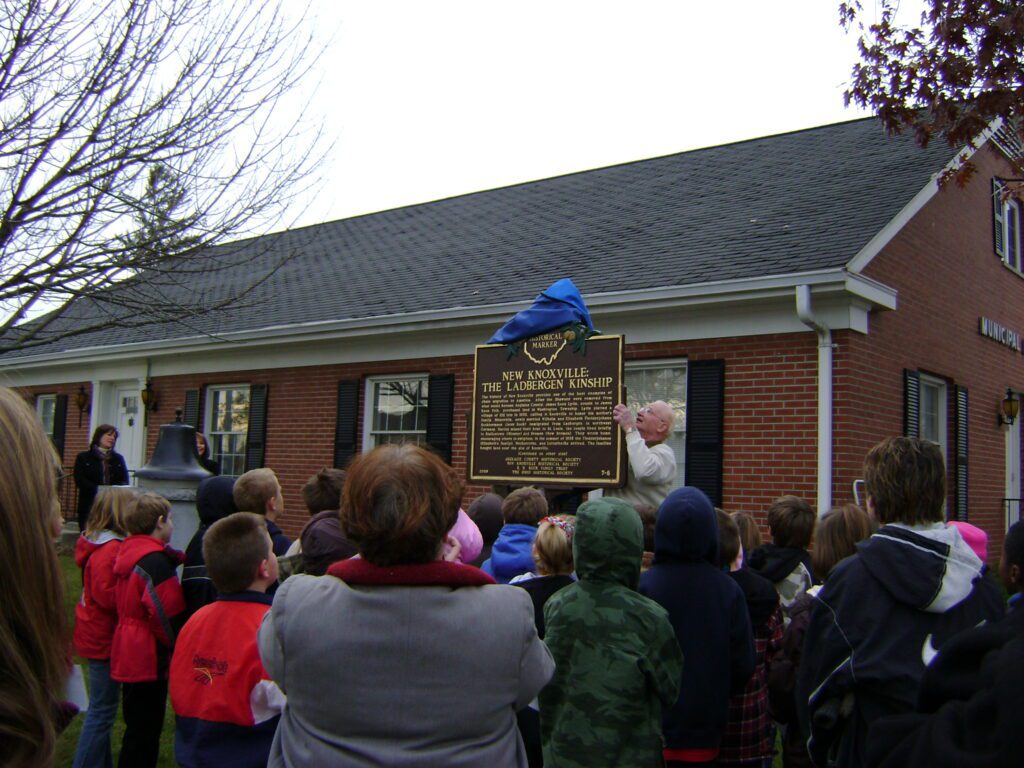
The history of New Knoxville provides one of the best examples of chain migration to America. After the Shawnee were removed from what would become Auglaize County, James Knox Lytle, cousin to James Knox Polk, purchased land in Washington Township. Lytle platted a village of 102 lots in 1836, calling it Knoxville to honor his […]
8-6 Sts. Peter and Paul Church, Mother Church of the Petersburg Parishes
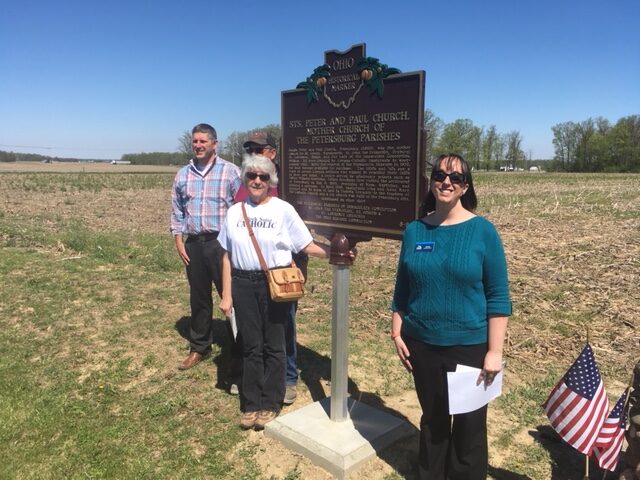
Saints Peter and Paul Church, Petersburg (1835), was the mother church for St. Joseph, Wapakoneta; St. John the Evangelist, Fryburg; St. Lawrence, Rhine; and Our Lady of the Immaculate Conception, Botkins. All were founded by German-Catholic immigrants to west-central Ohio. After the removal of the Wapakoneta Shawnee in 1832, the land became available for purchase. […]
9-6 Neil Armstrong’s Boyhood Home
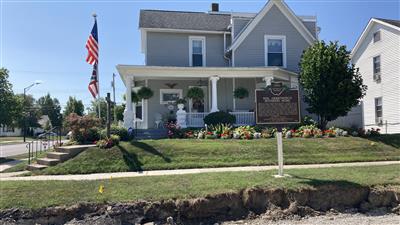
Stephen and Viola Armstrong moved their family, including 13-year-old Neil and his younger siblings, June and Dean, to the house at 601 West Benton Street in 1944. Here, Neil explored his fascination with flying by reading aviation magazines and building model airplanes. Neil completed flying lessons at nearby Port Koneta airport and earned his pilot’s […]
5-6 Dayton and Michigan Railroad
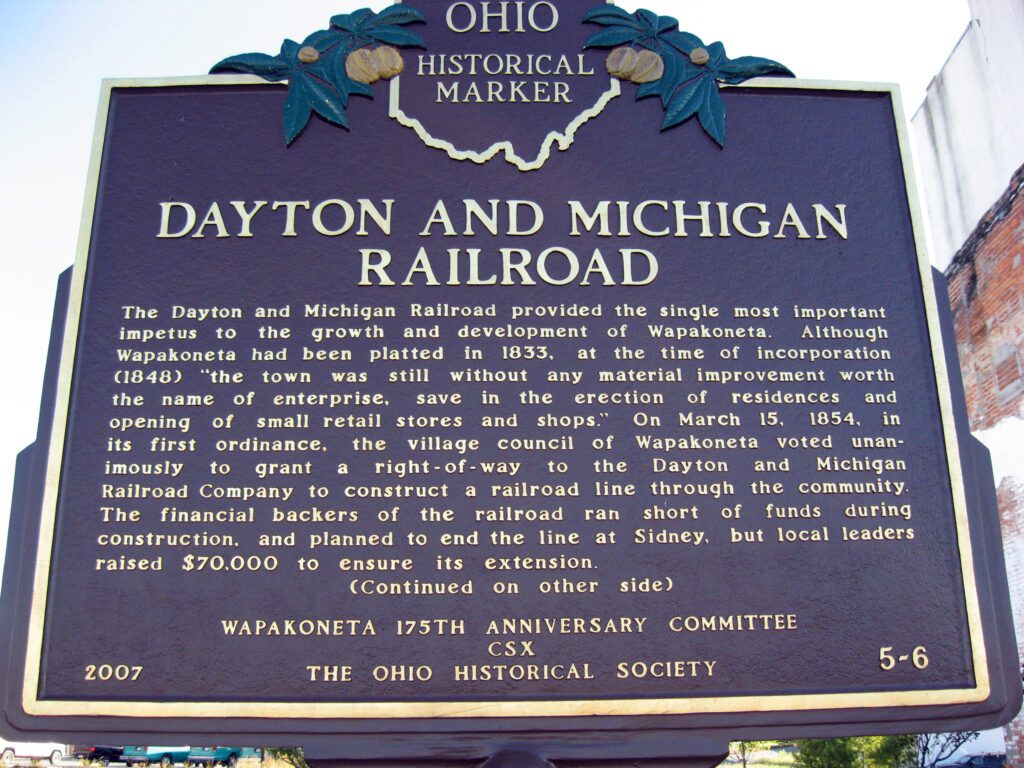
The Dayton and Michigan Railroad provided the single most important impetus to the growth and development of Wapakoneta. Although Wapakoneta had been platted in 1833, at the time of incorporation (1848), “the town was still without any material improvement worth the name of enterprise, save in the erection of residences and opening of small retail […]
6-6 The Shannon Stock Company
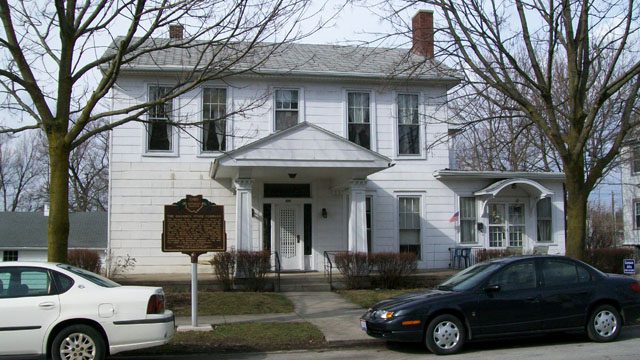
The Shannon Stock Company, also known as Shannon’s Famous Players, was a traveling theatre company based in Wapakoneta from 1913 until the Great Depression. Founded by Harry Shannon, the group included his wife Adelaide, their children, Harry Jr. and Hazel, and a company of twenty people or more. The Company performed in theatres in southern […]
1-6 Fort Amanda
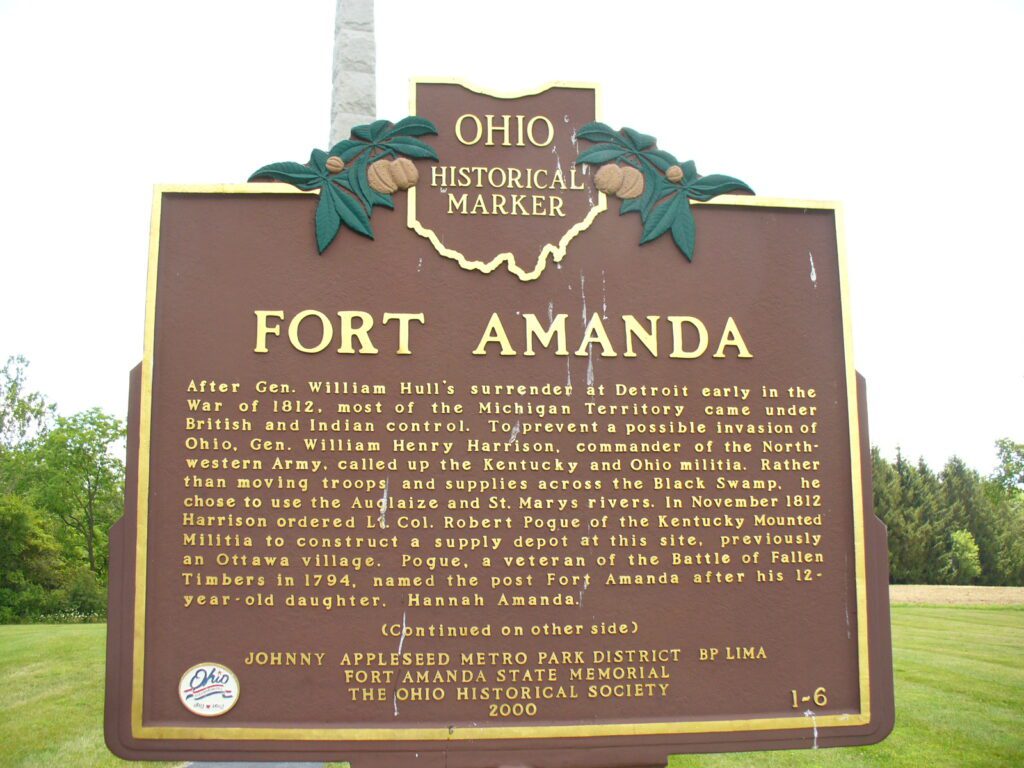
After Gen. William Hull’s surrender at Detroit early in the War of 1812, most of the Michigan Territory came under British and Indian control. To prevent a possible invasion of Ohio, Gen. William Henry Harrison, commander of the Northwestern Army, called up the Kentucky and Ohio militia. Rather than moving troops and supplies across the […]
2-6 The Miami & Erie Canal and New Bremen
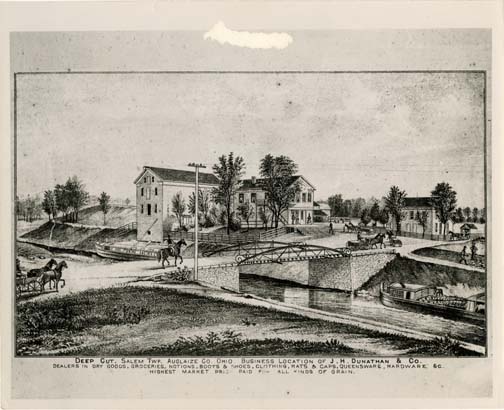
Begun in 1833, the Miami Extension Canal linked the Miami Canal in Dayton to the Wabash & Erie Canal at Junction. Engineering difficulties, epidemics, and the Panic of 1837 delayed completion of the Extension until June 1845, when the packet boat Banner first navigated the almost 250 miles distance from Cincinnati to Toledo in three […]
3-6 Dudley Nichols
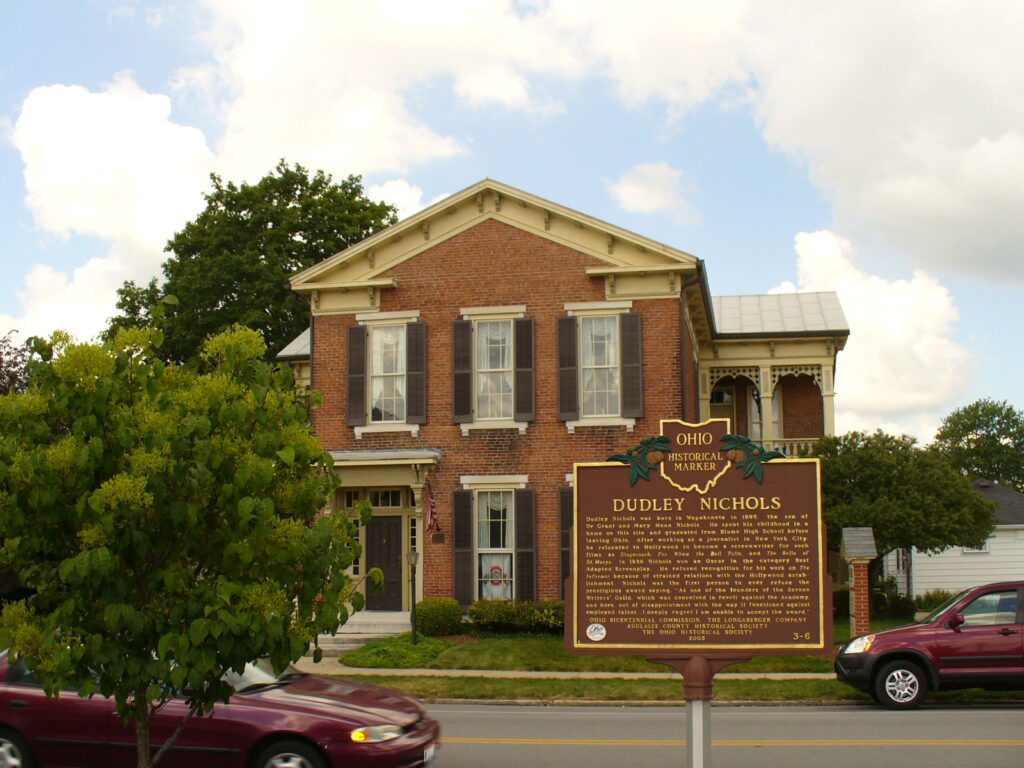
Dudley Nichols was born in Wapakoneta in 1895, the son of Dr. Grant and Mary Mean Nichols. He spent his childhood in a home on this site and graduated from Blume High School before leaving Ohio. After working as a journalist in New York City, he relocated to Hollywood to become a screenwriter for such […]
4-6 Town Pond Reservoir Cridersville’s Great Fire of 1918
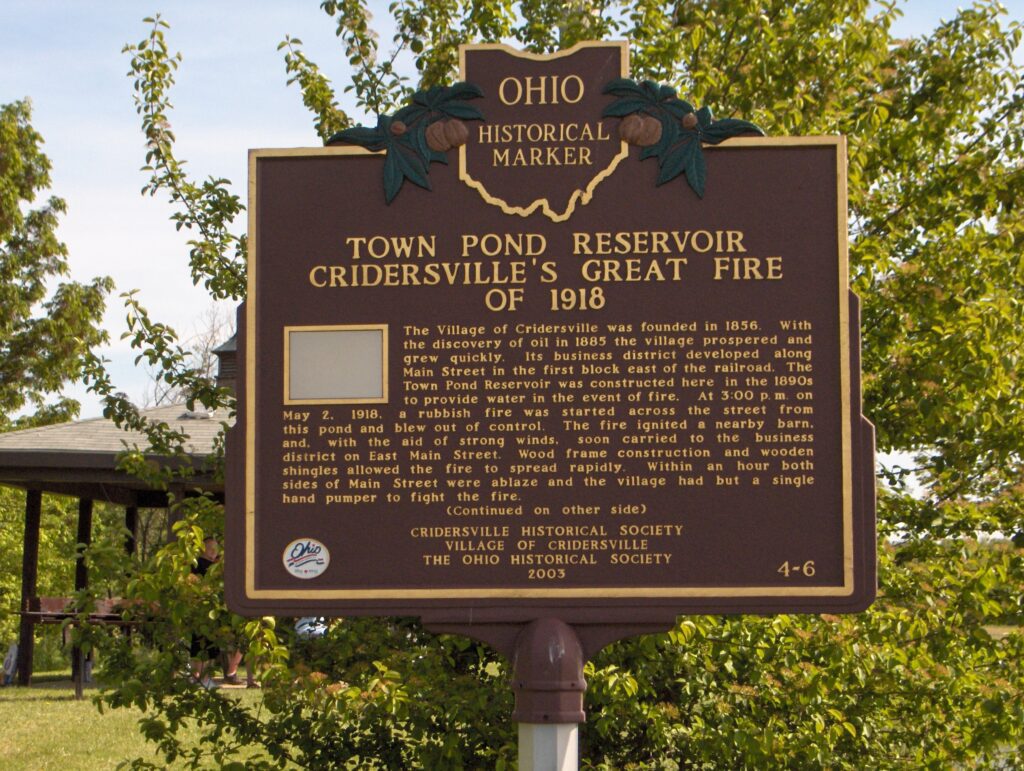
The Village of Cridersville was founded in 1856. With the discovery of oil in 1885 the village prospered and grew quickly. Its business district developed along Main Street in the first block east of the railroad. The Town Pond Reservoir was constructed here in the 1890s to provide water in the event of fire. At […]
10-5 Athens National Guard Armory
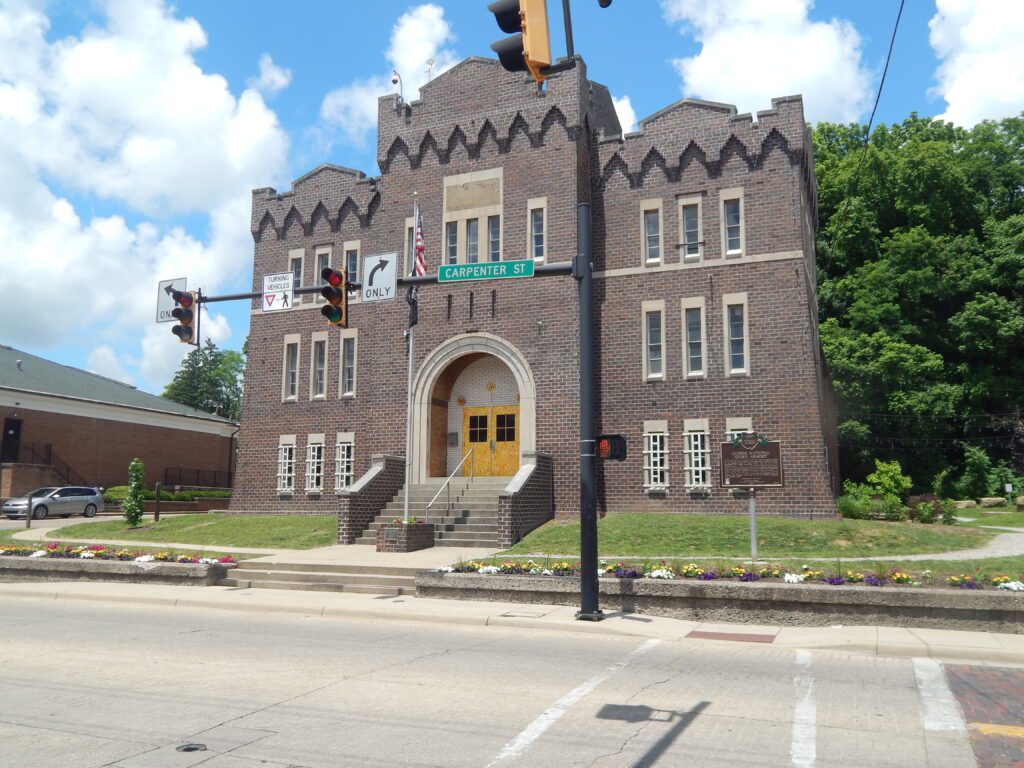
In the first years of the twentieth century, Athens’ citizens formed a new National Guard company. The guardsmen initially held drill at the Campbell Block on Court Street, but soon the Athens Commercial Club began advocating for an armory from the Ohio National Guard. In 1912, the Armory Board approved the request. Plans were drawn […]