 Skip to content

8-7 Captina African Methodist Episcopal Cemetery
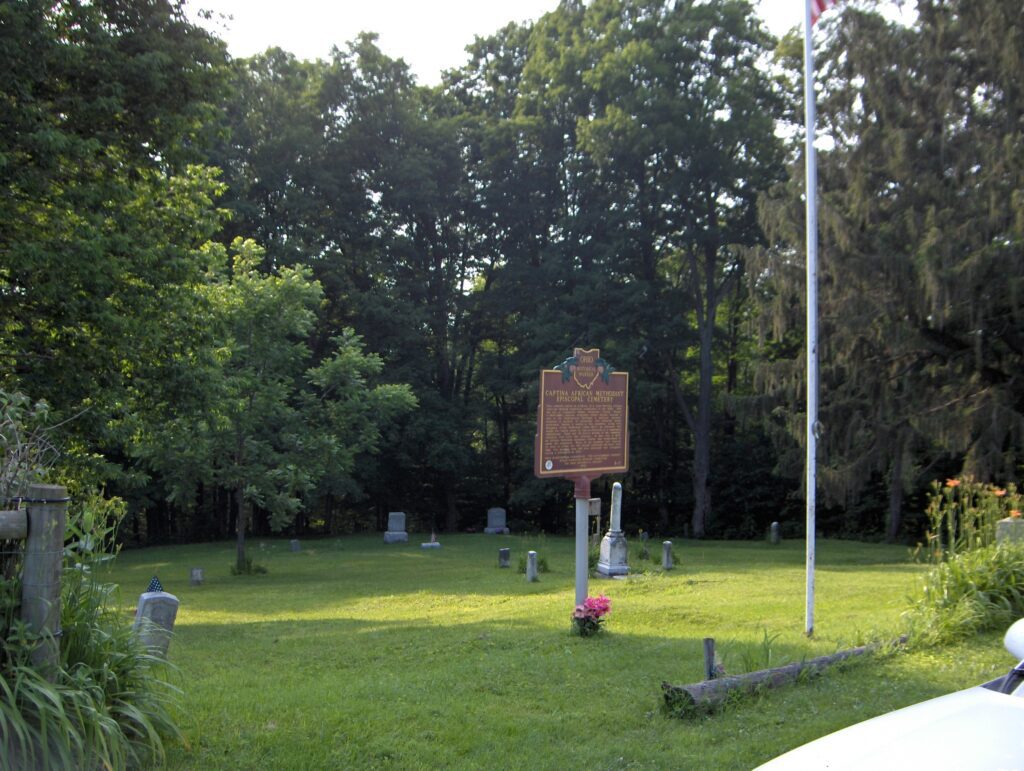
This cemetery stands as evidence of a once thriving African American farming community established in the 1820s. With the aid of community leader, Alexander “Sandy” Harper (c.1804-1889), Captina, originally called Guinea, became a stop on the Underground Railroad, a national network, shrouded in secrecy, of volunteers who directed slaves northward. Harper is buried in this […]
6-7 The Coal Industry at Powhatan Point / Powhatan Disaster 1944
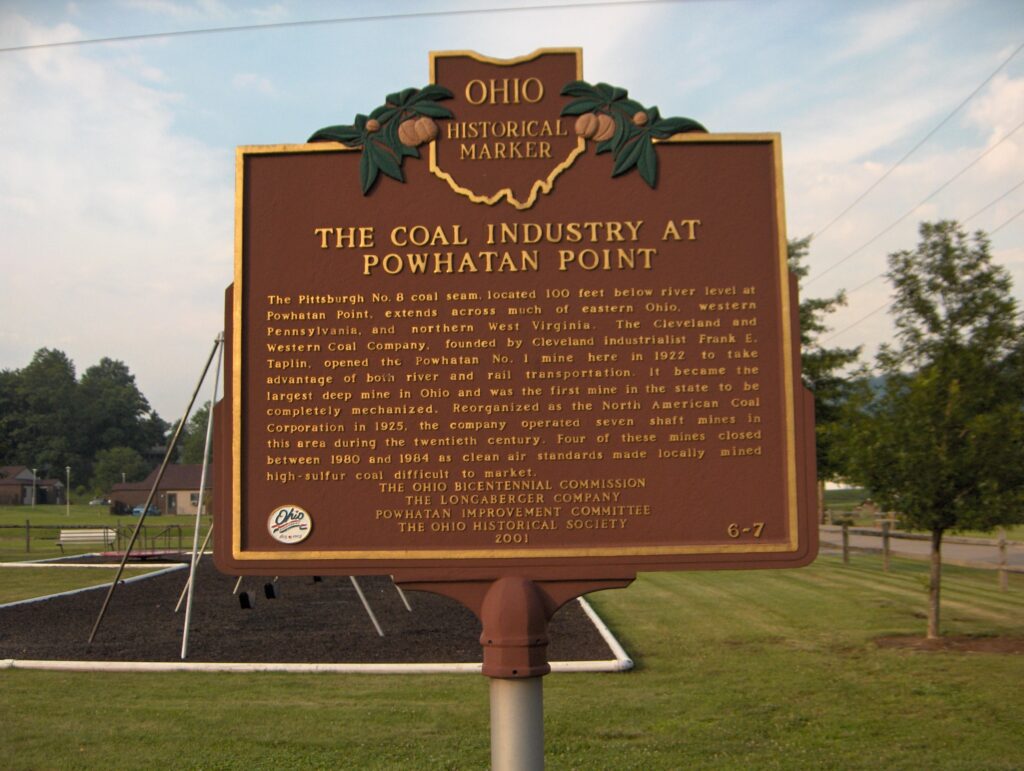
The Pittsburgh No. 8 coal seam, located 100 feet below river level at Powhatan Point, extends across much of eastern Ohio, western Pennsylvania, and northern West Virginia. The Cleveland and Western Coal Company, founded by Cleveland industrialist Frank E. Taplin, opened the Powhatan No. 1 mine here in 1922 to take advantage of both river […]
7-7 Governor Wilson Shannon 1802-1877 / Barnesville’s Shannon Family
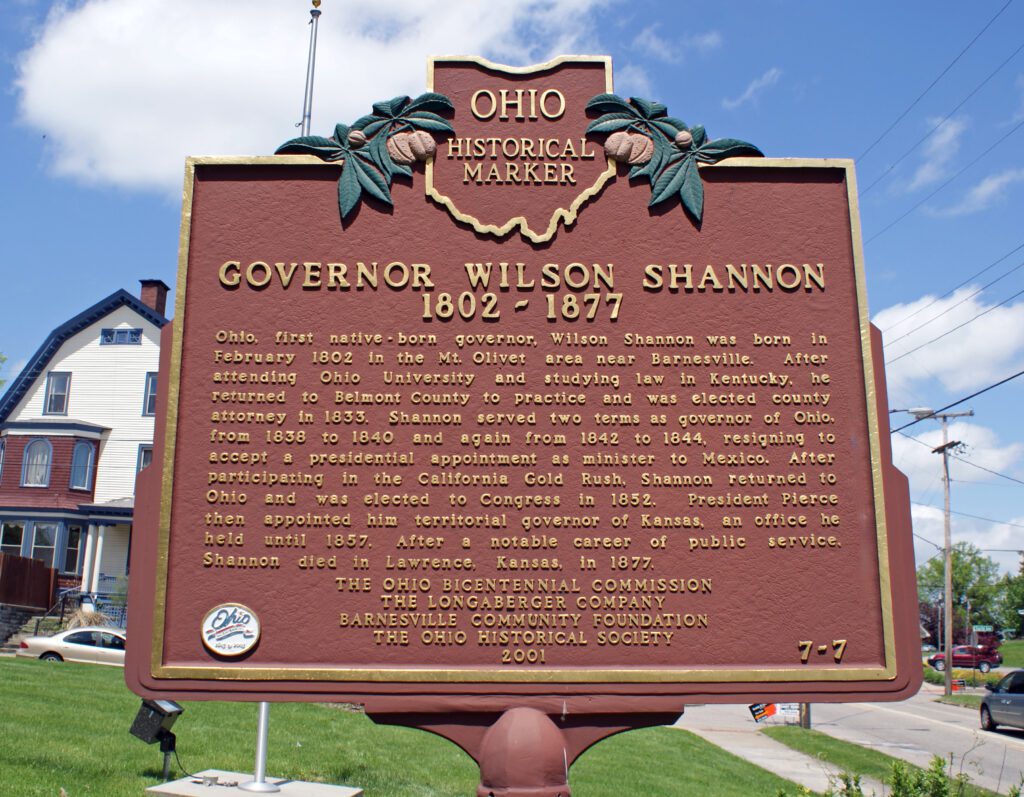
Ohio, first native-born governor, Wilson Shannon was born in February 1802 in the Mt. Olivet area near Barnesville. After attending Ohio University and studying law in Kentucky, he returned to Belmont County to practice and was elected county attorney in 1833. Shannon served two terms as governor of Ohio, from 1838 to 1840 and again […]
1-7 Mile Marker
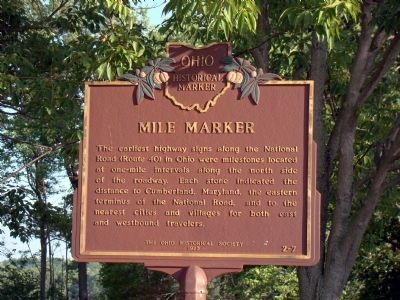
The earliest highway signs along the National Road (Route 40) in Ohio were milestones located at one-mile intervals along the north side of the roadway. Each stone indicated the distance to Cumberland, Maryland, the eastern terminus of the National Road, and to the nearest cities and villages for both east and westbound travelers.
2-7 Mile Marker
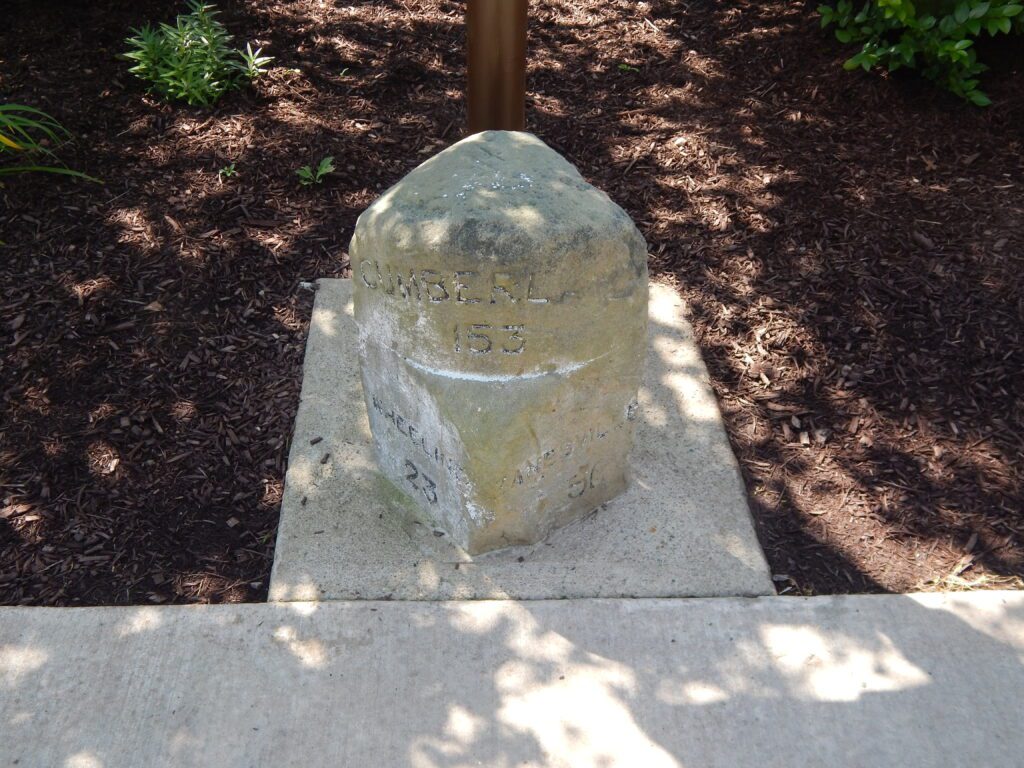
The earliest highway signs along the National Road (Route 40) in Ohio were milestones located at one-mile intervals along the north side of the roadway. Each stone indicated the distance to Cumberland, Maryland, the eastern terminus of the National Road, and to the nearest cities and villages for both east and westbound travelers.
3-7 Walnut Grove Cemetery
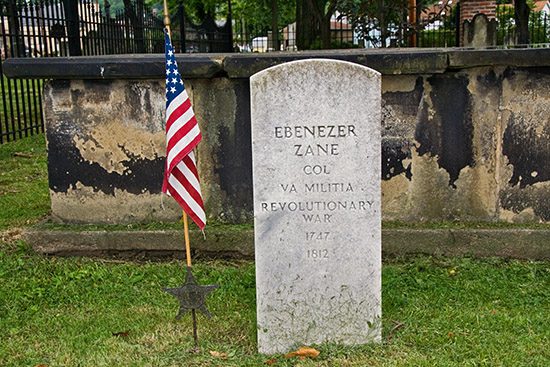
The Walnut Grove Cemetery is the burial place of members of the Zane and Martin families. Their graves lie within the brick enclosure. The cemetery is also the resting-place of many early Martins Ferry residents, including veterans of the Revolutionary War, the War of 1812, the Mexican War, and the Civil War. The Zane and […]
4-7 Historic Bridgeport
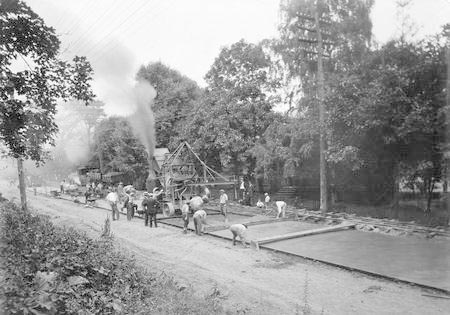
Colonel Ebenezer Zane, one of the founders of Wheeling, laid out the village that became Bridgeport in 1806 on the site of Fort Kirkwood (1789). Originally named Canton, it acquired its present name after the bridge to Wheeling Island was built. The arrival of the National Road in 1818 made the growing town a major […]
5-7 Harley E. Warrick (1924-2000)
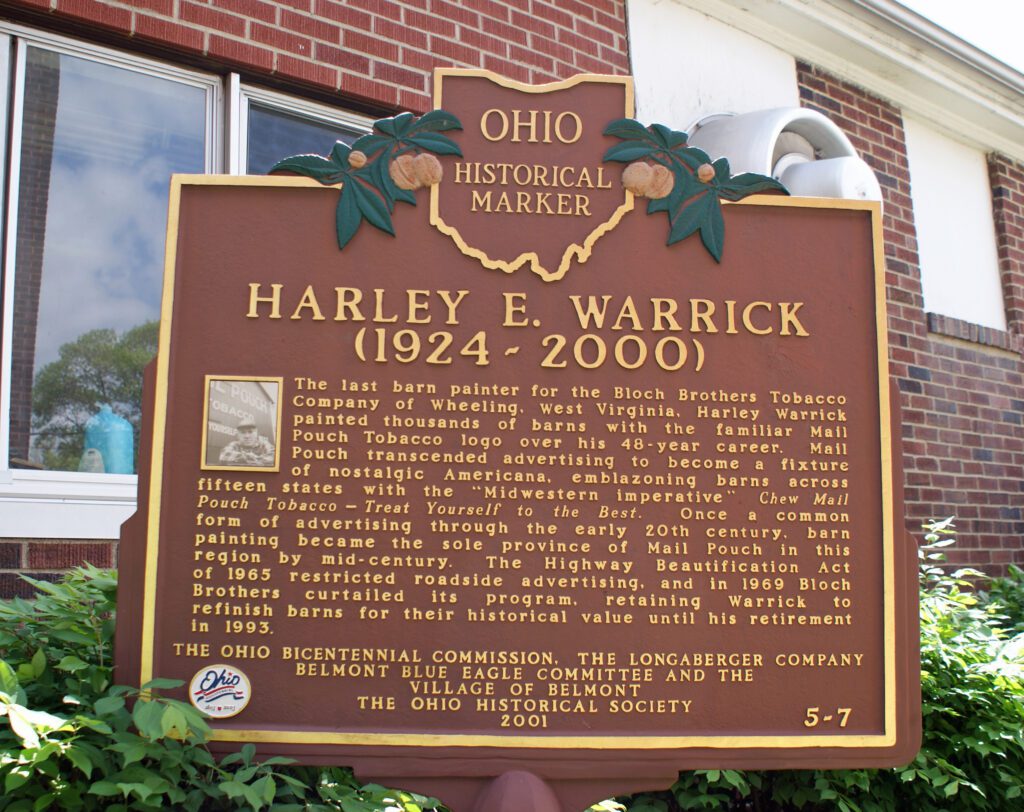
The last barn painter for the Bloch Brothers Tobacco Company of Wheeling, West Virginia, Harley Warrick painted thousands of barns with the familiar Mail Pouch Tobacco logo over his 48-year career. Mail Pouch transcended advertising to become a fixture of nostalgic Americana, emblazoning barns across fifteen states with the “Midwestern imperative”: Chew Mail Pouch Tobacco-Treat […]
10-6 Reservoir Mill, St. Marys
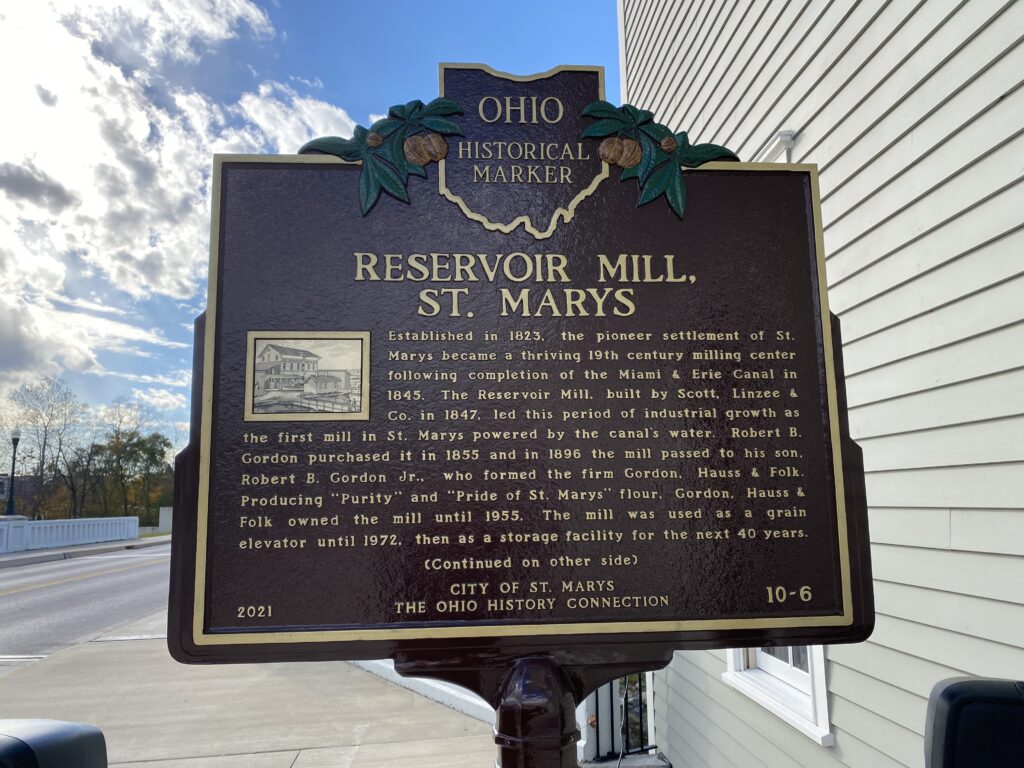
Established in 1823, the pioneer settlement of St. Marys became a thriving 19th century milling center following completion of the Miami & Erie Canal in 1845. The Reservoir Mill, built by Scott, Linzee & Co. in 1847, led this period of industrial growth as the first mill in St. Marys powered by the canal’s water. […]
7-6 New Knoxville: The Ladbergen Kinship
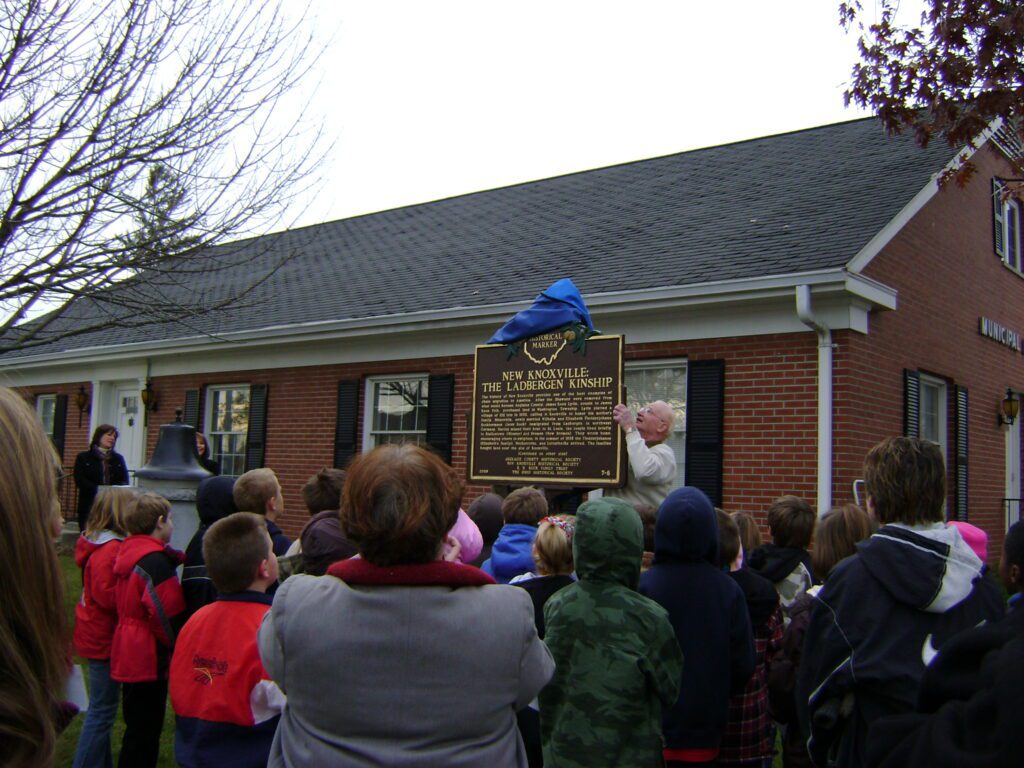
The history of New Knoxville provides one of the best examples of chain migration to America. After the Shawnee were removed from what would become Auglaize County, James Knox Lytle, cousin to James Knox Polk, purchased land in Washington Township. Lytle platted a village of 102 lots in 1836, calling it Knoxville to honor his […]