The Greater Abyssinia Baptist Church (GABC) organized with 250 members on December 16, 1945, at a Phillis Wheatley Association meeting. Led by its first pastor, Rev. John Rollins Plummer, the congregation raised $47,000 to purchase the Jewish Synagogue at East 105th Street and Tacoma Avenue from the Beth Hamedrosh Hagodel Beth Israel Congregation in 1946. It later purchased a parsonage, land for parking, and created a Federal Credit Union. Tragically, Rev. Plummer was killed in a car accident on October 22, 1951. The church’s lower auditorium was remodeled and dedicated as J.R. Plummer Memorial Hall. Honoring its missionary and pastoral care foundations, the church built a $3M senior citizens complex nearby. An endowment fund, instituted by its pastor’s savings in 1995, ensures that this commitment to civic leadership endures.
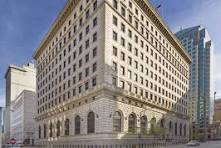
Cleveland was chosen as one of the country’s twelve Federal Reserve cities after a competitive selection process and opened its bank on November 16, 1914. The Federal Reserve Banks promote maximum employment and stable prices as part of the central banking system authorized by the 1913 Federal Reserve Act. Cleveland’s Bank serves the communities of the Fourth Federal Reserve District through supervision and regulation of financial institutions, analyzing and reporting on regional economic trends, and producing research on economic issues of importance to the nation and world. The first woman officer in any of the twelve banks was promoted to her role in 1956 by the Cleveland Fed. In 1982, the first woman in any of the nation’s Federal Reserve Banks served as the sixth President of the Federal Reserve Bank of Cleveland.