 Skip to content

14-41 Ohio Valley Steelworker Statue
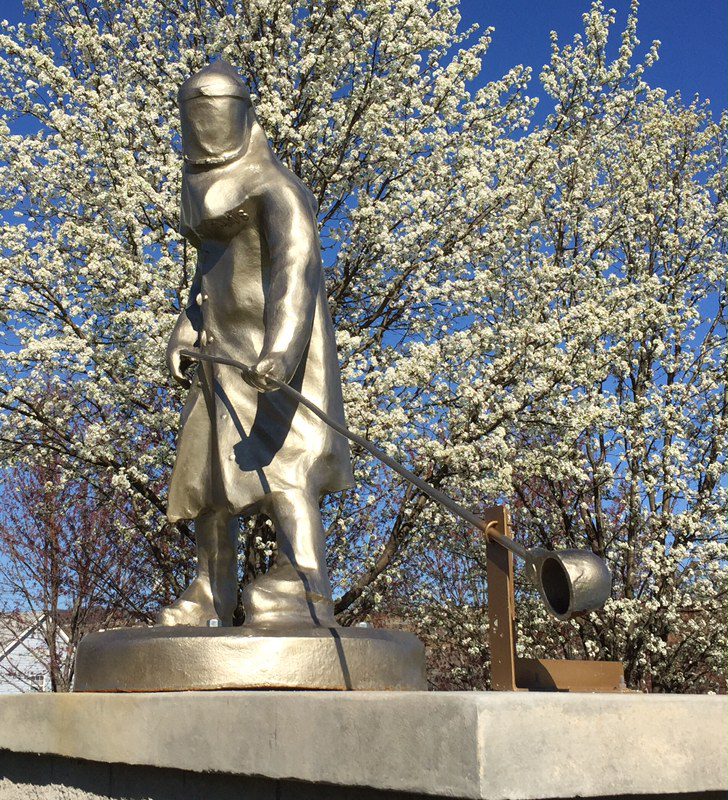
The Ohio Valley Steelworker Statue was cast at Centre Foundry and Machine Company in Wheeling, West Virginia and dedicated in 1989. Created by artist Dimitrios Akis, the statue honors the men and women who worked in area iron and steel industries beginning as early as 1856. The statue depicts a steelworker in protective garb pouring […]
13-41 Mooretown Soldiers Monument
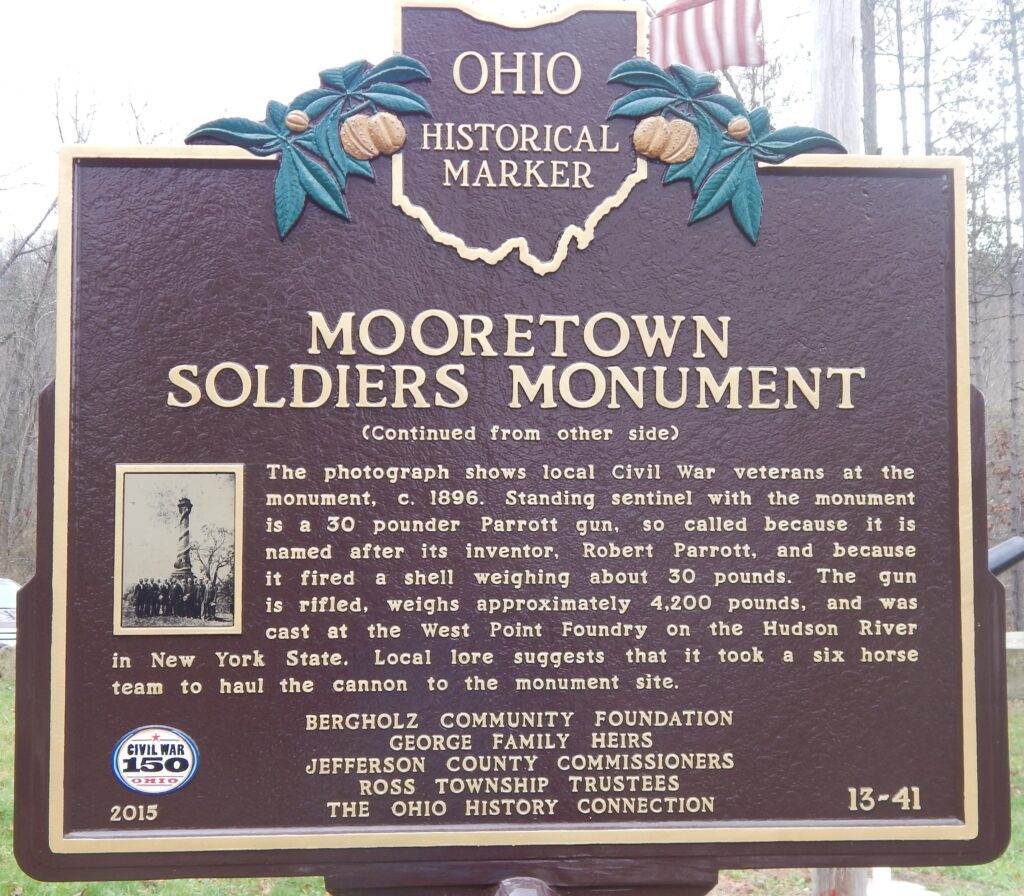
In 1871 Robert and Martha McLaughlin George erected a Soldiers Monument in the memory of their son Thomas and other soldiers from Ross Township, Jefferson County, Ohio who died in service to the United States during the Civil War. All were native to Ross Township and some, like 25 year-old Thomas George, were members of […]
12-41 William Pittenger Congressional Medal of Honor, 1863
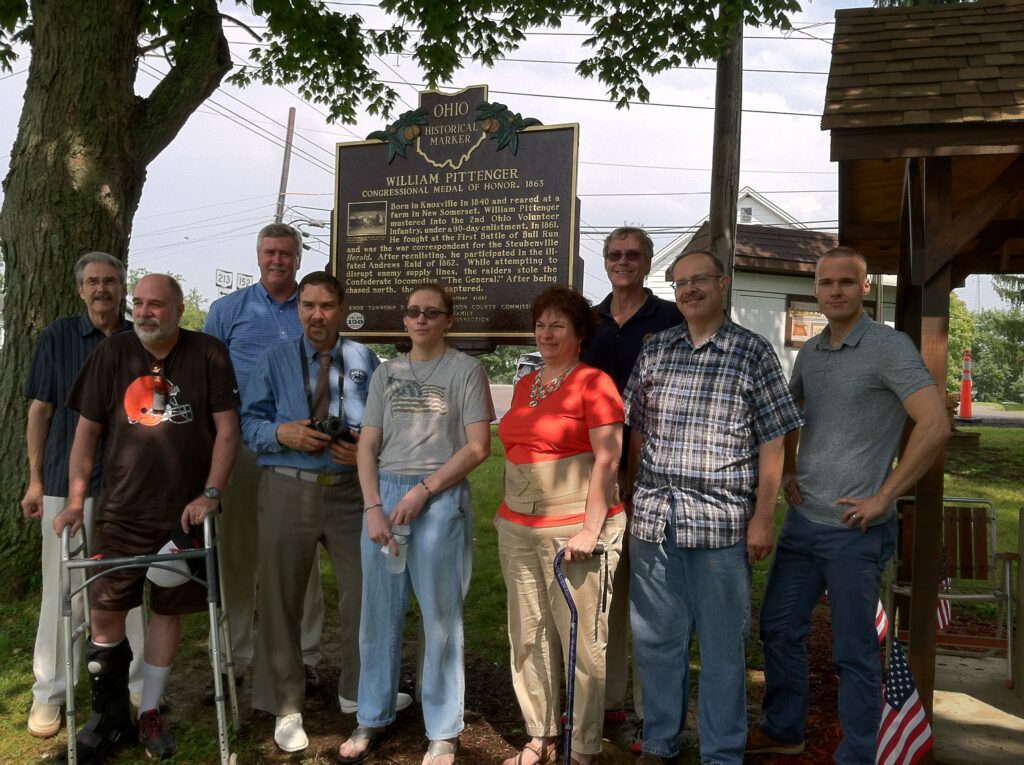
The General at Union Station in Chattanooga, Tennessee (circa 1907). Born in Knoxville in 1840 and reared at a farm in New Somerset, William Pittenger mustered into the 2nd Ohio Volunteer Infantry, under a 90-day enlistment, in 1861. He fought at the First Battle of Bull Run and was the war correspondent for the Steubenville […]
11-41 Society of Friends in Early Smithfield
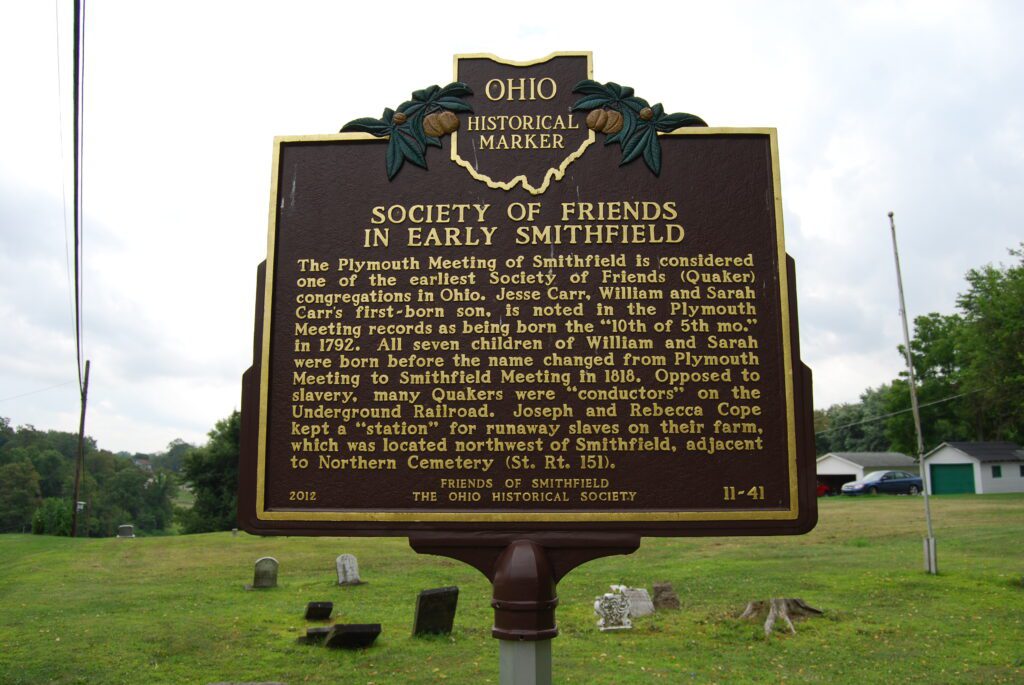
The Plymouth Meeting of Smithfield is considered one of the earliest Society of Friends (Quaker) congregations in Ohio. Jesse Carr, William and Sarah Carr’s first born son, is noted in the Plymouth Meeting records as being born the “10th of 5th mo.” in 1792. All seven children of William and Sarah were born before the […]
10-41 Andrew Carnegie (1835-1919) / Carnegie Library of Steubenville
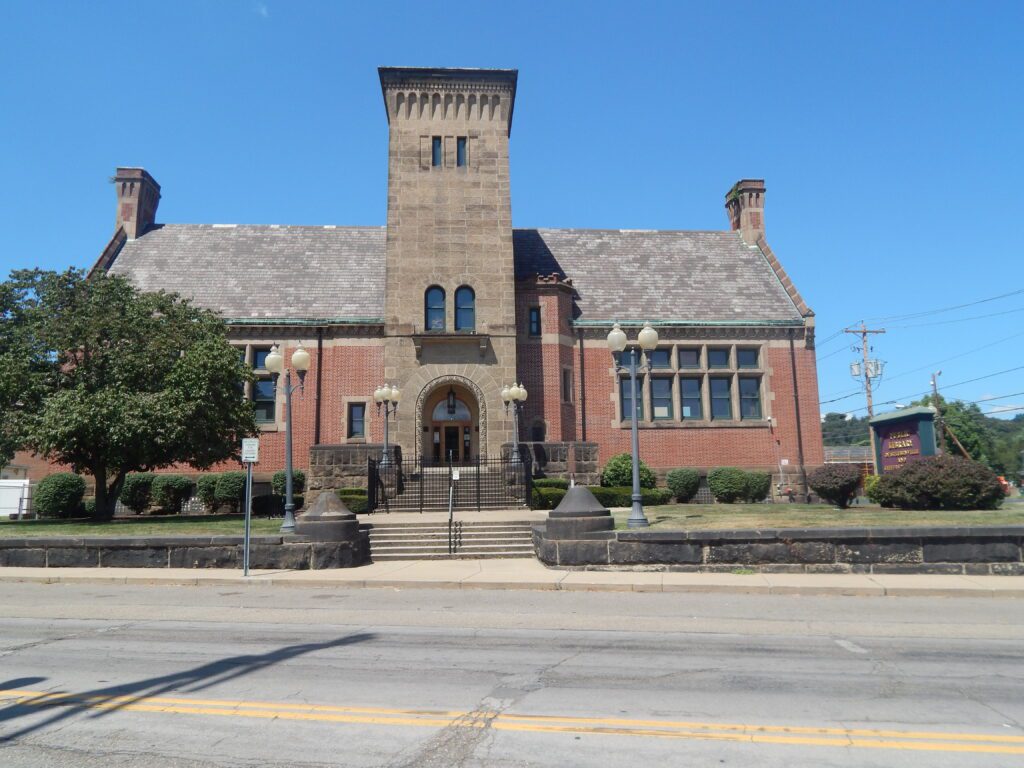
Andrew Carnegie was born in Dunfermline, Scotland. He immigrated to Allegheny City Pennsylvania with his family when he was 13. While operating the telegraphs for the Pennsylvania Railroad, Carnegie perceived the great need for steel in the railroad industry. With this insight, he founded the Carnegie Steel Corporation which operated for 35 years before he […]
9-41 Giuseppe Moretti / Soldiers and Sailors Monument
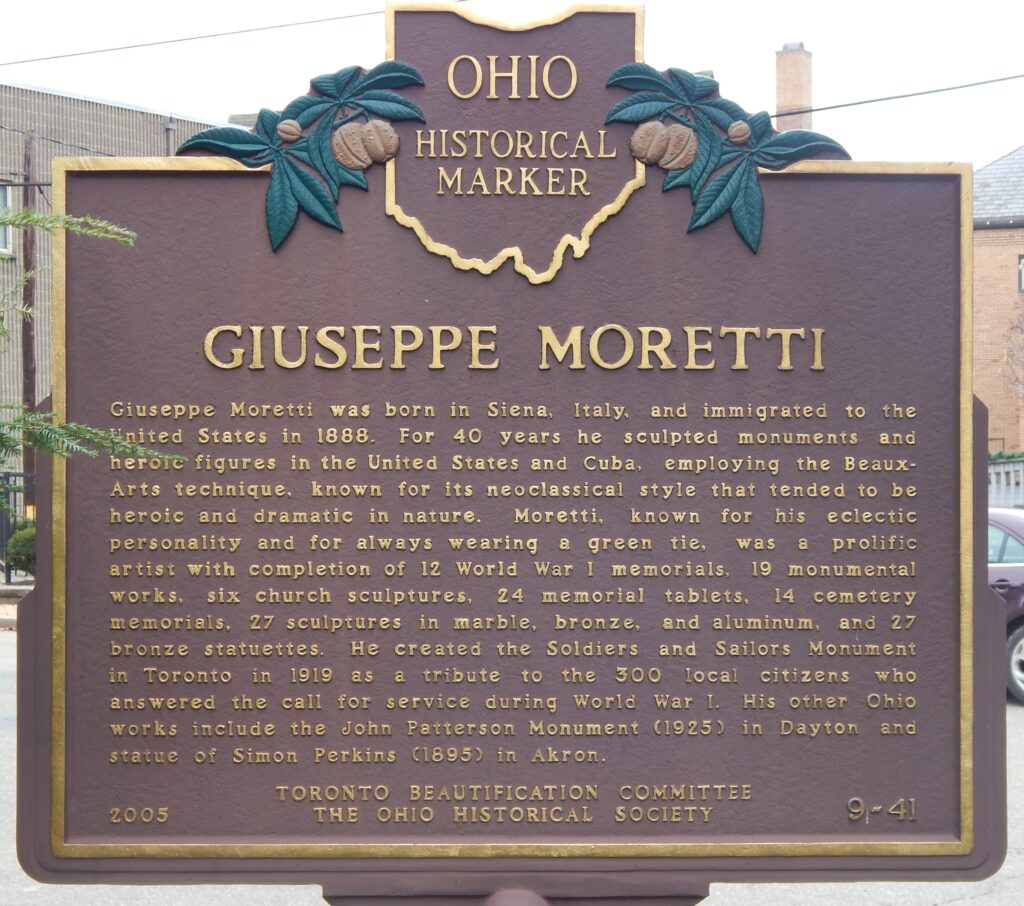
Giuseppe Moretti was born in Siena, Italy, and immigrated to the United States in 1888. For 40 years he sculpted monuments and heroic figures in the United States and Cuba, employing the Beaux-Arts technique, known for its neoclassical style that tended to be heroic and dramatic in nature. Mor etti, known for his eclectic personality […]
8-41 Abraham Lincoln’s Visit to Steubenville
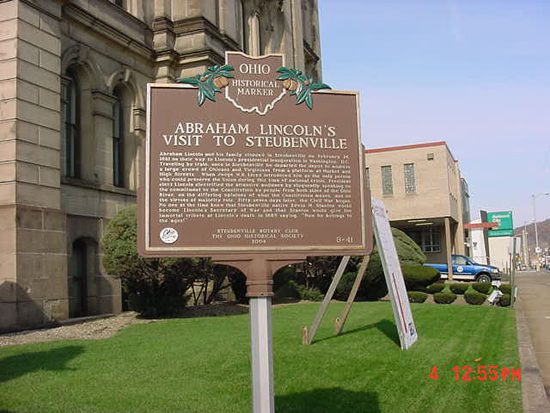
Abraham Lincoln and his family stopped in Steubenville on February 14, 1861 on their way to Lincoln’s presidential inauguration in Washington, D.C. Traveling by train, once in Steubenville he departed the depot to address a large crowd of Ohioans and Virginians from a platform at Market and High Streets. When Judge W.R. Lloyd introduced him […]
7-41 Secretary of War Edwin M. Stanton

Born in Steubenville in 1814, Edwin McMasters Stanton studied at Kenyon College and opened his law practice in Cadiz in 1836. The grandson of North Carolina slaveholders, Stanton opposed slavery. A successful railroad attorney and War Democrat at the beginning of the Civil War, he accepted the challenge of reorganizing President Abraham Lincoln’s War Department. […]
6-41 Ohio River Lock and Dam 10 Site
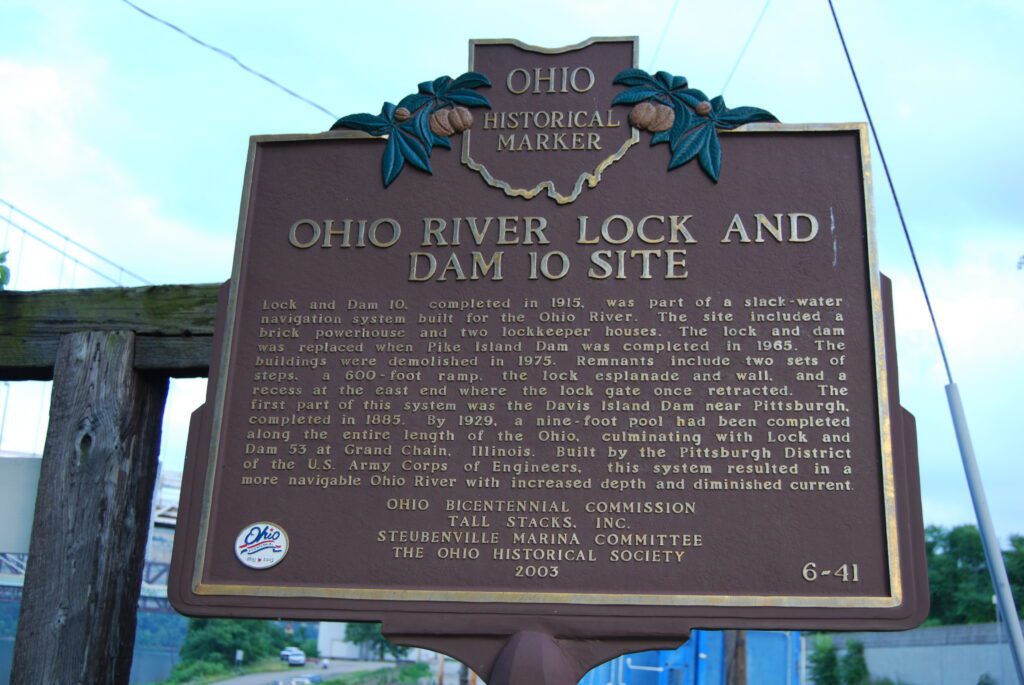
Lock and Dam 10, completed in 1915, was part of a slack-water navigation system built for the Ohio River. The site included a brick powerhouse and two lockkeeper houses. The lock and dam was replaced when Pike Island Dam was completed in 1965. The buildings were demolished in 1975. Remnants include two sets of steps, […]
5-41 Benjamin Lundy Home / Free Labor Store
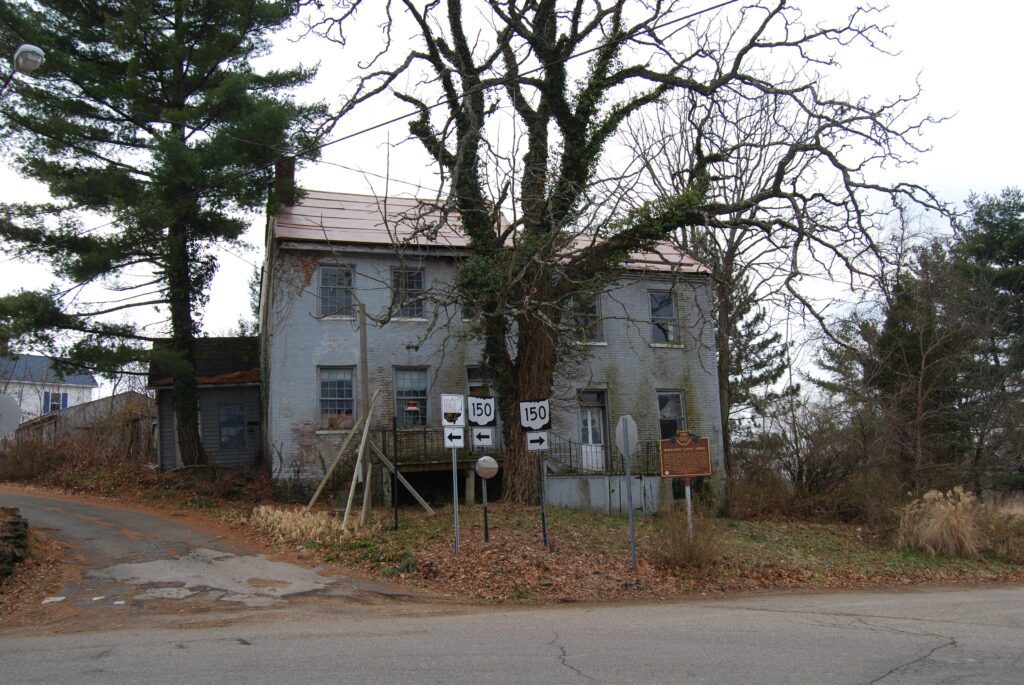
After witnessing the slave trade in Wheeling, Virginia, Quaker abolitionist Benjamin Lundy (1789-1839) resolved to battle the institution, first organizing the Union Humane Society in St. Clairsville in 1815. In 1821, Lundy moved to Mount Pleasant and began publishing the Genius of Universal Emancipation, a newspaper devoted wholly to anti-slavery issues. The newspaper would later […]