 Skip to content

3-41 Fort Steuben
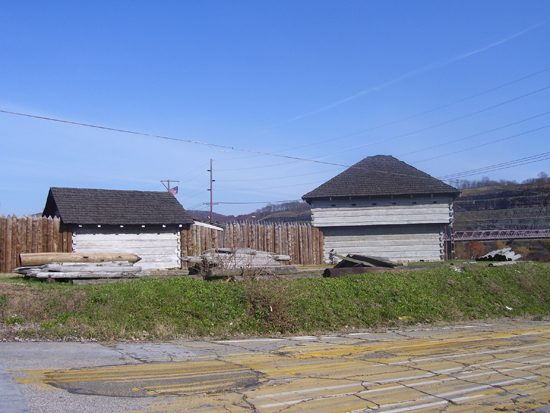
In 1787, the construction of Fort Steuben was completed by Captain John Francis Hamtramck and soldiers of the 1st American Regiment, who were sent to the frontier by the United States government to remove illegal squatters and protect government surveyors from American Indian raids. The surveyors were platting the First Seven Ranges of the Northwest […]
2-41 Steubenville’s Dean Martin
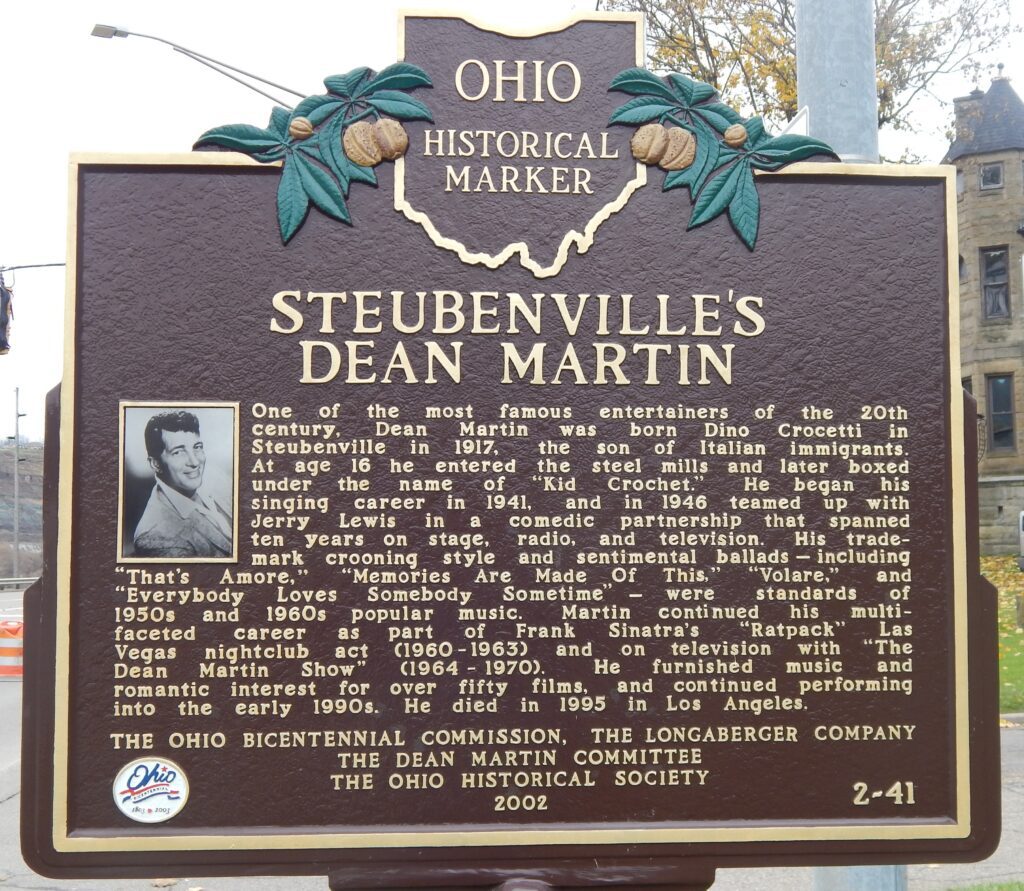
One of the most famous entertainers of the 20th century, Dean Martin was born Dino Crocetti in Steubenville in 1917, the son of Italian immigrants. At age 16 he entered the steel mills and later boxed under the name of “Kid Crochet.” He began his singing career in 1941, and in 1946 teamed up with […]
1-41 Federal Land Office
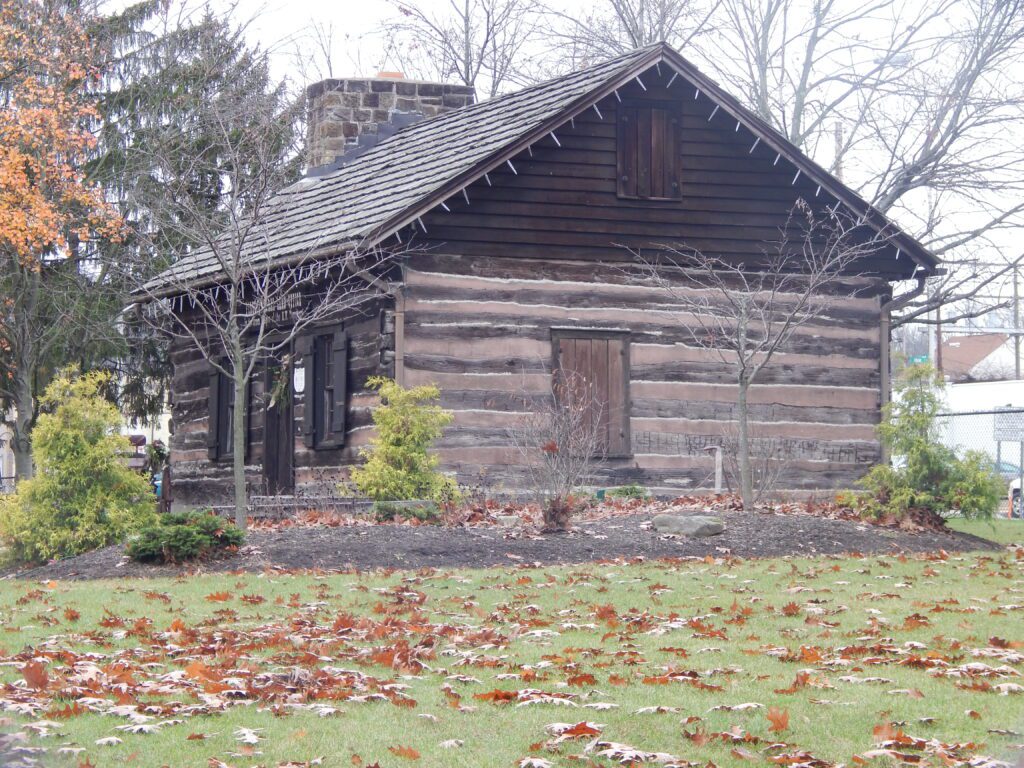
This log building was constructed in 1801 by David Hoge on the west side of Third Street. It served as his home and was the first Federal land office in that part of the Northwest Territory known as the Seven Ranges. In 1809 it was moved and 12 years later encased in a brick structure […]
11-40 Evans Cemetery / The 1818 Welsh Pioneers
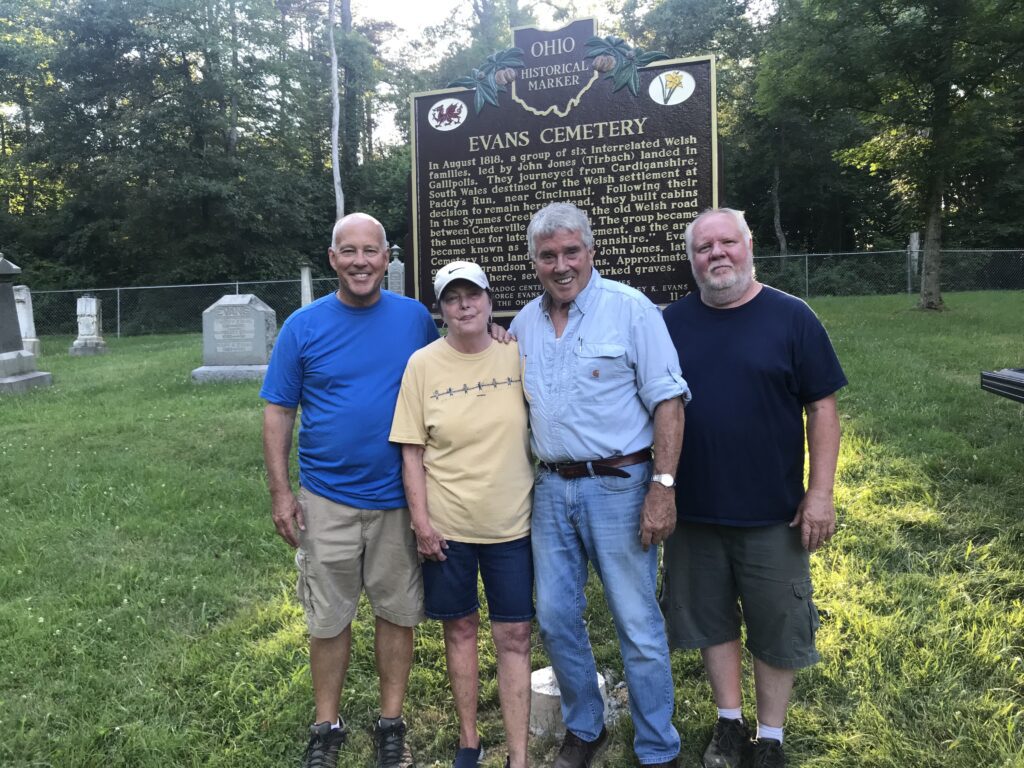
In August 1818, a group of six interrelated Welsh families, led by John Jones (Tirbach) landed in Gallipolis. They journeyed from Cardiganshire, South Wales destined for the Welsh settlement at Paddy’s Run, near Cincinnati. Following their decision to remain here instead, they built cabins in the Symmes Creek Valley on the old Welsh road between […]
10-40 Welsh-American Heritage Museum / Old Welsh Congregational Church
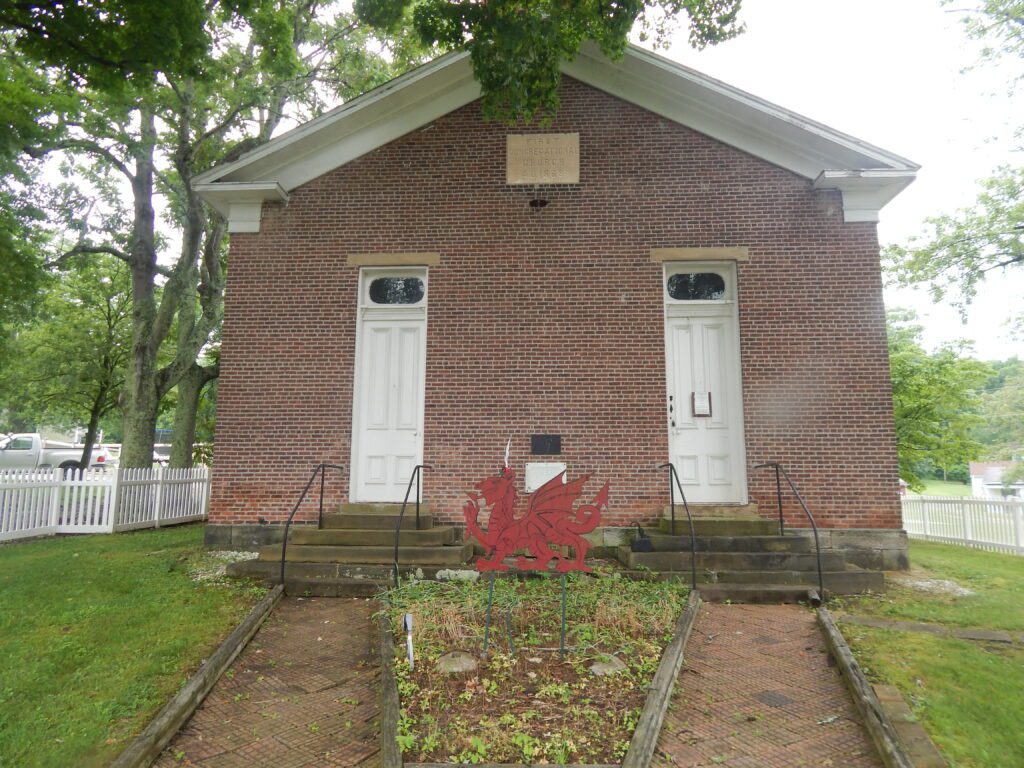
In 1972 a group of Welsh-Americans chartered the Welsh-American Heritage Museum to preserve Welsh history and culture, and to preserve the Welsh Congregational Church. The old brick church was where songs of praises rang, as the Welsh gathered and sang beloved hymns of their homeland in four-part harmony. The church is a link in a […]
9-40 53rd O.V.I. Regiment / Camp Diamond
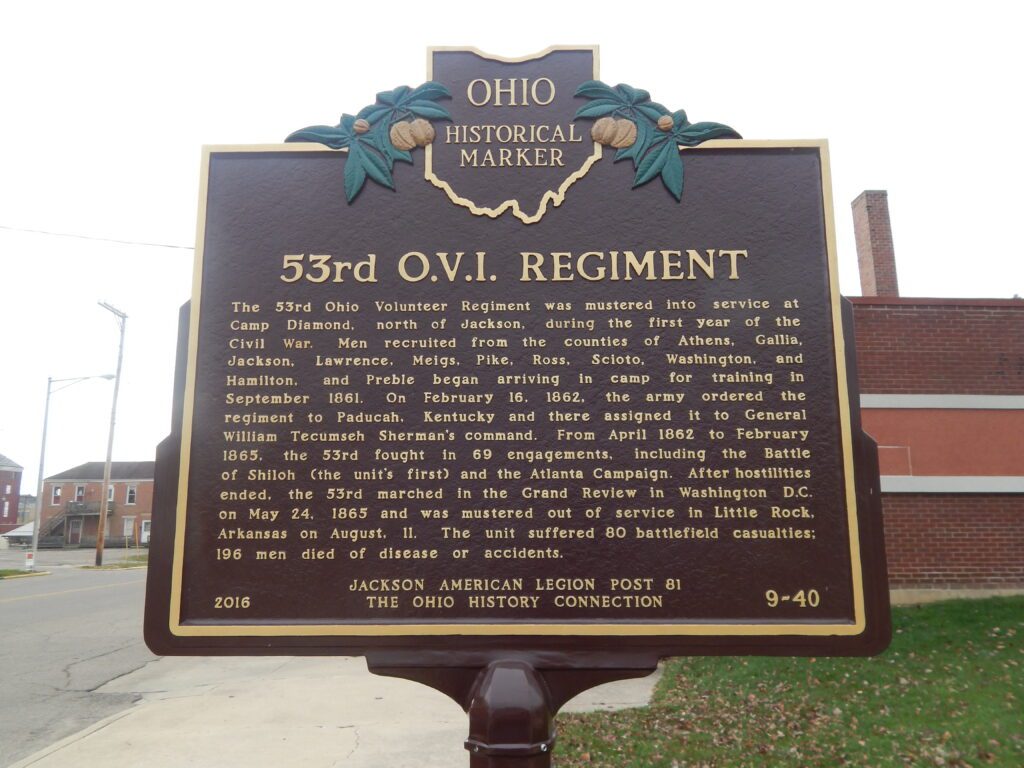
The 53rd Ohio Volunteer Regiment was mustered into service at Camp Diamond, north of Jackson, during the first year of the Civil War. Men recruited from the counties of Athens, Gallia, Jackson, Lawrence, Meigs, Pike, Ross, Scioto, Washington, and Hamilton, and Preble began arriving in camp for training in September 1861. On February 16, 1862, […]
8-40 McKinley Park / William McKinley
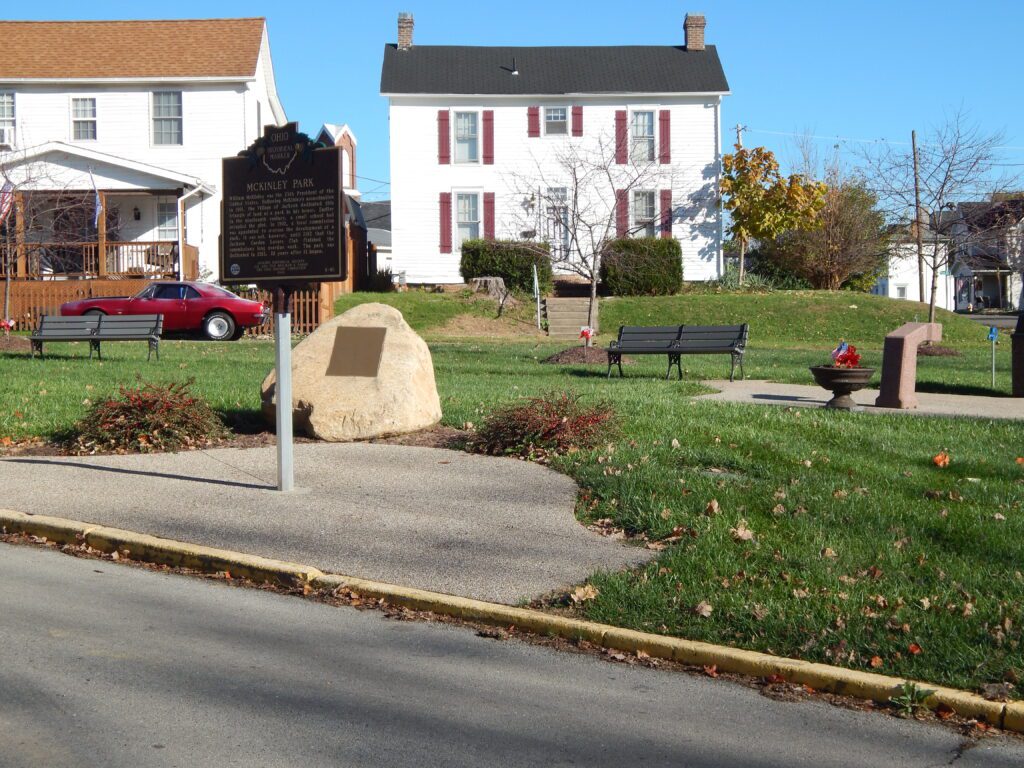
William McKinley was the 25th President of the United States. Following McKinley’s assassination in 1901, the Village of Jackson dedicated this triangle of land as a park in his honor. Earlier in the nineteenth century, a small school had occupied the plot. In 1902, a local commission was appointed to oversee the development of a […]
7-40 The Jackson County Apple Festival / Commercial Apple Orchards in Jackson County
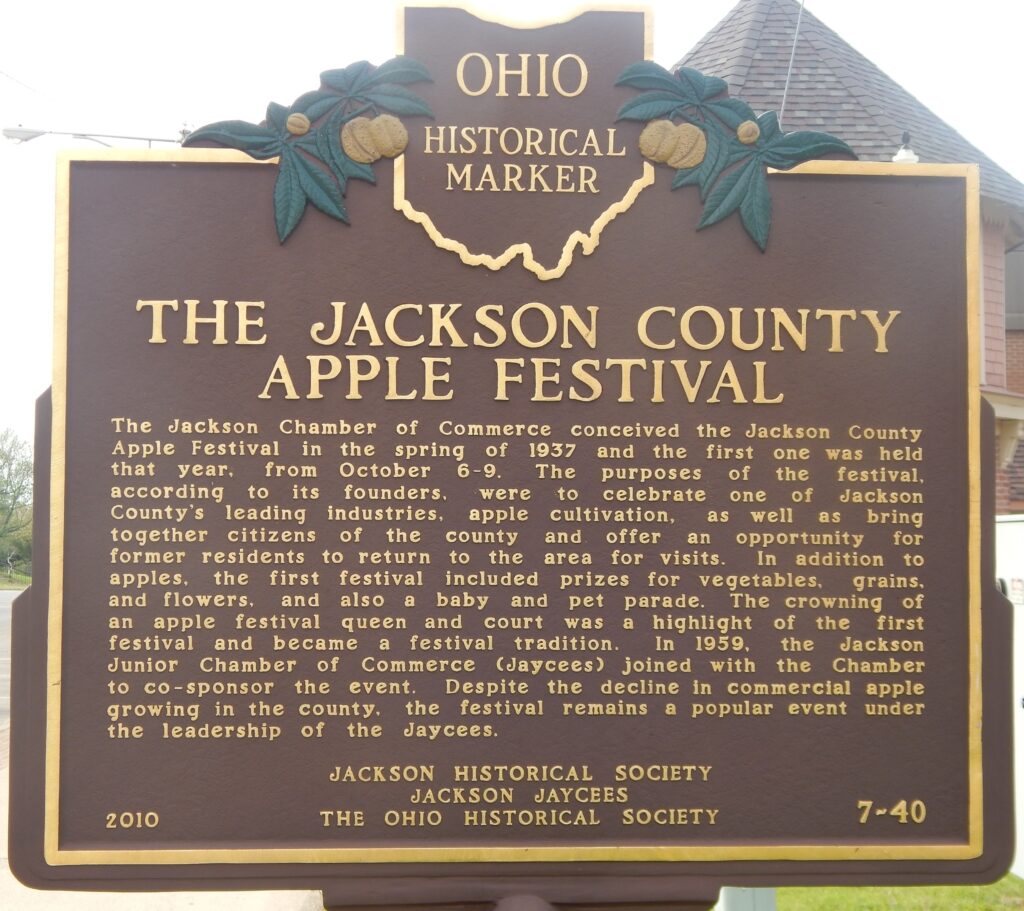
The Jackson Chamber of Commerce conceived the Jackson County Apple Festival in the spring of 1937 and the first one was held that year, from October 6-9. The purposes of the festival, according to its founders, were to celebrate one of Jackson County’s leading industries, apple cultivation, as well as bring together citizens of the […]
6-40 James Cemetery / Major John James
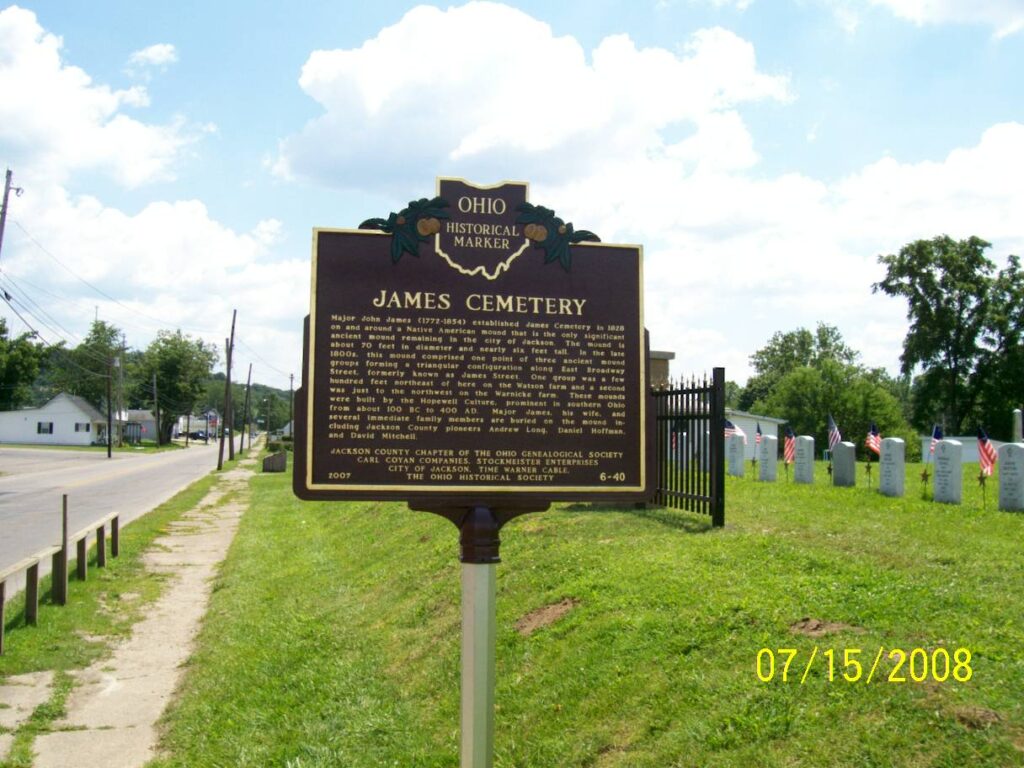
Major John James (1772-1854) established James Cemetery in 1828 on and around a Native American mound that is the only significant ancient mound remaining in the city of Jackson. The mound is about 70 feet in diameter and nearly six feet tall. In the late 1800s, this mound comprised one point of three ancient mound […]
5-40 The Scioto Salt Licks / The Scioto Salt Works
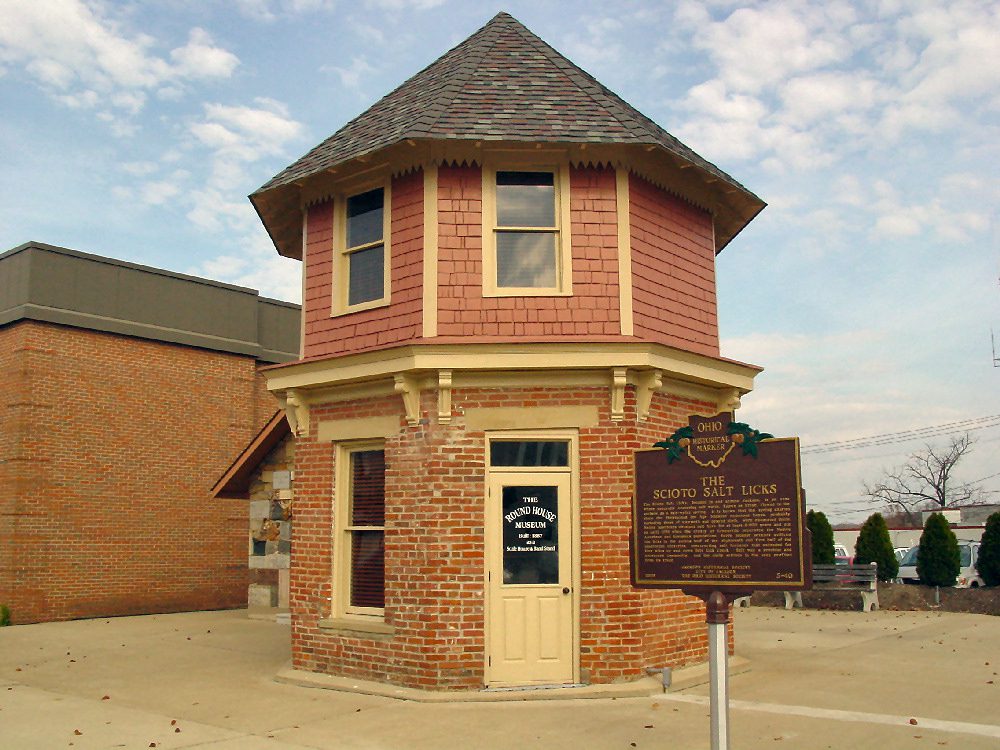
The Scioto Salts Licks, located in and around Jackson, is an area where naturally occurring salt water, known as brine, flowed to the surface as a salt-water spring. It is known that the spring existed since the Pleistocene Ice Age because numerous bones, probably including those of mammoth and ground sloth, were excavated there. Native […]