 Skip to content

159-18 Desegregation of Cleveland Public Schools

The building at 1380 E. 6th Street, designed by Walker and Weeks, served as the Cleveland Board of Education 1931-2013. During the 1950s and 1960s, the segregation of Cleveland Public Schools was the center of the city’s civil rights movement. Parents, like Daisy Craggett and Eddie Gill, protested relay classes and intact busing. The United […]
104-31 United Colored American Cemetery / Notable Citizens Interred at UCAC
United Colored American Cemetery is among the earliest in situ African American cemeteries in Hamilton County. The 11.6 acres in Madisonville were purchased by the United Colored American Association (UCAA) after the legislated closure of their earlier Avondale cemetery. Many Avondale burials and headstones were moved prior to the new cemetery’s dedication on May 30, […]
22-62 Ohio State Highway Patrol Commemorating the First Graduating Class of the Ohio State Highway Patrol, November 15, 1933 / Instilling Core Values for 90 Years 1933-2023
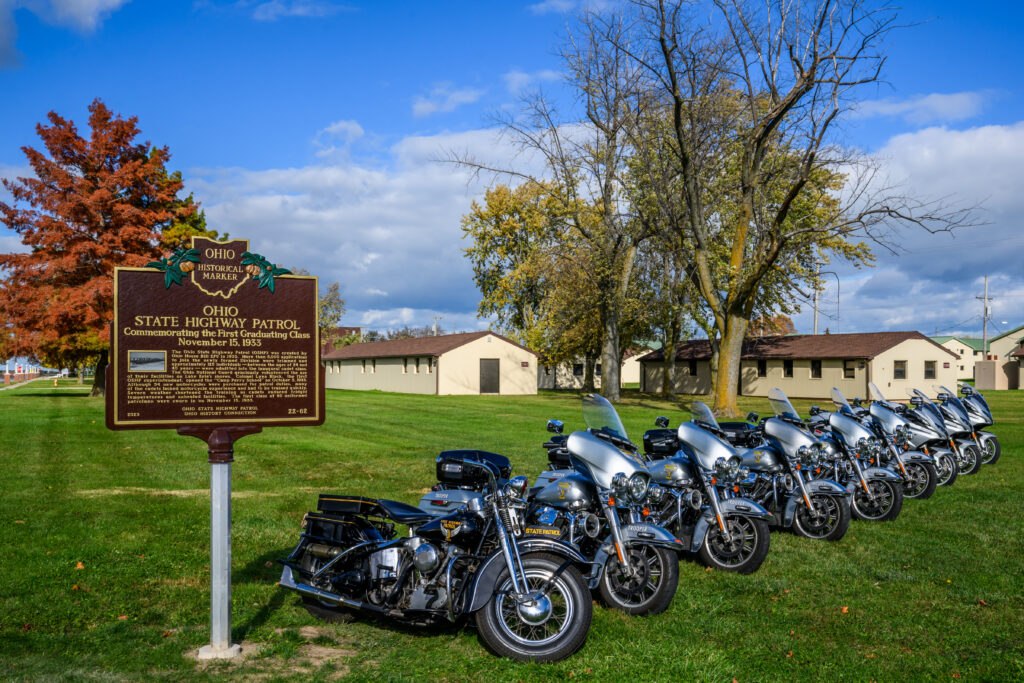
The Ohio State Highway Patrol (OSHP) was created by Ohio House Bill 270 in 1933. Over 5,000 applications to join the newly formed Division were trimmed and approximately 125 individuals — between the ages of 24 and 40 years — were admitted into the inaugural cadet class. The Ohio National Guard graciously volunteered the use […]
20-67 The James Converse & Hopson Hurd Store / A Commercial Site Since 1825
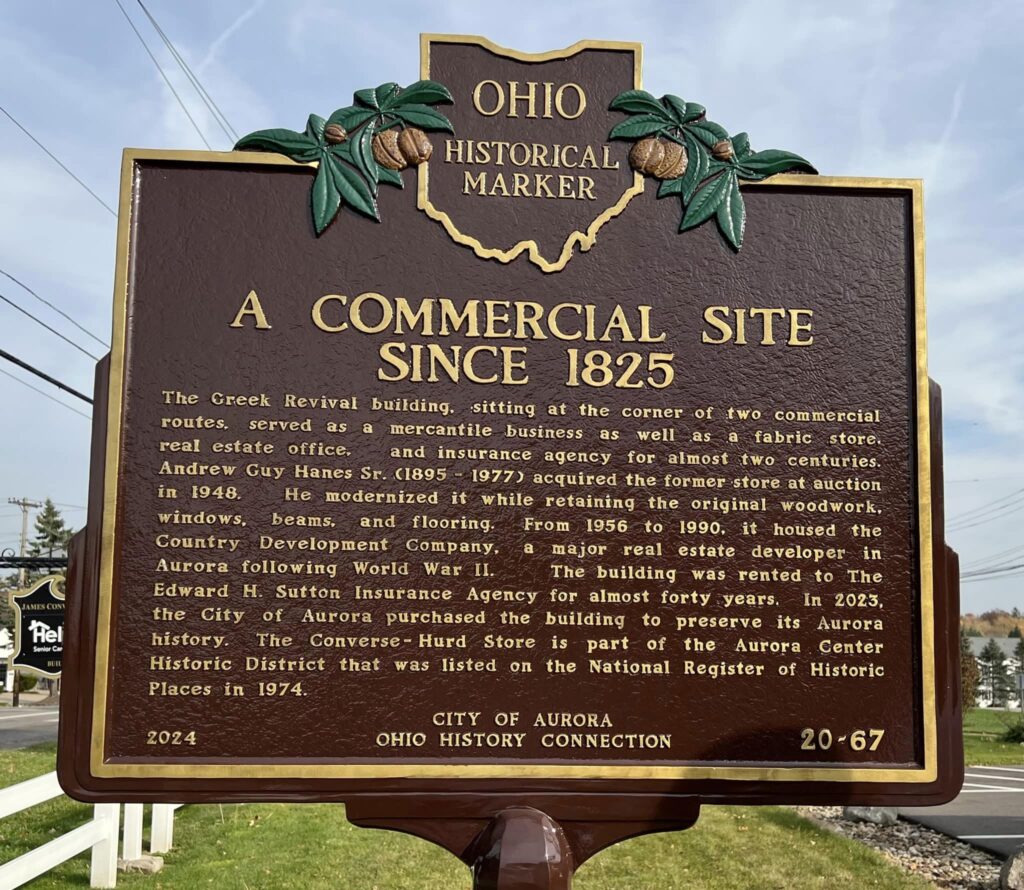
James Willard Converse (1806-1892) opened his store in 1825 at 10 South Chillicothe Road. Serving residents, merchants, and travelers, the store proved central to Aurora’s early commercial development. Converse’s Daybook survives as a glimpse into the habits of early citizens, who, along with household items, regularly purchased whiskey. Surprisingly, such sales surged on George Washington’s […]
40-78 Mesopotamia Village District
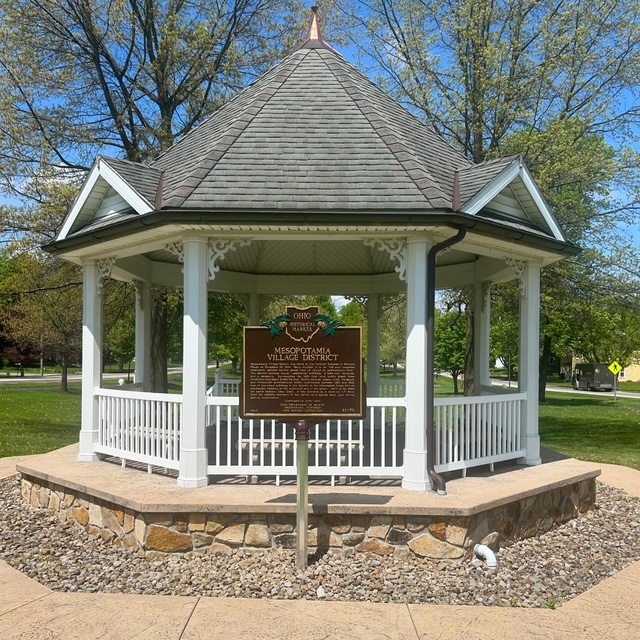
Mesopotamia Village District was listed in the National Register of Historic Places on December 24, 1974. Many consider it to be “the most unspoiled nineteenth century central green type of village in northeastern Ohio.” The district includes houses, commercial buildings, a town hall, churches, and a cemetery. Surrounding the 1600-foot-long public green these structures represent […]
51-77 St. Vincent-St. Mary Catholic High School / A Firm Foundation in Catholic Education
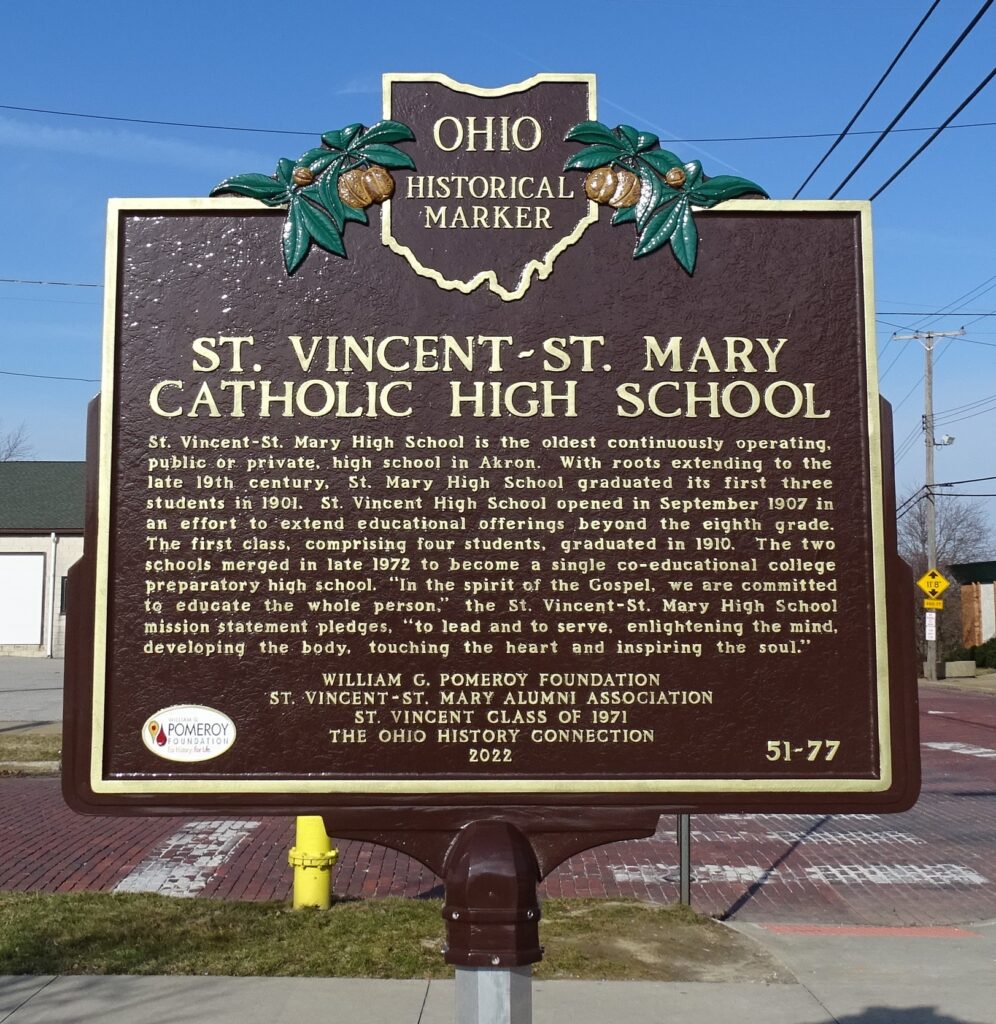
St. Vincent-St. Mary High School is the oldest continuously operating, public or private, high school in Akron. With roots extending to the late 19th century, St. Mary High School graduated its first three students in 1901. St. Vincent High School opened in September 1907 in an effort to extend educational offerings beyond the eighth grade. […]
4-61 Caldwell Downtown Historic District

The Caldwell Downtown Historic District is the historic commercial and governmental core of the Village of Caldwell, which was founded in 1857 on farmland owned by Joseph and Samuel Caldwell. Caldwell serves as the county seat of Noble County, the last of Ohio’s 88 counties to be organized. The agricultural community prospered and by 1873 […]
6-61 Noble County Jail and Sheriff’s Office
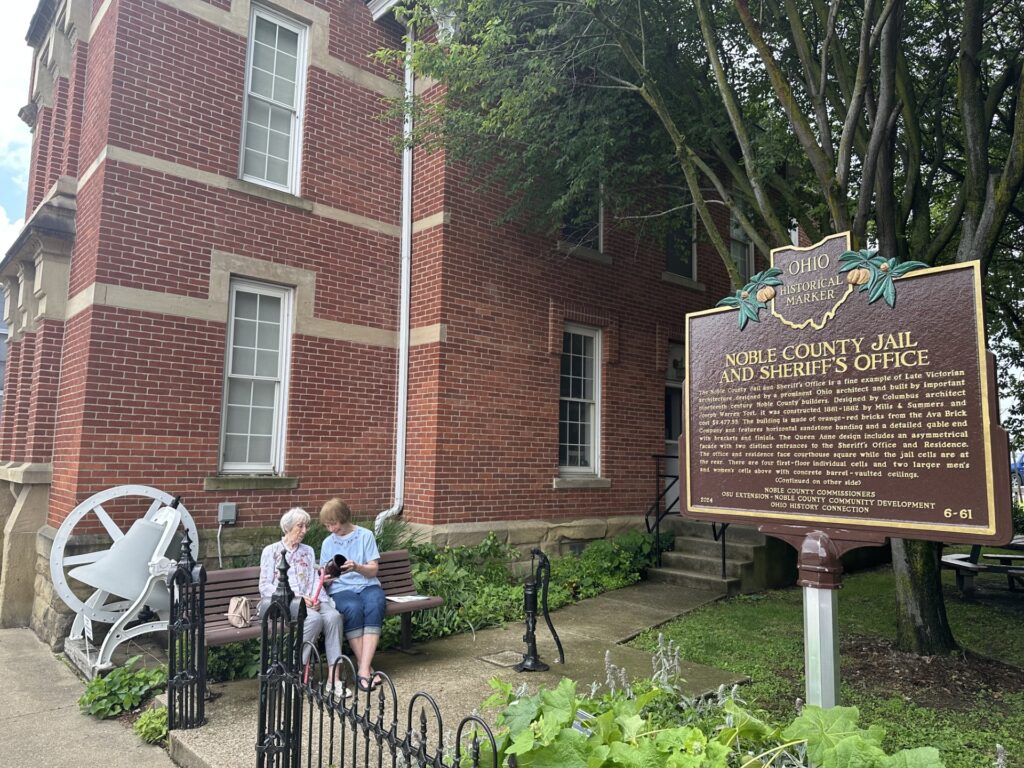
The Noble County Jail and Sheriff’s Office is a fine example of Late Victorian architecture designed by a prominent Ohio architect and built by important nineteenth century Noble County builders. Designed by Columbus architect Joseph Warren Yost, it was constructed 1881-1882 by Mills & Summers and cost $9,477.55. The building is made of orange-red bricks […]
5-61 Exaltation / Elevation of the Holy Cross Church
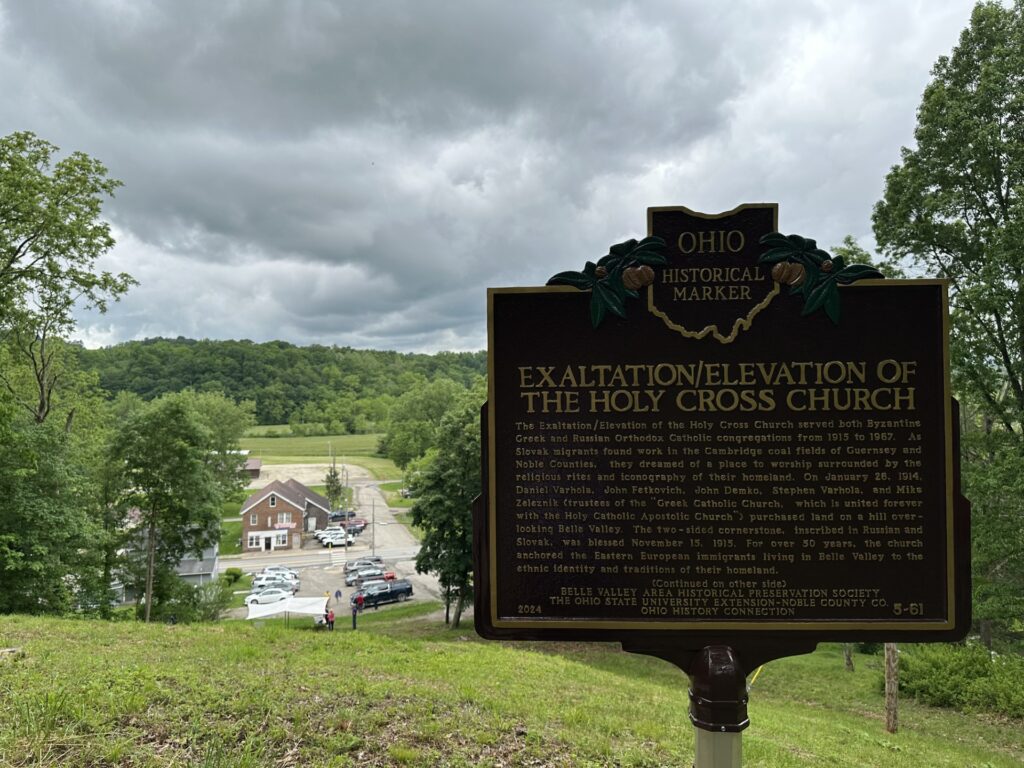
The Exaltation/Elevation of the Holy Cross Church served both Byzantine Greek and Russian Orthodox Catholic congregations from 1915 to 1967. As Slovak migrants found work in the Cambridge coal fields of Guernsey and Noble Counties, they dreamed of a place to worship surrounded by the religious rites and iconography of their homeland. On January 26, […]
8-20 Archibald Worthington / Worthington’s Cemetery

Archibald Worthington (1818-1895) was a freed slave from Virginia, a Civil War veteran, and prominent landowner in Highland Township. Census records indicate he was manumitted prior to 1850, and by 1860 owned land in northwest Ohio. Worthington also farmed, boarded freed slaves, and owned apple orchards and livestock. April 1866 township records show that he […]