 Skip to content

9-39 Paul E. Brown Football Trailblazer and Innovator
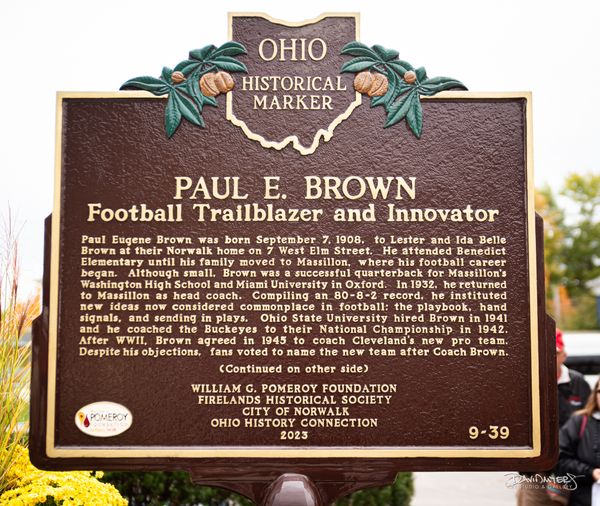
Paul Eugene Brown was born September 7, 1908, to Lester and Ida Belle Brown at their Norwalk home on 7 West Elm Street. He attended Benedict Elementary until his family moved to Massillon, where his football career began. Although small, Brown was a successful quarterback for Massillon’s Washington High School and Miami University in Oxford. […]
17-42 Wayman Chapel AME Church
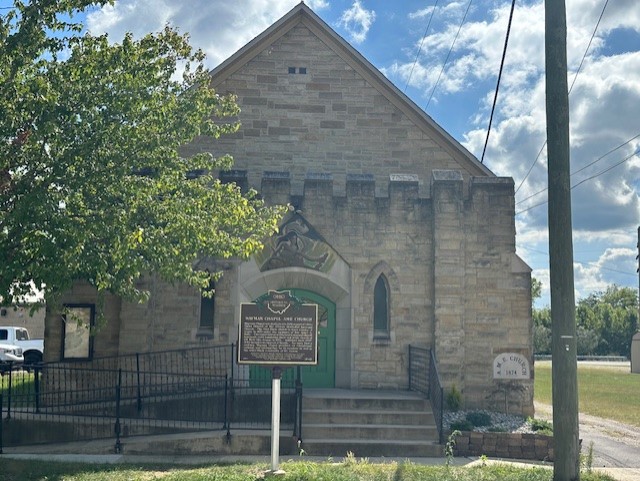
Wayman Chapel was dedicated in 1874 as part of Ohio’s Third District of the African Methodist Episcopal Church. The first Black church in Knox County, it began in 1870 under the guidance of Rev. James A. Ralls. The congregation met in local homes and church basements until completing their red brick church at 102 West […]
153-18 Cleveland’s Ali Summit / The Negro Industrial and Economic Union

Players of the Cleveland Browns gathered eleven Black professional athletes and future mayor Carl Stokes to discuss with boxer Muhammad Ali (January 17, 1942-June 3, 2016) his refusal to serve in the Vietnam War. After their private meeting on June 4, 1967, the twelve men decided to “support Ali on principle” and held a lengthy […]
8-2 More Than A Game
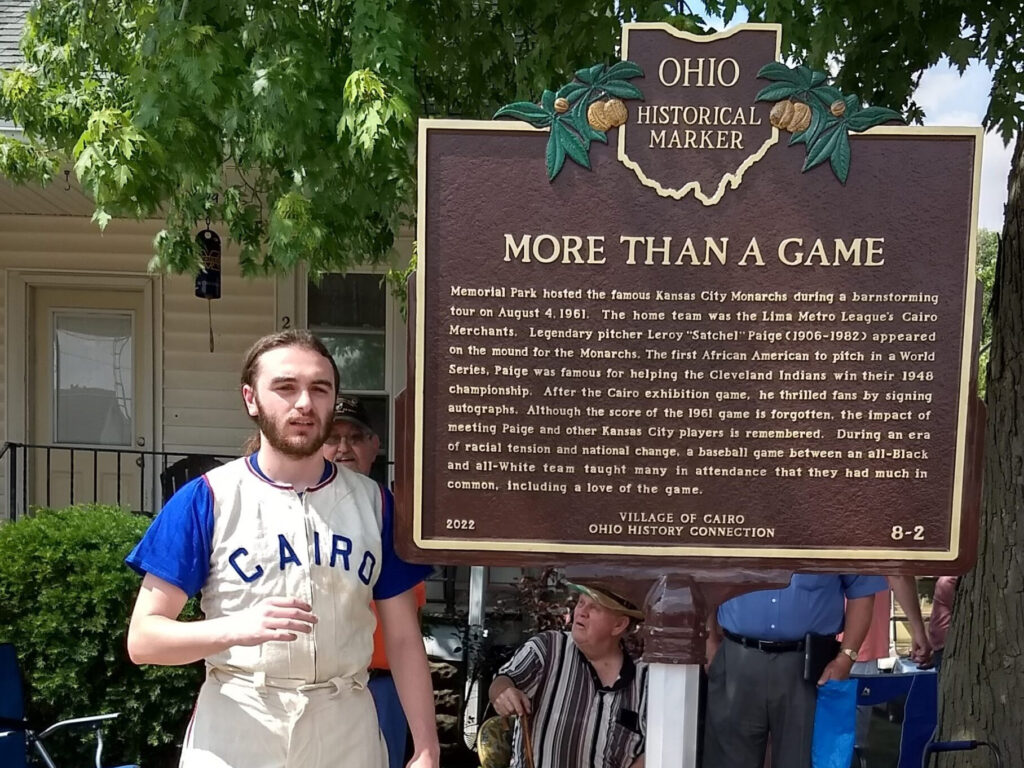
Memorial Park hosted the famous Kansas City Monarchs during a barnstorming tour on August 4, 1961. The home team was the Lima Metro League’s Cairo Merchants. Legendary pitcher Leroy “Satchel” Paige (1906-1982) appeared on the mound for the Monarchs. The first African American to pitch a World Series, Paige was famous for helping the Cleveland […]
156-18 The African American Cultural Garden
Acquiring the African American Cultural Garden was a struggle for equitable access to public space in Cleveland during the Civil Rights era. Between 1961 and 1977, Black Clevelanders sought space to celebrate Black pride and culture within Cleveland’s Cultural Gardens. Activists lobbied the Cultural Garden Federation, City Council, and engaged the Black community to acquire […]
152-18 Gates of Hope for Jewish Immigrants
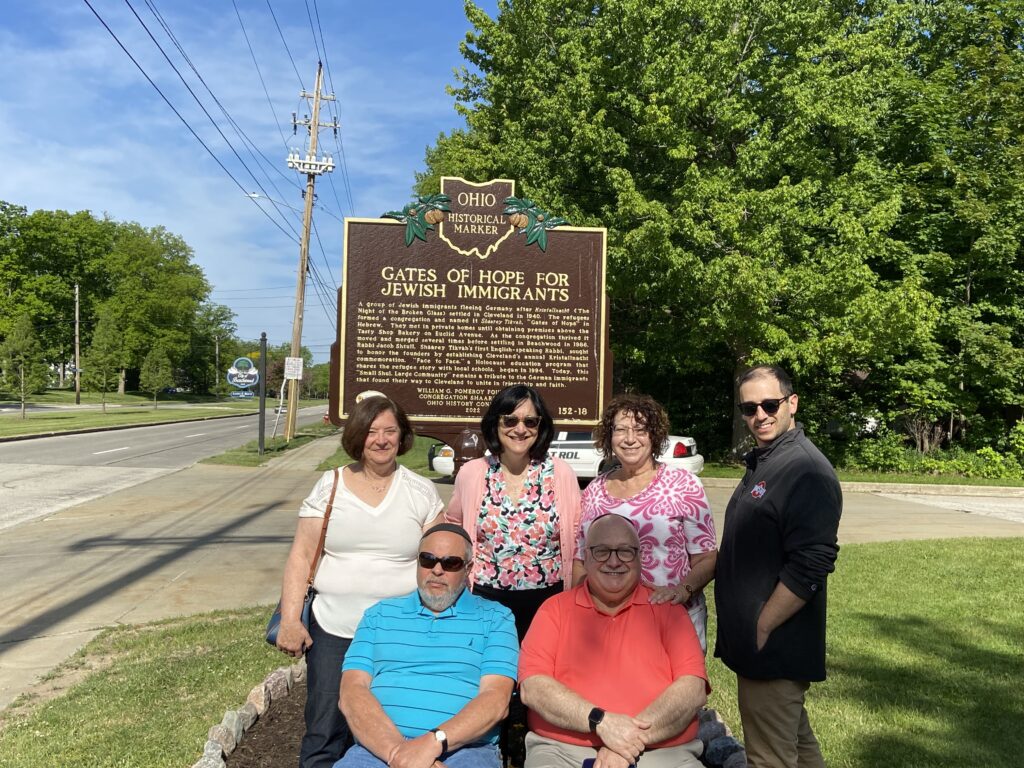
A group of Jewish immigrants fleeing Germany after Kristallnacht (The Night of the Broken Glass) settled in Cleveland in 1940. The refugees formed a congregation and named it Shaarey Tikvah, “Gates of Hope” in Hebrew. They met in private homes until obtaining premises above the Tasty Shop Bakery on Euclid Avenue. As the congregation thrived […]
136-25 Summit Station
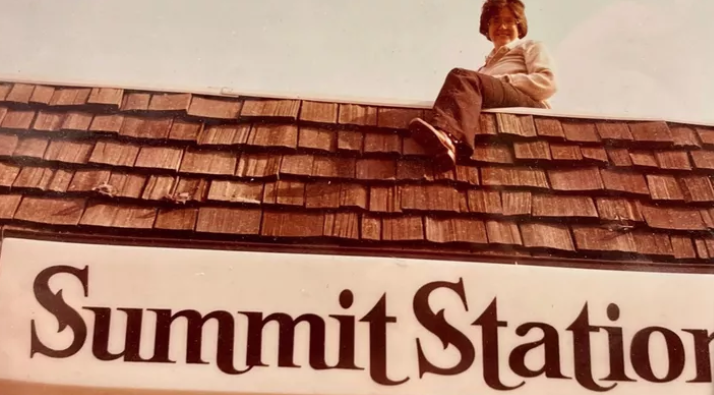
2210 Summit Street once housed one of Ohio’s longest-running lesbian bars. In 1970, a lesbian bartender at Jack’s A Go Go recognized that while Columbus had bars for gay men, it needed one geared toward lesbian clientele. Patrons knew the bar as “Jack’s,” Logan’s Off Broadway, and Summit Station. Staff welcomed women from small towns, […]
18-51 Marion Women’s Club Home
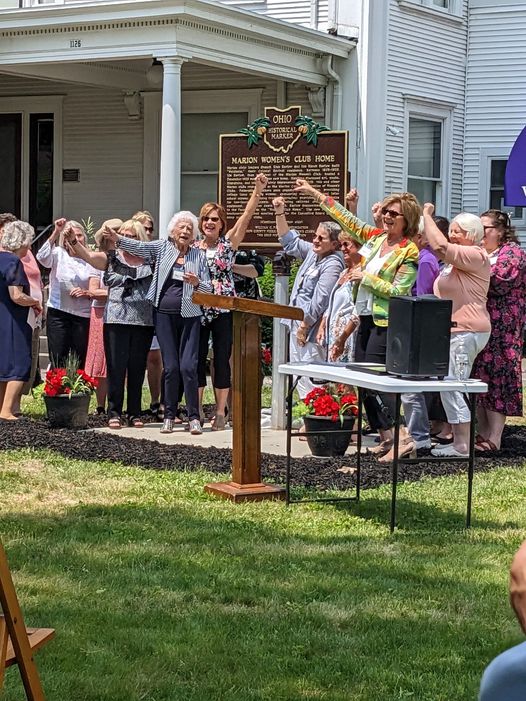
Marion civic leaders Shauck Elah Barlow and Ida Harsh Barlow built “Waldheim,” their Colonial Revival residence, between 1903-1905. Ida Barlow, then president of the Marion Women’s Club, hosted a December 1905 meeting in her new home. Members discussed art, music, literature, and ideas for “civic improvement.” In 1909, this and other Marion clubs reorganized as […]
154-18 Sculptors of Guardians / Scultori Dei Guardiani
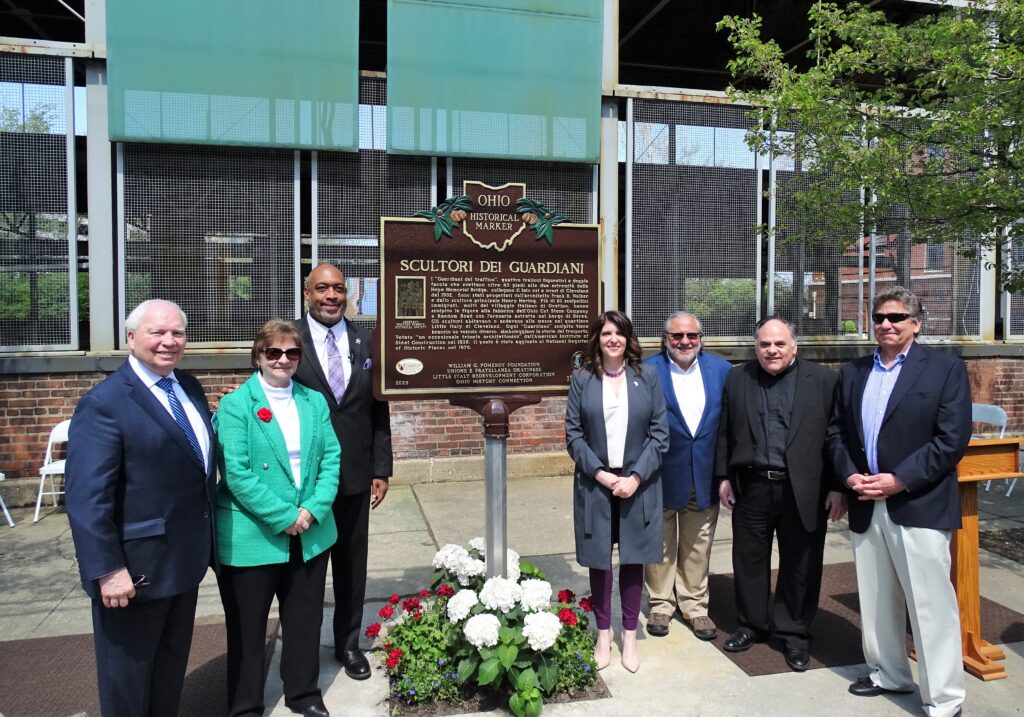
Guardians of Traffic,” four double-sided figural pylons towering over 40-feet above either end of the Hope Memorial Bridge, have connected Cleveland’s east and west side since 1932. They were designed by architect Frank R. Walker and lead sculptor Henry Hering. More than 20 immigrant stonemasons — many fromthe Italian village of Oratino — carved the […]
149-18 Glenville High School
Invited to speak at three Cleveland high schools, Dr. Martin Luther King Jr. delivered his powerful “Rise Up!” speech to students at Glenville High School on April 26, 1967. It signaled King’s opening drive to elect African Americans to prominent government positions in northern cities. Encouraging students to “develop a sense of somebodiness,” King challenged […]