 Skip to content

2-52 Judge Samuel Hinckley 1757-1840 / John Brongers 1843-1932
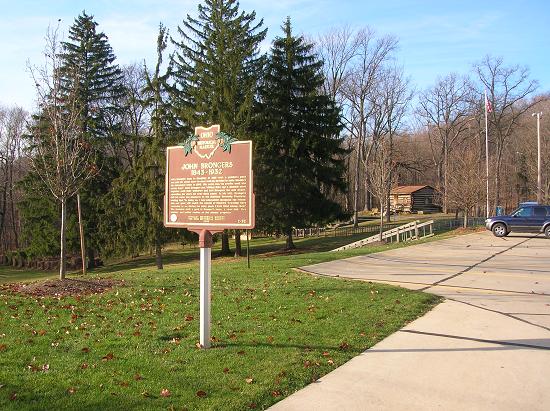
As a member of the Connecticut Land Company, Judge Samuel Hinckley of North Hampton, Massachusetts purchased township 4N Range 13W of the Western Reserve in 1795 for a sum equivalent to 23 cents an acre. The township remained unsettled until Abraham Freeze was commissioned by Judge Hinckley in 1819 to survey the township into 100 […]
1-52 The Giants of Seville
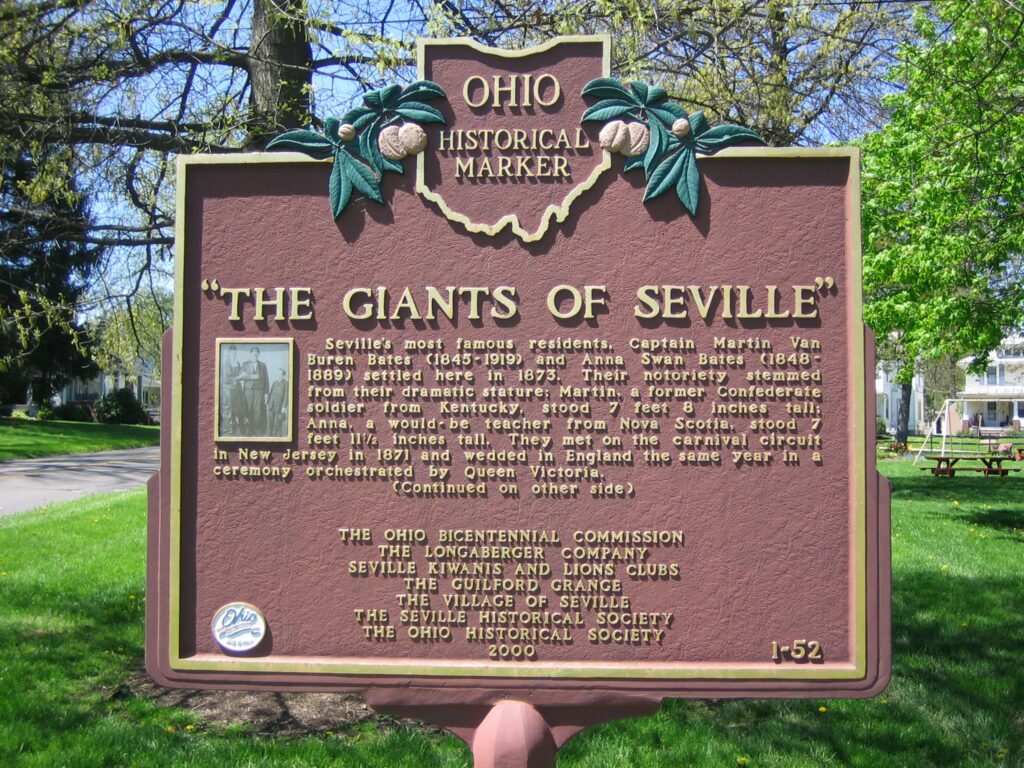
Seville’s most famous residents, Captain Martin Van Buren Bates (1845-1919) and Anna Swan Bates (1848-1889) settled here in 1873. Their notoriety stemmed from their dramatic stature: Martin, a former Confederate soldier from Kentucky, stood 7 feet 8 inches tall; Anna, a would-be teacher from Nova Scotia, stood 7 feet 11 inches tall. They met on […]
17-51 Old Marion Cemetery- Also known as the Quarry Street or Pioneer Cemetery
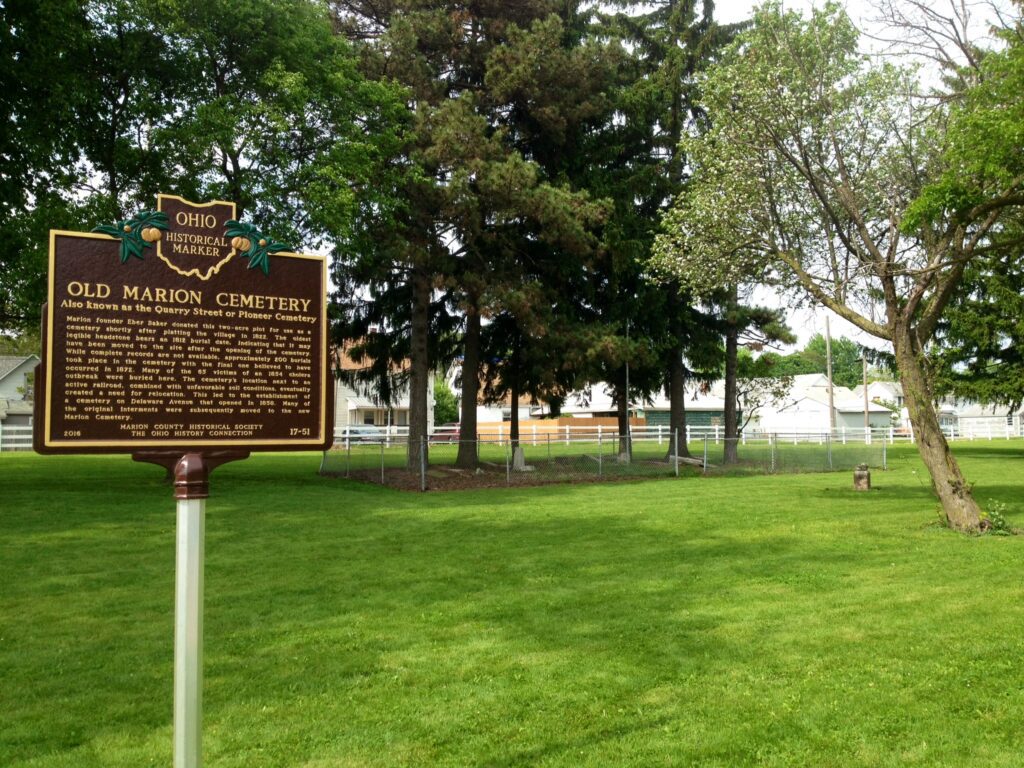
Marion founder Eber Baker donated this two-acre plot for use as a cemetery shortly after platting the village in 1822. The oldest legible headstone bears an 1812 burial date, indicating that it may have been moved to the site after the opening of the cemetery. While complete records are not available, approximately 200 burials took […]
16-51 Cummin’s Home
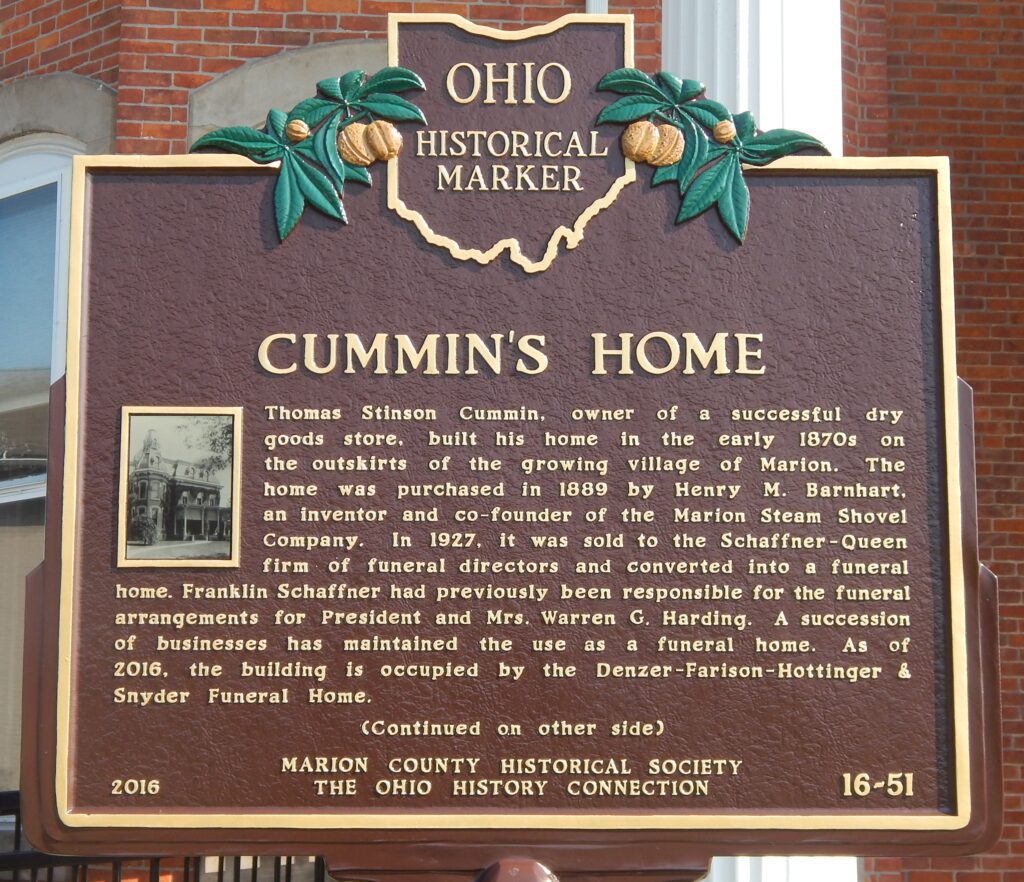
Thomas Stinson Cummin, owner of a successful dry goods store, built his home in the early 1870s on the outskirts of the growing village of Marion. The home was purchased in 1889 by Henry M. Barnhart, an inventor and co-founder of the Marion Steam Shovel Company. In 1927, it was sold to the Schaffner- Queen […]
15-51 Scioto Ordnance Plant Site
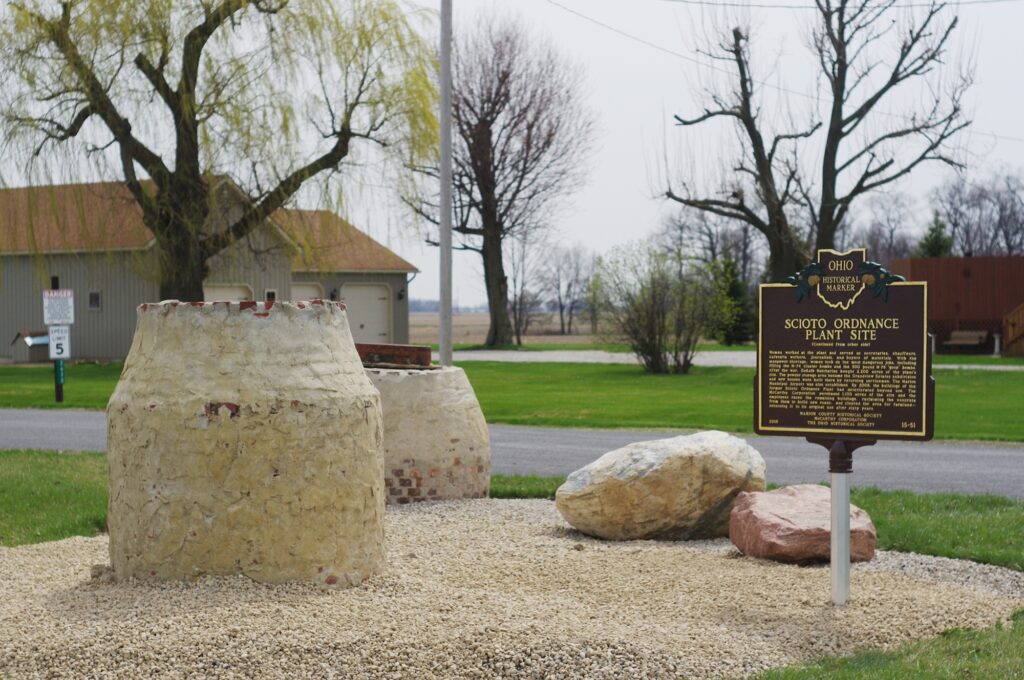
On March 2, 1942, four months after the U.S. entered WWII, farmers living between Marion-Williamsport and Marseilles-Galion Roads and between State Route 98 and the Norfolk & Western Railroad were notified to vacate their farms by the first of May. This displaced approximately 126 farm families from over 12,600 acres so that a munitions factory […]
14-51 Camp Marion, World War II Prisoners of War, 1944-1946
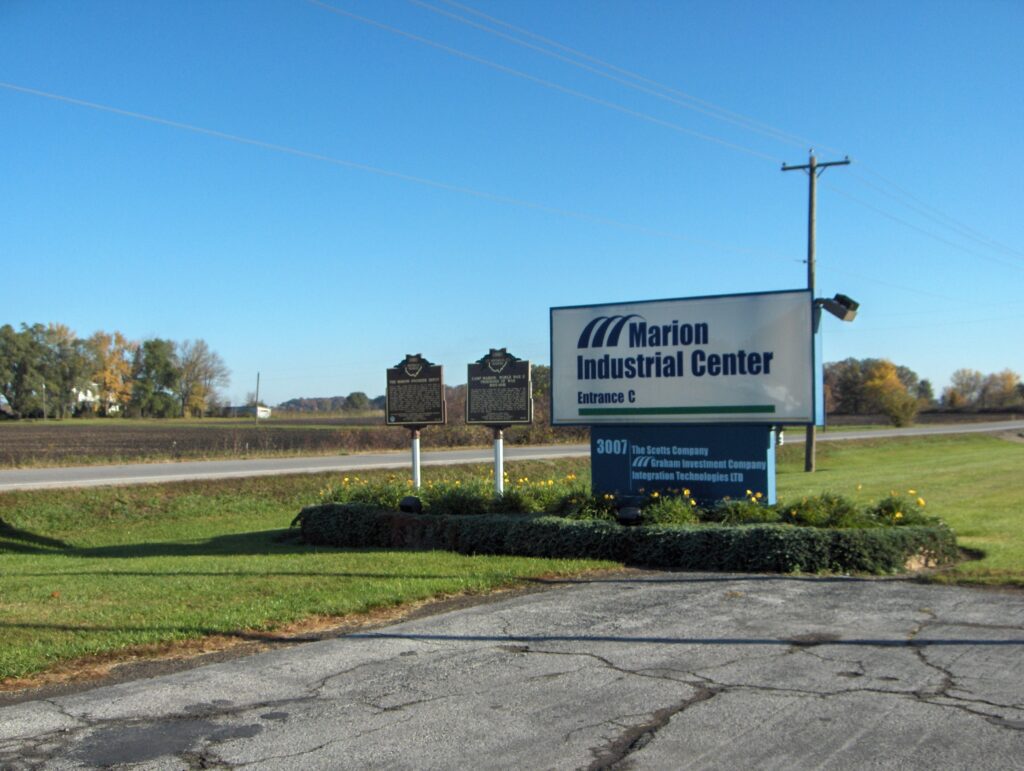
This site was once a twenty-four acre camp for Prisoners of War established on the grounds of the Marion Engineer Depot. The Depot was a major supply and logistics site of the U.S. Army Engineers during World War II. The first contingent of POWs arrived in December 1944, consisting of two hundred and fifty men, […]
13-51 Marion Steam Shovel
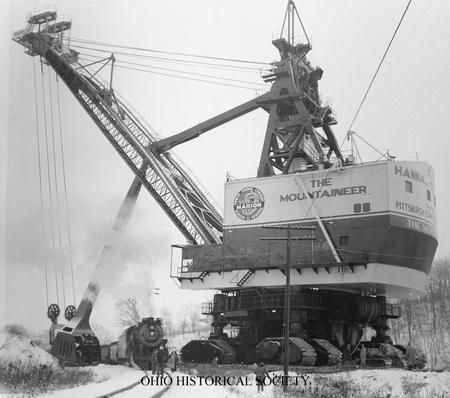
The Marion Steam Shovel Company built the primary tools for America’s civil engineering for more than 100 years. Founded in 1884 by Henry M. Barnhart, George W. King, and Edward Huber, the company’s patent steam shovels helped revolutionize railway and road construction, and were used in the building of the Panama Canal, Hoover Dam, and […]
12-51 The Marion Engineer Depot
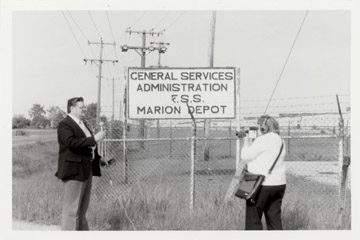
Early in 1942, during World War II, the U. S. Army Corps of Engineers acquired 640 acres along two miles of U. S. Route 30 South (now State Route 309) from ten landowners. By June 11 of that year, the farm families were removed and construction of The Marion Engineer Depot (MED) began, costing $4 […]
11-51 Marion Mausoleum
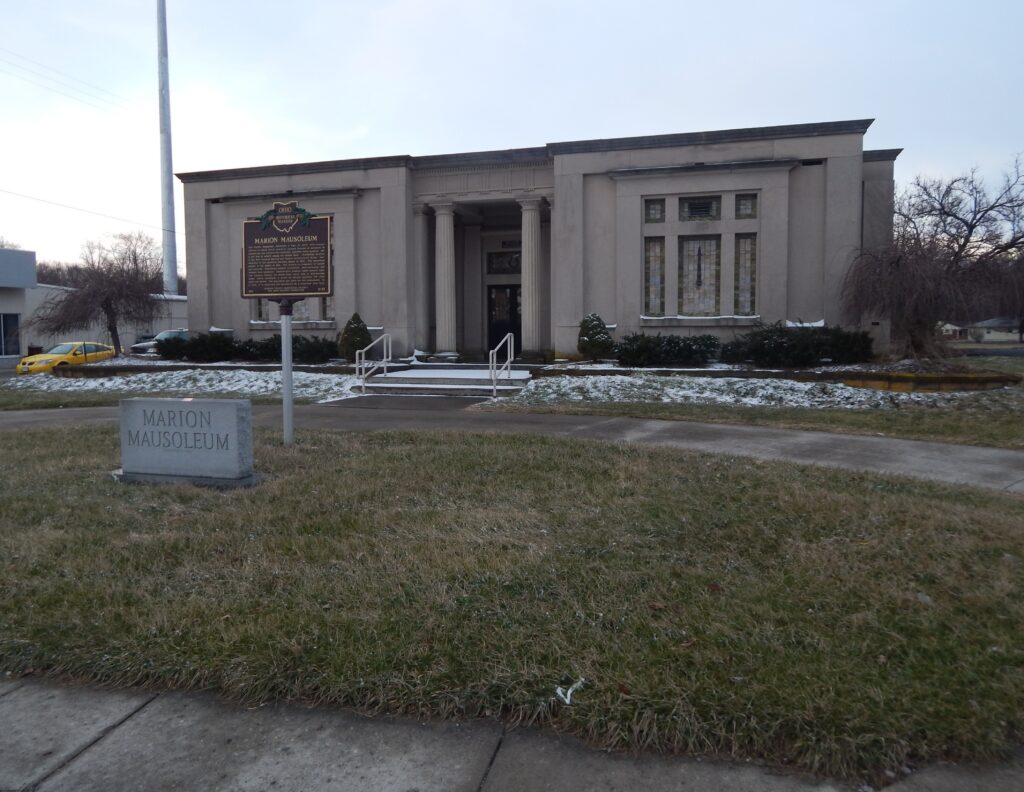
The Marion Mausoleum represents a time in early 20th-century America in which burial practices changed because of advances in engineering and construction materials, concerns about hygiene, and a new rise in wealth among the middle class. Exhibiting elements of the Neo-Classical Revival and Prairie architectural styles, construction of the sandstone building began in 1906. The […]
10-51 Harrison Military Road, War of 1812
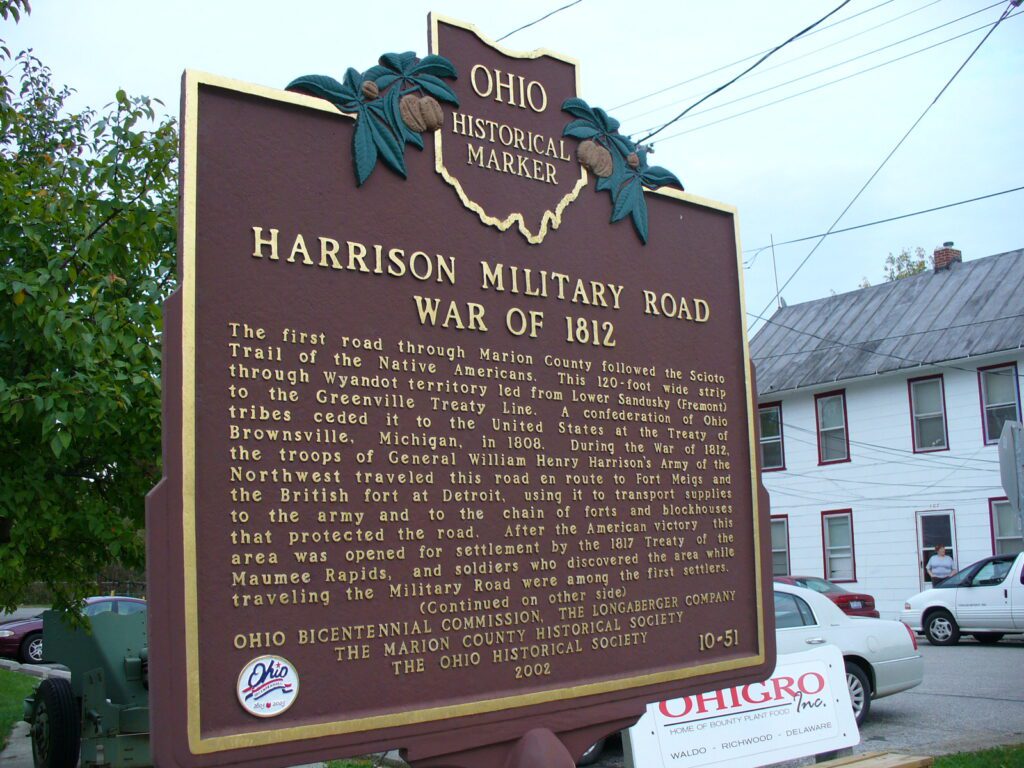
The first road through Marion County followed the Scioto Trail of the Native Americans. This 120-foot wide strip through Wyandot territory led from Lower Sandusky (Fremont) to the Greenville Treaty Line. A confederation of Ohio tribes ceded it to the United States at the Treaty of Brownsville, Michigan, in 1808. During the War of 1812, […]