 Skip to content

10-78 Kinsman
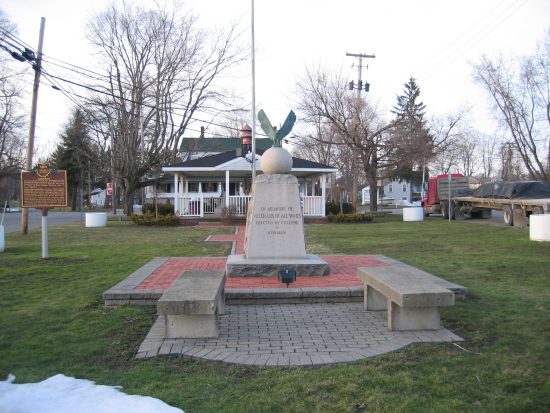
The township of Kinsman was purchased by John Kinsman of Lisbon, Connecticut, in 1799 from the Connecticut Land Company. Kinsman has been the home of many notable citizens, some of whom include: Philip P. Bliss (1838-1876) and James McGrannahan (1840-1907) were hymn composers and religious musical directors for the nationally-known evangelical Dwight L. Moody Revival […]
9-78 Mahoning Lodge No. 29, IOOF
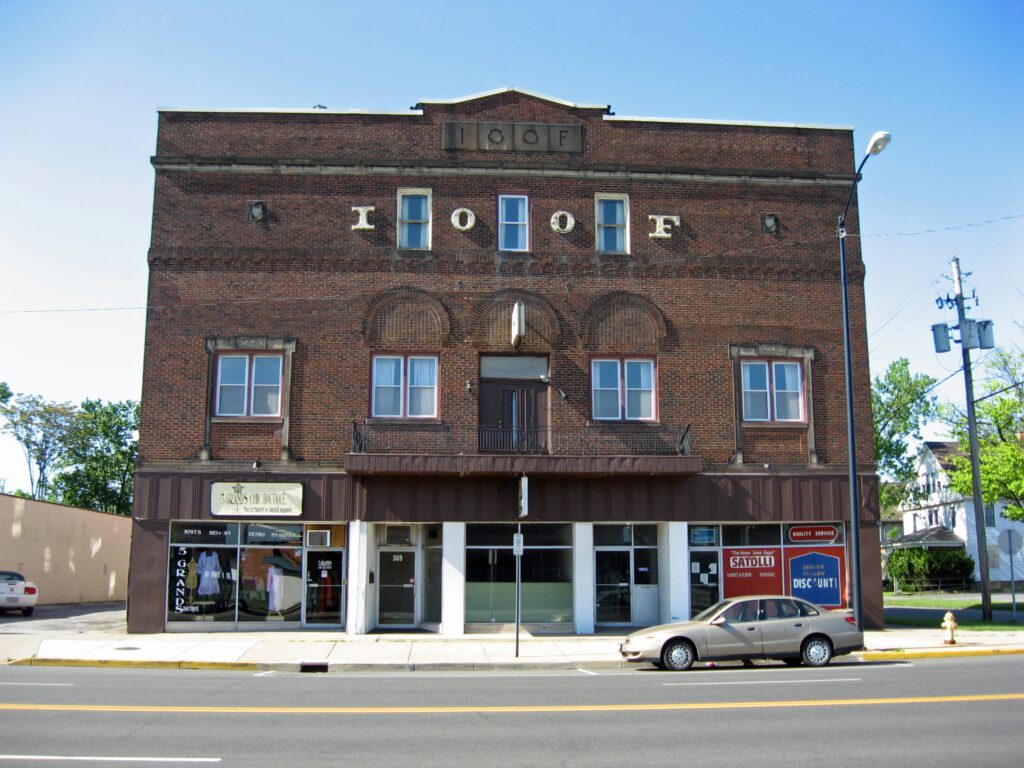
The Independent Order of Odd Fellows (IOOF), a world-wide fraternal organization, was introduced to the United States from England in 1819 and was established in Ohio in 1830. Mahoning Lodge #29 in Warren, Ohio, received its jurisdictional charter on May 21, 1844, and is currently the oldest active lodge in northeast Ohio. The lodge was […]
8-78 Mary Ann Campana
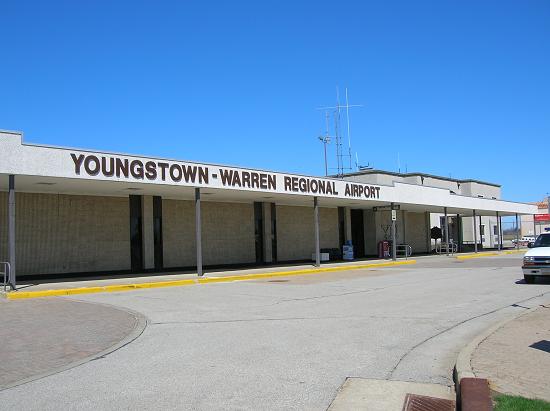
Born on April 18, 1913, in Barrea, Province L’Aquila Abruzzi, Italy to Salvatore and Maria (Lombardozzi) Campana, Mary Ann Campana immigrated to the United States with her parents at age eight. Raised in Youngstown and educated in the Youngstown Public Schools and Youngstown College, Ms. Campana was a pioneer in Ohio, National, and international aviation. […]
7-78 Kinsman House 1832
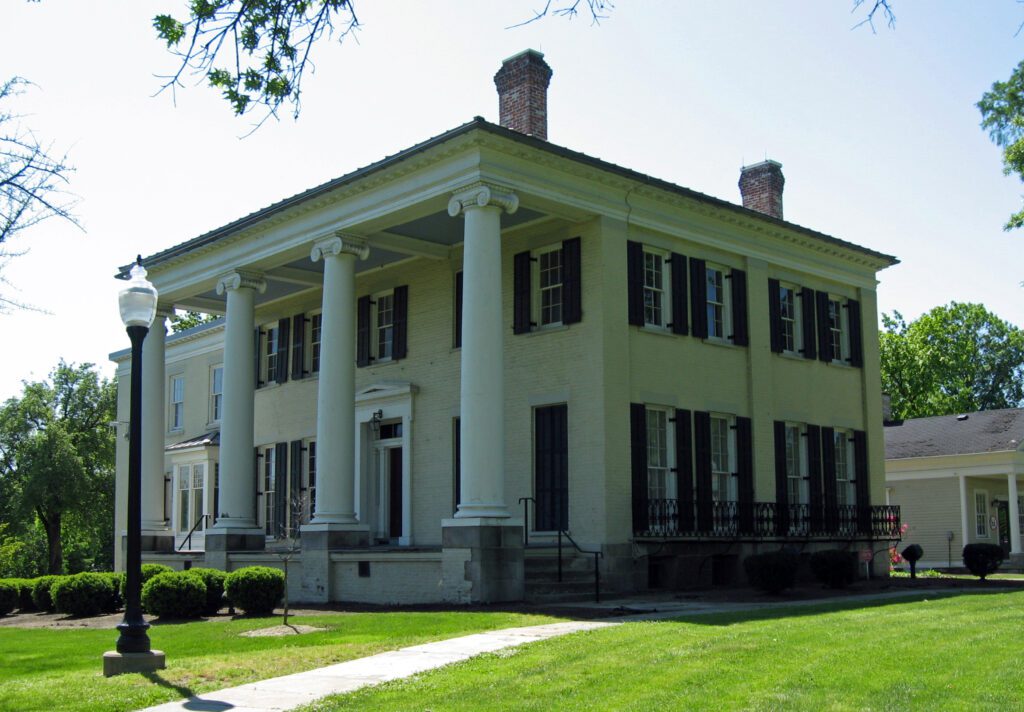
1832 Greek Revival Style. The Kinsman House once served as classrooms for the Dana School of Music, Hiram College Branch. The house is listed on the National Register of Historic Places.
6-78 James Heaton (1770-1856) Founder of Niles
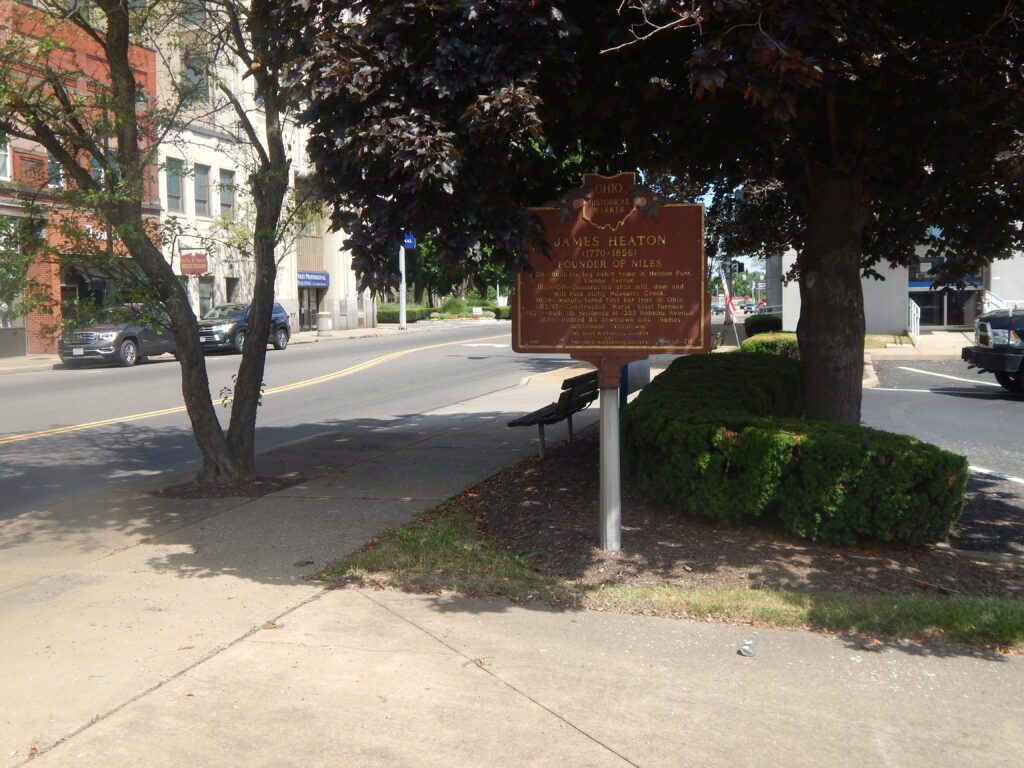
1806 – Built his log cabin home in Heaton Park, Vienna Avenue. 1806/07 – Constructed a grist mill, dam and mill race along Mosquito Creek. 1809 – Manufactured first bar iron in Ohio. 1812/13 – Constructed “Maria” blast furnace. 1820 – Built his residence at 1355 Robbins Avenue. 1834 – Platted 54 downtown lots. Names […]
5-78 Trumbull Red Cross Chapter House, Pioneer Cemetery
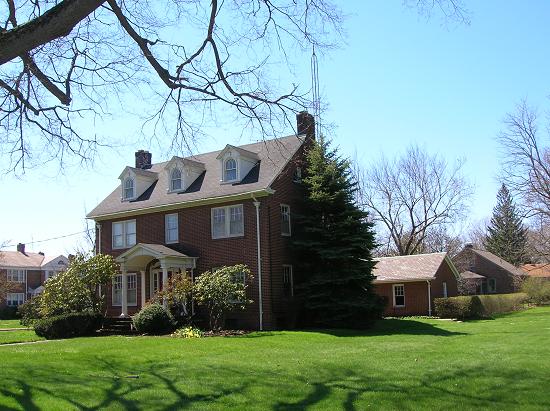
Administration Building built in 1931. Chapter House built in 1962. Commemorating American Red Cross Centennial, 1881-1981. Early Western Reserve burial grounds, 1804-1848. Grave sites of 12 Revolutionary War veterans and Mary Chesney, member of pioneer Warren family and for whom local D.A.R. chapter was named.
4-78 John Stark Edwards House

Built in 1807. Listed on the National Register of Historic Places. Trumbull County Historical Society Museum.
3-78 Old Erie Lodge No. 3 Free and Accepted Masons
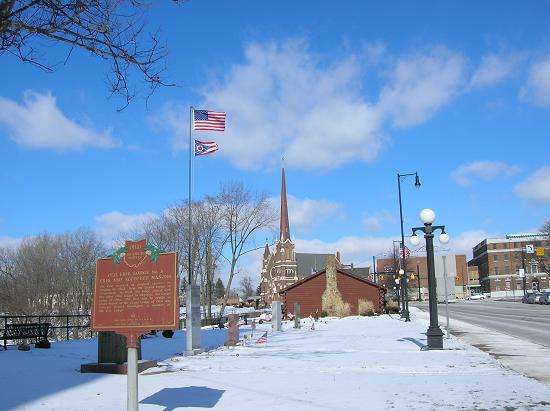
Old Erie received its original charter on October 19, 1803, from the Grand Lodge of Connecticut. In 1808, the lodge joined with five other Ohio lodges to organize the Grand Lodge of Ohio. The first man to preside as Grand Master of the Grand Lodge of Ohio was Governor Samuel Huntington, a member of Old […]
2-78 First Presbyterian Church
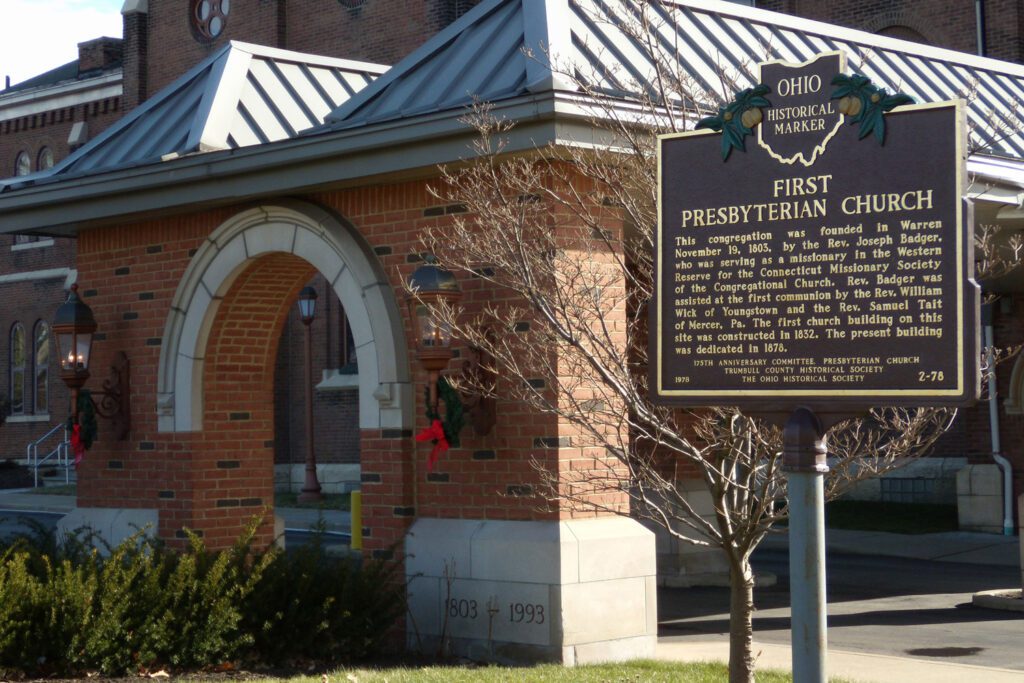
This congregation was founded in Warren November 19, 1803, by the Rev. Joseph Badger, who was serving as a missionary in the Western Reserve for the Connecticut Missionary Society of the Congregational Church. Rev. Badger was assisted at the first communion by the Rev. William Wick of Youngstown and the Rev. Samuel Tait of Mercer, […]
1-78 Perkins House
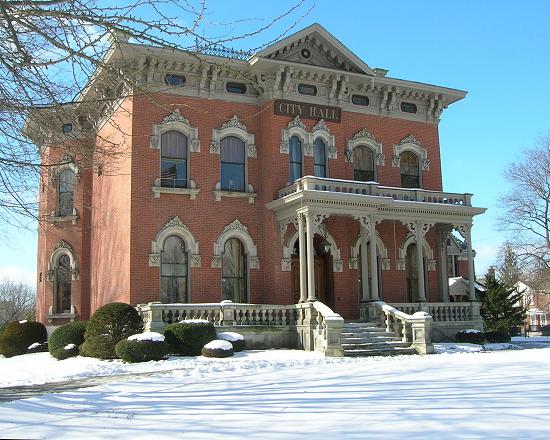
This ornate Victorian/Italianate house was constructed in 1871 as the home of Henry Bishop Perkins, Sr., a civic, business, and political leader of the Western Reserve. During the 19th and early 20th century political figures such as U.S. Grant, James A. Garfield, Rutherford B. Hayes, Benjamin Harrison and William McKinley were visitors to this house.