 Skip to content

15-22 (B) Ohio Veterans Home, Ohio Soldiers’ and Sailors’ Home, 1888-1979
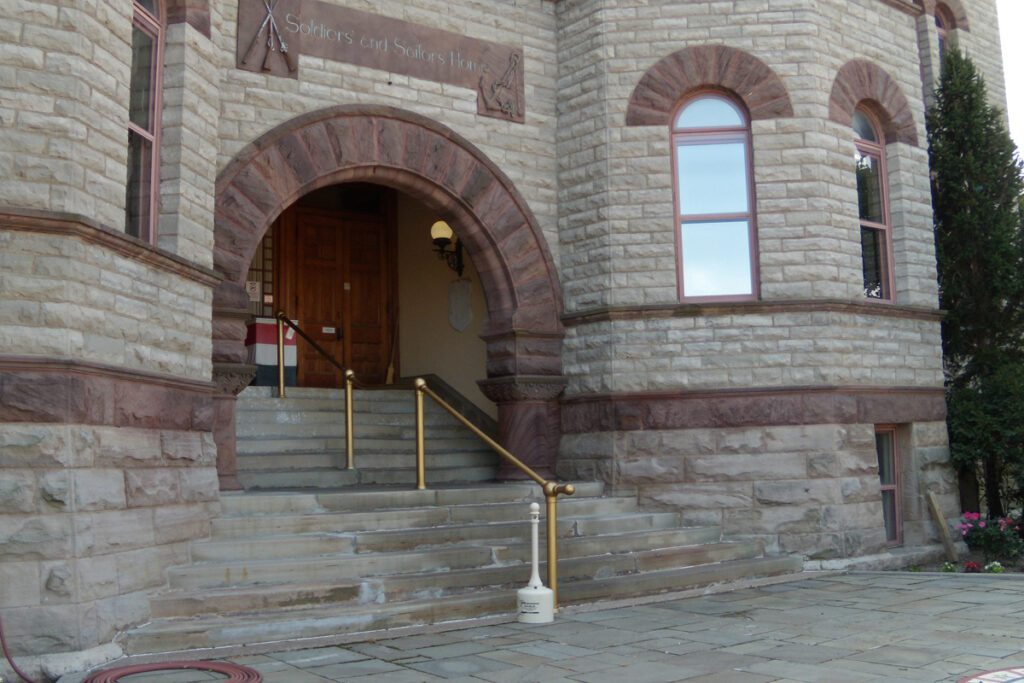
Following the Civil War, many of Ohio’s disabled and wounded veterans found inadequate provisions for their long-term needs. In response, the Grand Army of the Republic’s Department of Ohio lobbied for a state-operated veterans’ home. In 1886 Governor Joseph B. Foraker signed a bill establishing the Ohio Soldiers’ and Sailors’ Home for honorably discharged veterans. […]
14-22 Huron’s Maritime History / Huron Lighthouses
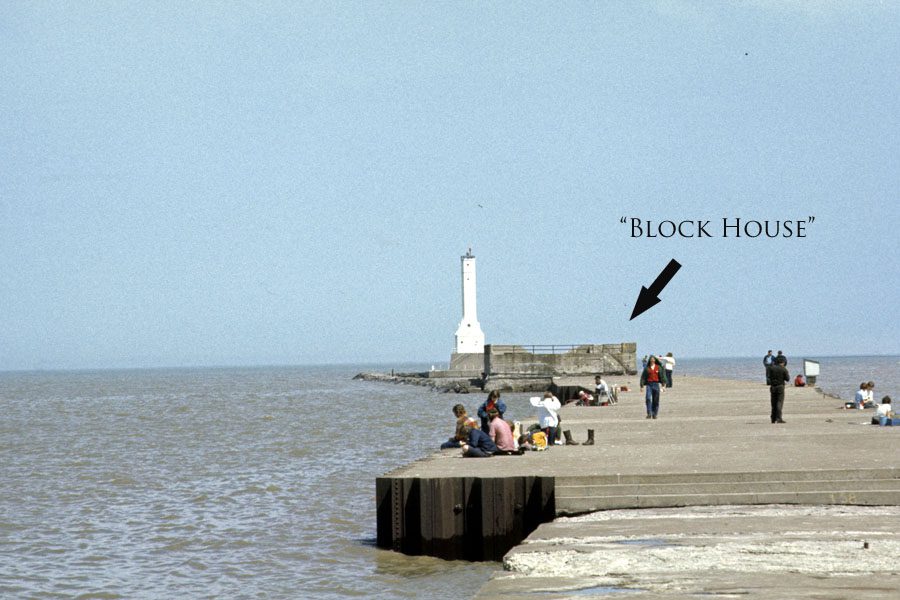
Lake Erie commerce has played a central role in the development of Huron. Important among Huron’s maritime industries were shipbuilding and commercial fishing. The city’s shipbuilding industry dates to the first decades of the nineteenth century. Shipyards were located on the Huron River’s west bank, slightly north of this marker, and also upstream at Fries […]
12-22 Huron’s First Inhabitants
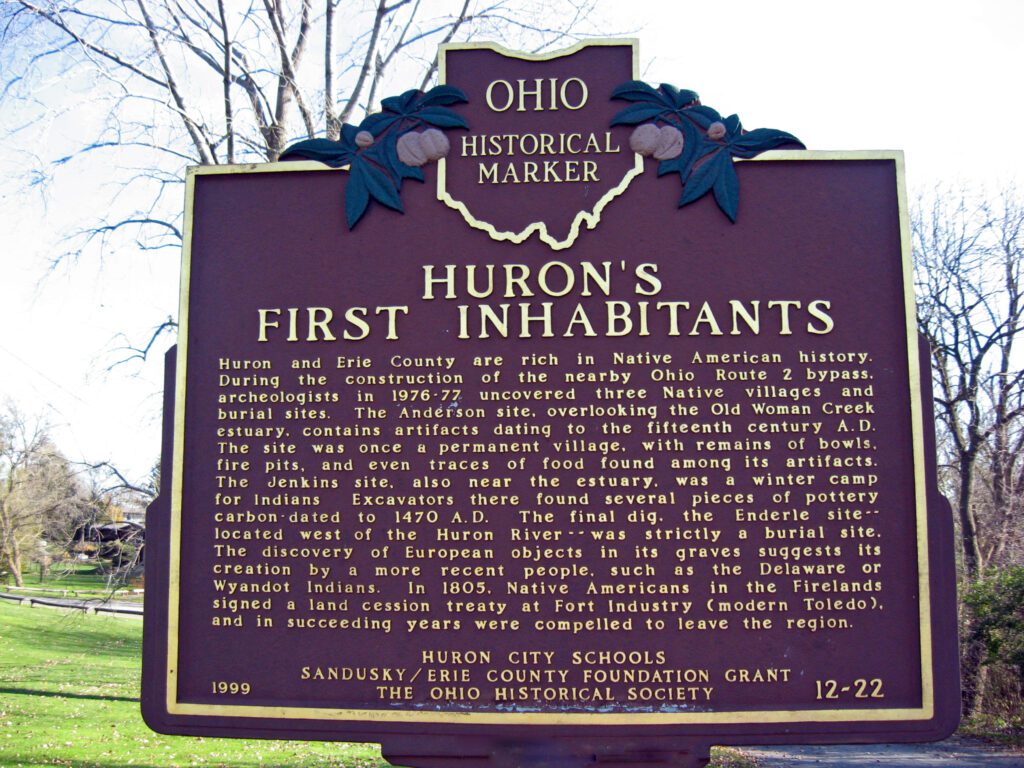
Huron and Erie County are rich in Native American history. During the construction of the nearby Ohio Route 2 bypass, archeologists in 1976-77 uncovered three Native villages and burial sites. The Anderson site, overlooking the Old Woman Creek estuary, contains artifacts dating to the fifteenth century A.D. The site was once a permanent village, with […]
11-22 The Wright House and The Underground Railroad / Old Main Street
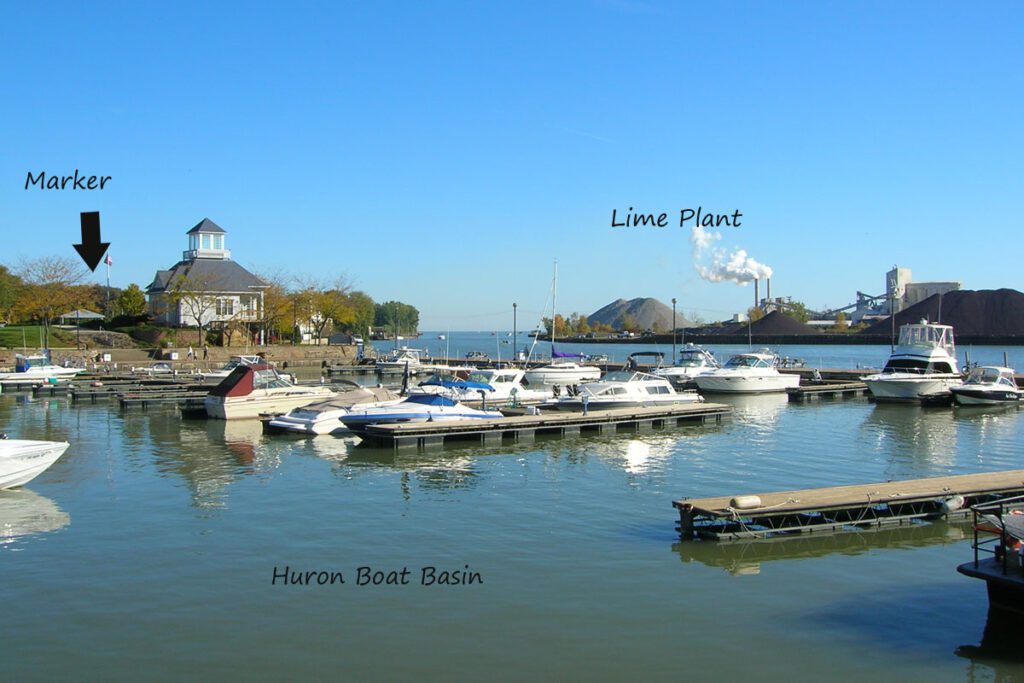
In the early 1800s, Jabez Wright, an early Huron County judge, purchased a large tract of lakeside land on the north side of what is now Cleveland Road. There Wright built an eight-room farmhouse that later served as a “station” on the fabled Underground Railroad, playing a vital role in aiding fugitive African-American slaves to […]
10-22 Christ Episcopal Church
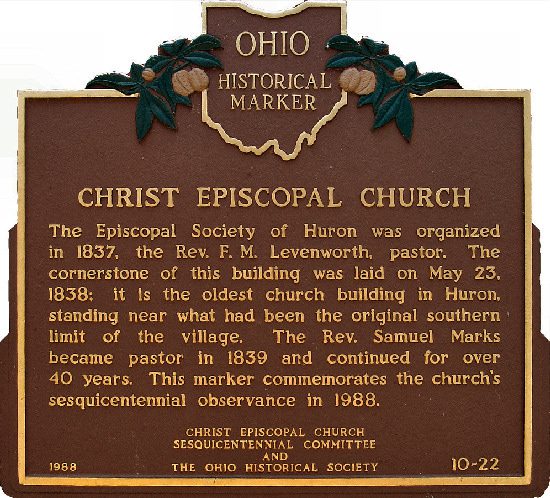
The Episcopal Society of Huron was organized in 1837, the Rev. F. M. Levenworth, pastor. The cornerstone of this building was laid May 23, 1838; it is the oldest church building in Huron, standing near what had been the original southern limit of the village. The Rev. Samuel Marks became pastor in 1839 and continued […]
9-22 Grace Episcopal Church
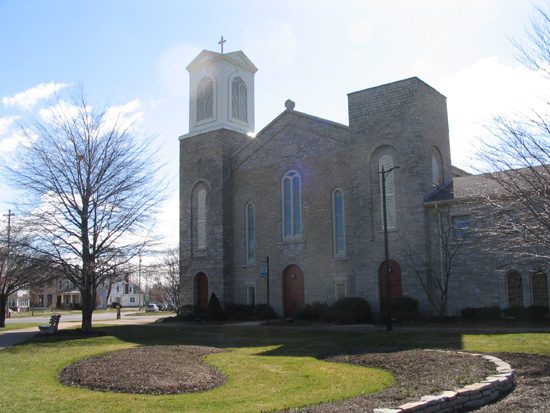
This building was begun in 1835 and was completed in 1844. It is the oldest church building in continual use in Sandusky and incorporates a portion of the original structure. This marker commemorated the one hundred fiftieth anniversary of the laying of the cornerstone and the church’s sesquicentennial observance in 1985.
8-22 Kilbourne Plat
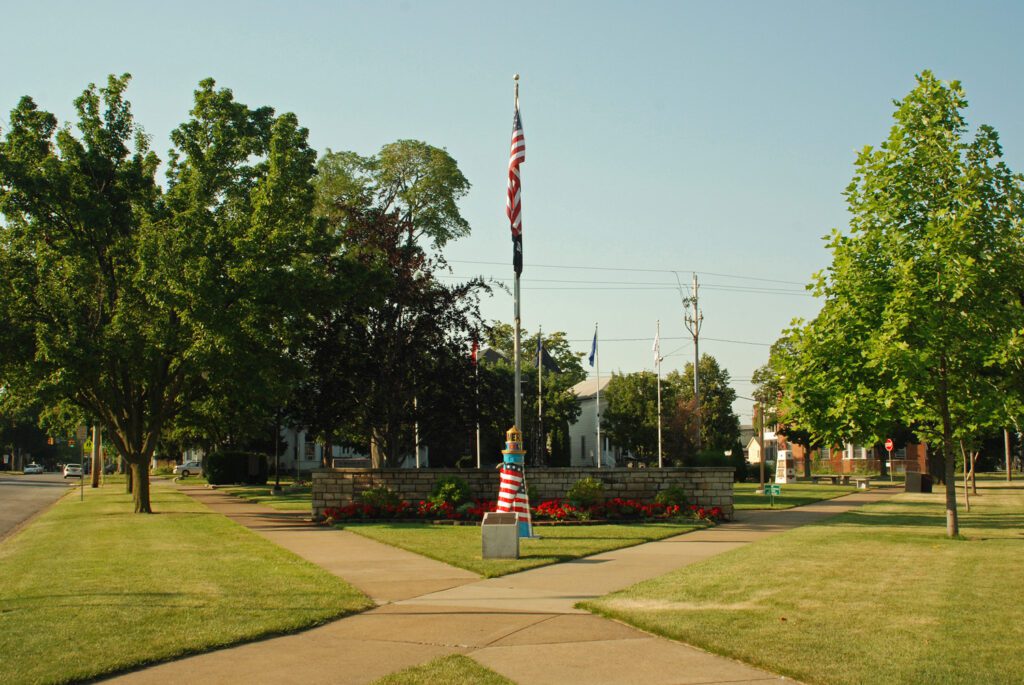
Hector Kilbourne, a Freemason and the surveyor who make the original plat of Sandusky (as Portland) in 1816, laid out the streets to form the Masonic emblem. Huron and Central Avenue are the arms of the compass, Elm and Poplar Streets the sides of the mason’s square. The first Masonic Lodge in Sandusky was founded […]
7-22 Fort Sandusky
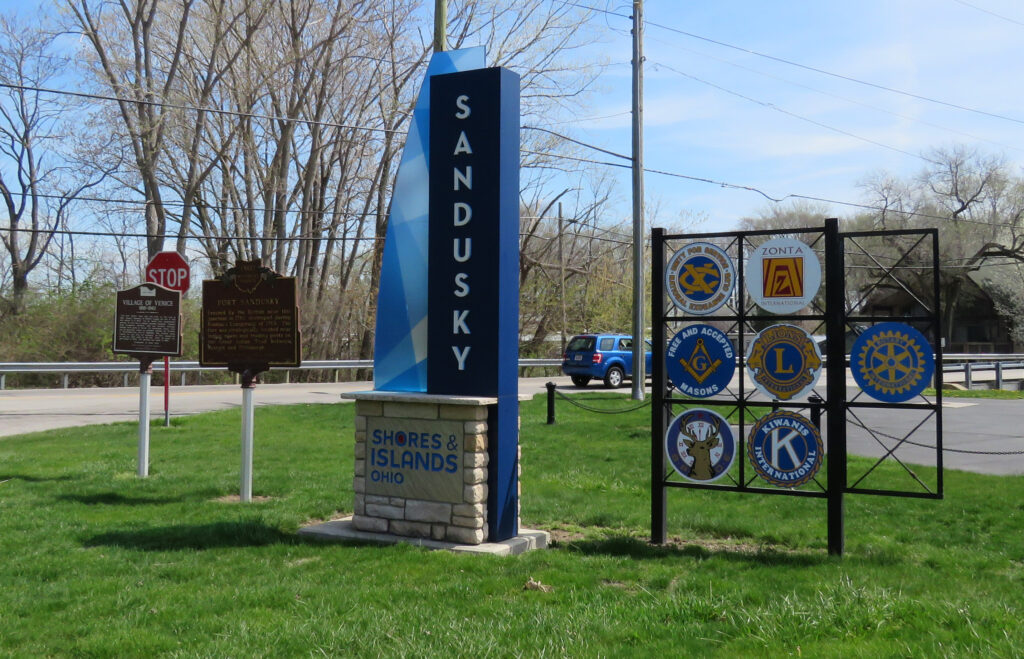
Erected by the British near this junction in 1761; destroyed during Pontiac’s Conspiracy of 1763. The fort was strategically located near Indian towns and trading posts on the Great Indian trail between Detroit and Pittsburgh.
6-22 Sandusky’s First Congregation
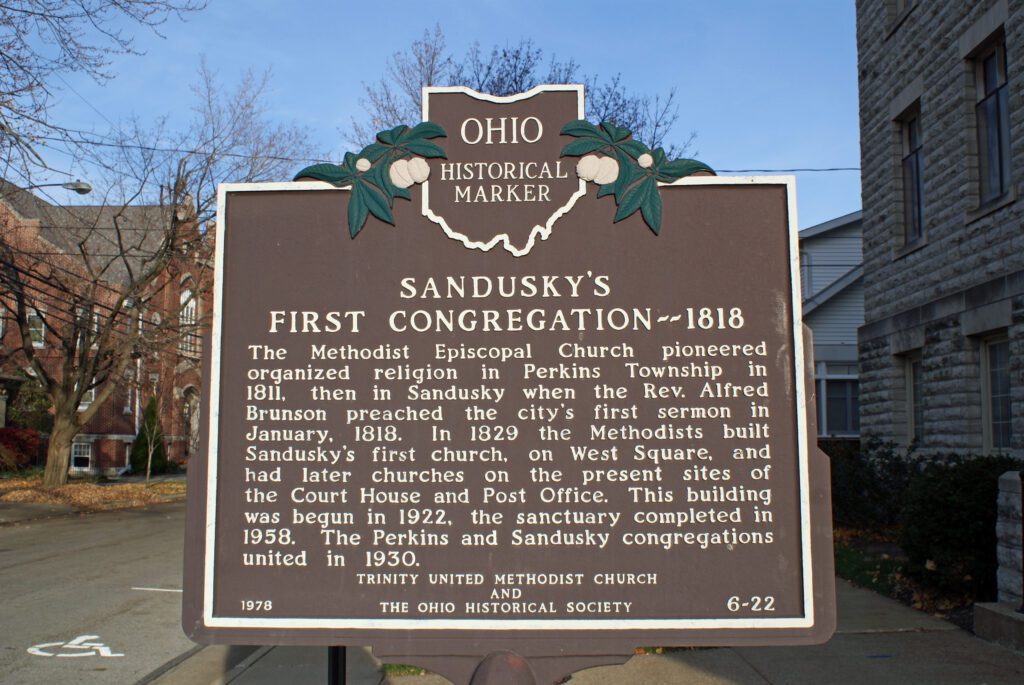
The Methodist Episcopal Church pioneered organized religion in Perkins Township in 1811, then in Sandusky when the Rev. Alfred Brunson preached the city’s first sermon in January, 1818. In 1829 the Methodists built Sandusky’s first church, on West Square, and had later churches on the present sites of the Court House and Post Office. This […]
5-22 Good Samaritan Hospital
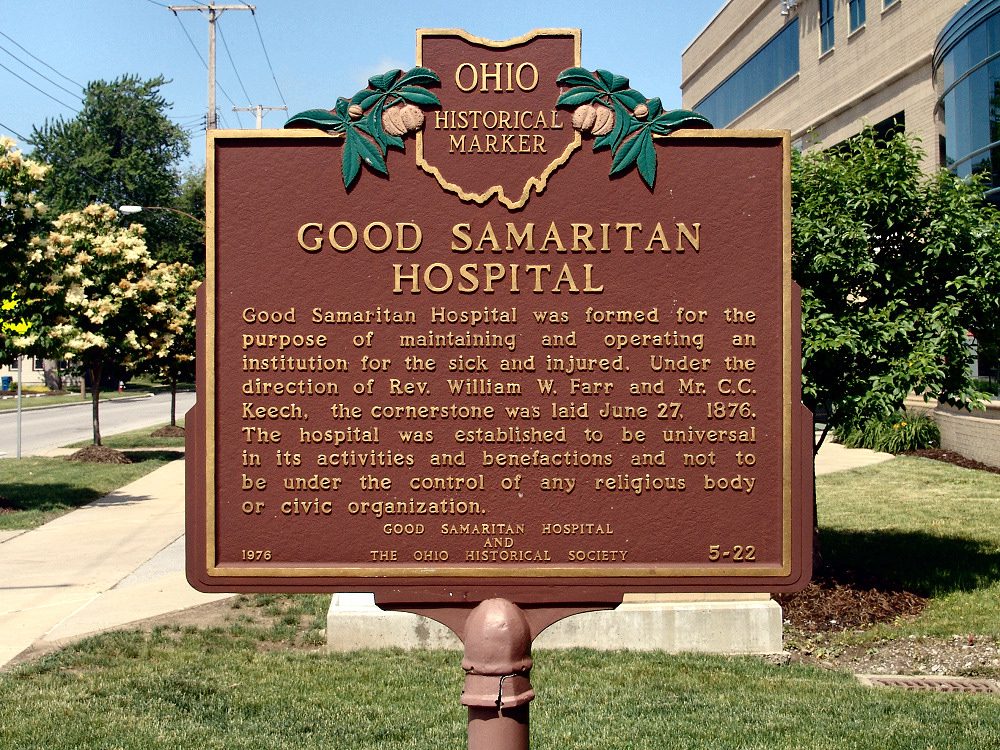
Good Samaritan Hospital was formed for the purpose of maintaining and operating an institution for the sick and injured. Under the direction of Rev. William W. Farr and Mr. C.C. Keech, the cornerstone was laid June 27, 1876. The hospital was established to be universal in its activities and benefactors and not to be under […]