 Skip to content

6-35 Riverfront Industries Powered by Canal Water / How Napoleon Kept Its Name
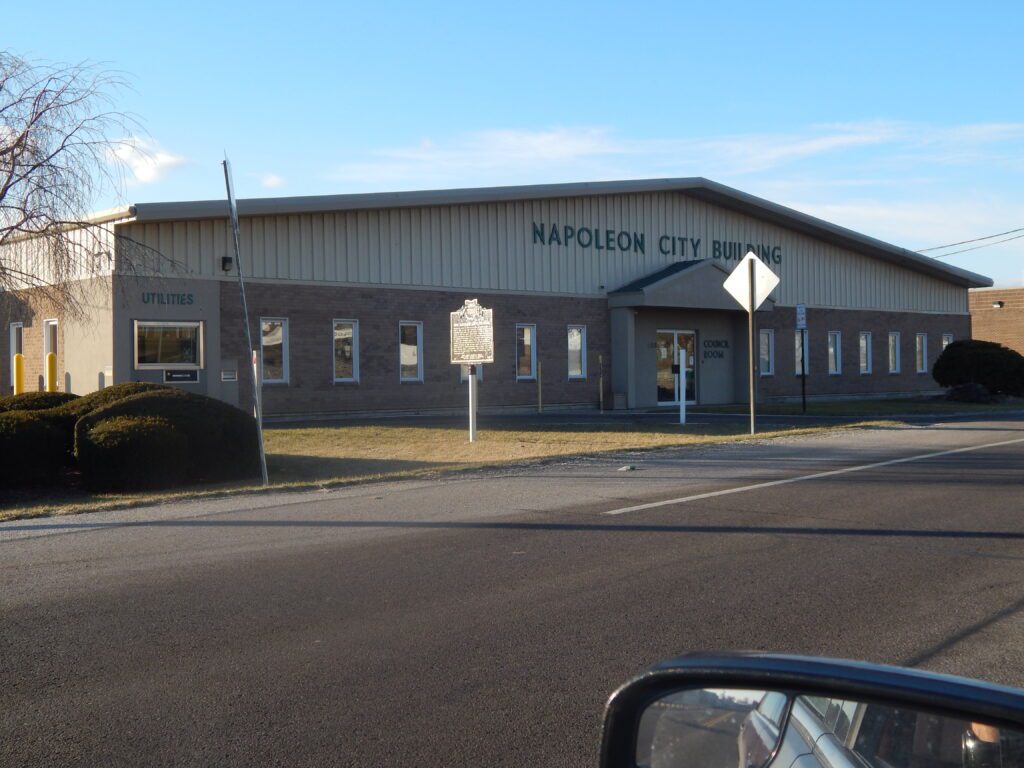
The completion of the Miami and Erie Canal passing through Napoleon in 1843 provided a way to receive manufactured goods, export farm products, and power local mills. The early industries of Napoleon utilized the canal as a source of reliable water power, which led to the development of a mid-19th-century industrial waterfront. Some of the […]
5-35 Miami & Erie Canal and Napoleon’s First Cemetery / Miami & Erie Canal and Napoleon’s First Cemetery
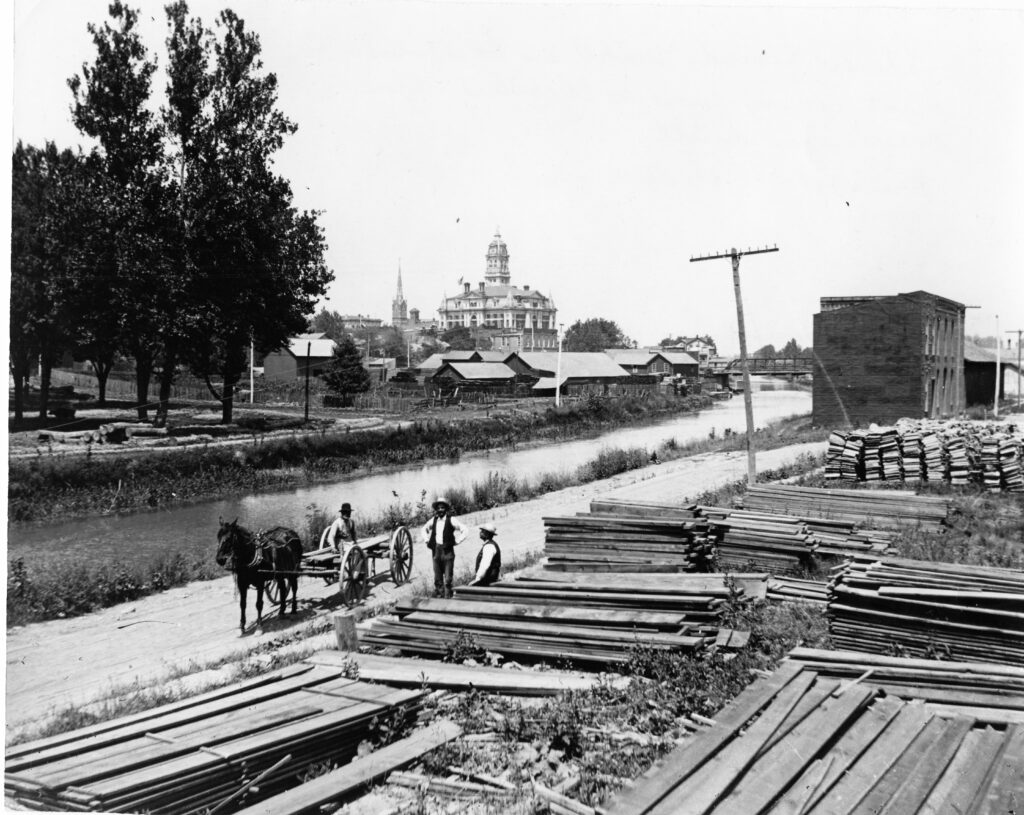
Miami & Erie Canal and Napoleon’s First Cemetery. The Miami & Erie Canal stretched approximately 250 miles from Cincinnati to Toledo. Napoleon and other towns on the Maumee River’s banks were on a slackwater section of the canal. Between 1825 and 1845, laborers constructed the canal using shovels, picks, wheelbarrows, and horse and mule-drawn carts. […]
3-35 Civil War Camp Latty
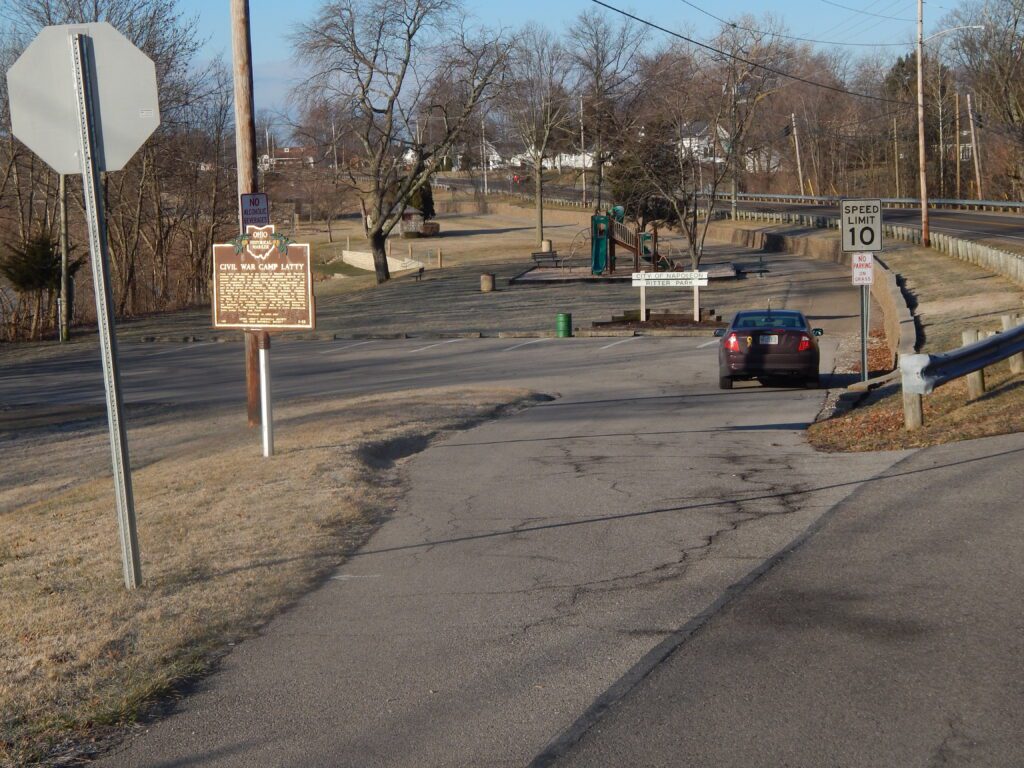
Camp Latty was located at the corner of Riverview and Glenwood Avenues in Napoleon, Ohio and included Glenwood Cemetery in its grounds. This camp was named for Judge Alexander S. Latty, a staunch supporter of the Union. From October to December 1861 the 68th Regiment was organized. The 68th Regiment then took part in the […]
2-35 Draining the Great Black Swamp

The landscape of northwest Ohio was formed by melting ice and the glacial lakes left behind in its wake. Because of the low gradient (3 feet fall per mile) to the northeast, the flat lacustrine plain evolved into a large swamp. A massive swamp forest with huge hardwoods, broken only sporadically with intermittent wet prairies […]
1-35 Prairie Des Mascoutins
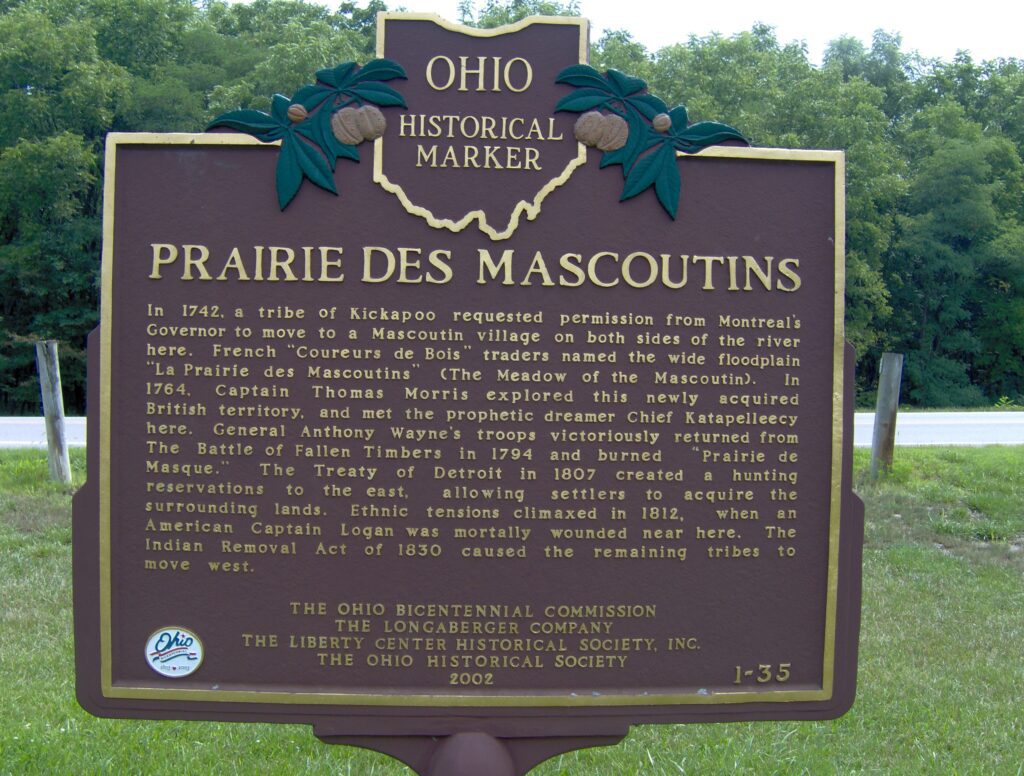
In 1742, a tribe of Kickapoo requested permission from Montreal’s Governor to move to a Mascoutin village on both sides of the river here. French “Coureurs de Bois” traders named the wide floodplain “La Prairie des Mascoutins” (The Meadow of the Mascoutin). In 1764, Captain Thomas Morris explored this newly acquired British territory, and met […]
4-34 Mary L. Jobe Akeley / Harry F. Hazlett
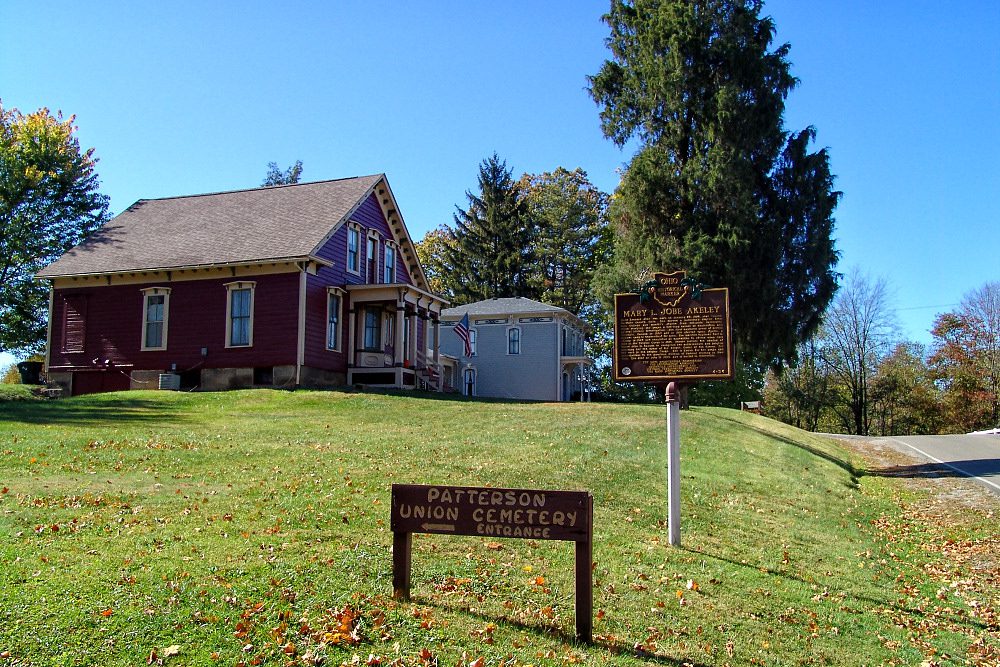
Mary Leonore Jobe was born on January 29, 1878, near Tappan, Harrison County, Ohio. She earned a bachelor’s degree from Scio College and master’s degree from Columbia University. While studying, she began a life-long career of exploration and natural history investigation. She first explored areas of British Columbia, Canada in 1905 and in 1916 started […]
3-34 Franklin College, Alma Academy / Cornerstone of Civil Rights
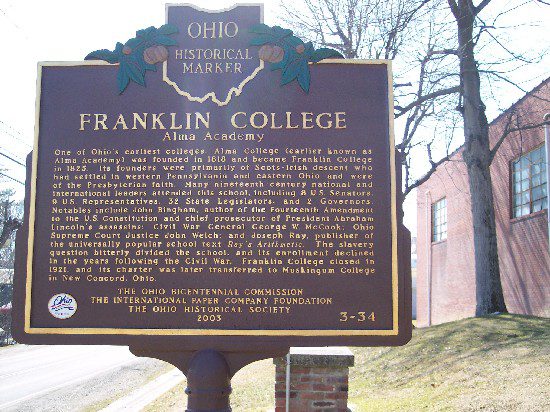
One of Ohio’s earliest colleges, Alma College (earlier known as Alma Academy) was founded in 1818 and became Franklin College in 1825. Its founders were primarily of Scots-Irish descent who had settled in western Pennsylvania and eastern Ohio and were of the Presbyterian faith. Many nineteenth-century national and international leaders attended this school, including 8 […]
2-34 Historic Hopedale / Clark Gable, “The King of Hollywood”
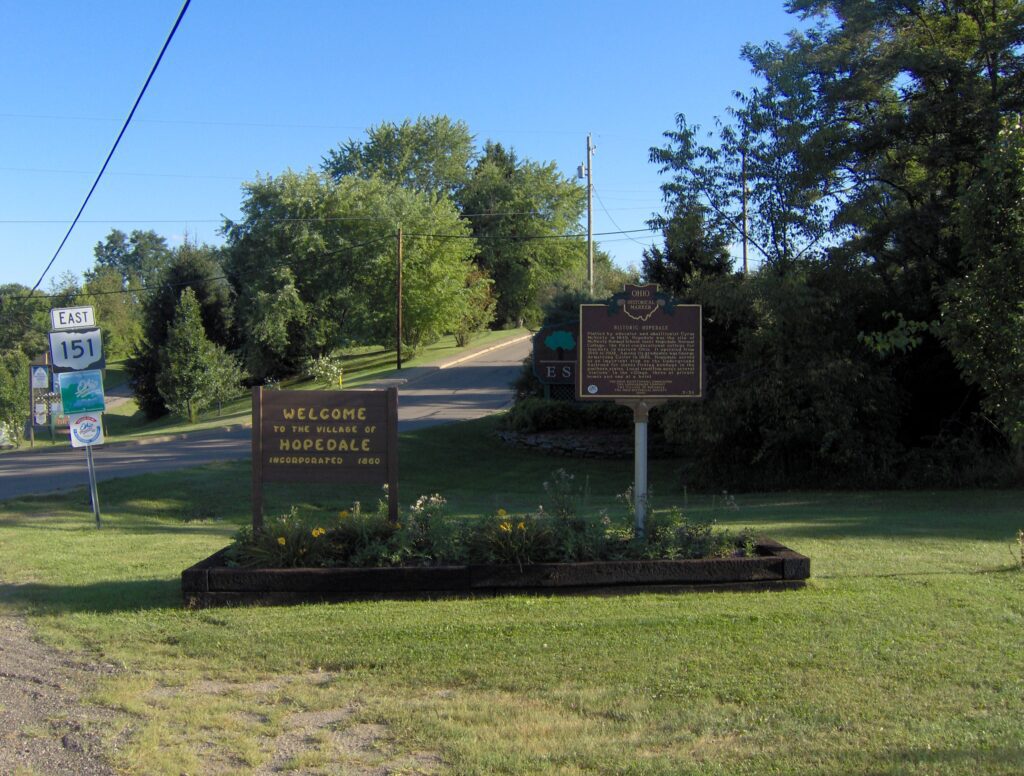
Platted by educator and abolitionist Cyrus McNeely in 1849, Hopedale was the site of McNeely Normal School, later Hopedale Normal College, the first coeducational college for teachers in eastern Ohio. It operated from 1849 to 1902. Among its graduates was George Armstrong Custer in 1856. Hopedale served as an important stop on the Underground Railroad […]
16-33 Ada Passenger Depot, 1887
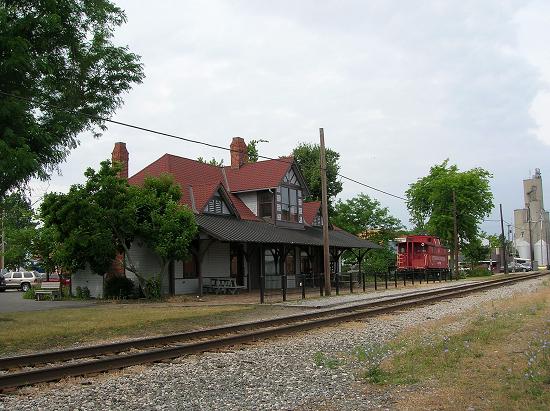
Ada grew alongside the tracks of the Ohio & Indiana Railroad, completed in 1854 between Crestline, Crawford County, and Fort Wayne, Indiana. This line became part of the Southwest Division of the Pennsylvania Railroad in 1869. Ada’s rapid growth as a college town in the 1880s prompted the railroad to build this distinctive and unique […]
15-33 Village of McGuffey / Great 1934 Onion Strike
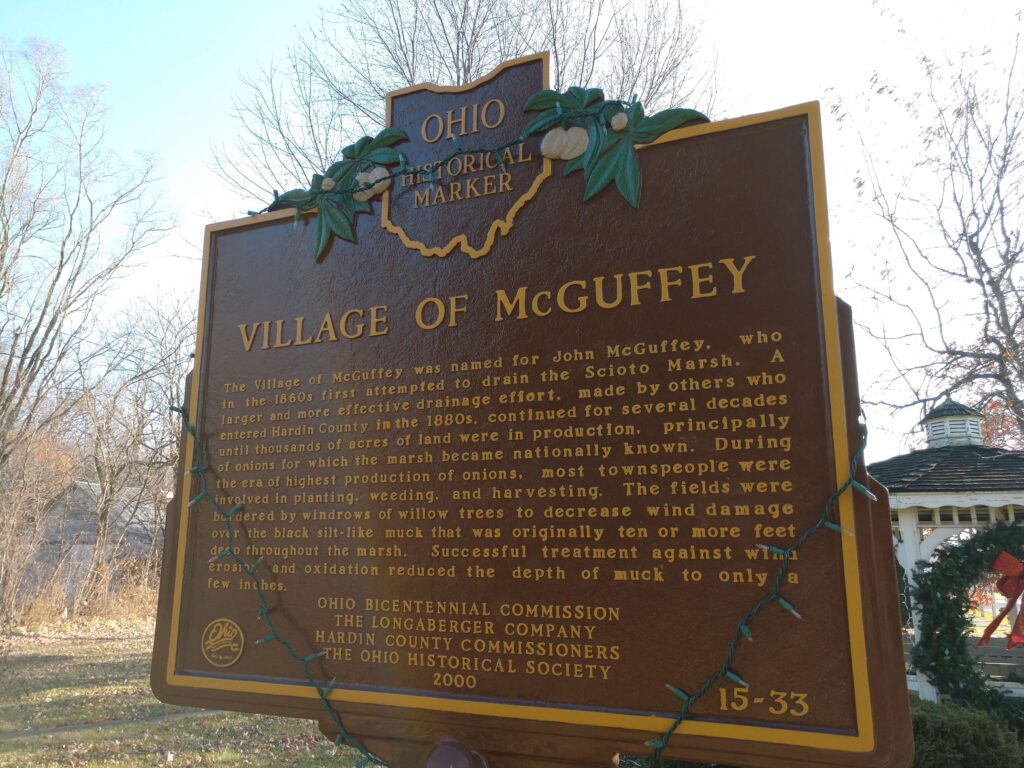
The Village of McGuffey was named for John McGuffey, who in the 1860s first attempted to drain the Scioto Marsh. A larger and more effective drainage effort, made by others who entered Hardin County in the 1880s, continued for several decades until thousands of acres of land were in production, principally of onions for which […]