 Skip to content

2-35 Draining the Great Black Swamp

The landscape of northwest Ohio was formed by melting ice and the glacial lakes left behind in its wake. Because of the low gradient (3 feet fall per mile) to the northeast, the flat lacustrine plain evolved into a large swamp. A massive swamp forest with huge hardwoods, broken only sporadically with intermittent wet prairies […]
1-35 Prairie Des Mascoutins
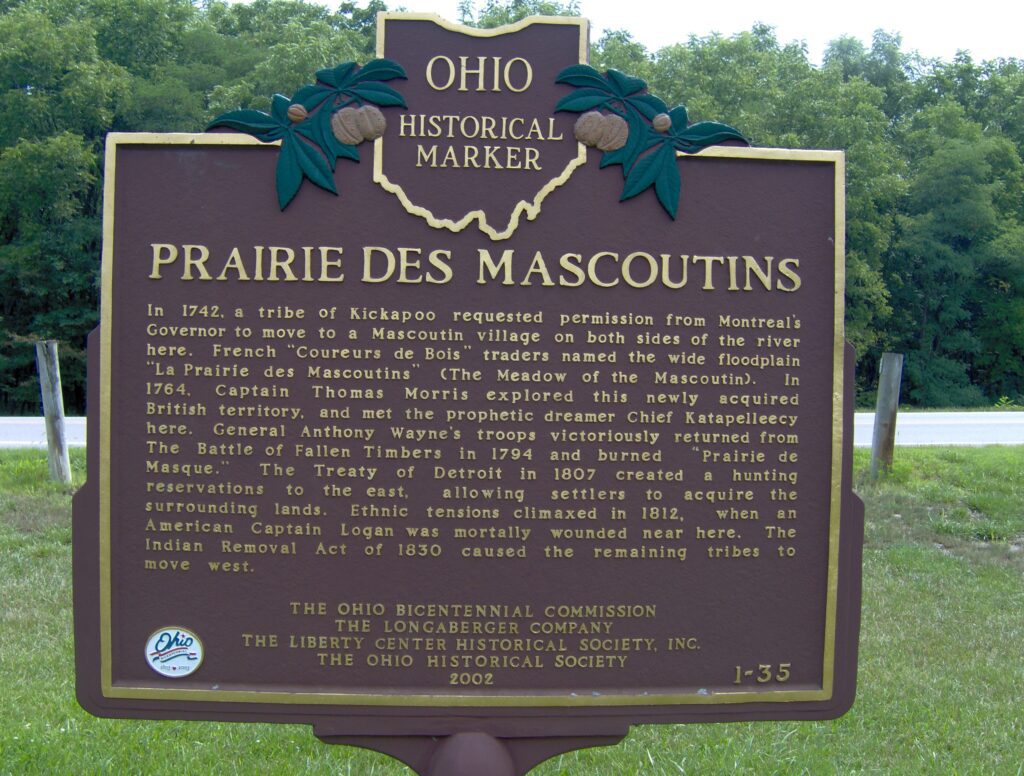
In 1742, a tribe of Kickapoo requested permission from Montreal’s Governor to move to a Mascoutin village on both sides of the river here. French “Coureurs de Bois” traders named the wide floodplain “La Prairie des Mascoutins” (The Meadow of the Mascoutin). In 1764, Captain Thomas Morris explored this newly acquired British territory, and met […]
4-34 Mary L. Jobe Akeley / Harry F. Hazlett
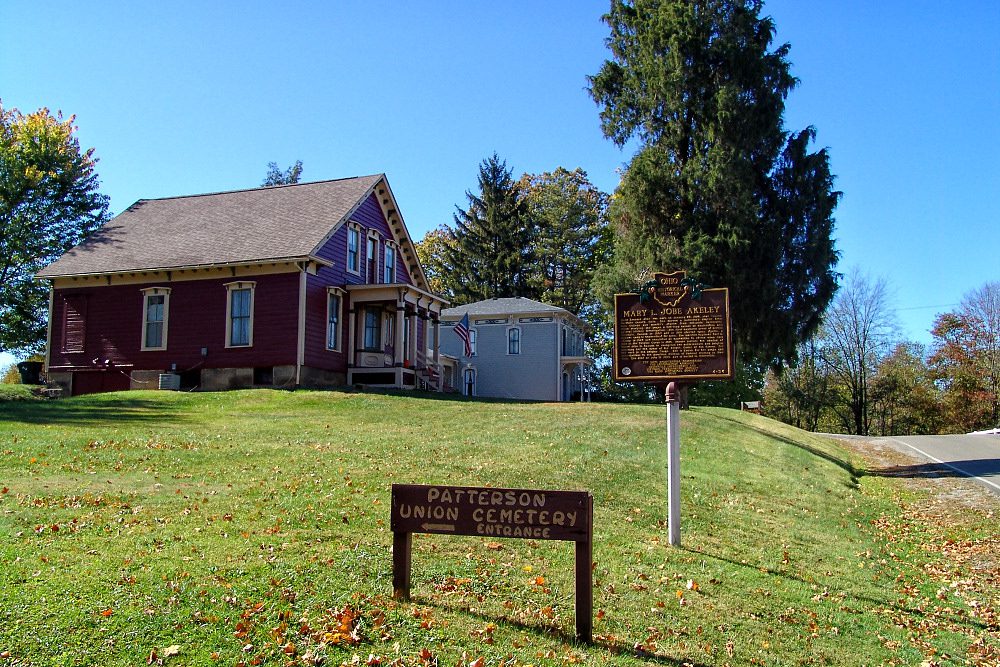
Mary Leonore Jobe was born on January 29, 1878, near Tappan, Harrison County, Ohio. She earned a bachelor’s degree from Scio College and master’s degree from Columbia University. While studying, she began a life-long career of exploration and natural history investigation. She first explored areas of British Columbia, Canada in 1905 and in 1916 started […]
3-34 Franklin College, Alma Academy / Cornerstone of Civil Rights
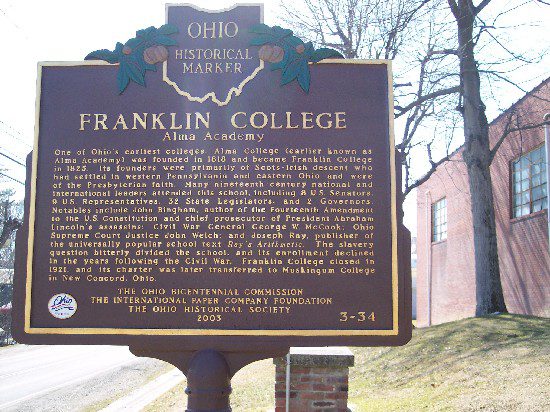
One of Ohio’s earliest colleges, Alma College (earlier known as Alma Academy) was founded in 1818 and became Franklin College in 1825. Its founders were primarily of Scots-Irish descent who had settled in western Pennsylvania and eastern Ohio and were of the Presbyterian faith. Many nineteenth-century national and international leaders attended this school, including 8 […]
2-34 Historic Hopedale / Clark Gable, “The King of Hollywood”
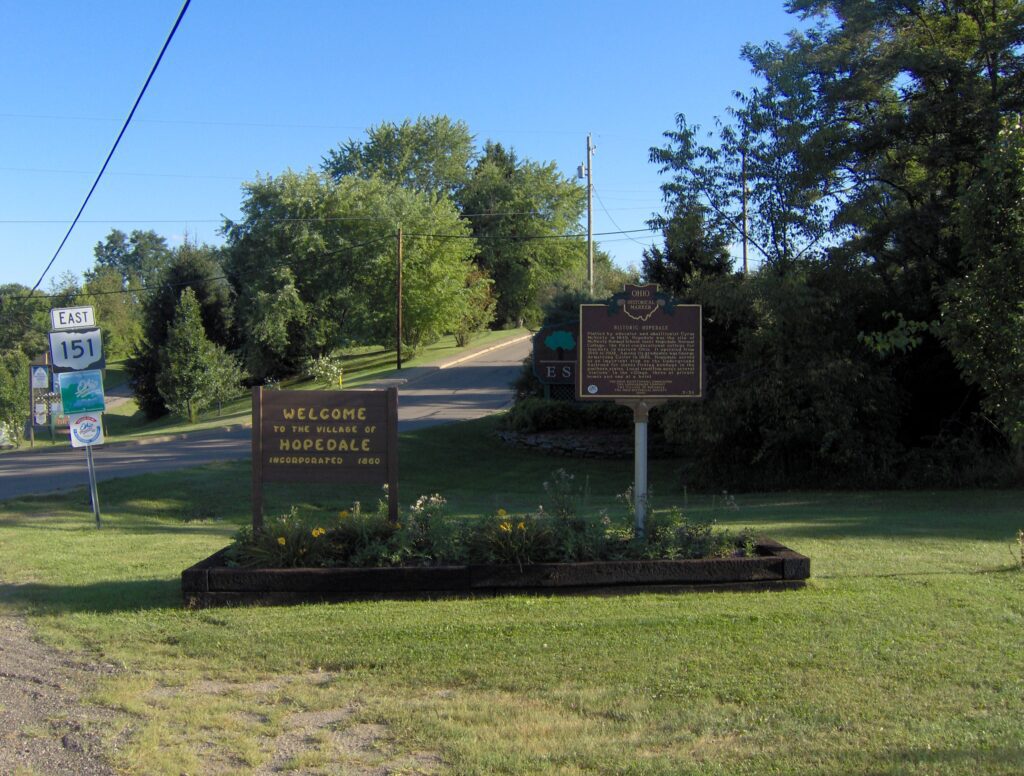
Platted by educator and abolitionist Cyrus McNeely in 1849, Hopedale was the site of McNeely Normal School, later Hopedale Normal College, the first coeducational college for teachers in eastern Ohio. It operated from 1849 to 1902. Among its graduates was George Armstrong Custer in 1856. Hopedale served as an important stop on the Underground Railroad […]
16-33 Ada Passenger Depot, 1887
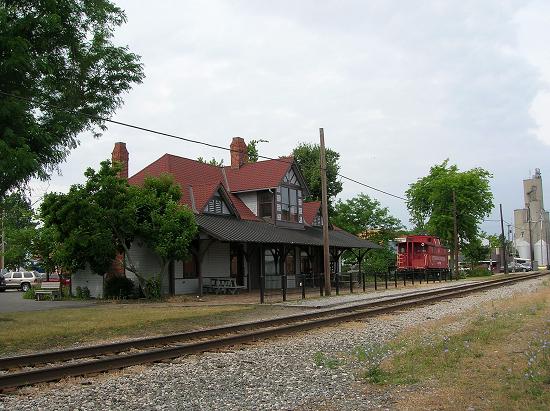
Ada grew alongside the tracks of the Ohio & Indiana Railroad, completed in 1854 between Crestline, Crawford County, and Fort Wayne, Indiana. This line became part of the Southwest Division of the Pennsylvania Railroad in 1869. Ada’s rapid growth as a college town in the 1880s prompted the railroad to build this distinctive and unique […]
15-33 Village of McGuffey / Great 1934 Onion Strike
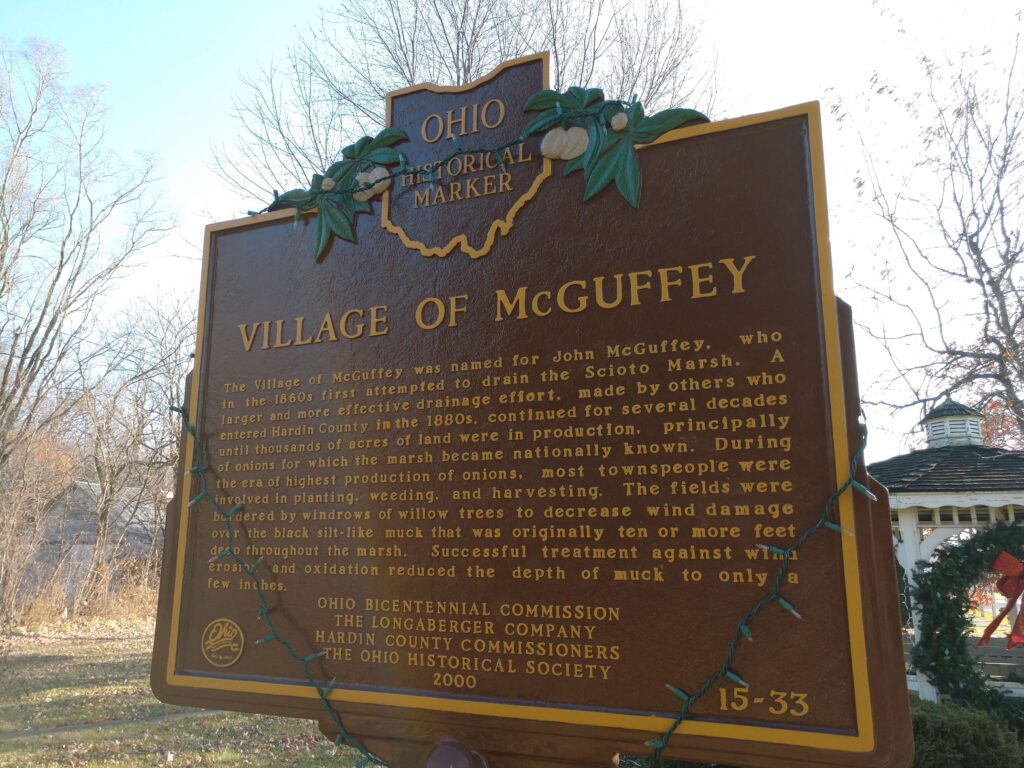
The Village of McGuffey was named for John McGuffey, who in the 1860s first attempted to drain the Scioto Marsh. A larger and more effective drainage effort, made by others who entered Hardin County in the 1880s, continued for several decades until thousands of acres of land were in production, principally of onions for which […]
14-33 Ohio Northern University
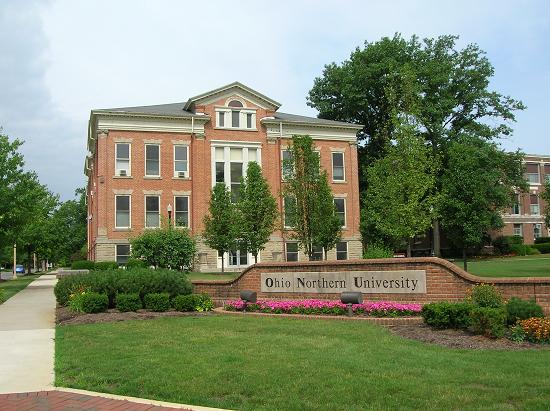
Henry Solomon Lehr founded Ohio Northern University in 1871 as the Northwestern Ohio Normal School. Its purpose was to train teachers and to provide higher education to the people in Northwest Ohio. In 1885, the school became Ohio Normal University. The new name recognized that the institution drew students from all over Ohio and the […]
13-33 The Hardin County Courthouse
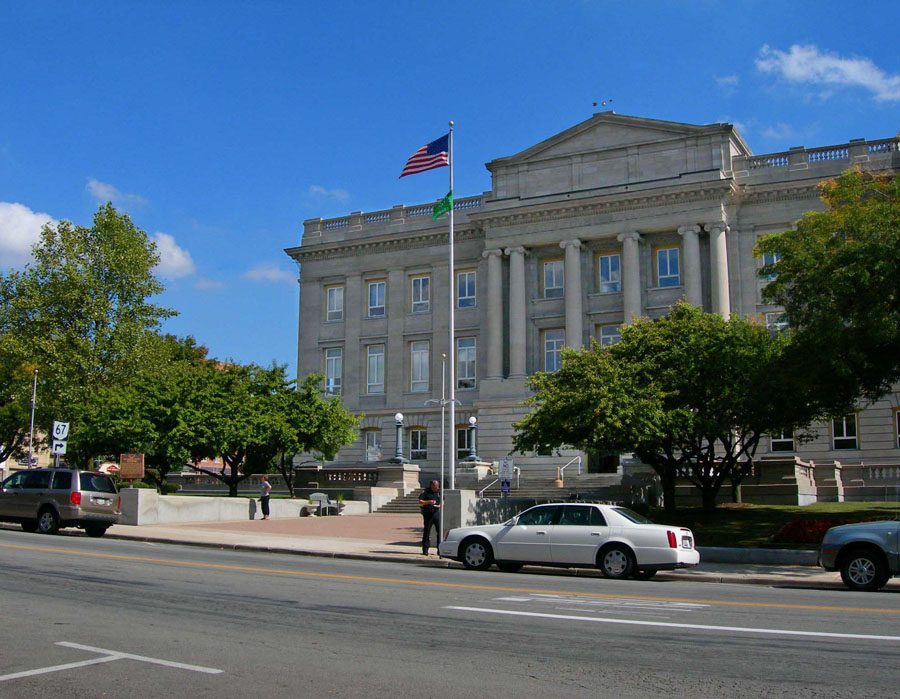
One of Ohio’s larger courthouses, this structure, completed in 1915 at a cost of $275,000, is the third courthouse to be built in this vicinity. The building, designed by the architectural firm, Richards, McCarty, and Bulford, is an excellent example of Neoclassical Revival architecture. The courthouse interior is notable for its outstanding leaded stained glass […]
12-33 Hull’s Trail
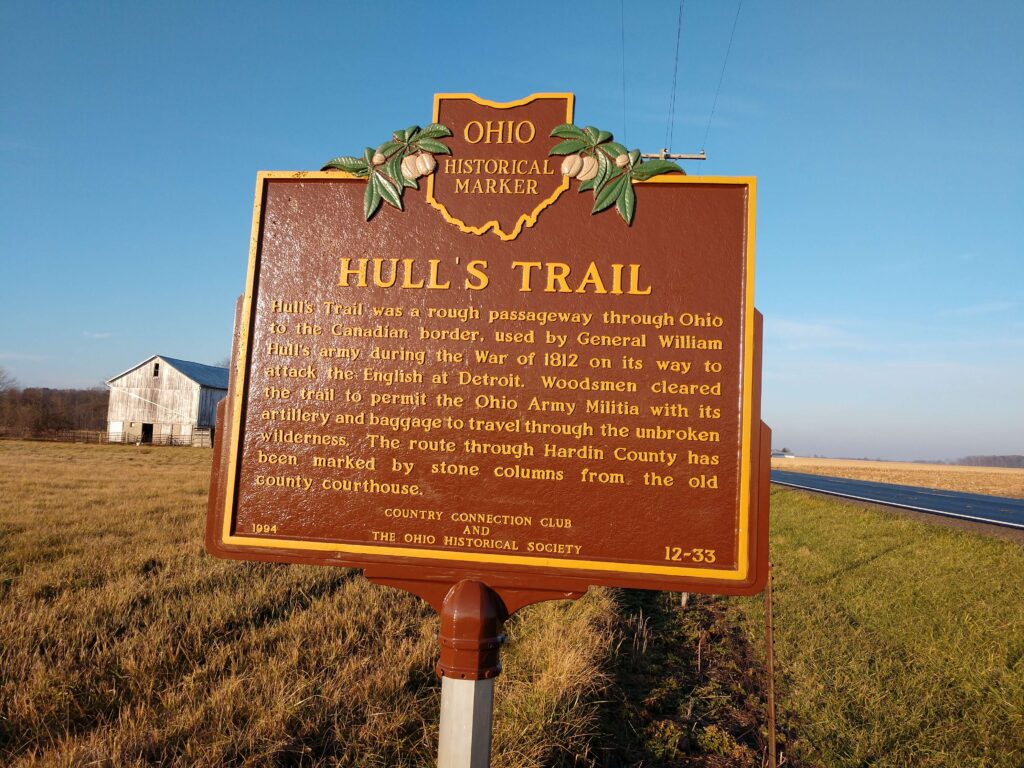
Hull’s Trail was a rough passageway through Ohio to the Canadian border, used by General William Hull’s army during the War of 1812 on its way to attack the English at Detroit. Woodsmen cleared the trail to permit the Ohio Army Militia with its artillery and baggage to travel through the unbroken wilderness. The route […]