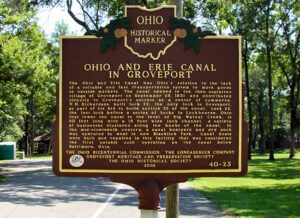
The Ohio and Erie Canal was Ohio’s solution to the lack of a reliable and fast transportation system to move goods to outside markets. The canal opened in the then unplatted village of Groveport on September 25, 1831 and contributed directly to Groveport’s success as a center of commerce. W.H. Richardson built lock 22, the only lock in Groveport, as part of his bid to build section 52 of the canal. Lock 22, the last lock before a series of locks in Lockbourne, Ohio that lower the canal to the level of Big Walnut Creek, is 90 feet long with a 15 foot wide lock channel. A variety of businesses clustered along the banks of the canal. In the mid-nineteenth century, a canal boatyard and dry dock was operated in what is now Blacklick Park. Canal boats were built and repaired in this facility that was considered the first notable such operation on the canal below Baltimore, Ohio.
On the night of January 3, 1894, Toledo’s largest fire broke out in the massive King-Quale grain elevators. A westward wind from Maumee River drove flames toward the center of Toledo’s business district. The blaze destroyed several buildings including the Chamber of Commerce and the West and Truaz building. Despite the best efforts of city firefighters using horse-drawn steam pumpers, the fire continued until a serendipitous shift in the winds allowed the firefighters to contain the conflagration.
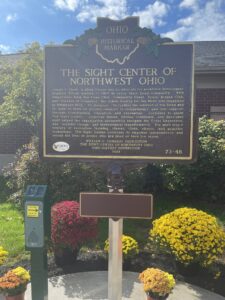
Joseph F. Clunk, a blind Ohioan and an advocate for workforce development, inspired Toledo leaders in 1923 to serve their blind community. With cooperation from the Lions Club, Community Chest, Toledo Rotary Club, and Chamber of Commerce, the Toledo Society for the Blind was organized in November 1923. Its purpose, “to further the interest of the blind and to open to them all possible avenues to independence and self-support, through investigation, education, and recreation,” continues to guide The Sight Center. Generous donors, tireless volunteers, and dedicated staff helped the organization successfully navigate the Great Depression, war, societal change, and technological transformation. For more than a century of innovative training, classes, clubs, clinics, and assistive technology, The Sight Center continues to empower independence and enrich the lives of people who are blind or have low vision.