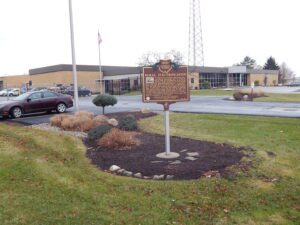
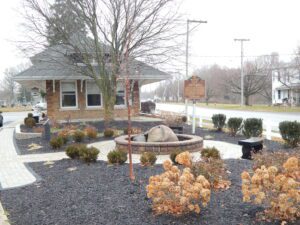
On November 14, 1935, the rural electrification movement got its start in Piqua with the installation of the first electric pole financed by the Rural Electrification Administration (REA). In partnership with the Miami Rural Electric Cooperative, Inc., the pole was constructed to support a power line of 193 miles, bringing electricity to nearly 700 farms in the county. At the time the REA was established by the federal government, only 10% of the rural population had electricity. Today, electric cooperative lines reach more than 36 million consumers in 47 states.
Veteran’s Park, S triangle of OH 66 & Washington Avenue
Piqua
, OH
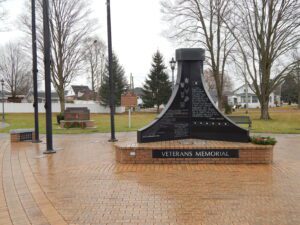
Local views on the Vietnam War mirrored national attitudes of pride and confusion. Piqua citizens participated in the “Letters for Life” campaign in 1970 for prisoners of war. Piqua Daily Call assistant news editor James W. DeWeese traveled to Paris in a frustrated attempt to deliver the letters to the Hanoi Peace delegation. The state activated the local Ohio National Guard unit in 1970 to help suppress anti-Vietnam student rioting in Columbus. The military conflict came home in 1966 when William Pitsenbarger became the first of eleven men from Piqua to die in Vietnam. In 1967, Piqua High School graduate Air Force Major William J. Baugh was shot down over North Vietnam and taken prisoner. He remained a P.O.W. until 1973.
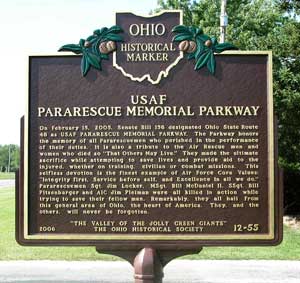
On February 15, 2005, Senate Bill 156 designated Ohio State Route 48 as USAF PARARESCUE MEMORIAL PARKWAY. The Parkway honors the memory of all Pararescuemen who perished in the performance of their duties. It is also a tribute to the Air Rescue men and women who died so “That Others May Live.” They made the ultimate sacrifice while attempting to save lives and provide aid to the injured, whether on training, civilian or combat missions. This selfless devotion is the finest example of Air Force Core Values: ” Integrity first, Service before self, and Excellence in all we do.” Pararescuemen Sgt. Jim Locker, MSgt. Bill McDaniel, SSgt Bill Pitsenbarger and AIC Jim Pleiman were all killed in action while trying to save their fellow man. Remarkably, they all hail from this general area of Ohio, the heart of America. They, and the others, will never be forgotten.
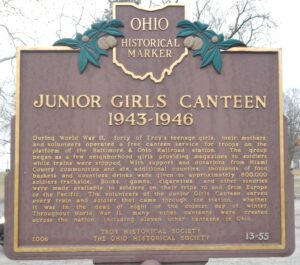
During World War II, forty of Troy’s teenage girls, their mothers, and volunteers operated a free canteen service for troops on the platform of the Baltimore & Ohio Railroad station. The group began as a few neighborhood girls providing magazines to soldiers while trains were stopped. With support and donations from Miami County communities and six additional counties, thousands of food baskets and countless drinks were given to approximately 600,000 soldiers trackside. Books, games, cigarettes, and other sundries were made available to soldiers on their trips to and from Europe or the Pacific. The volunteers of the Junior Girls Canteen served every train and soldier that came through the station, whether it was in the dead of night or the coldest day of winter. Throughout World War II, many other canteens were created across the nation, including eleven other canteens in Ohio.
On March 20, 1868, The Ohio General Assembly passed a revision to the Ohio Revised Code allowing for a municipality and a township to join together in purchasing land for a shared cemetery. On April 24, 1868, the Washington Township Trustees passed a resolution creating Forest Hill Union Cemetery. This cemetery was to be shared with the City of Piqua and became the first mutual cemetery between a municipality and a township in Ohio.
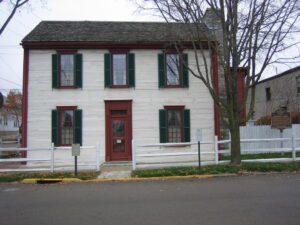
Benjamin Overfield (1774-1831), son of a Revolutionary War soldier, opened his tavern in this log house on September 13, 1808. Never moved, it is the oldest surviving building in Troy. The tavern provided food, lodging and space for business and social gatherings. Overfield agreed to let the county use a room on the second floor of the building as a temporary courtroom. Behind the tavern, Benjamin built a small log cabin that was home to his family. He prospered here until 1825 when he moved to the Public Square. Today’s structure includes the tavern, the cabin, and later additions. Used as a dwelling from 1825 until 1948, the building now houses the Overfield Tavern Museum. Benjamin Overfield and his first wife Mary are buried in Rose Hill Cemetery.
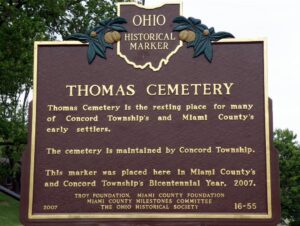
Thomas Cemetery is the resting place for many of Concord Township’s and Miami County’s early settlers. The cemetery is maintained by Concord Township. This marker was placed here in Miami County’s and Concord Township’s Bicentennial Year, 2007.
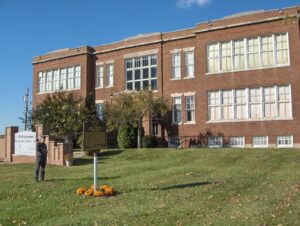
In 1832, Sylvanus Allen’s property became the site of Brown Township’s sixth and final school district. Following many building expansions, the current building, constructed in 1916, became the home of the Lena-Conover Consolidated School and became part of the Miami East Local School District in 1958. In 1991, the building’s educational legacy continued when it was returned to the trustees and became the home of the A.B. Graham Memorial Center Inc, named in honor of the Lena-Conover alumnus, educator and founder of the 4-H club movement.