 Skip to content

16-43 Henry Kelsey Devereau and “The Spirit of ’76”
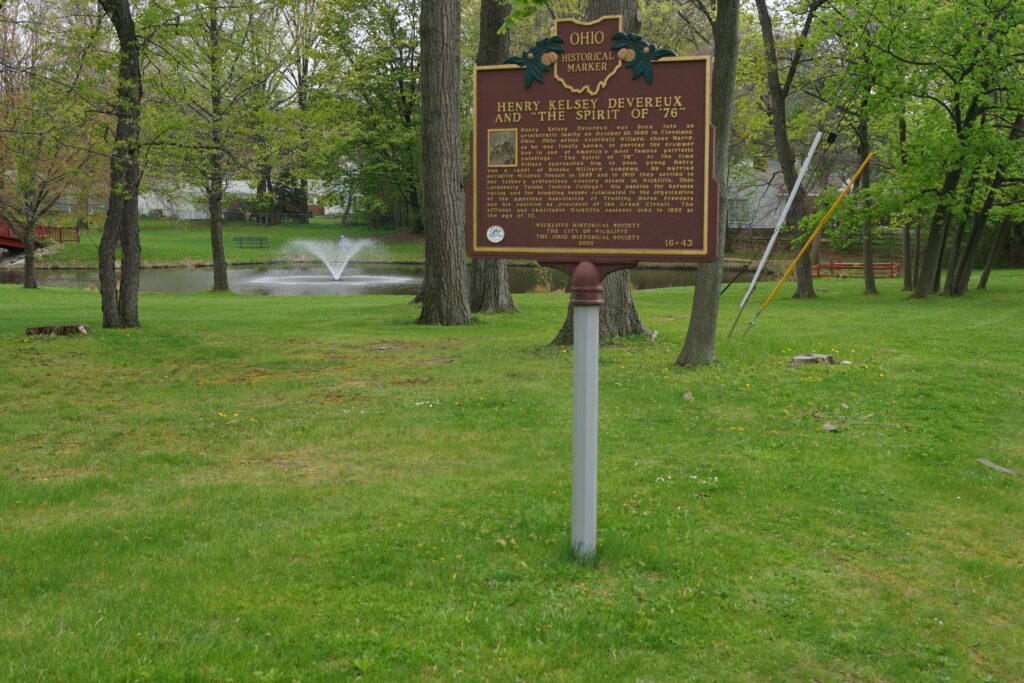
Henry Kelsey Devereux was born into an aristocratic family on October 10, 1859 in Cleveland, Ohio. Ohio artist, Archibald Willard, chose Harry, as he was fondly known, to portray the drummer boy in one of America’s most famous patriotic paintings, “The Spirit of ’76”. At the time Willard approached him to pose, young Harry was […]
15-43 Daniel Carter Beard
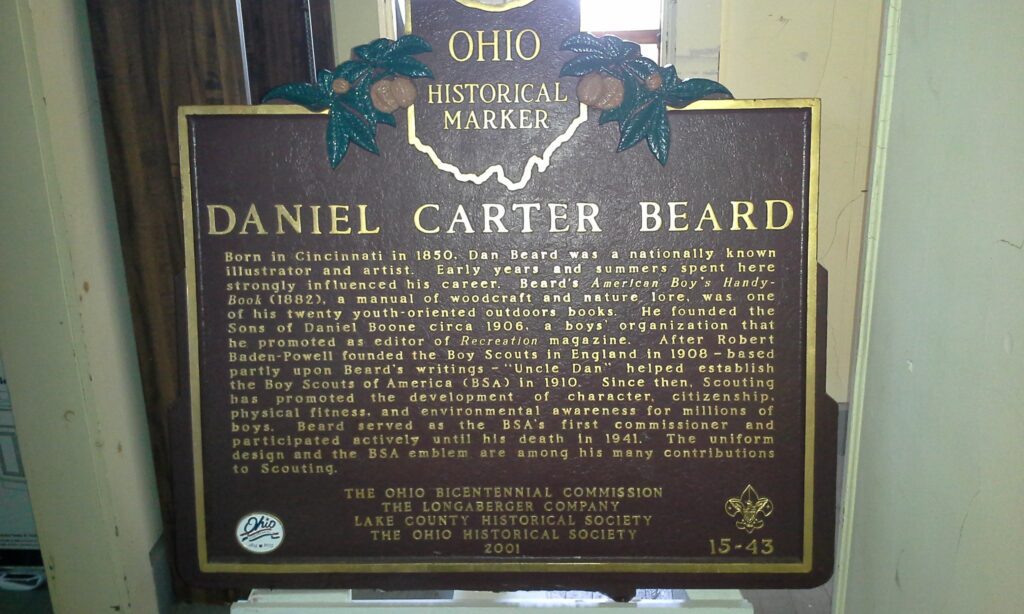
Born in Cincinnati in 1850, Dan Beard was a nationally known illustrator and artist. Early years and summers spent here strongly influenced his career. Beard’s American Boy’s Handy-Book (1882), a manual of woodcraft and nature lore, was one of his twenty youth-oriented outdoors books. He founded the Sons of Daniel Boone circa 1906, a boys’ […]
13-43 Unionville Tavern / Unionville Tavern

First known as the Webster House, later as the New England House, and finally as the Old Tavern, this inn has served travelers on the old Cleveland-Buffalo Road (now State Route 84) since before Ohio became a state. As traffic on the old Indian trail increased and it became a post and stage road, the […]
12-43 The Casement House / General Jack and Frances Jennings Casement
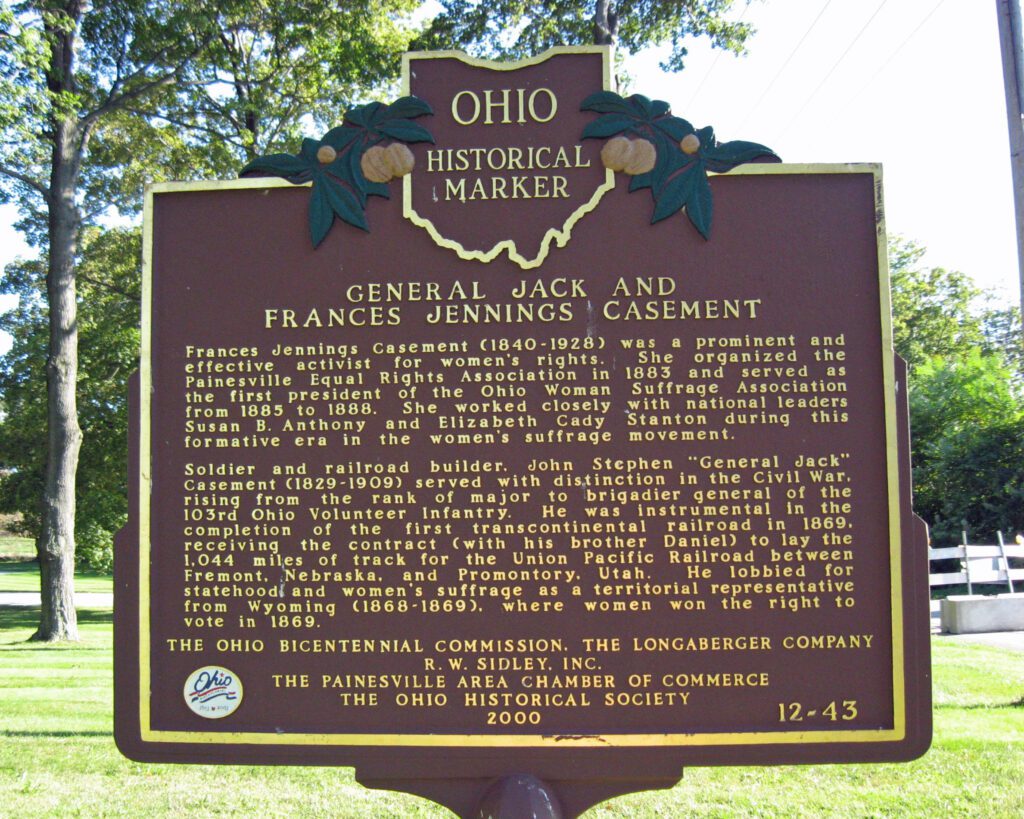
Western Reserve agriculturalist Charles Clement Jennings built the Casement House, also known as the “Jennings Place,” for his daughter Frances Jennings Casement in 1870. Designed by Charles W. Heard, son-in-law and student of Western Reserve master builder Jonathan Goldsmith, it is an excellent example of the Italianate style, featuring ornate black walnut woodwork, elaborate ceiling […]
11-43 Thomas W. Harvey (1821-1892)
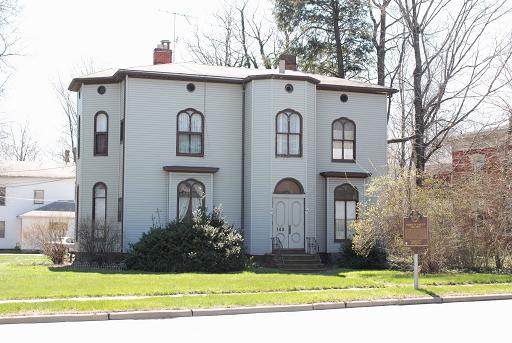
This Italianate-style house is the former home of noted educational leader Thomas W. Harvey. Here he wrote A Practical Grammar of the English Language, as well as a series of language texts and readers. First published in 1868, Harvey’s Grammar was a fixture in primary schools across the Midwest for more than fifty years. As […]
10-43 Mentor Avenue Historic District

Among the fifty-four buildings that comprise the Mentor Avenue District are examples of Federal, Greek Revival, Early Romanesque Revival, Italianate, Second Empire, Queen Anne, and twentieth century eclectic styles. Renowned master builder Jonathan Goldsmith (1783-1847), whose Federal and Greek Revival designs define the so-called “Western Reserve” style, built at least two of these houses; the […]
9-43 The Griffith Disaster, 1850
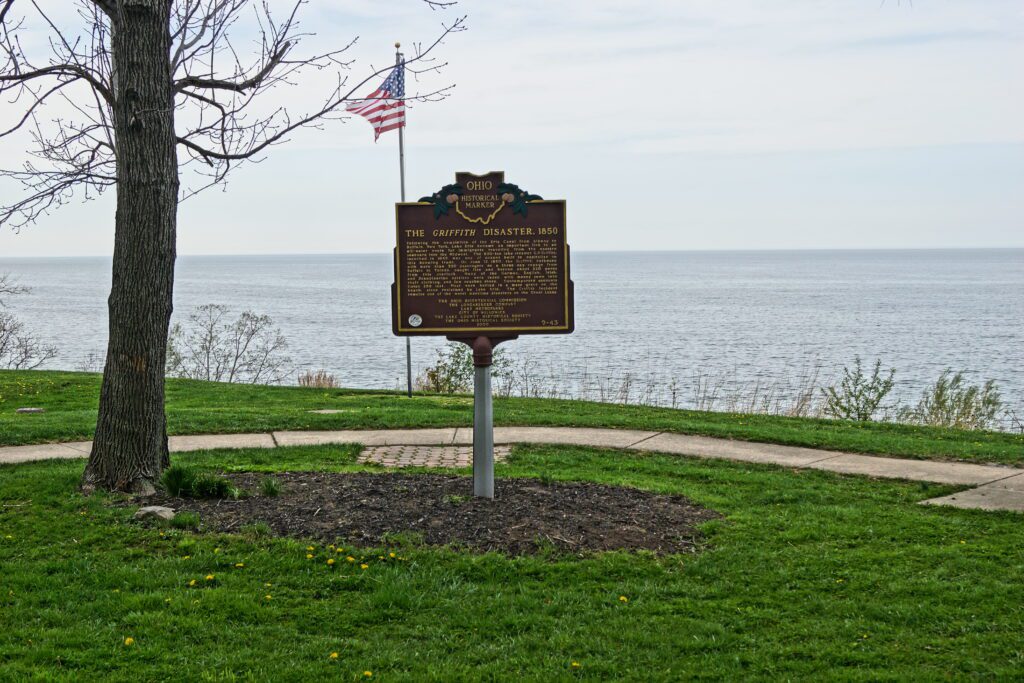
Following the completion of the Erie Canal from Albany to Buffalo, New York, Lake Erie became an important link in an all-water route for immigrants traveling from the eastern seaboard into the Midwest. The 600-ton lake steamer G.P. Griffith, launched in 1847, was one of dozens built to capitalize on this booming trade. On June […]
8-43 The Willoughby University of Lake Erie, Medical College, 1834-1847 / Willoughby Female Seminary, 1847-1856
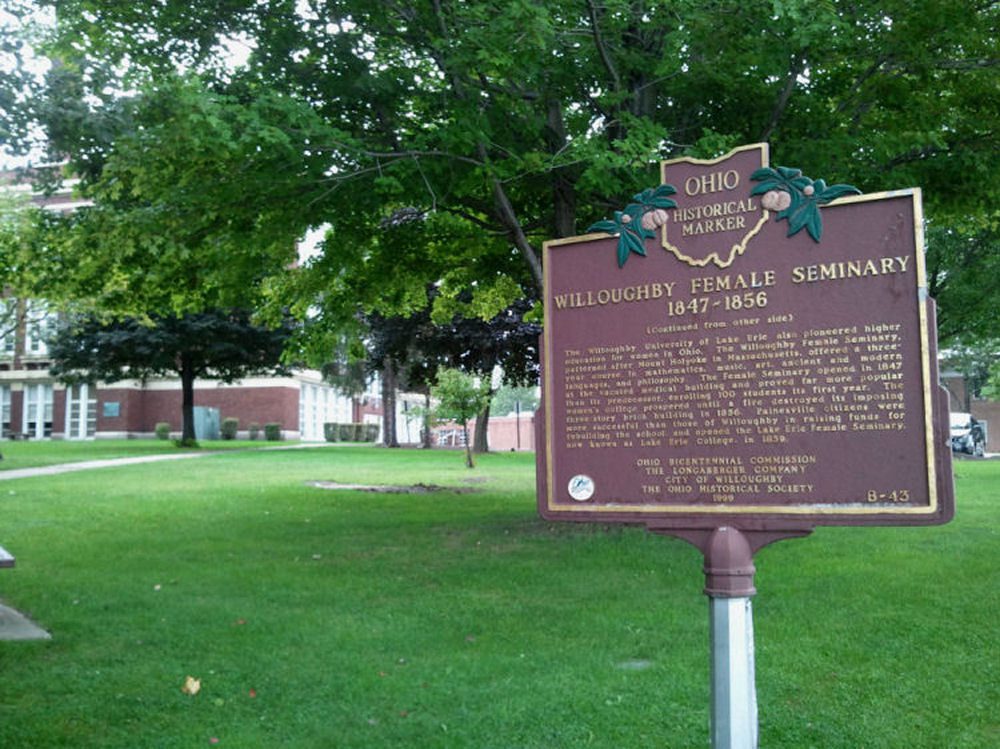
The village of Chagrin, founded in 1798, changed its name in 1834 to honor Dr. Westel Willoughby, a pioneer medical educator. That same year, the Willoughby University of Lake Erie was chartered, and the Willoughby Medical College opened its doors, signaling the beginning of medical education in northern Ohio. The Medical College trained 160 doctors, […]
7-43 Hugh Mosher and the “Spirit of ’76”
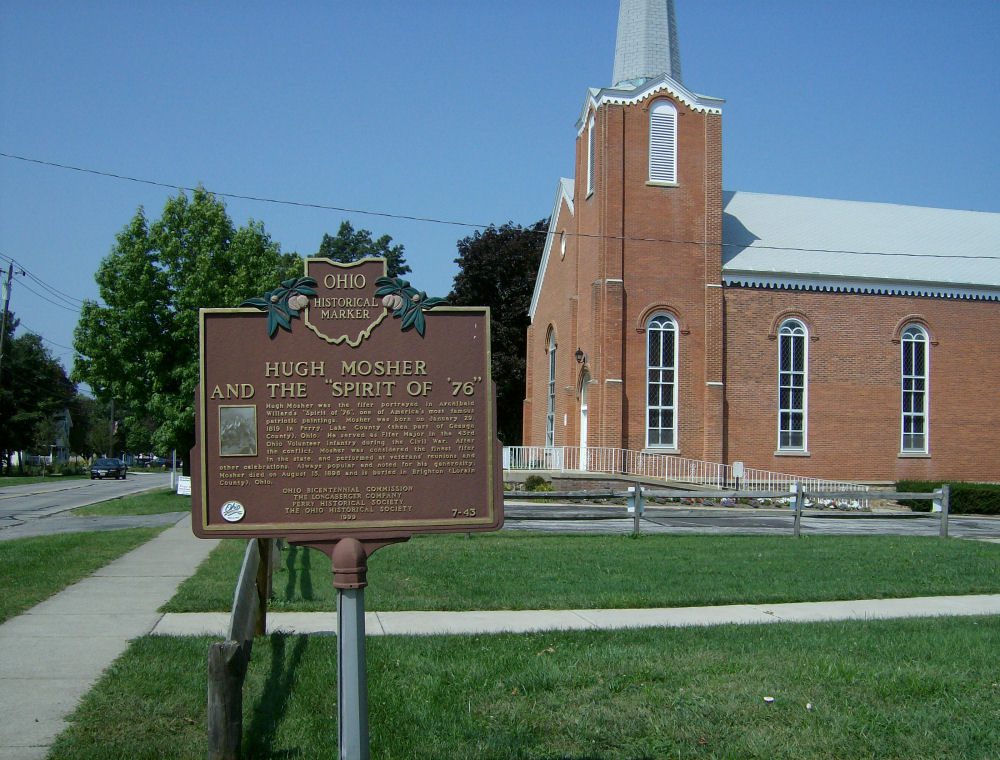
Hugh Mosher was the fifer portrayed in Archibald Willard’s “Spirit of ’76”, one of America”s most famous patriotic paintings. Mosher was born on January 29, 1819 in Perry, Lake County (then part of Geauga County), Ohio. He served as Fifer Major in the 43rd Ohio Volunteer Infantry during the Civil War. After the conflict, Mosher […]
6-43 Lake County YMCA
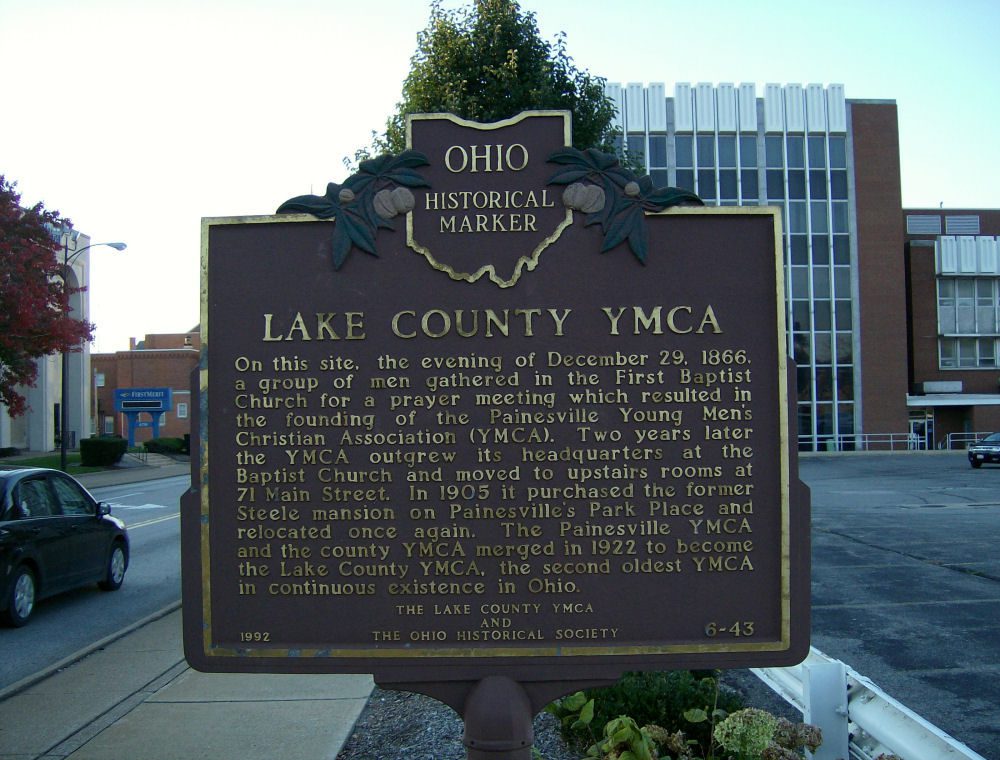
On this site, the evening of December 29, 1866, a group of men gathered in the First Baptist Church for a prayer meeting which resulted in the founding of the Painesville Young Men’s Christian Association (YMCA). Two years later the YMCA outgrew its headquarters at the Baptist Church and moved to upstairs rooms at 71 […]