 Skip to content

36-48 Engine House Number One / Neptune Engine No. 1
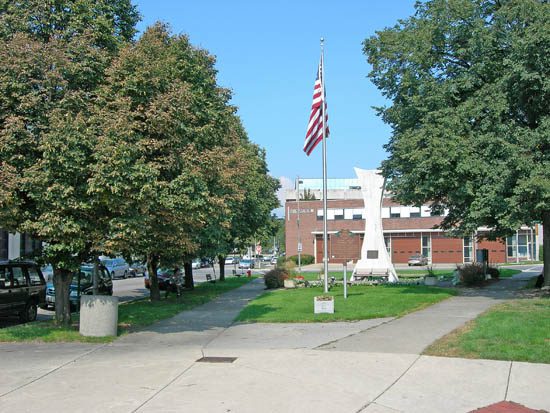
Toledo’s first fire station was built in November 1837 one city block due north of this site at the southwest corner of Cherry Street and Eagle Lane at 519 Cherry on what is now the driveway for the Goodwill Industries Building. It was a small non-descript, wooden building, built by contractors Hoisington and Manning for […]
35-48 Ohio Electric Railroad Bridge / Roche De Bout Roche De Boeuf
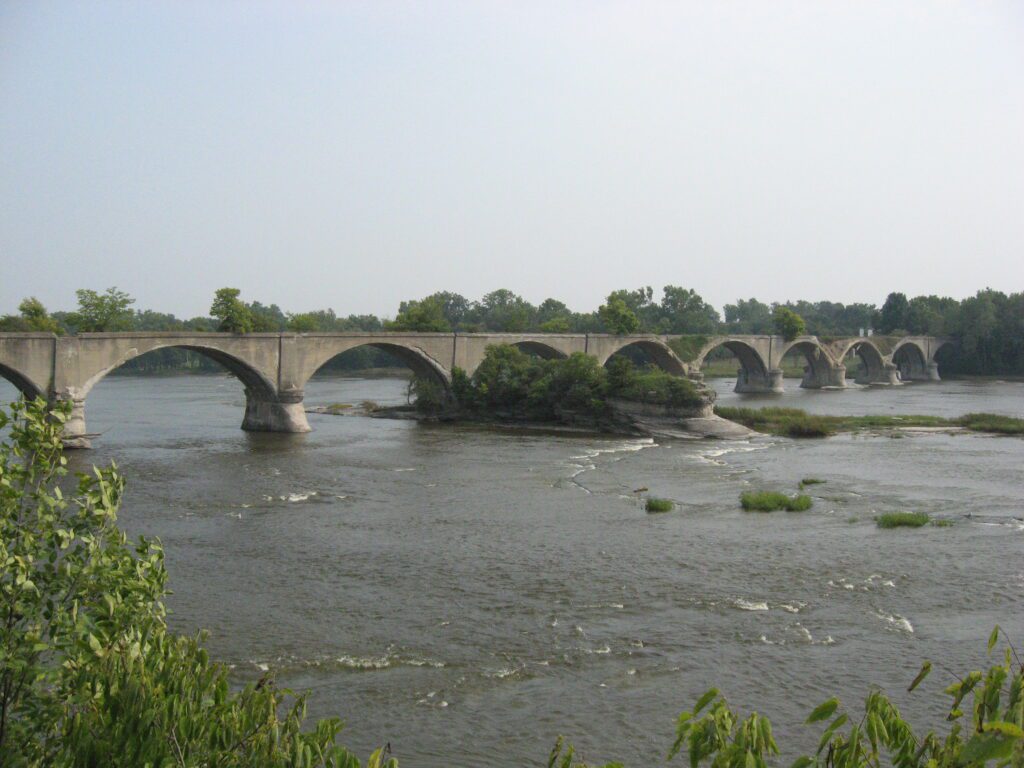
The Lima and Toledo Traction Company Bridge was construted in 1907 by the National Bridge Company of Indianapolis, and it was considered to be a revolutionary type of bridge construction. The Old Electric Bridge, as it was called, was built of steel reinforced concrete and filled with earth. In fact, for this period some considered […]
33-48 The Old Territorial Road
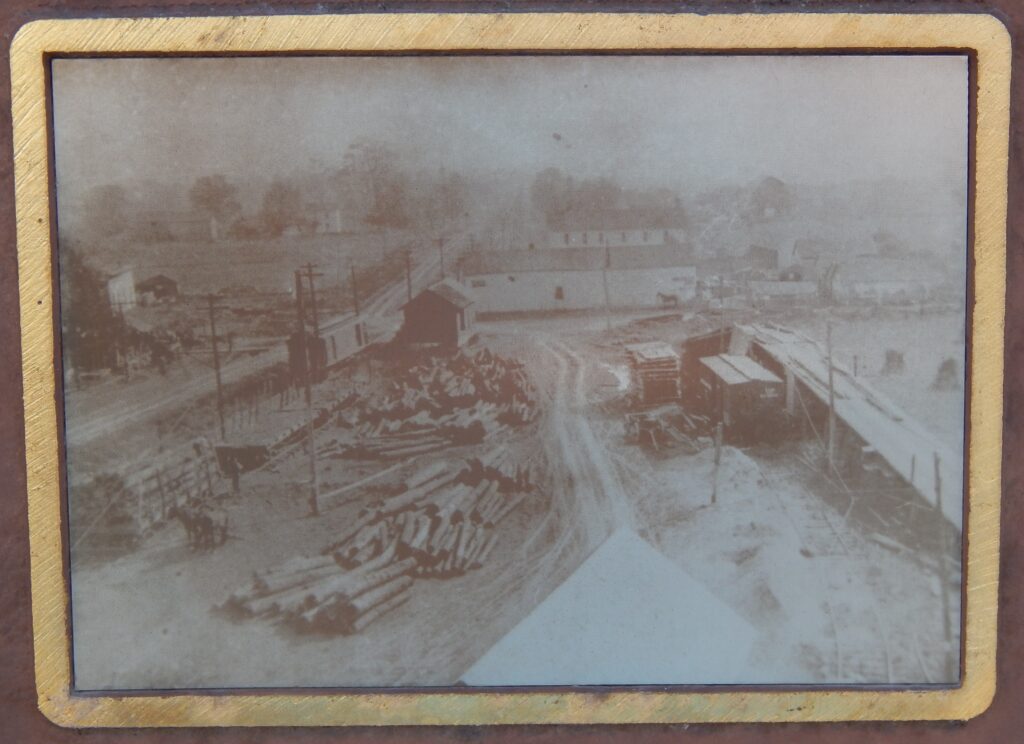
The earliest improved public road west from Lake Erie to the Indiana border, the Territorial-Indiana Road was built by the U.S. Government in 1834-1835 through the Cottonwood Swamp, then a major obstacle to travel. It ran parallel to the Harris Line, the northern boundary of a narrow strip of land contested by Ohio and Michigan […]
32-48 Erie and Kalamazoo Railroad
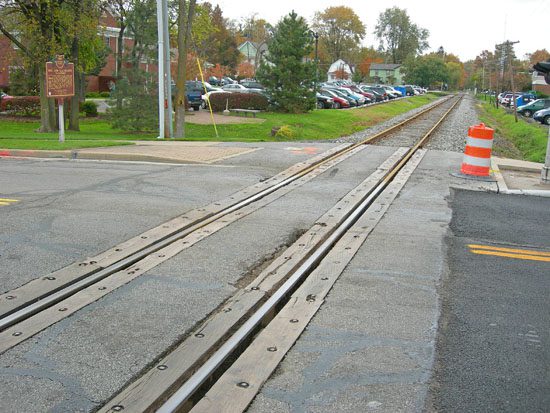
This rail line was the original route of the Erie and Kalamazoo Railroad, the first railroad to operate west of the Allegheny Mountains. The train made its initial run on October 3, 1836 from Toledo to Adrian, a total of approximately thirty miles. In 1837, a steam locomotive replaced horses as the train’s engine. The […]
31-48 Miami & Erie Canal
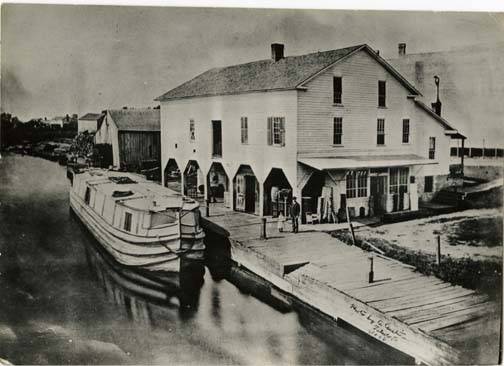
The Wabash & Erie Canal opened between Toledo and Lafayette, Indiana, May 8, 1843. The Miami Extension Canal was completed to Junction, Ohio, on July 4, 1845, linking the Wabash & Erie Canal with Cincinnati and resulting in changing the canal’s name to the Miami and Erie Canal. Prosperity reigned until the 1850s when railroad […]
29-48 Original Site of Toledo’s Oldest Black Institution / Warren African Methodist Episcopal Church
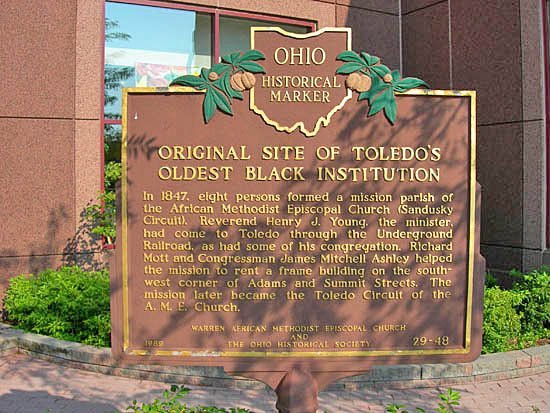
In 1847, eight persons formed a mission parish of the African Methodist Episcopal Church (Sandusky Circuit). Reverend Henry J. Young, the minister, had come to Toledo through the Underground Railroad, as had some of his congregation. Richard Mott and Congressman James Mitchell Ashley helped the mission to rent a frame building on the southwest corner […]
28-48 The University of Toledo
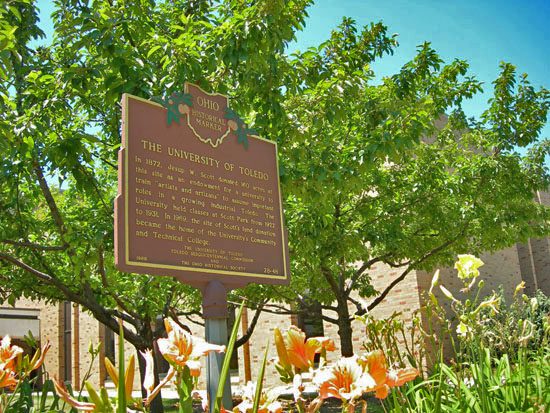
In 1872, Jesup W. Scott donated 160 acres at this site as an endowment for a university to train “artists and artisans” to assume important roles in a growing industrial Toledo. The University held classes at Scott Park from 1922 to 1931. In 1969, the site of Scott’s land donation became the site of the […]
27-48 The University of Toledo
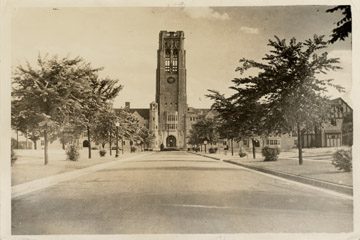
The Toledo University of Arts and Trades was established in 1872 with an endowment of 160 acres of land from Jesup W. Scott, local pioneer, publisher, and real estate broker. Scott envisioned Toledo as the “Future Great City of the World” and wanted an institution to train young people to fulfill their roles in the […]
26-48 Canal Terminus / Manhattan
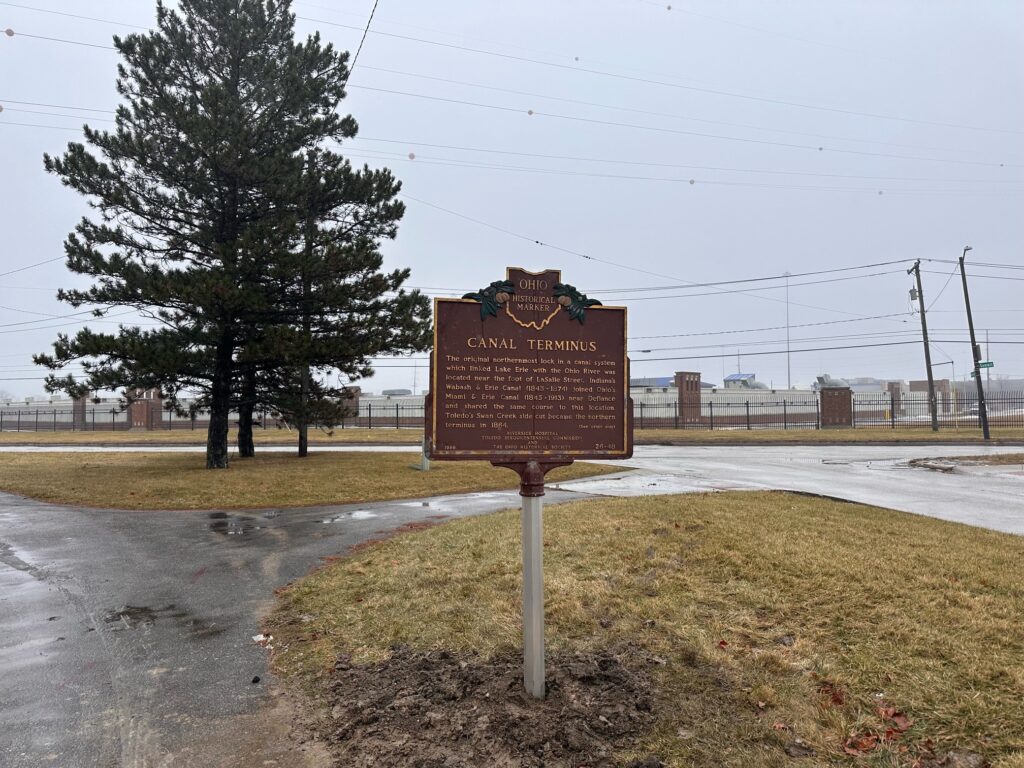
The original northernmost lock in a canal system which linked Lake Erie with the Ohio River was located near the foot of LaSalle Street. Indiana’s Wabash & Erie Canal (1843-1874) joined Ohio’s Miami & Erie Canal (1845-1913) near Defiance and shared the same course to this location. Toledo’s Swan Creek side cut became the northern […]
24-48 Medical College of Ohio

State interest in medical education for northwest Ohio became a reality when the Medical College of Ohio at Toledo was established in December, 1964. Located initially at South Detroit and Arlington on Lucas County property, MCO moved to the present 350-acre campus starting in 1972. It is the area’s first medical school since the closing […]