 Skip to content

14-55 Forest Hill Union Cemetery
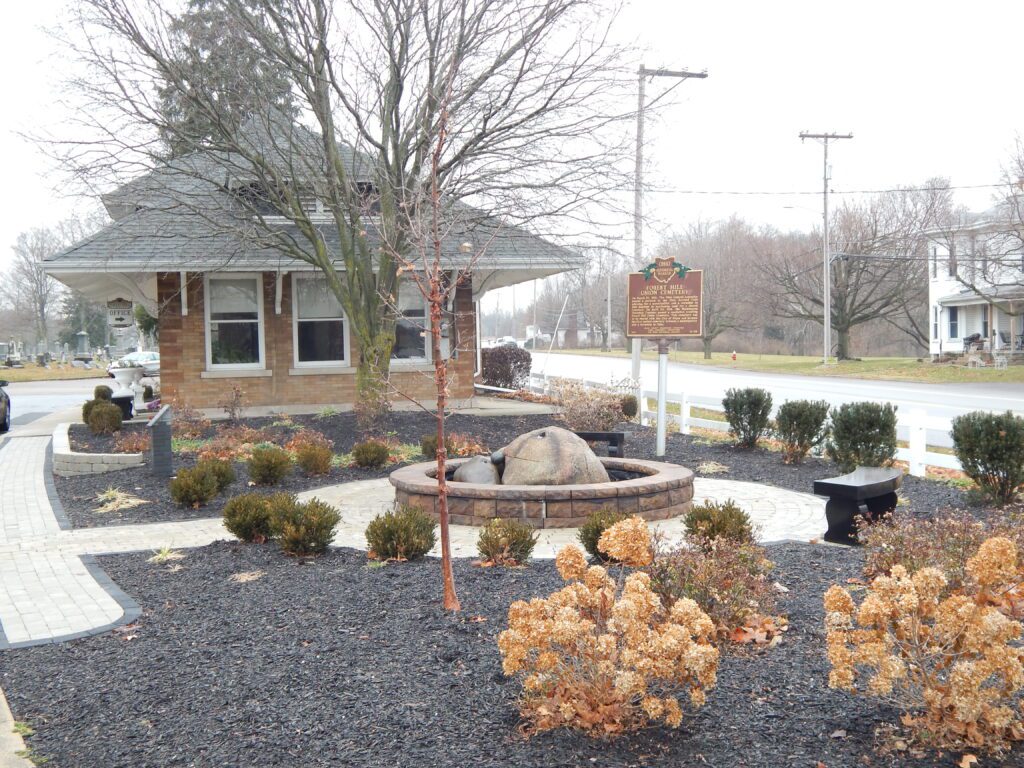
On March 20, 1868, The Ohio General Assembly passed a revision to the Ohio Revised Code allowing for a municipality and a township to join together in purchasing land for a shared cemetery. On April 24, 1868, the Washington Township Trustees passed a resolution creating Forest Hill Union Cemetery. This cemetery was to be shared […]
13-55 Junior Girls Canteen, 1943-1946
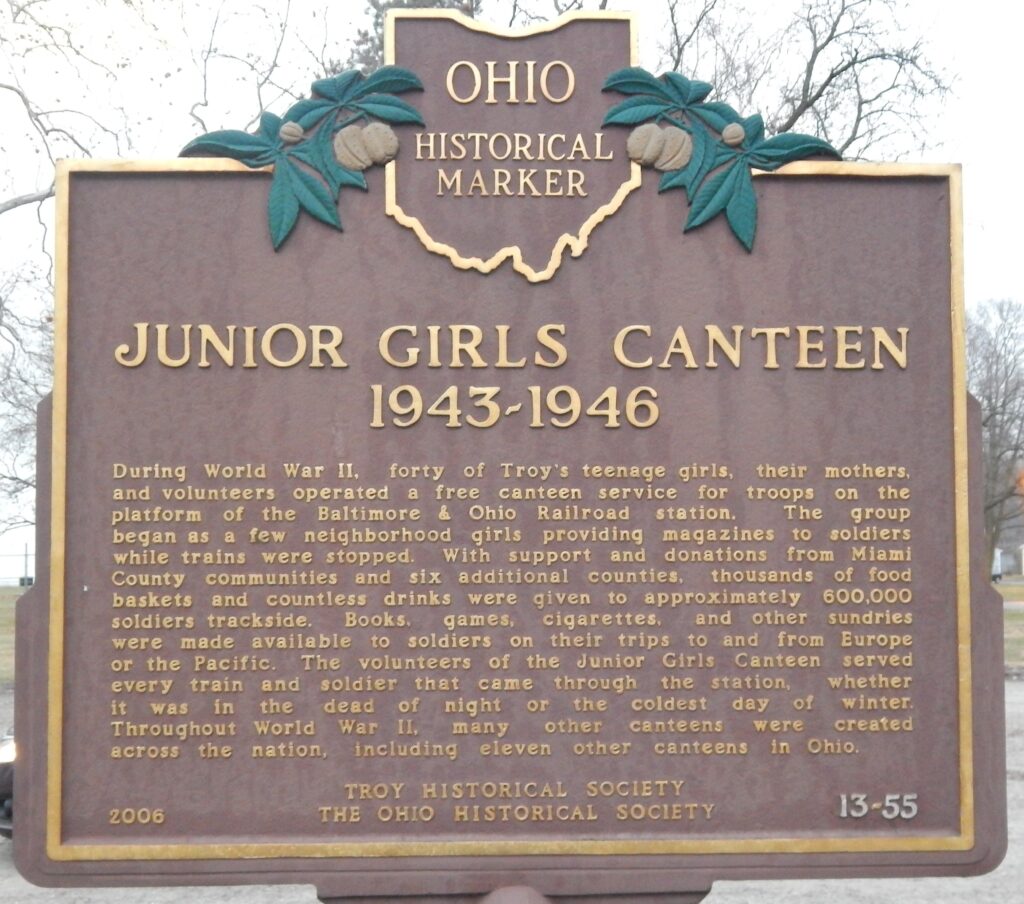
During World War II, forty of Troy’s teenage girls, their mothers, and volunteers operated a free canteen service for troops on the platform of the Baltimore & Ohio Railroad station. The group began as a few neighborhood girls providing magazines to soldiers while trains were stopped. With support and donations from Miami County communities and […]
12-55 USAF Pararescue Memorial Parkway
On February 15, 2005, Senate Bill 156 designated Ohio State Route 48 as USAF PARARESCUE MEMORIAL PARKWAY. The Parkway honors the memory of all Pararescuemen who perished in the performance of their duties. It is also a tribute to the Air Rescue men and women who died so “That Others May Live.” They made the […]
11-55 Piqua’s Vietnam Home Front / William H. Pitsenbarger
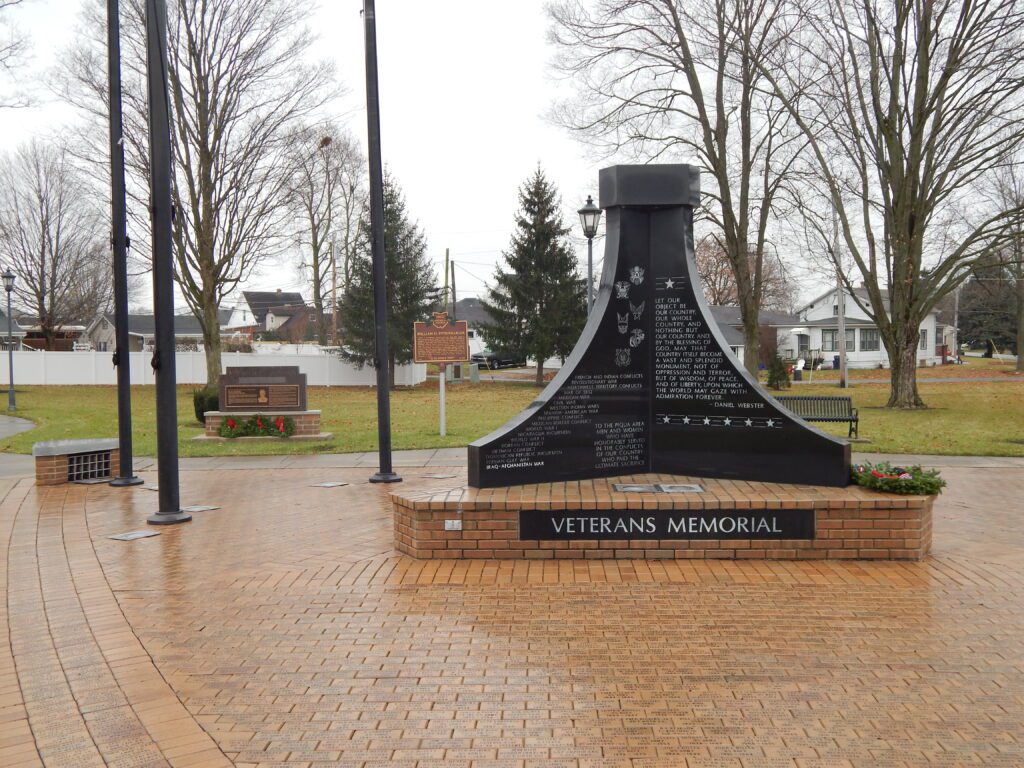
Local views on the Vietnam War mirrored national attitudes of pride and confusion. Piqua citizens participated in the “Letters for Life” campaign in 1970 for prisoners of war. Piqua Daily Call assistant news editor James W. DeWeese traveled to Paris in a frustrated attempt to deliver the letters to the Hanoi Peace delegation. The state […]
10-55 Rural Electrification
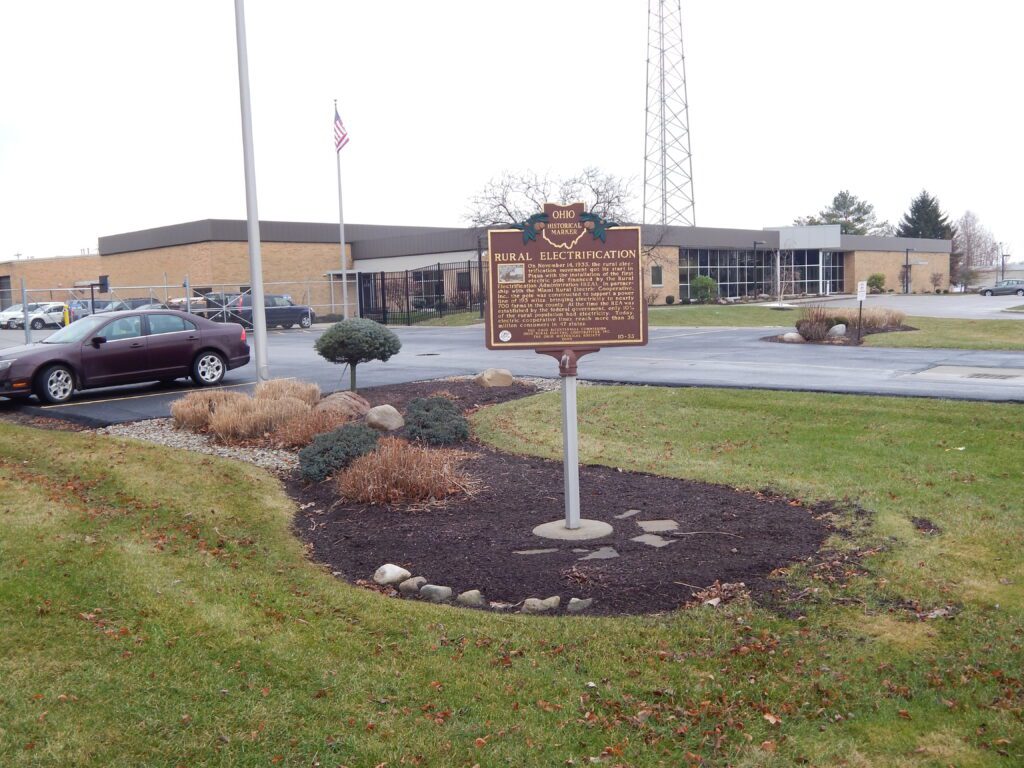
On November 14, 1935, the rural electrification movement got its start in Piqua with the installation of the first electric pole financed by the Rural Electrification Administration (REA). In partnership with the Miami Rural Electric Cooperative, Inc., the pole was constructed to support a power line of 193 miles, bringing electricity to nearly 700 farms […]
8-55 Bradford Fire of 1920
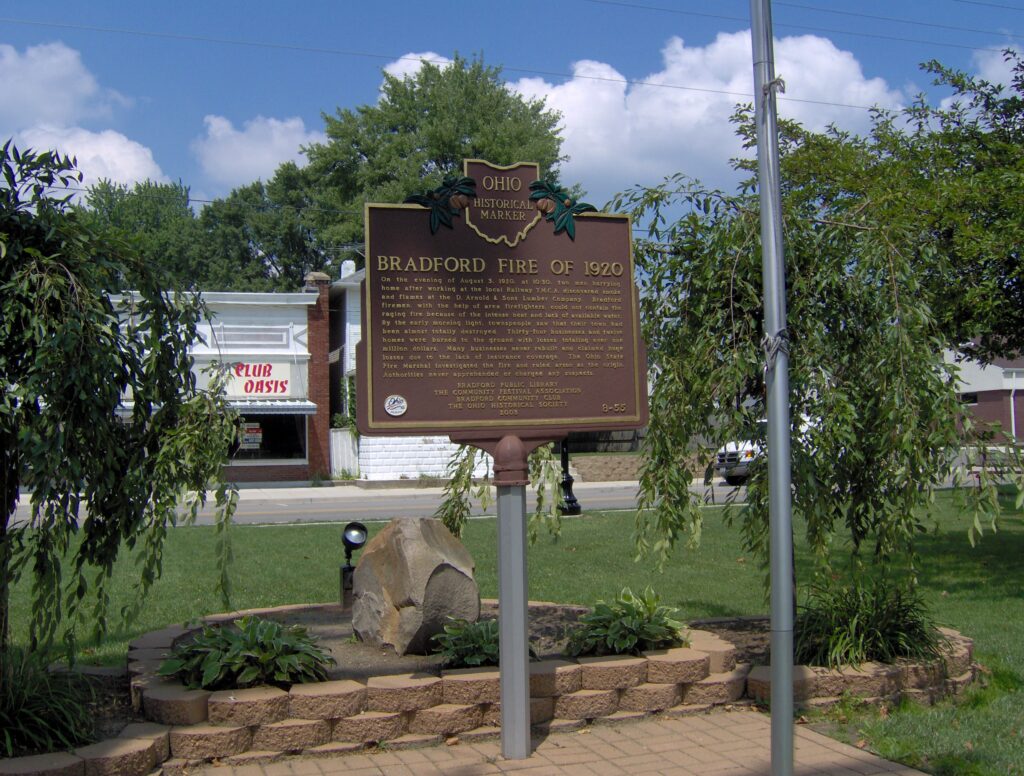
On the evening of August 3, 1920, at 10:30, two men hurrying home after working at the local Railway Y.M.C.A. discovered smoke and flames at the D. Arnold & Sons Lumber Company. Bradford firemen, with the help of area firefighters, could not contain the raging fire because of the intense heat and lack of available […]
7-55 WACO Aircraft Company (Weaver Aircraft Company)
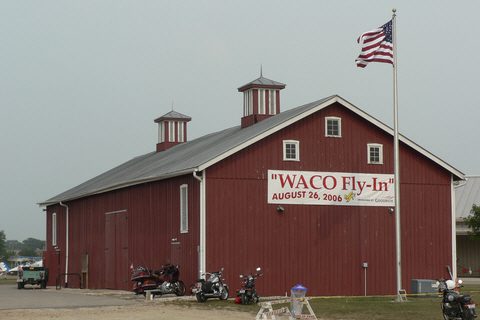
Founded in 1921 as the Weaver Aircraft Company and located in Lorain, Ohio, the Waco Aircraft Company relocated to Troy in March 1923. It was the first aircraft company to use assembly line production and shock strut landing gear. Leading all civilian aircraft production at a ratio of two to one from 1927-1929, the company […]
6-55 Battle of Pickawillany, 1752

In the mid-1700s, France found its influence waning among midwestern tribes as it contested for Native American trade and military alliances with Great Britain. Shortly after Miami chief Memeskia (also known as Old Britain or La Demoiselle) moved his village to Pickawillany, British traders were given permission to establish a small post in the village, […]
5-55 Lock Nine
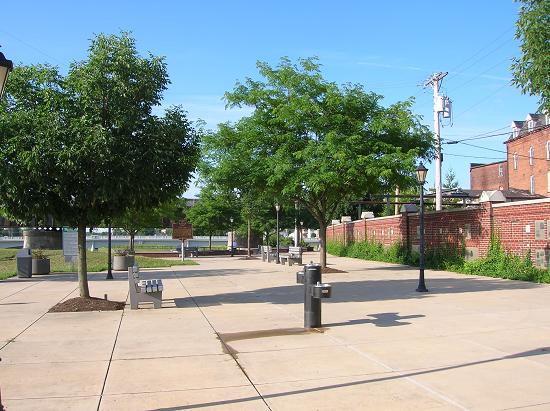
Completed in 1837, the limestone lock nine served as a catalyst for the growth of Piqua. The lock helped connect the village to Cincinnati (1837) and Toledo (1845) by way of the Miami and Erie Canal. German immigrants traveled up the canal from Cincinnati and settled within a five-block area of the lock. Industries used […]
4-55 Piqua’s Early African-American Heritage / Goodrich Giles
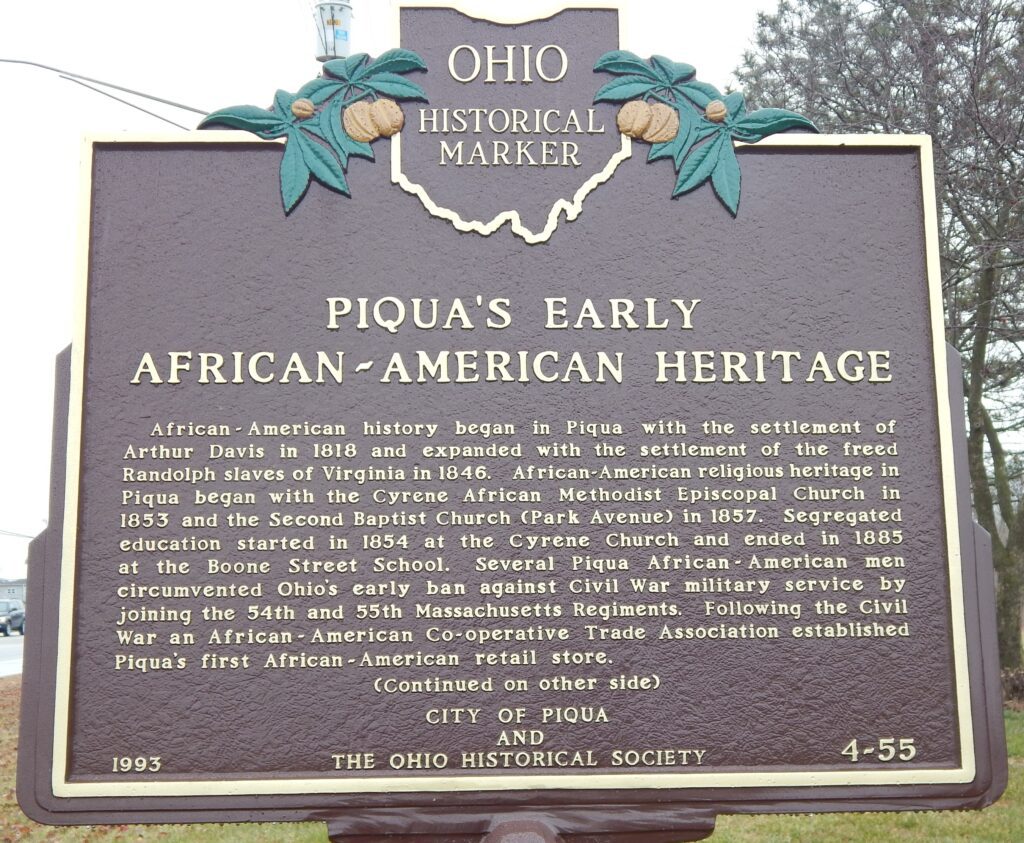
African-American history began in Piqua with the settlement of Arthur Davis in 1818 and expanded with the settlement of the freed Randolph slaves of Virginia in 1846. African-American religious heritage in Piqua began with the Cyrene African Methodist Episcopal Church in 1853 and the Second Baptist Church (Park Avenue) in 1857. Segregated education started in […]