 Skip to content

3-72 McPherson Cemetery
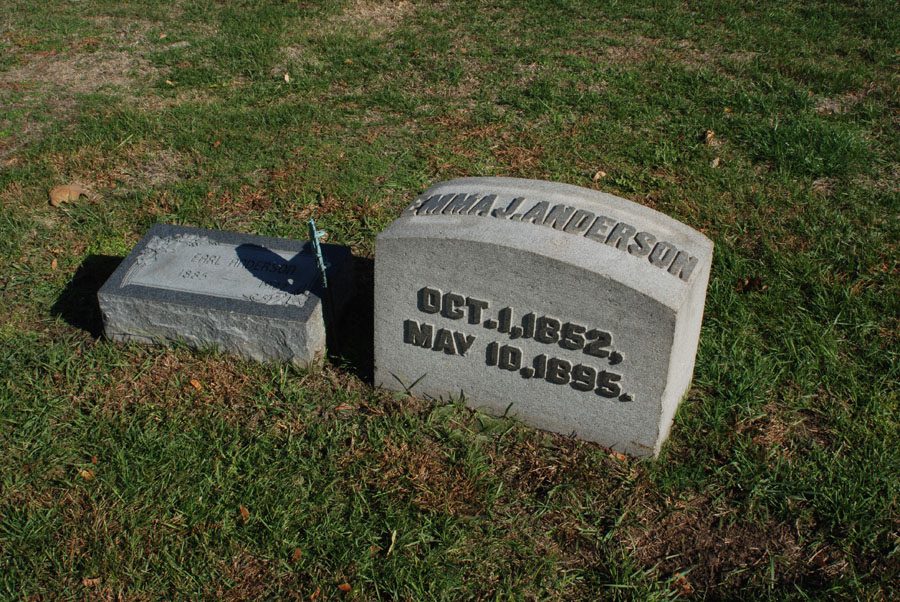
Named for Major General James B. McPherson, buried here July 29, 1864. Here also are graves of George Burton Meek, U.S.N., first American serviceman killed in the War with Spain; Congressional Medal of Honor recipients Charles H. McCleary, Civil War, and Rodger W. Young, World War II; Emma Anderson, mother of author Sherwood Anderson.
2-72 Sandusky County Fairgrounds
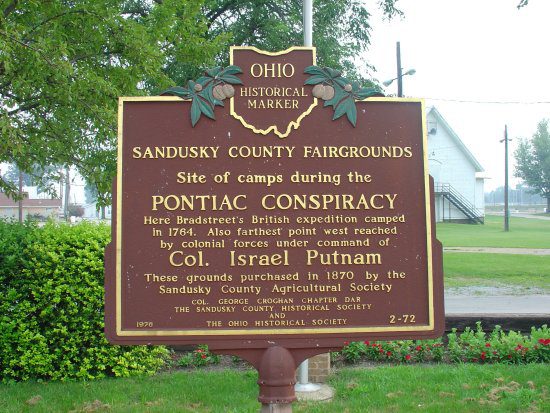
Here Bradstreet’s British expedition camped in 1764. Also farthest point west reached by colonial forces under command of Col. Israel Putnam. These grounds purchased in 1870 by the Sandusky County Agricultural Society.
1-72 Fort Stephenson / Fort Stephenson
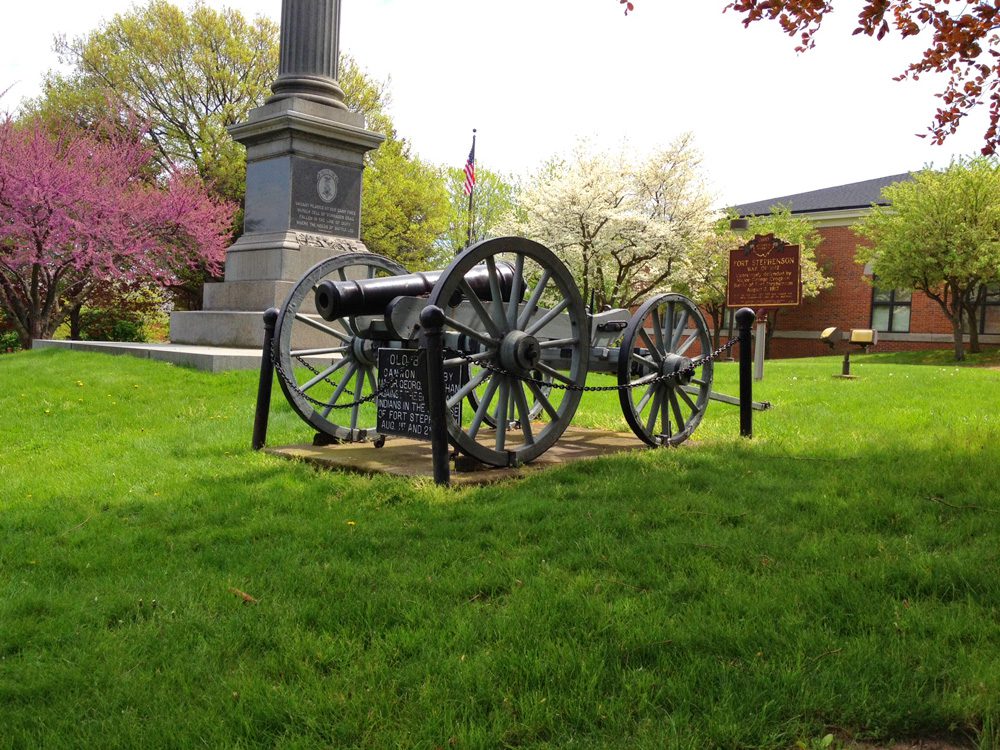
War of 1812. Victoriously defended by Major George Croghan. Battle of Fort Stephenson. August 2, 1813. Built on this spot 1812-1813 and named for Col. Mills Stephenson, one of its builders.
17-71 Joseph Carter Corbin / Joseph Carter Corbin
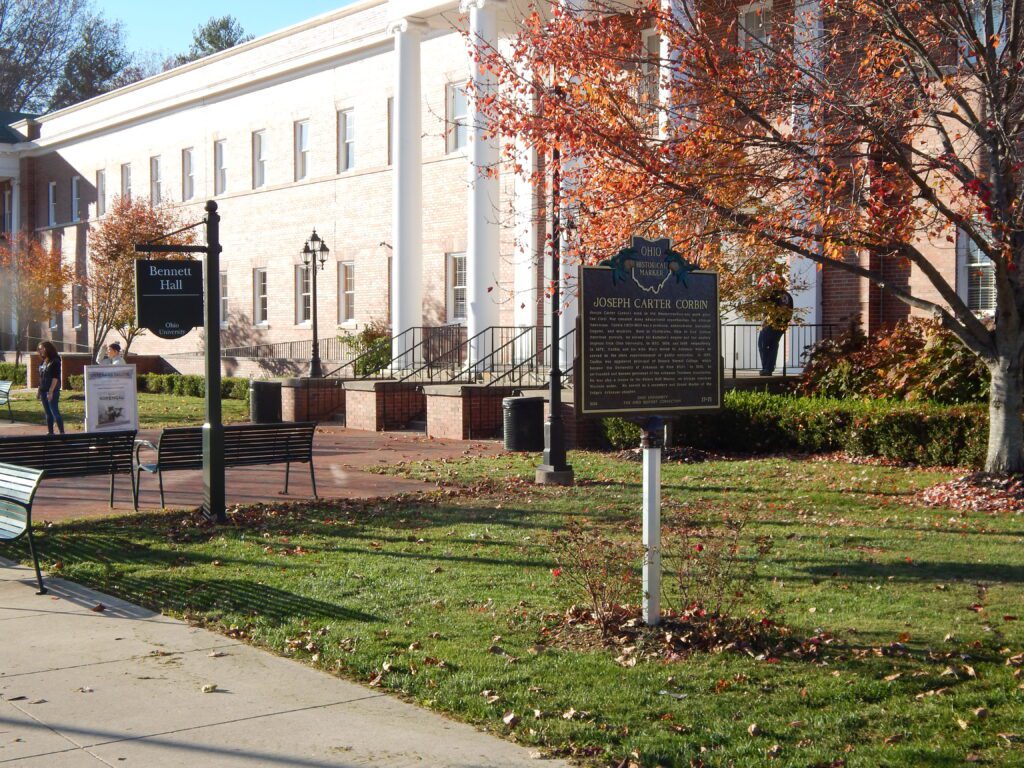
Joseph Carter Corbin’s work in the Reconstruction-era south after the Civil War created many educational opportunities for African Americans. Corbin (1833-1911) was a professor, administrator, journalist, linguist, and musician. Born in Chillicothe, Ohio to free African American parents, he earned his bachelor’s degree and two masters’ degrees from Ohio University, in 1853, 1856, and 1889, […]
14-71 Concord Presbyterian Church
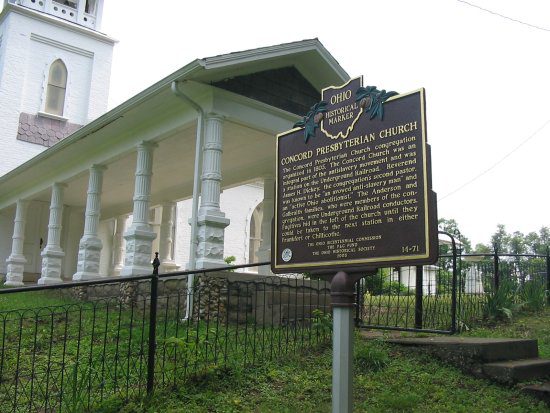
The Concord Presbyterian Church congregation organized in 1805. The Concord Church was an integral part of the antislavery movement and was a station on the Underground Railroad. Reverend James H. Dickey, the congregation’s second pastor, was known to be “an avowed anti-slavery man” and an “active Ohio abolitionist.” The Anderson and Galbraith families, who were […]
5-71 The Chillicothe Gazette
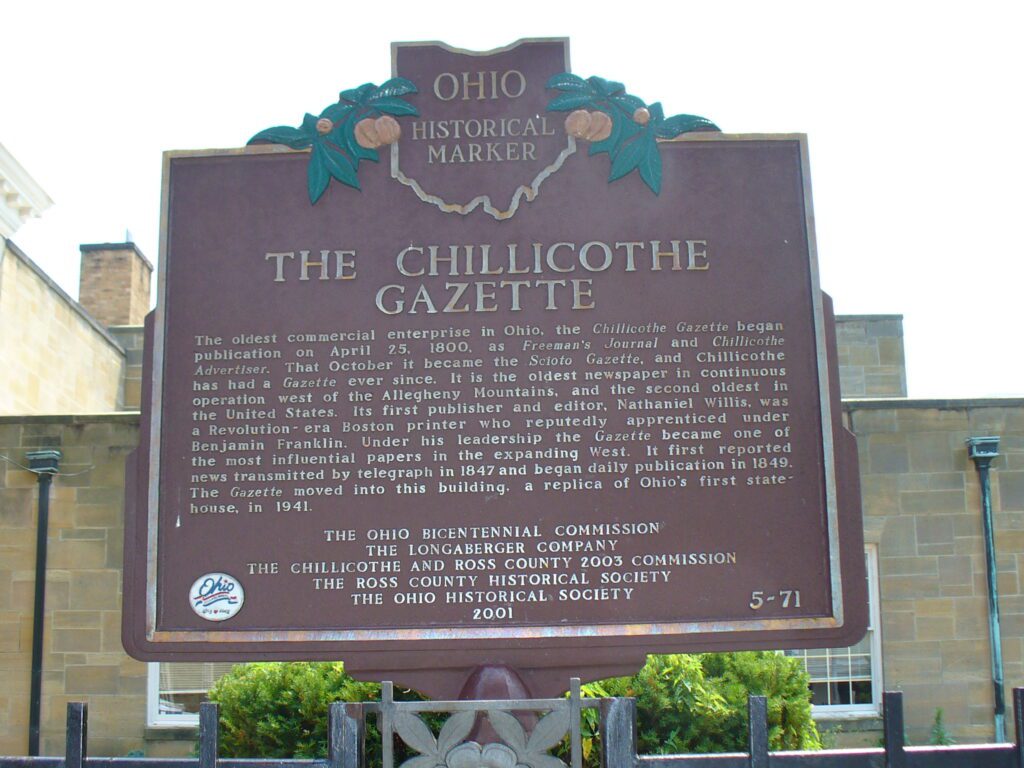
The oldest commercial enterprise in Ohio, the Chillicothe Gazette began publication on April 25, 1800, as Freeman’s Journal and Chillicothe Advertiser. That October it became the Scioto Gazette, and Chillicothe has had a Gazette ever since. It is the oldest newspaper in continuous operation west of the Allegheny Mountains, and the second oldest in the […]
3-71 Site of Ohio’s First Statehouse

Ross County’s first courthouse was Ohio’s first statehouse. The courthouse was erected on the Public Square in 1801. Thomas Worthington, one of the building’s superintendents, laid out the foundation. Chillicothe was the last capital of the Northwest Territory, and the final session of the territorial legislature met in the courthouse in 1801. Ohio’s first constitution […]
2-71 Grand Lodge of Free and Accepted Masons of Ohio

On this site, on January 4-7, 1808, the six Masonic lodges then existent in the state met and formed the Grand Lodge of Ohio. General Rufus Putnam of Marietta was elected the first Grand Master. Because of advanced age and failing health, he declined the honor and Governor Samuel Huntington was named in his stead.
15-71 The Great Seal of the State of Ohio
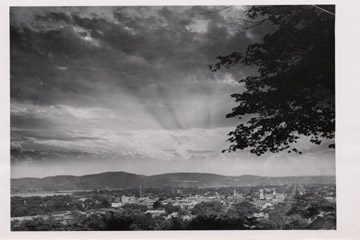
The hills before you were inspiration for the design of The Great Seal of the State of Ohio. The seal, first depicted in 1803, was often reconfigured until the present image was sanctioned by the Ohio General Assembly in 1967 and modified in 1996. In 1803 the law prescribed the sheaf of wheat to represent […]
13-71 Dard Hunter
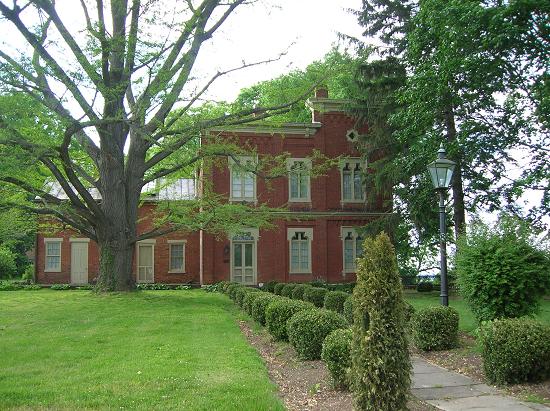
This classic Gothic Revival home built in the early 1850s, was one of Ohio’s early wineries with terraced hillside vineyards overlooking the city of Chillicothe. From 1919 until his death in 1966, it served as the home and working studio of noted American craftsman, artist, and historian Dard Hunter. A major artistic contributor to the […]