 Skip to content

14-71 Concord Presbyterian Church
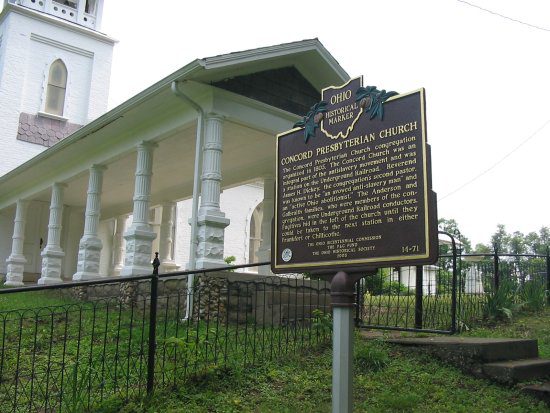
The Concord Presbyterian Church congregation organized in 1805. The Concord Church was an integral part of the antislavery movement and was a station on the Underground Railroad. Reverend James H. Dickey, the congregation’s second pastor, was known to be “an avowed anti-slavery man” and an “active Ohio abolitionist.” The Anderson and Galbraith families, who were […]
5-71 The Chillicothe Gazette
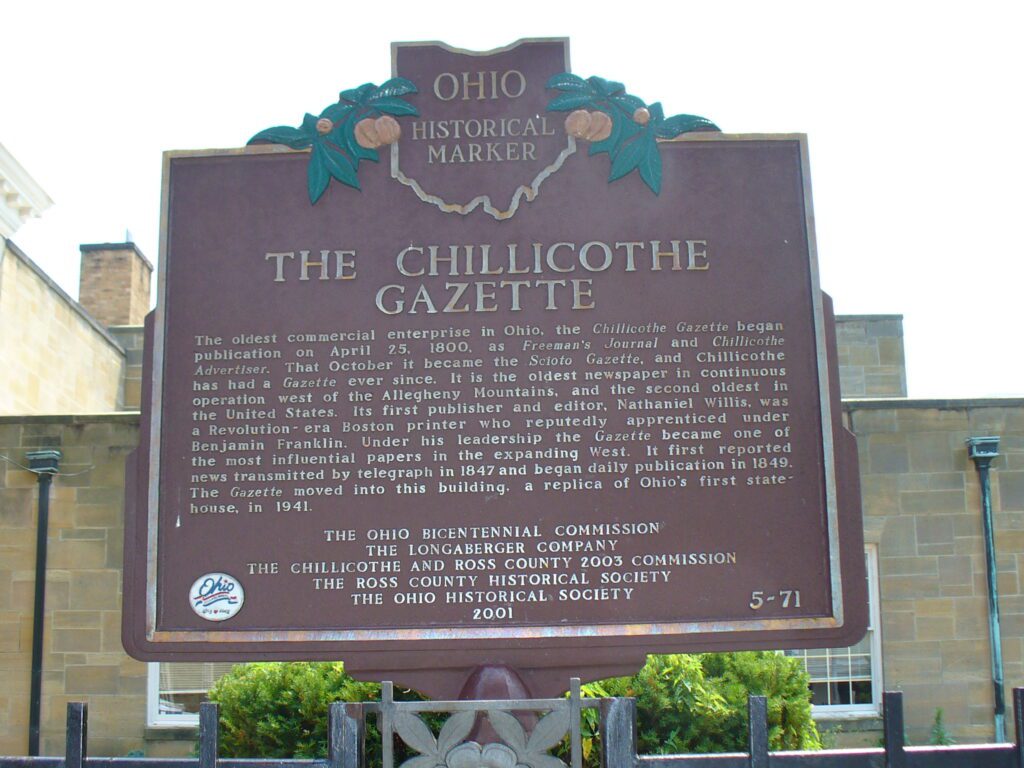
The oldest commercial enterprise in Ohio, the Chillicothe Gazette began publication on April 25, 1800, as Freeman’s Journal and Chillicothe Advertiser. That October it became the Scioto Gazette, and Chillicothe has had a Gazette ever since. It is the oldest newspaper in continuous operation west of the Allegheny Mountains, and the second oldest in the […]
3-71 Site of Ohio’s First Statehouse

Ross County’s first courthouse was Ohio’s first statehouse. The courthouse was erected on the Public Square in 1801. Thomas Worthington, one of the building’s superintendents, laid out the foundation. Chillicothe was the last capital of the Northwest Territory, and the final session of the territorial legislature met in the courthouse in 1801. Ohio’s first constitution […]
2-71 Grand Lodge of Free and Accepted Masons of Ohio

On this site, on January 4-7, 1808, the six Masonic lodges then existent in the state met and formed the Grand Lodge of Ohio. General Rufus Putnam of Marietta was elected the first Grand Master. Because of advanced age and failing health, he declined the honor and Governor Samuel Huntington was named in his stead.
15-71 The Great Seal of the State of Ohio
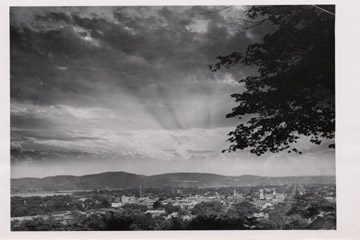
The hills before you were inspiration for the design of The Great Seal of the State of Ohio. The seal, first depicted in 1803, was often reconfigured until the present image was sanctioned by the Ohio General Assembly in 1967 and modified in 1996. In 1803 the law prescribed the sheaf of wheat to represent […]
13-71 Dard Hunter
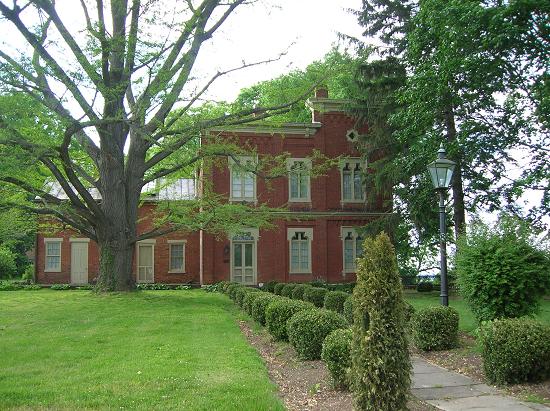
This classic Gothic Revival home built in the early 1850s, was one of Ohio’s early wineries with terraced hillside vineyards overlooking the city of Chillicothe. From 1919 until his death in 1966, it served as the home and working studio of noted American craftsman, artist, and historian Dard Hunter. A major artistic contributor to the […]
11-71 Banking Crisis of 1819
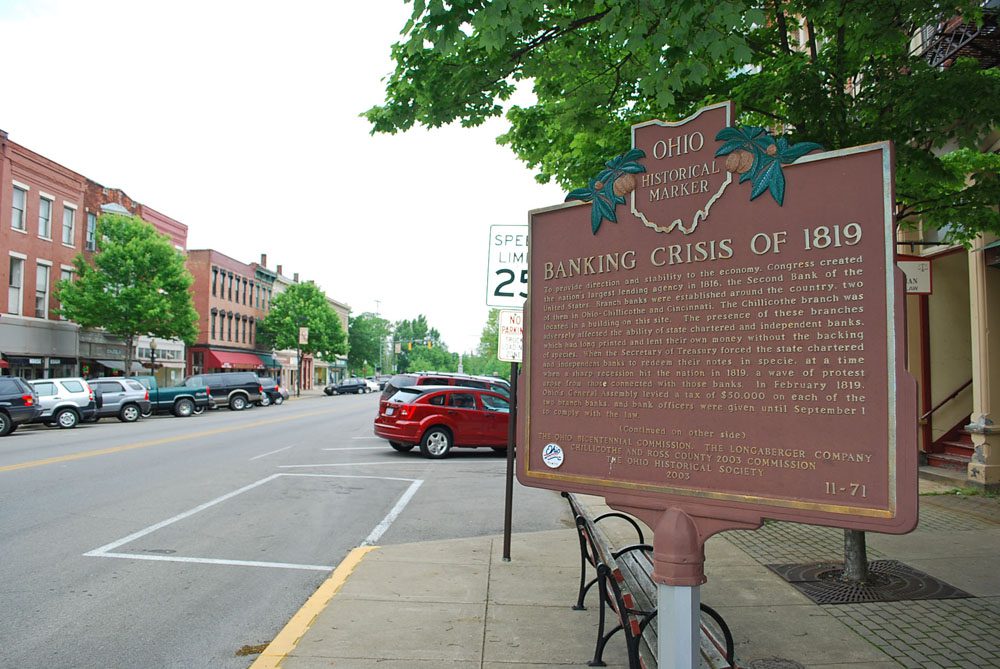
To provide direction and stability to the economy, Congress created the nation’s largest lending agency in 1816, the Second Bank of the United States. Branch banks were established around the country, two of them in Ohio-Chillicothe and Cincinnati. The Chillicothe branch was located in a building on this site. The presence of these branches adversely […]
9-71 Burton Egbert Stevenson

Born in Chillicothe in 1872, Burton Stevenson’s life was devoted to the written word as a prolific author and anthologist, and as a librarian. Following stints as a journalist while a student at Princeton University and then at newspapers in Chillicothe, Stevenson became the librarian of the city’s public library in 1899. He held the […]
8-71 The “Statehood Riots” / The Enabling Act, 1802
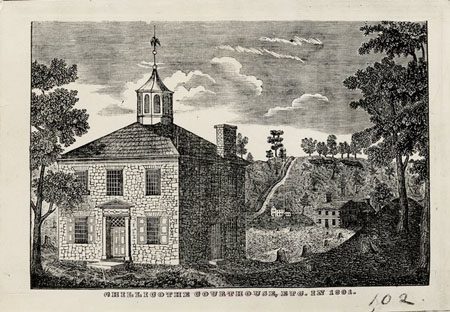
The first Northwest Territory assembly formally met in Cincinnati in September 1799 to initiate self-government. The legislators were deeply divided politically. The Republicans (antifederalists or “Jeffersonians”), led by Thomas Worthington and Edward Tiffin of Chillicothe, opposed the appointed government headed by the Federalist governor, Arthur St. Clair. They saw it as arbitrary and autocratic and […]
7-71 Camp Sherman
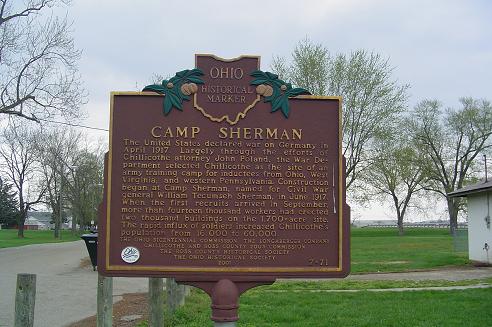
The United States declared war on Germany in April 1917. Largely through the efforts of Chillicothe attorney John Poland, the War Department selected Chillicothe as the site of an army training camp for inductees from Ohio, West Virginia, and western Pennsylvania. Construction began at Camp Sherman, named for Civil War general William Tecumseh Sherman, in […]