 Skip to content

16-83 Butterworth Station / Butterworth Family Contributions
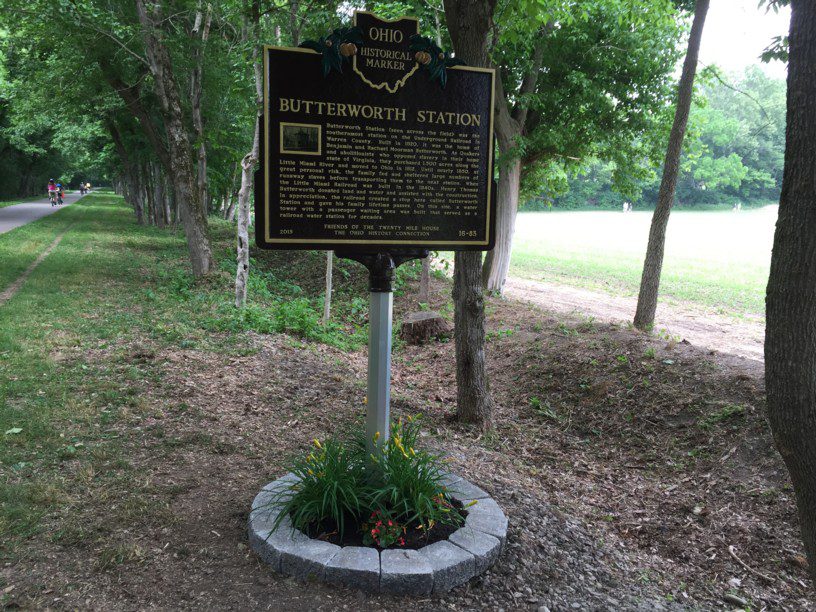
Butterworth Station (seen across the field) was the southernmost station on the Underground Railroad in Warren County. Built in 1820, it was the home of Benjamin and Rachael Moorman Butterworth. As Quakers and abolitionists who opposed slavery in their home state of Virginia, they purchased 1,500 acres along the Little Miami River and moved to […]
14-83 Jeremiah Morrow’s Barn
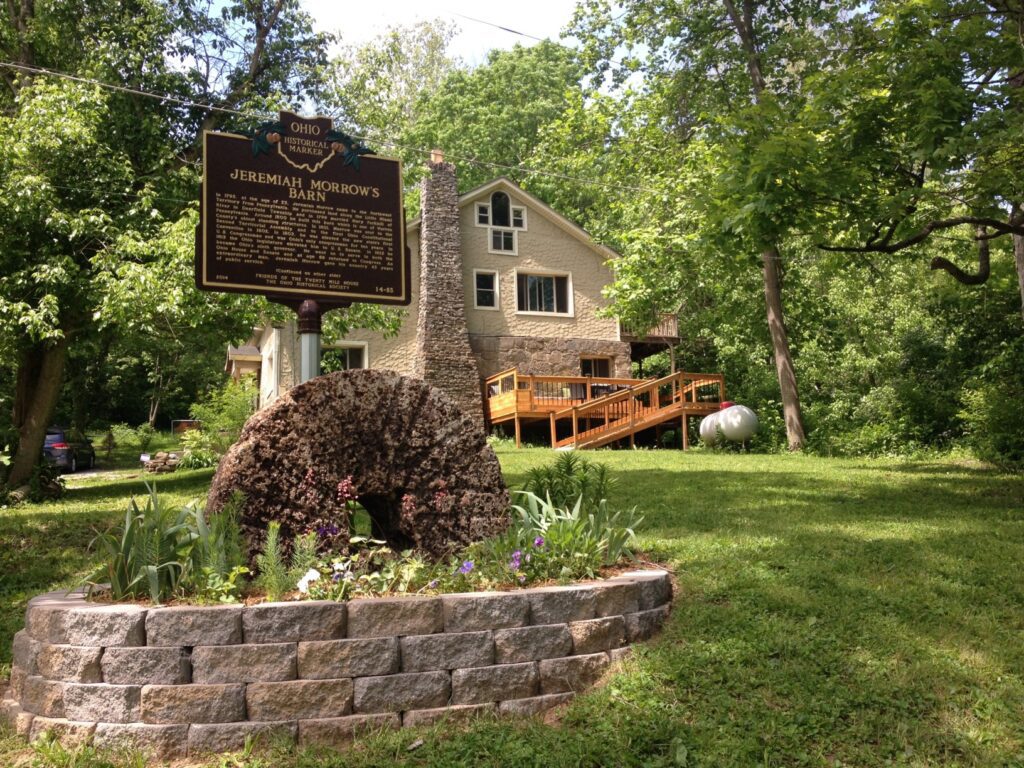
In 1795, at the age of 23, Jeremiah Morrow came to the Northwest Territory from Pennsylvania. He purchased land along the Little Miami River in Deerfield Township and in 1799 married Mary Parkhill of Pennsylvania. Around 1800 he built this barn which is one of Warren County’s oldest standing structures. In 1801, Morrow was sent […]
13-83 The Mackinaw Historic District
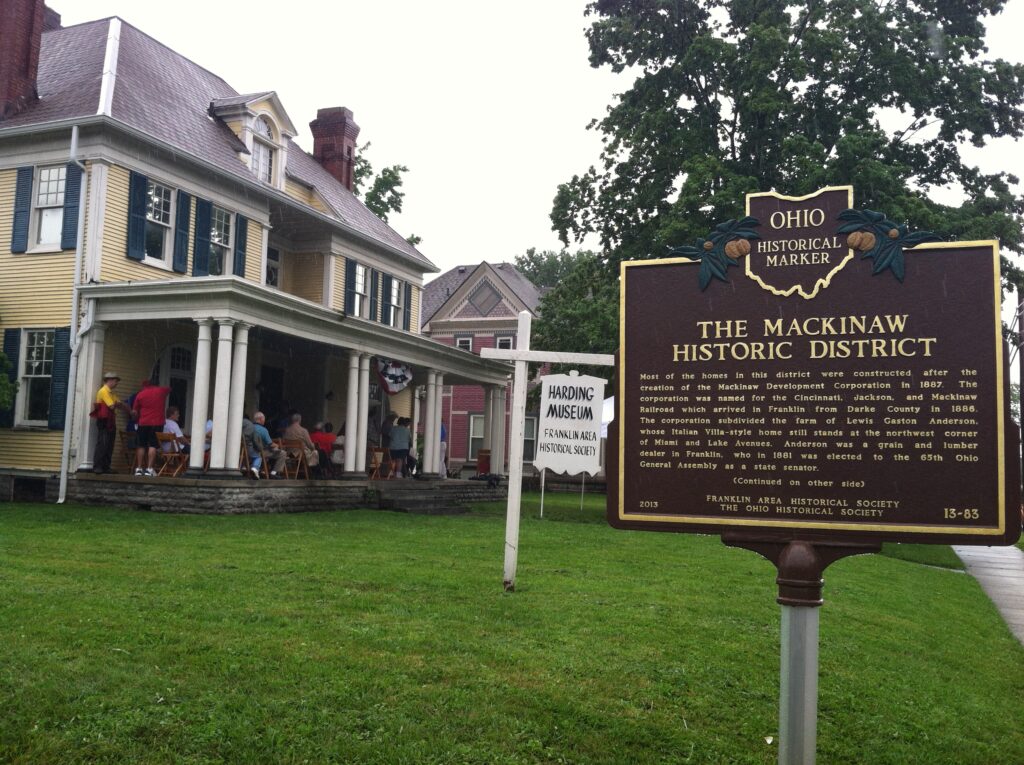
Most of the homes in this district were constructed after the creation of the Mackinaw Development Corporation in 1887. The corporation was named for the Cincinnati, Jackson, and Mackinaw Railroad which arrived in Franklin from Darke County in 1886. The corporation subdivided the farm of Lewis Gaston Anderson, whose Italian Villa-style home still stands at […]
12-83 Franklin in the Civil War
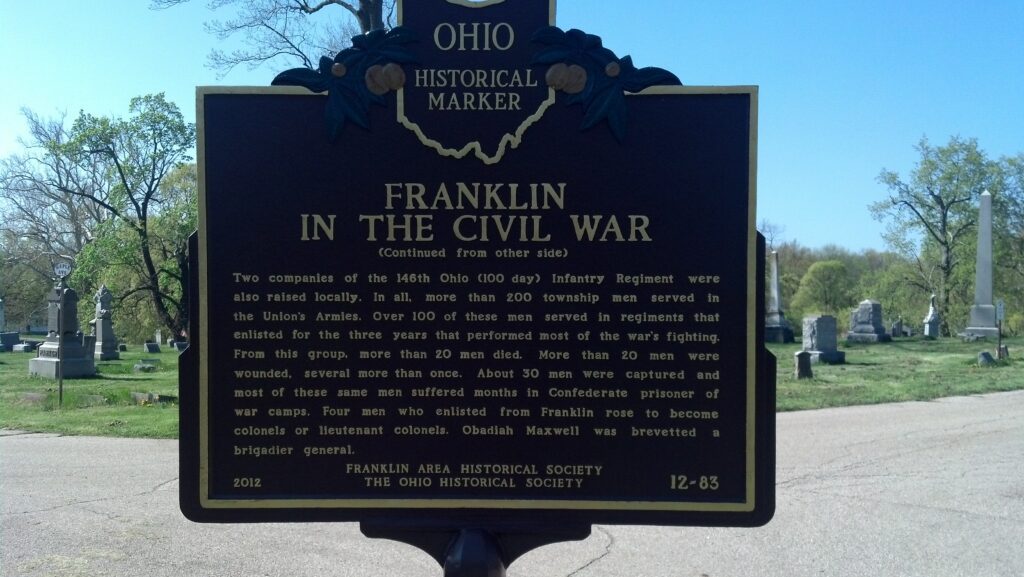
Men from Franklin Township were among the first from Ohio to leave for the war and participated in many of the conflict’s great campaigns. Individual companies of the 1st Ohio (90 day), 2nd Ohio, 75th Ohio, and 79th Ohio infantry were raised locally. Other Franklin men served in the 60th (1 year), 69th Ohio, and […]
11-83 Lewis Davis Campbell / Robert Cumming Schenck
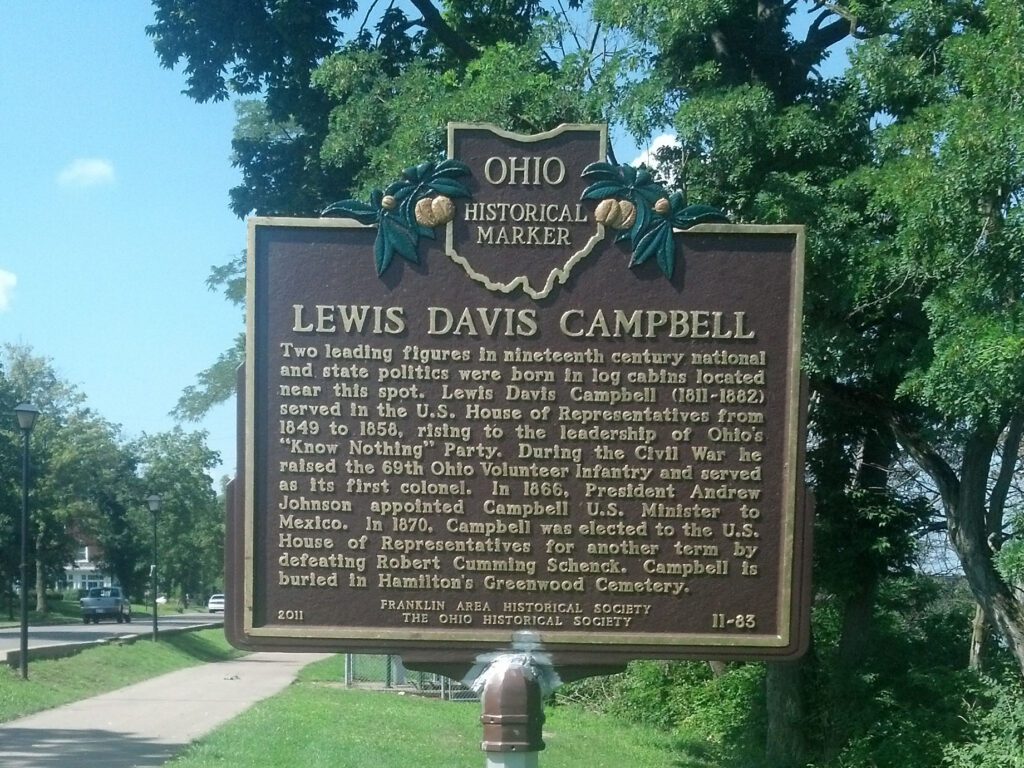
Two leading figures in nineteenth century national and state politics were born in log cabins located near this spot. Lewis Davis Campbell (1811-1882) served in the U.S. House of Representatives from 1849 to 1858, rising to the leadership of Ohio’s “Know Nothing” Party. During the Civil War he raised the 69th Ohio Volunteer Infantry and […]
10-83 Harveysburg / The Harveysburg School
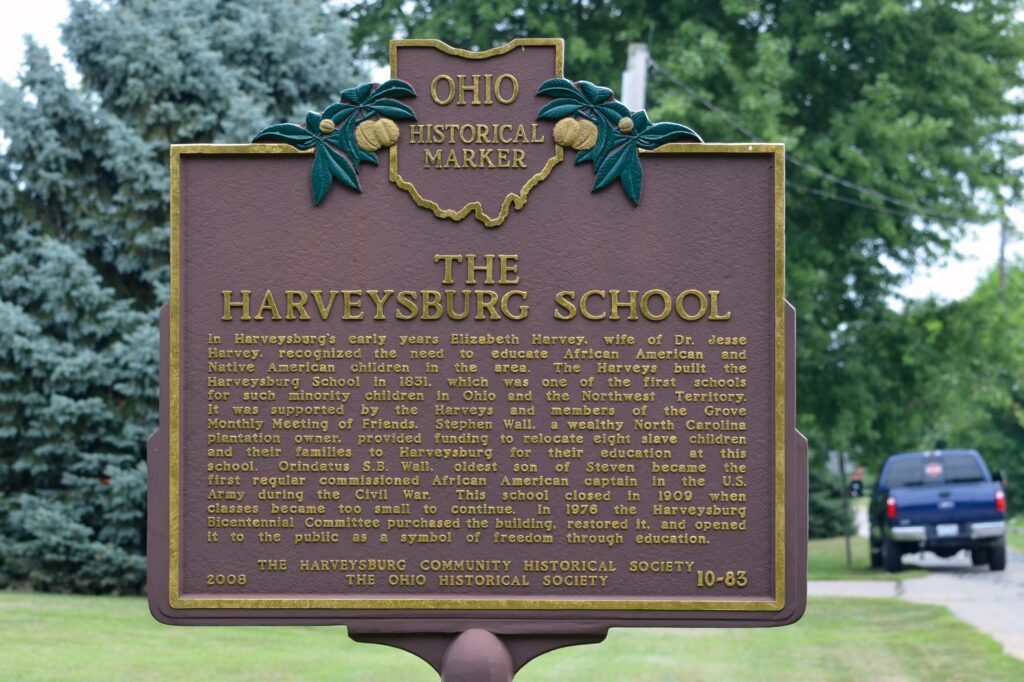
The Quaker village of Harveysburg was founded in 1829 on land originally a part of Colonel Abraham Buford’s Revolutionary War Land Grant. Levi Lukens, a Virginia Quaker, purchased the 1000 – acre survey in 1812 and sold a portion to Rhoden Ham in 1815. Ham then sold a portion of his holdings to William Harvey, […]
9-83 The Civilian Conservation Corps / The Civilian Conservation Corps of Fort Ancient
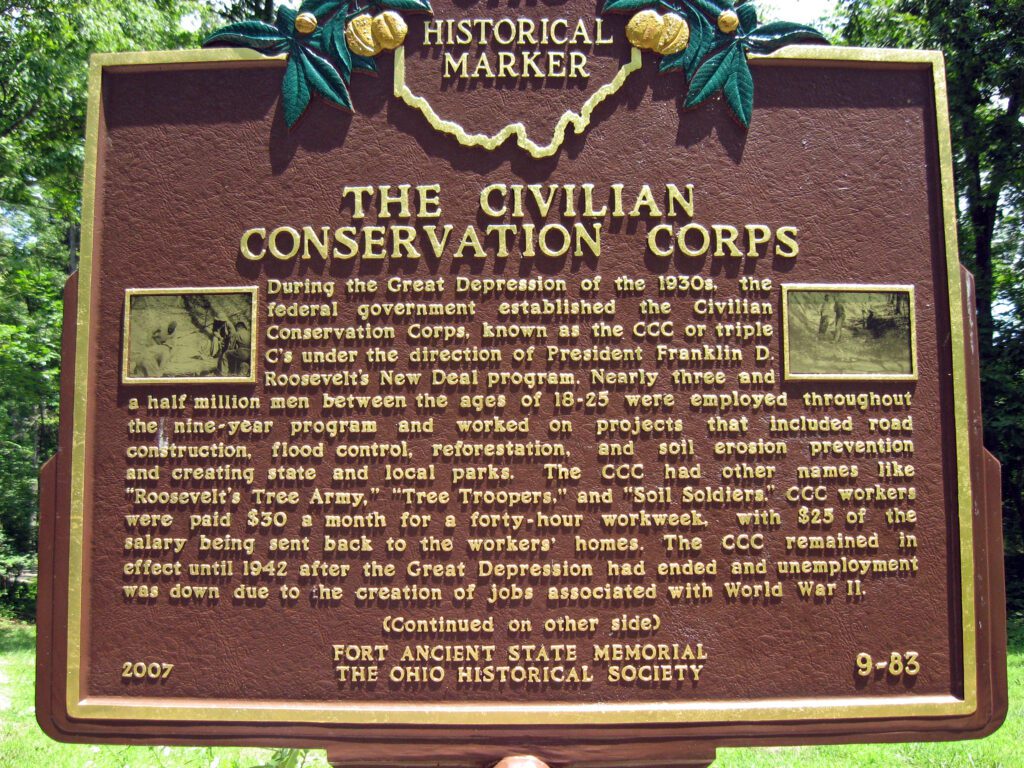
During the Great Depression of the 1930s, the federal government established the Civilian Conservation Corps, known as the CCC or triple C’s under the direction of President Franklin D. Roosevelt’s New Deal program. Nearly three and a half million men between the ages of 18-25 were employed throughout the nine-year program and worked on projects […]
8-83 Jonathan Wright Homestead

Jonathan Wright (1782-1855) and his wife Mary Bateman Wright (1787-1866) moved with their five children from Menallen, Adams County, Pennsylvania, in 1814 and built this Federal style house. Using skills acquired from his father, Joel Wright, a surveyor who platted the city of Columbus, Jonathan platted the village of “Springborough,” named for the many springs […]
7-83 The Old Log Post Office
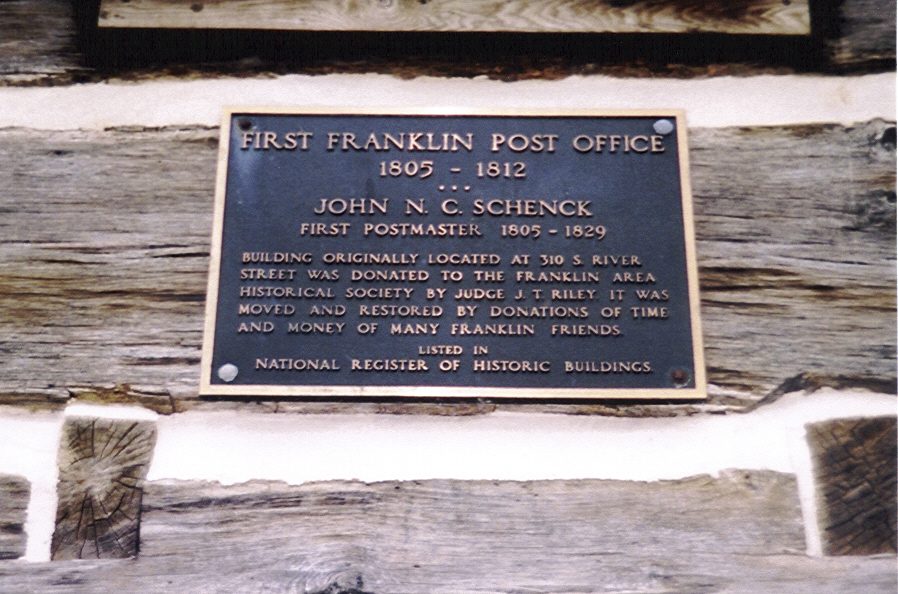
The oldest known structure standing in Franklin, the Old Log Post Office is a reminder of the links the community’s earliest members maintained to the rest of the young state of Ohio and to the United States during the early nineteenth century. John Noble Cumming Schenck, older brother of one of the founders of Franklin, […]
6-83 Spring Valley Wildlife Area – A Feature of Ohio’s Wetlands
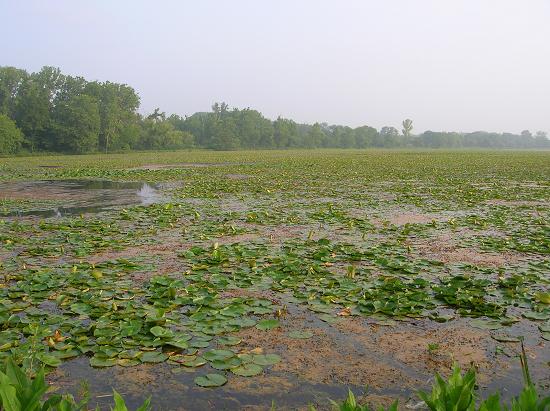
Nearly 90% of Ohio’s wetlands have been drained or filled. Kettle holes, sphagnum peat bogs, prairies, and oak openings are still found in a few glaciated areas in the northern half of the state. Coastal areas along Lake Erie and bottomlands along Ohio’s rivers and streams preserve the remaining wetlands. Once a commercial fur farm, […]