 Skip to content

15-87 William Henry Harrison’s Encampment
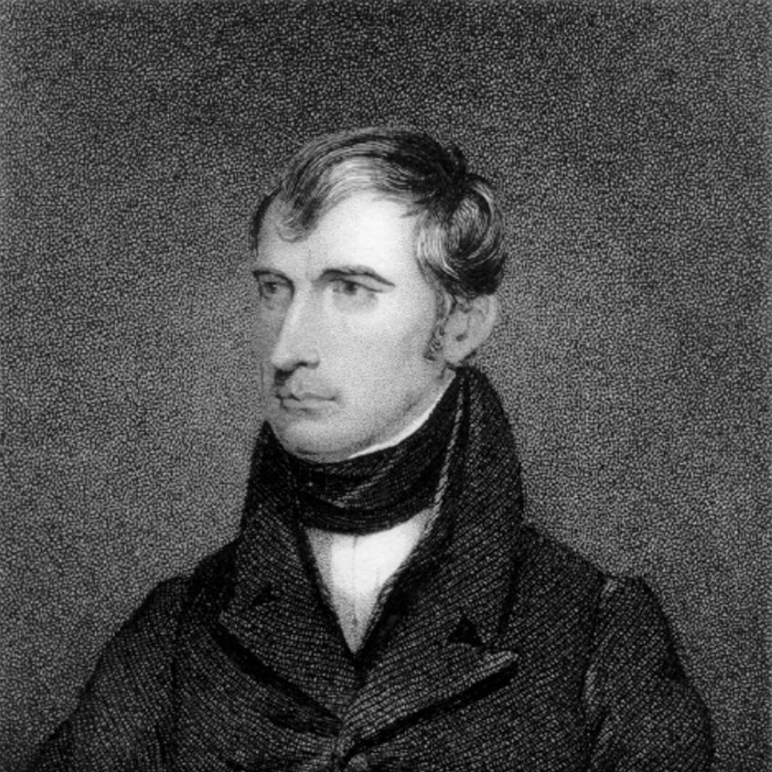
During the War of 1812, Northwestern Army Commander General William Henry Harrison led troops through northwest Ohio on the way to Detroit and Ft. Malden in Michigan. After the decimation of General James Winchester’s division at Frenchtown (Monroe, Michigan) by British and Indian forces, Harrison retreated and led his troops southward to the Portage River. […]
14-87 Amos Spafford
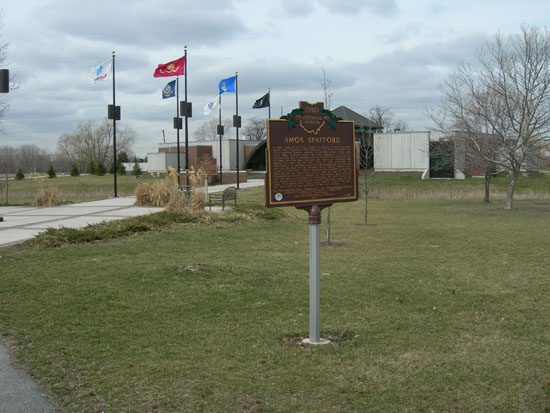
In 1810, early settlers here were Major Amos Spafford (1753-1818), his wife Olive (1756-1823), and their children Samuel, Aurora , Chloe (Mrs. Almon Gibbs), and Anna (Mrs. Richard Craw). In 1796, Spafford, a native of Connecticut, was a surveyor for the Connecticut Land Company. He drew the first map laying out Cleveland and named the […]
13-87 The Maumee and Western Reserve Road / Turnpike Milestones

Sandusky Street (U.S. Highway 20) is the former Maumee and Western Reserve Turnpike. Native American tribes northwest of the Ohio River ceded the right of way for this 46-mile road to the federal government in the Treaty of Brownstown in 1808. This narrow strip ran in a nearly straight line from the lower Maumee River […]
12-87 Pemberville Town Hall and Opera House
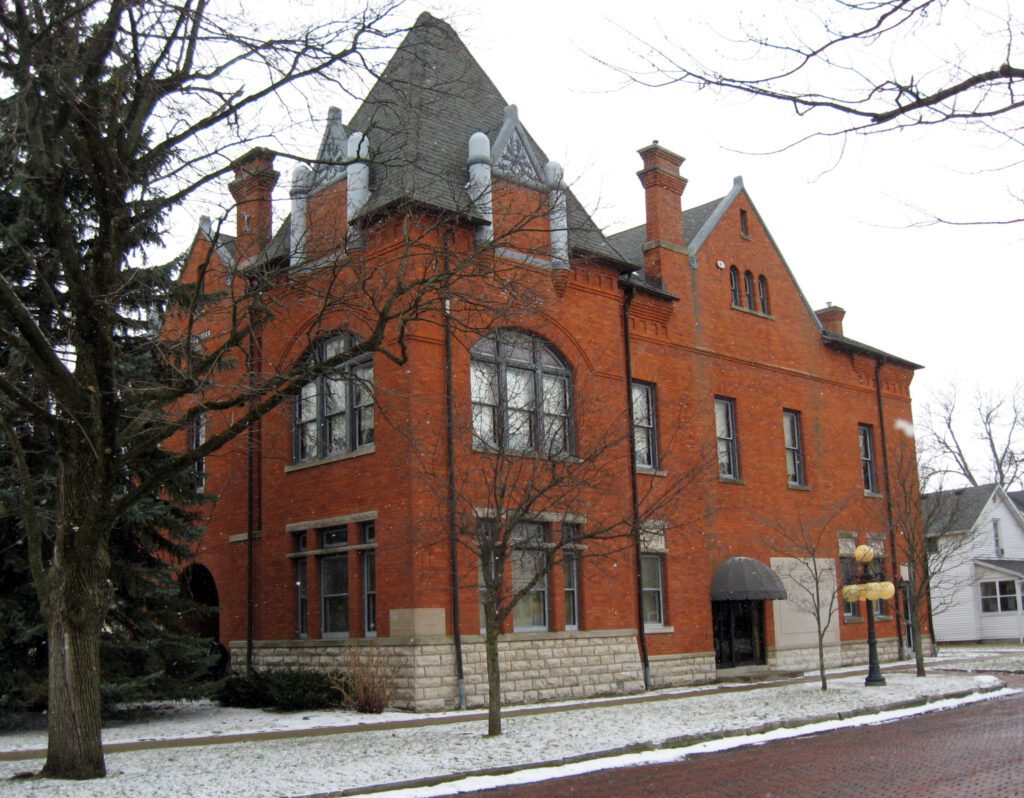
Completed in 1892 at the height of the region’s oil boom, the Pemberville Town Hall followed a late-1800s municipal trend to house many civic functions under one roof. The fire station, jail, and council chambers occupied the ground level, while the entire second floor hosted a public auditorium, or “opera house,” that seated 250. The […]
11-87 Wood County Infirmary, 1889-1971
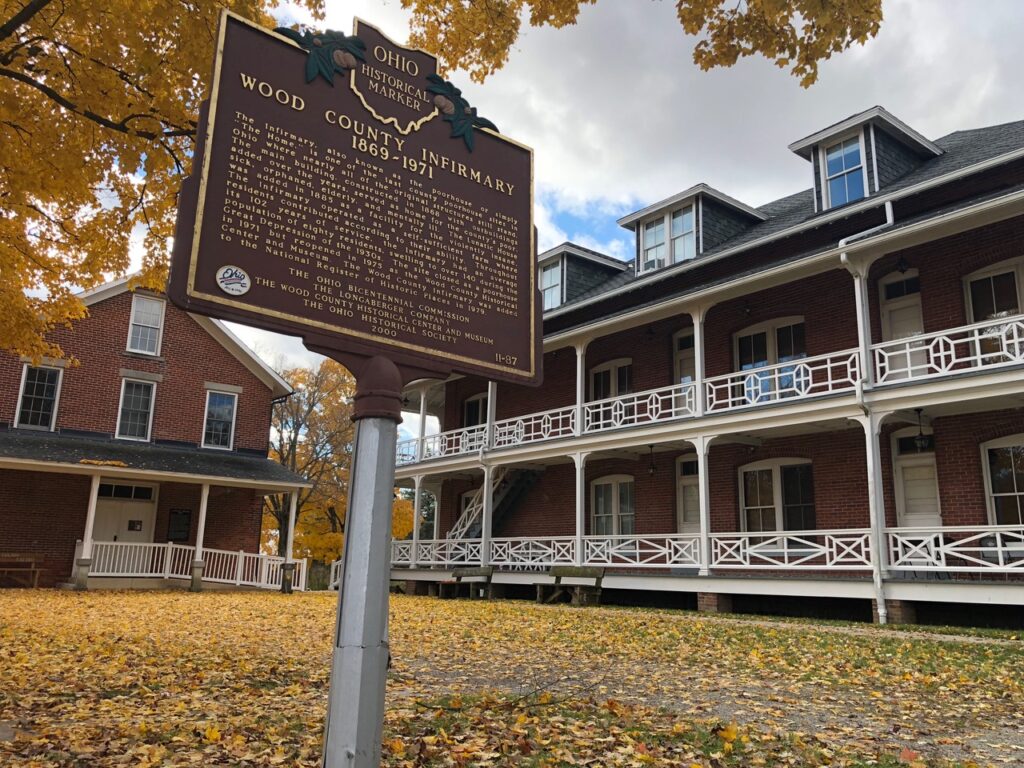
The Infirmary, also known as the poorhouse or simply “The Home,” is one of the last county poorhouse sites in Ohio where nearly all of the original structures still stand. The main building, constructed in 1868 with outbuildings added over the years, served as home for the county’s poor, sick, orphaned, elderly, and mentally ill. […]
10-87 North Baltimore / Community Firsts
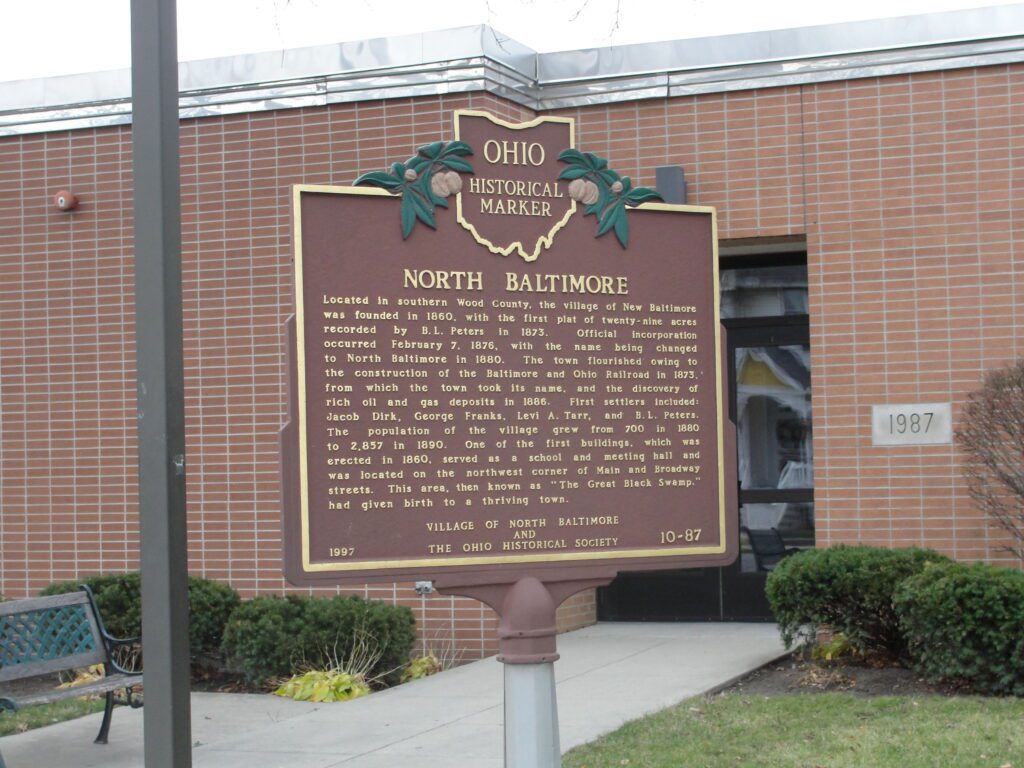
Located in southern Wood County, the village of New Baltimore was founded in 1860, with the first plat of twenty-nine acres recorded by B.L. Peters in 1873. Official incorporation occurred February 7, 1876, with the name being changed to North Baltimore in 1880. The town flourished owing to the construction of the Baltimore and Ohio […]
9-87 First Presbyterian Church
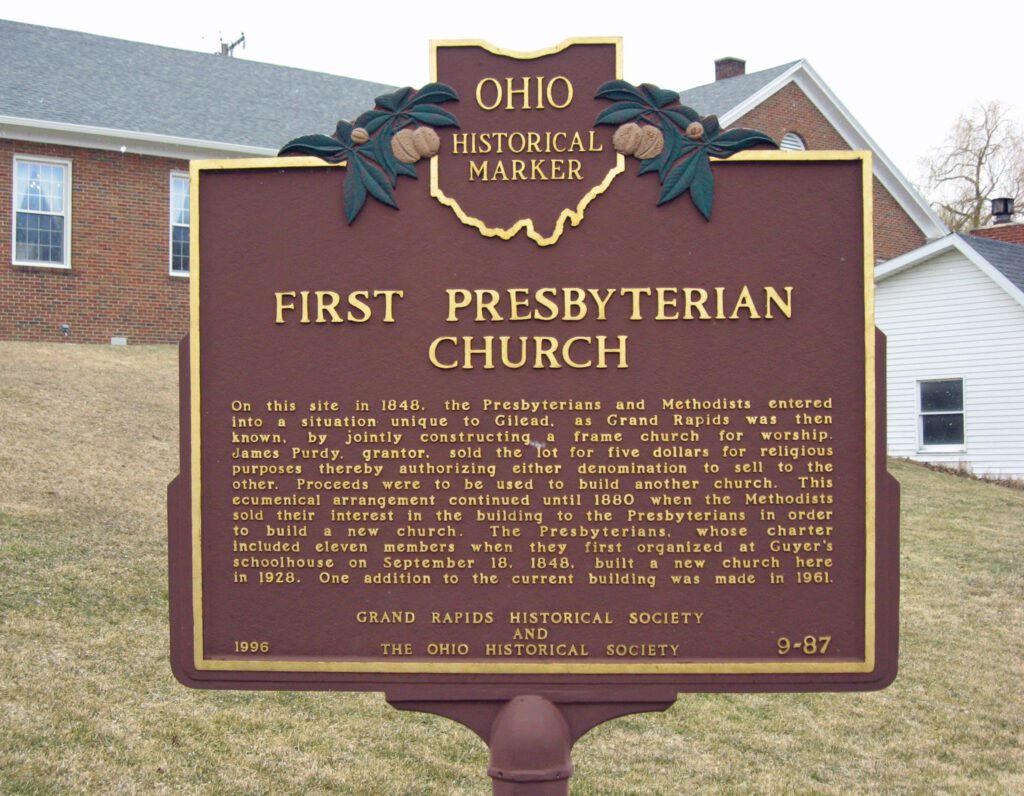
On this site in 1848, the Presbyterians and Methodists entered into a situation unique to Gilean, as Grand Rapids was then known, by jointly constructing a frame church for worship. James Purdy, grantor, sold the lot for five dollars for religious purposes thereby authorizing either denomination to sell to the other. Proceeds were to be […]
8-87 Dominick Labino
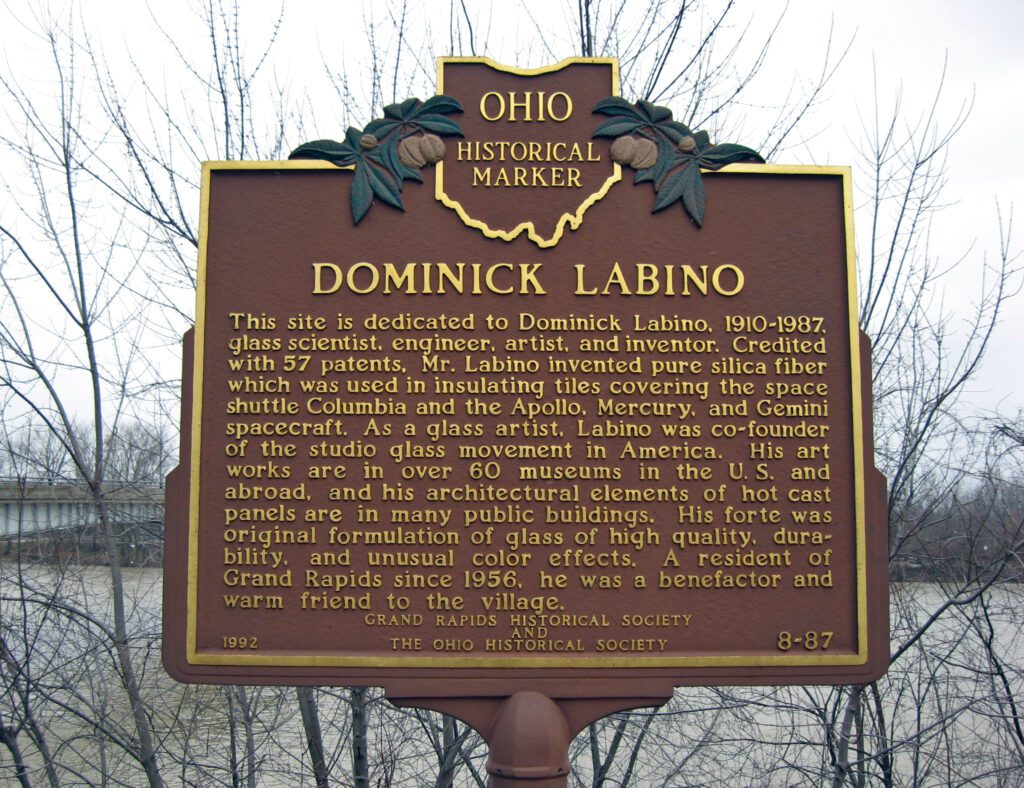
This site is dedicated to Dominick Labino, 1910-1987, glass scientist, engineer, artist, and inventor. Credited with 57 patents, Mr. Labino invented pure silica fiber which was used in insulating tiles covering the space shuttle Columbia and the Apollo, Mercury, and Gemini spacecraft. As a glass artist, Labino was co-founder of the studio glass movement in […]
7-87 Army Lodge No. 24 Free and Accepted Masons
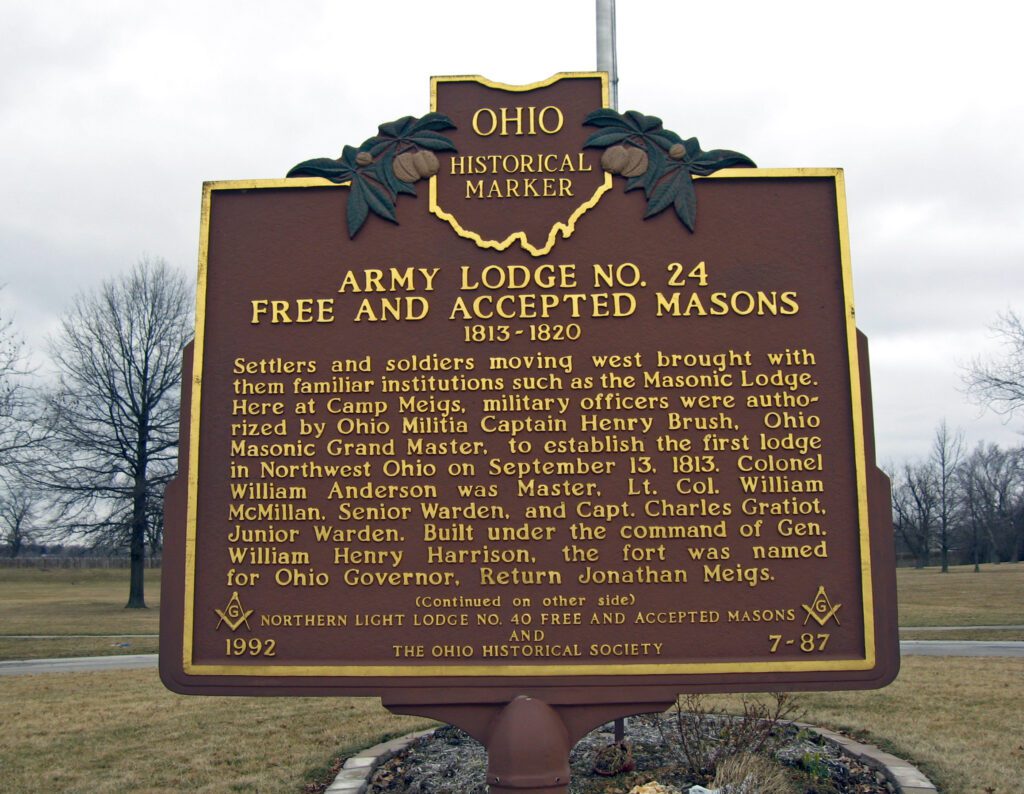
Settlers and soldiers moving west brought with them familiar institutions such as the Masonic Lodge. Here at Camp Meigs, military officers were authorized by Ohio Militia Captain Henry Brush, Ohio Masonic Grand Master, to establish the first lodge in Northwest Ohio on September 13, 1813. Colonel William Anderson was Master, Lt. Col. William McMillan, Senior […]
6-87 Grand Rapids 1833-1983
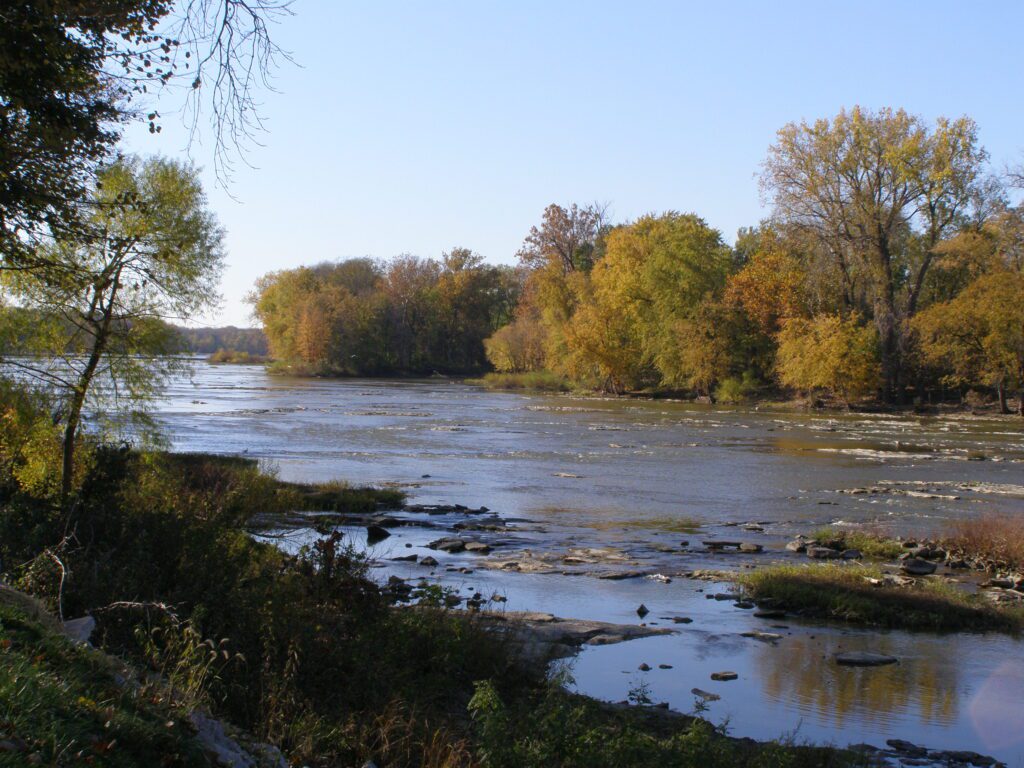
This site, at the head of the Great Rapids of the Maumee, has been a major river crossing for centuries. The village was platted in 1833 as Gilead but was overshadowed by rival Providence during the canal era. In 1868 the name Grand Rapids was adopted, and the town prospered with the arrival of the […]