 Skip to content

1-87 In Memory of Lieutenant Wilson W. Brown / The Andrews Raiders
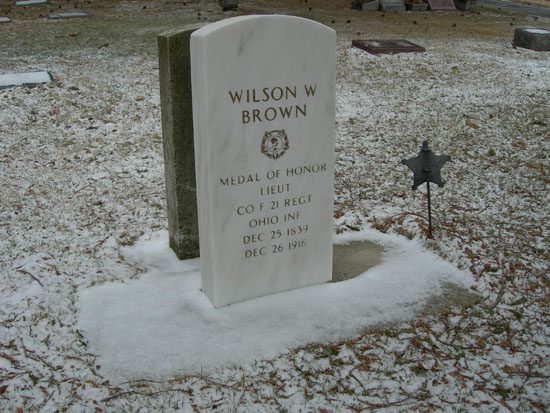
Medal of Honor winner, who is buried here. He joined the famous Andrews Raiders to wreck Confederate supply lines. The raiders captured a locomotive, “The General,” at Big Shanty, Georgia, on April 12, 1862. Brown served as the engineer and was captured after the “General” ran out of fuel. He escaped on October 16 and […]
10-86 Edgerton Town Hall & Park Opera House
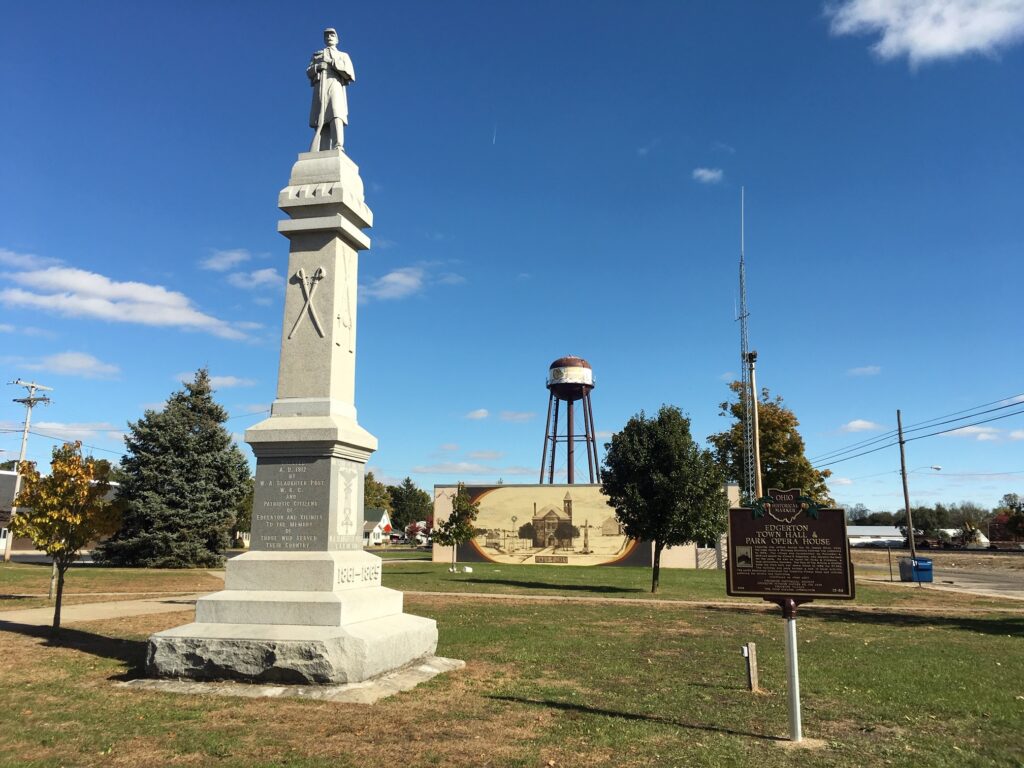
Edgerton was settled beside the St. Joseph River when the Lake Shore & Michigan Southern railroad was completed in 1854. The village was incorporated on December 4, 1865, and named for Alfred P. Edgerton, who donated the land for the park. He was an agent for Hicks & Company, a land speculation business. The firm […]
9-86 William James Knight / Andrews Raiders
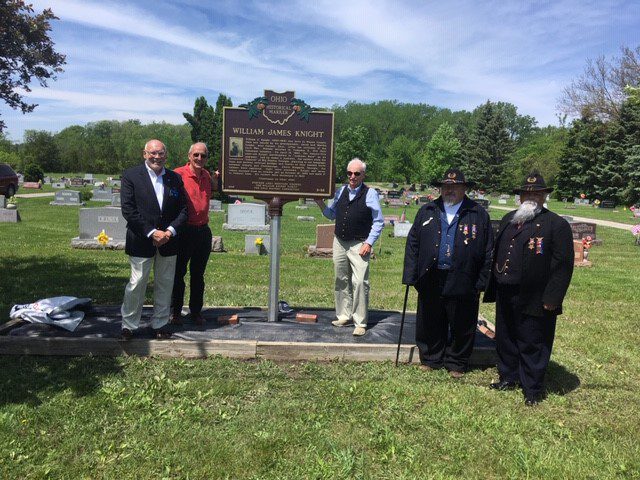
William J. Knight (1837-1916) was born in Wayne County, Ohio and raised by his grandparents, Jacob and Martha Knight, near Farmer, Ohio. After the outbreak of the Civil War, William enlisted in Company E, 21st Ohio Volunteer Infantry. On April 12, 1862, the twenty-five year-old Knight participated in “Andrews Raid” as an engineer. Led by […]
8-86 Casimir Pulaski: Father of American Cavalry

Pulaski and Pulaski Township in Williams County are named for Casimir Pulaski, a Polish cavalry officer who died to win America’s independence from Great Britain during the Revolutionary War. Charged with attempting to kidnap the king of Poland, Pulaski (1747-1779) fled to Paris and then to America in 1777, met General George Washington, and joined […]
7-86 Richard E. Schreder 1915-2002

Richard E. Schreder grew up in Toledo, Ohio and graduated from the University of Toledo with a degree in Mechanical Engineering. He was a decorated navy pilot and iconic aviation figure who helped shape the American soaring movement, international glider design, and competitive soaring and piloting flight strategies. He also made high performance gliders available […]
6-86 Cedar Hill Farm

The Cedar Hill Farm Homestead story began in 1864 when John Burchard purchased the farmland. It has been in the Kisseberth family since 1903 and gained centennial status in 2003. In 2008, the Ohio Centennial Farm of Cedar Hill became the first farm in Williams County to be accepted into the Ohio Department of Agriculture’s […]
5-86 Stryker’s Railroad Heritage
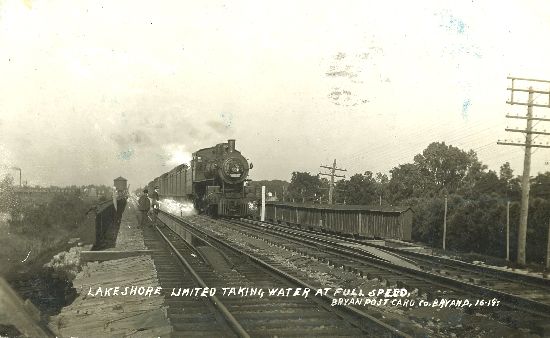
Like many nineteenth century communities in Ohio, Stryker owes its birth and early growth to the railroad industry. Stryker, named for Rome, New York, attorney and railroad executive John Stryker, was surveyed on September 19, 1853, beside the proposed Northern Indiana Railroad. For more than fifty years, “track pans” at Stryker allowed steam locomotives to […]
4-86 Rail Speed Record

In 1966 the New York Central Railroad Company (A.E. Perlman, President) proposed a test of existing rail passenger equipment to determine the feasibility of operating high-speed passenger service between cities up to 300 miles apart. The site chosen for the test was near Bryan, Ohio on the longest multiple track straight railroad line in the […]
3-86 Bryan’s Air Mail Field

Here, on September 6, 1918, Bryan’s Air Mail Field began operations as one of Ohio’s first official airfields with the arrival of a survey flight to establish air mail service between New York and Chicago. Scheduled service began on July 1, 1919, and stretched west to San Francisco on September 8, 1920, completing the 2,666 […]
1-86 Nettle Lake Mound Group / The Hopewell Indians

The Nettle Lake Mound Group consists of 4 low mounds overlooking a stream that runs into Nettle Lake. The mounds vary in height from 1 to 3 feet and in diameter from 18 to 30 feet. The mounds are composed primarily of reddish-brown sand (secondary mound) covering a layer of darker sand and loam (primary […]